
A large prize may attract attention, but it does not automatically create a successful promotion. The strongest raffle prize ideas combine desirability, simple entry mechanics, attainable winner tiers, and a clear connection to the sponsoring brand.
Cash and consumer electronics can generate immediate interest, but they often create little brand exposure after the campaign ends. Custom merchandise offers a different advantage. It can reflect the campaign theme, support the customer’s lifestyle, and keep the brand visible every time the prize is used.
Why Merchandise Works for Raffle Campaigns
Merchandise can turn a promotional reward into a long-term brand touchpoint.
A travel bag may accompany a winner on multiple trips. A picnic set can appear at family gatherings. A branded cooler, drinkware collection, or home entertainment kit can remain in use for years.
Custom merchandise also gives brands greater control over the campaign experience. Product colors, materials, features, packaging, and branding can all be developed around a specific audience or occasion.
Other advantages include:
- More flexibility across different prize tiers
- Stronger connections between the reward and the promoted product
- Greater potential for limited-edition or exclusive designs
- Continued visibility after the raffle draw
- Opportunities for winner-generated social media content
- Better control over perceived value and presentation
Merchandise does not need to replace headline prizes completely. A well-structured campaign can use an aspirational grand prize to attract attention, supported by branded merchandise that creates more opportunities to win.
How to Choose the Right Raffle Prize
The best prize is not necessarily the most expensive one. It is the product that best supports the campaign objective while remaining attractive and practical for the target audience.
Before selecting a prize, consider the following factors.
Start with the people expected to enter the promotion.
Would they genuinely use the product? Does it reflect their lifestyle, interests, location, age group, or purchasing habits?
A travel organizer may appeal to frequent flyers, while a foldable shopping trolley could be more valuable to supermarket customers. Audience relevance should come before novelty.
A prize should feel worth the effort required to enter.
Perceived value can come from functionality, presentation, exclusivity, customization, or the number of products included in a set. A coordinated gift collection may feel more substantial than a single item, even when both have similar production costs.
The merchandise should relate naturally to the company, promoted product, campaign theme, or customer occasion.
A beverage brand could offer an outdoor entertainment set. An automotive company could create a road-trip kit. A beauty brand could develop a travel vanity collection.
The relationship does not have to be literal, but it should make sense to the customer.
Branding should improve the product rather than make it look like a basic giveaway.
Consider custom colors, embossed details, product-inspired shapes, subtle logos, campaign graphics, personalized elements, or specially designed packaging.
A prize people are comfortable using in public will usually deliver stronger long-term exposure.
The prize must be achievable within the available lead time, order quantity, and budget.
Custom tooling, complex electronics, special materials, and personalized components may require more development time. Product concepts should therefore be reviewed early enough to allow for design revisions, prototyping, testing, and production.
Merchandise Raffle Prize Ideas for Different Industries
Rather than selecting random promotional products, brands can develop merchandise around a clear campaign direction. The following ideas can be adapted for different prize values and winner tiers.
Food, Beverage, and Hospitality
Food and beverage prizes can extend the product experience into social occasions, dining, travel, and entertainment.
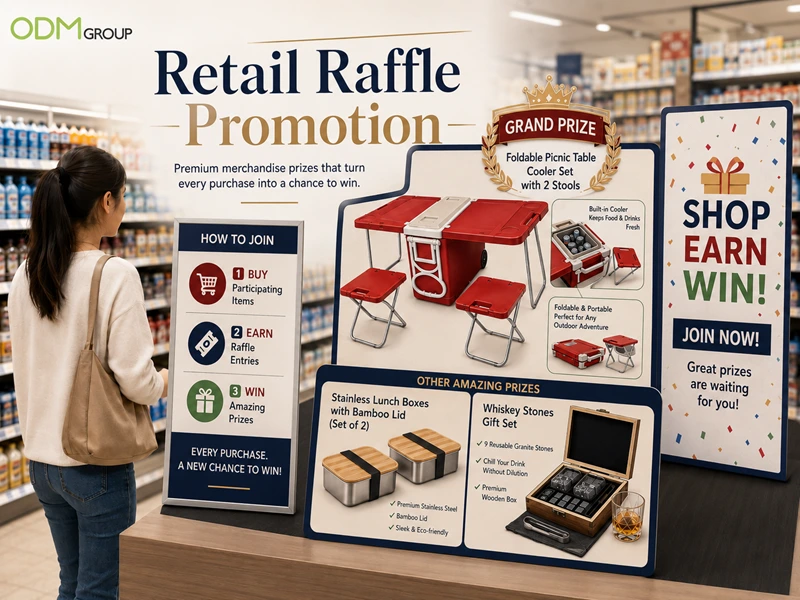
Premium prizes
- Outdoor dining sets
- Beverage coolers
- Foldable picnic tables
- Home bar accessory
- Premium serving trays
- Compact beverage carts
Mid-tier prizes
- Insulated lunch bags
- Picnic blankets
- Reusable drinkware
- Branded ice buckets
- Tabletop games
- Serving boards
High-volume rewards
- Bottle openers
- Coaster sets
- Reusable cups
- Snack containers
- Compact cooler bags
- Collectible merchandise
Brands can also bundle several related products into a themed “summer hosting kit,” “movie night set,” or “weekend picnic collection.”
Retail and Consumer Brands
Retailers can use merchandise prizes to increase basket value, promote participating products, or encourage loyalty program use.
Relevant ideas include:
- Foldable shopping trolleys
- Reusable shopping bags
- Home organization sets
- Utility wagons
- Portable coolers
- Travel organizers
- Family activity kits
- Limited-edition collectibles
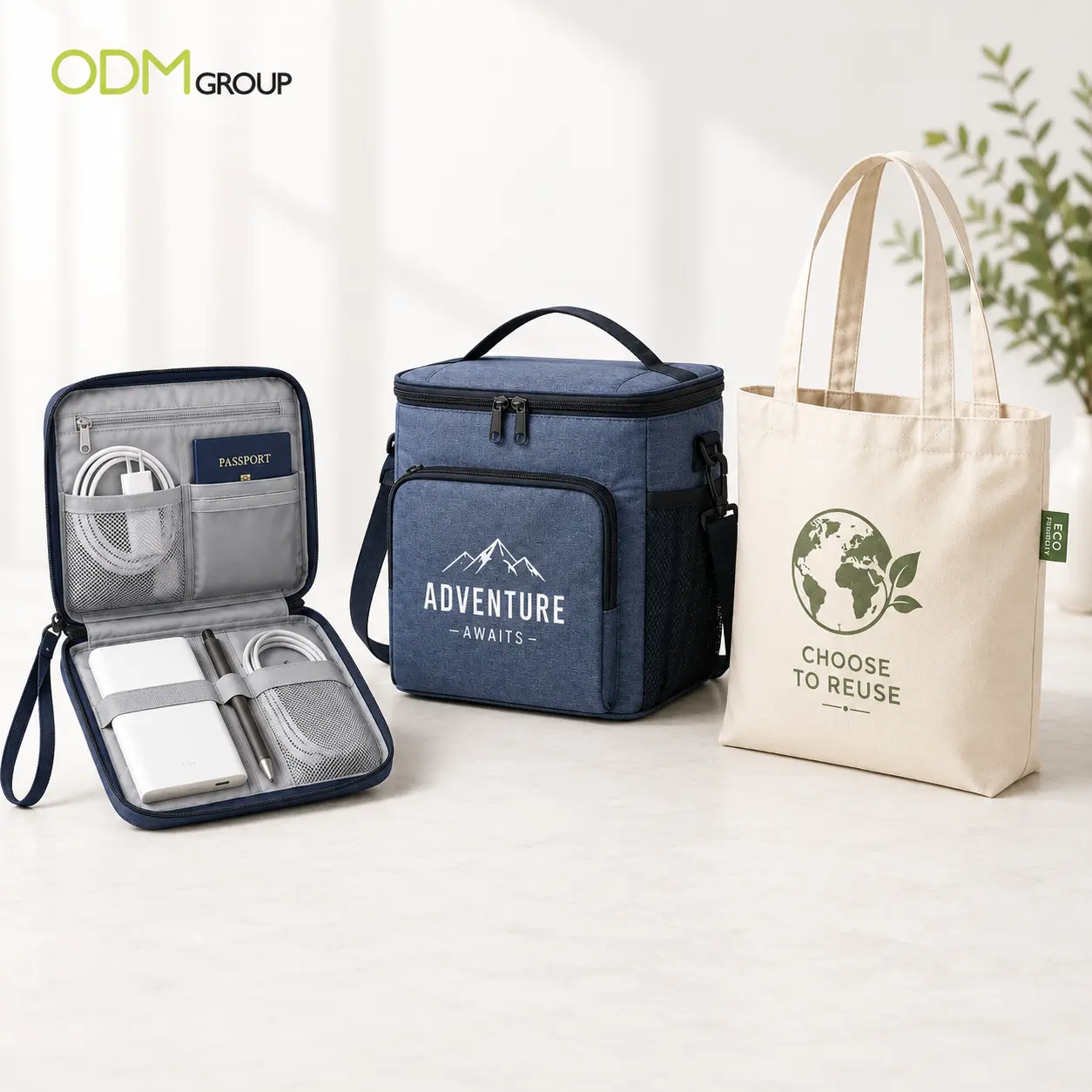
A retailer running a nationwide campaign could offer a premium shopping trolley as a major prize, insulated bags as mid-tier rewards, and compact reusable bags for a larger group of winners.
Participating brands can also contribute products to create multi-brand prize bundles.
Travel, Automotive, and Fuel
These industries can build prize collections around mobility, road trips, holidays, and everyday convenience.
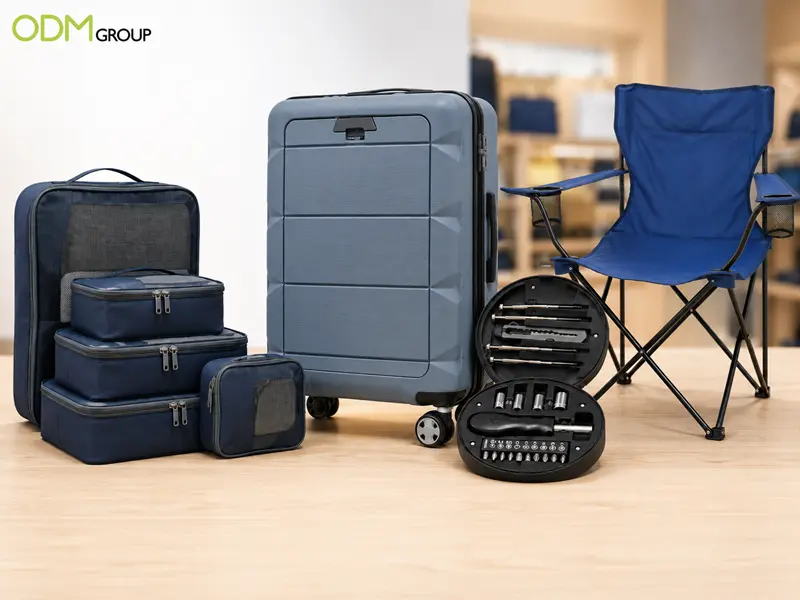
Travel-focused ideas
- Cabin luggage
- Packing cube sets
- Passport holders and luggage tags
- Foldable backpacks
- Travel pillows and eye masks
- Waterproof travel pouches
- Portable coffee sets
Automotive and fuel ideas
- Car emergency kits
- Trunk organizers
- Car care sets
- Portable vacuums
- Branded travel coolers
- Foldable camping chairs
- Road-trip accessory kits
A complete road-trip set could combine a cooler, organizer, travel blanket, reusable bottles, and emergency accessories in one branded storage case. Possible prizes include:
- Wireless charging organizers
- Laptop sleeves
- Tech accessory pouches
- Executive backpacks
- Premium notebooks
- Desk organization sets
- Portable work lights
- Travel document organizers
- Cable management kits
- Smart luggage trackers
Subtle branding often works better for technology and financial services. A small embossed logo, custom lining, or branded presentation box can feel more premium than a large printed graphic.
Beauty, Wellness, and Fitness
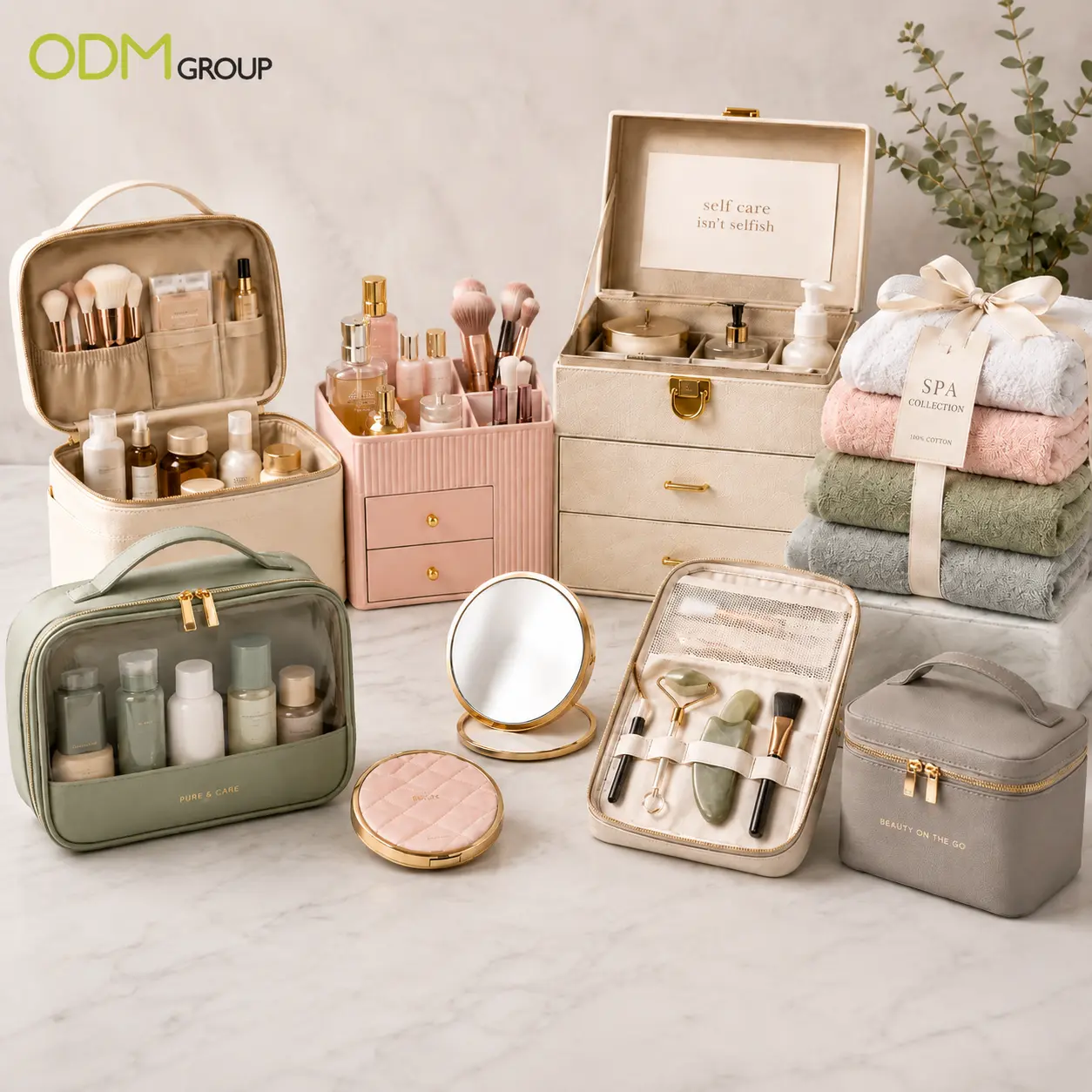
Beauty and wellness brands can create prize kits around personal routines, travel, relaxation, or active lifestyles.
Beauty and self-care ideas
- Vanity cases
- Cosmetic organizers
- Travel toiletry sets
- Compact mirrors
- Skincare accessory kits
- Spa towel collections
- Self-care storage boxes
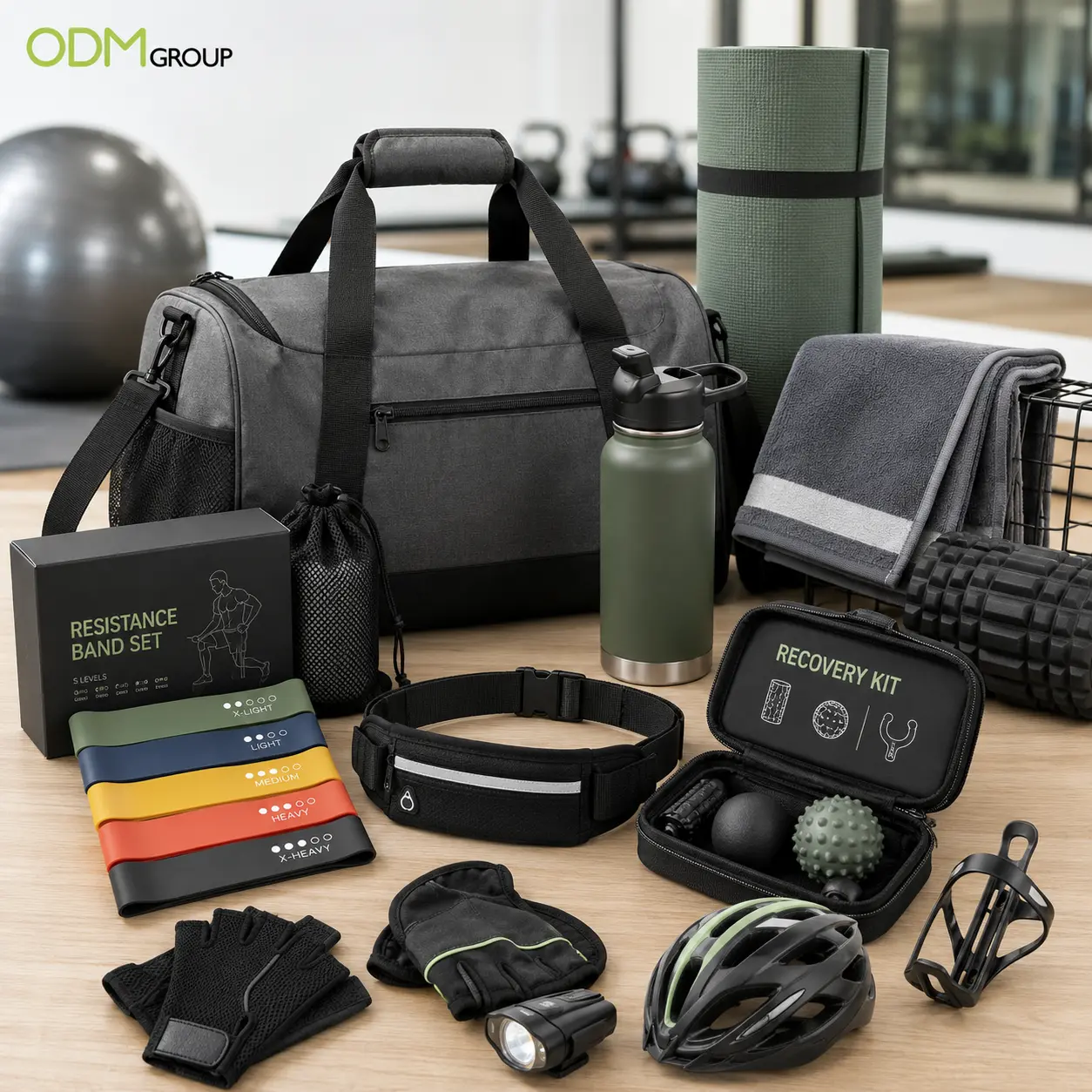
Fitness ideas
- Gym bags
- Exercise mats
- Sports towels
- Resistance band sets
- Insulated water bottles
- Running belts
- Recovery kits
- Cycling accessories
A themed name can improve the presentation. Instead of offering a group of unrelated products, the brand could introduce a “Weekend Wellness Kit,” “Travel Beauty Set,” or “Post-Workout Recovery Pack.”
Entertainment, Media, and Lifestyle
Entertainment campaigns can use merchandise to create exclusivity and collectibility.
Prize directions include:
- Limited-edition figurines
- Character-inspired travel accessories
- Custom card or board games
- Movie-night kits
- Branded cushions and blankets
- Product-inspired storage boxes
- Replica props adapted into functional items
- Numbered art prints
- Collectible merchandise series
Limited production runs, numbered packaging, or several designs released during different campaign stages can encourage repeat participation.
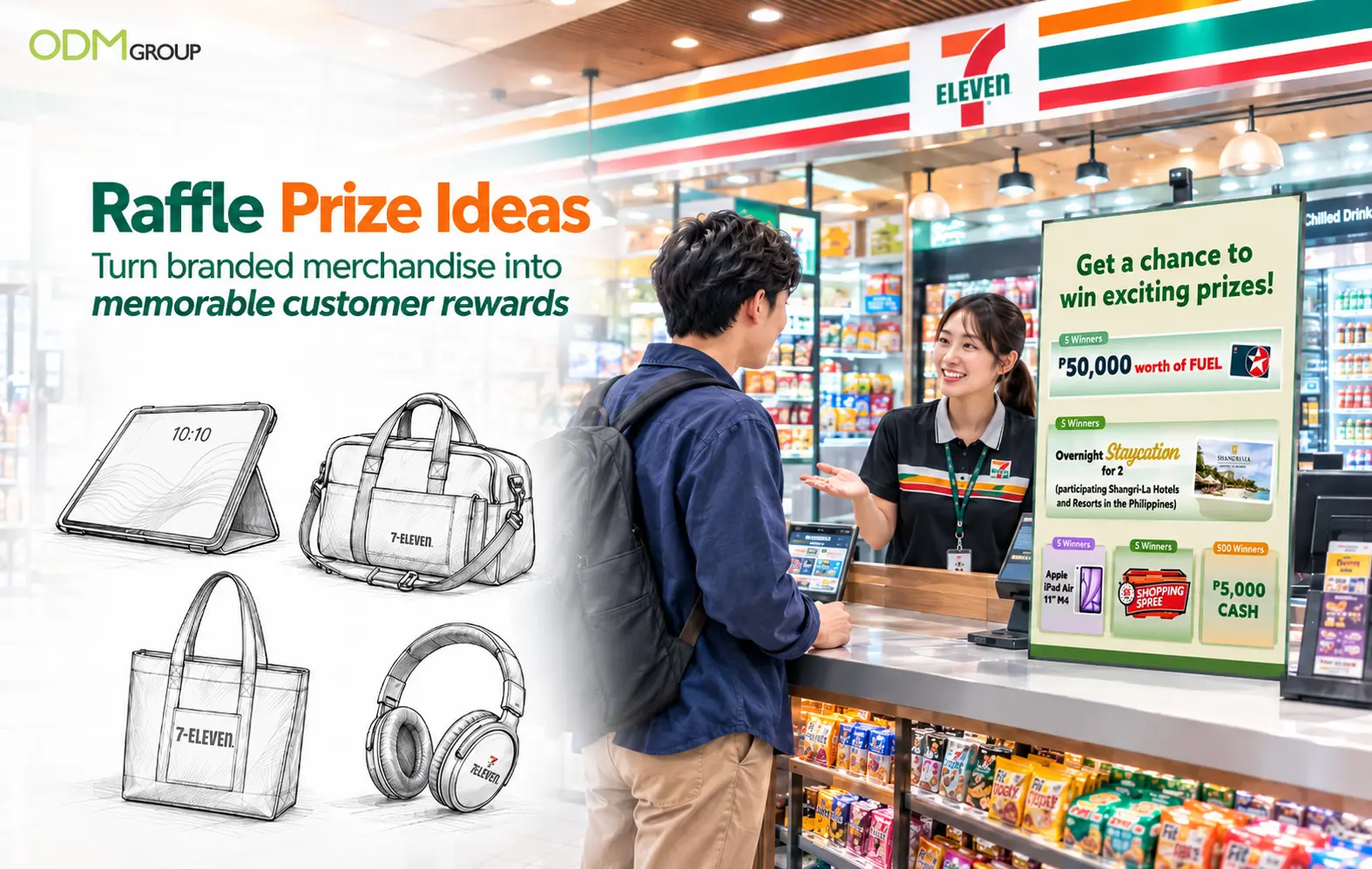
What Brands Can Learn From 7-Eleven Philippines
7-Eleven Philippines shows how retailers can adapt raffle prizes to different campaign objectives and customer occasions.
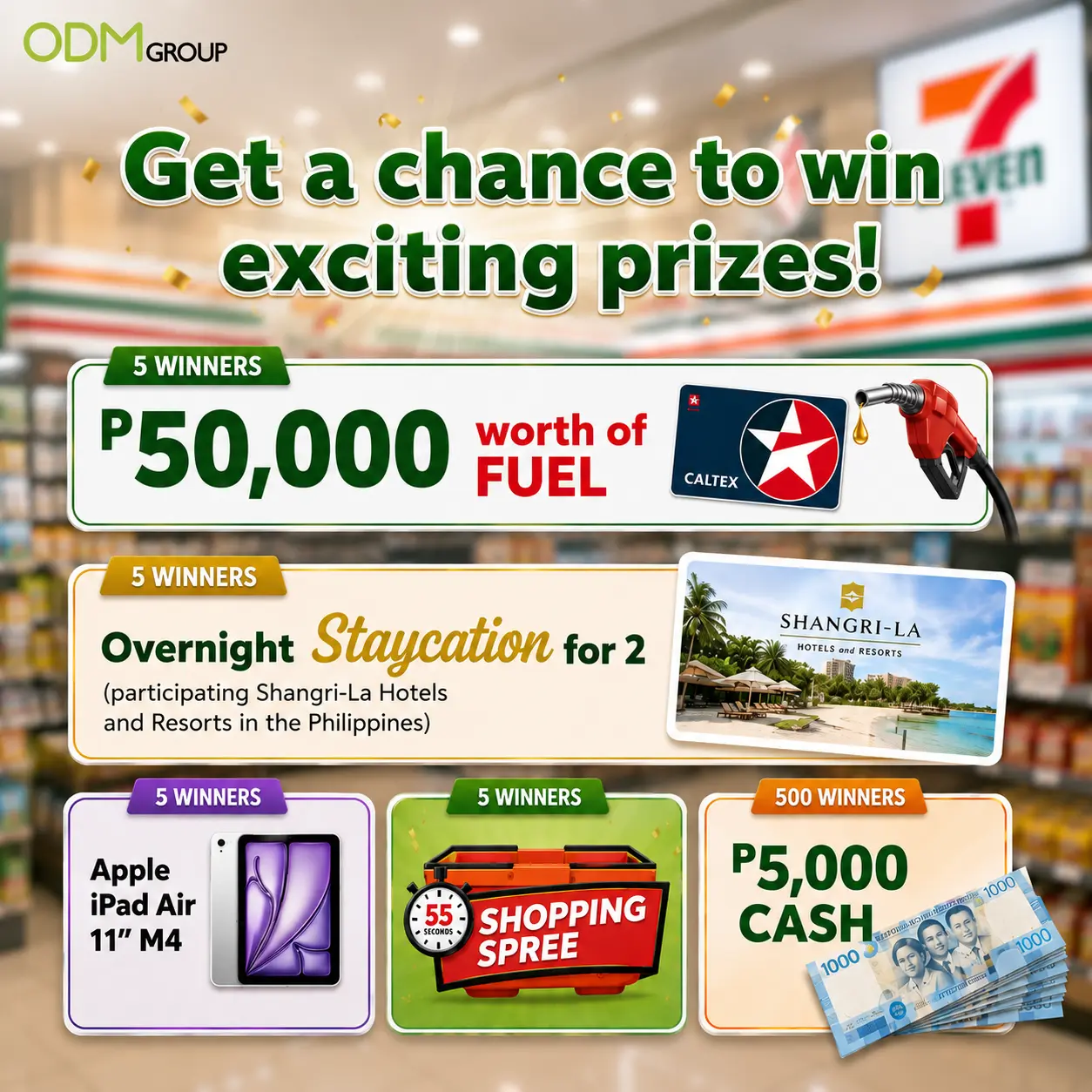
For its milestone promotion running from July 22 to September 13, 2026, customers could earn raffle entries by purchasing PHP 200 worth of participating products or using the CLiQQ App. The prizes included fuel packages, staycations, Apple iPad Air units, shopping sprees, and PHP 5,000 cash rewards for 500 winners. The mix combined aspirational prizes with a large number of attainable rewards.
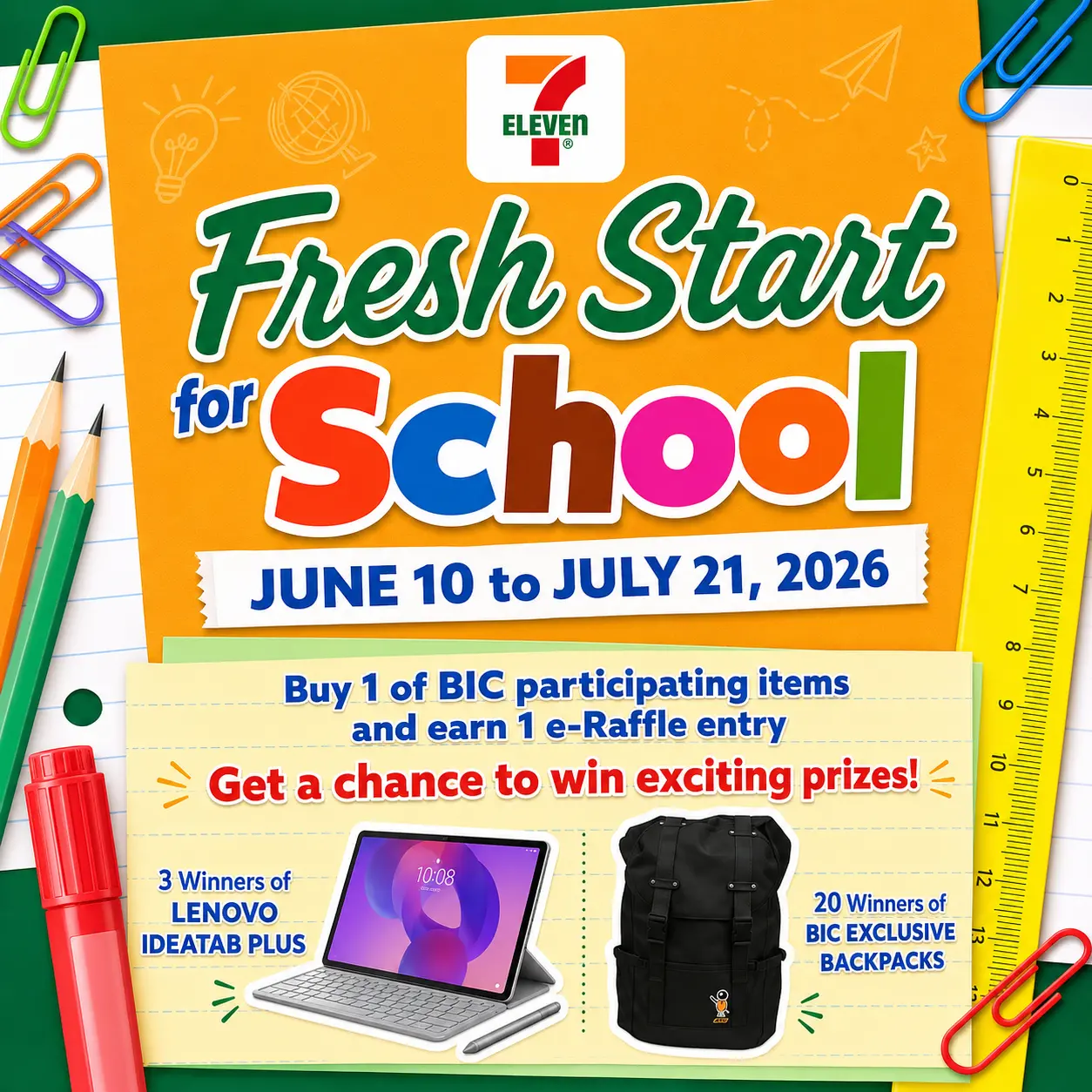
Its Fresh Start for School promotion used a more targeted approach. From June 10 to July 21, 2026, customers who purchased a participating BIC product earned an e-raffle entry. Prizes included Lenovo IdeaTab Plus devices and BIC-exclusive backpacks.
Together, the campaigns demonstrate the value of matching prizes to the audience and occasion. A broad retail campaign can use several prize categories to maximize appeal, while a seasonal promotion can focus on merchandise directly connected to the customer’s immediate needs. Brands can apply the same approach with custom school kits, travel sets, shopping accessories, or limited-edition merchandise.
Discover how other brands conduct their raffle campaigns
Anyone can join Heineken’s QR code competition by buying a specially designed six-can pack of Heineken Silver.
In this promotion, the famous beverage company, Coca-Cola, offered its consumers a chance to win a Marshall Emberton Limited Edition X. The branded merchandise has a market value of $299, even though it’s relatively easy to enter.
On our latest trip to France, we were able to spot this bespoke shop display from the skincare brand. The glowing light that comes from its location is certainly hard to miss for any passersby.
A previous Coca-Cola supermarket campaign in Vietnam used this approach by offering shopping vouchers alongside instant-win drinkware and beverage packs. A branded roulette game helped attract attention and gave shoppers an interactive way to participate.
How to Conduct a Successful Raffle Campaign
An attractive prize may generate interest, but customers will not participate if the mechanics are confusing or inconvenient.
The complete raffle journey should be planned before the campaign is announced.
1. Define one clear campaign objective
Determine what the raffle needs to achieve.
Possible objectives include:
- Increasing average transaction value
- Supporting a product launch
- Encouraging loyalty app registration
- Increasing repeat store visits
- Promoting selected products
- Collecting qualified customer leads
- Driving event attendance
- Generating social media engagement
The objective should influence both the prize and the entry requirement.
For example, an app-growth campaign may award entries after registration or in-app purchases. A retail campaign may require customers to buy selected products or reach a minimum spending threshold.
2. Keep the entry process simple
Customers should be able to understand the mechanics within seconds.
Common entry methods include:
- Purchase a minimum amount
- Buy participating products
- Scan a QR code
- Enter a unique promotional code
- Upload proof of purchase
- Register through a loyalty app
- Complete an in-store activity
- Attend a brand event
- Submit campaign-related content
Avoid combining too many steps. Requiring a purchase, app download, registration form, receipt upload, and social media post may discourage participation.
3. Build a prize pyramid
A prize pyramid combines a small number of premium rewards with more numerous mid-tier and entry-level prizes.
For example:
- One premium grand prize
- Five high-value merchandise sets
- Twenty mid-tier prizes
- Hundreds of compact branded rewards
This approach creates a strong headline while making the possibility of winning feel more realistic.
Instant-win merchandise can also maintain engagement during a longer campaign, while major prizes are reserved for the final draw.
4. Connect the prize to the campaign theme
The prize should reinforce the promotion rather than feel like an unrelated addition.
A summer raffle could feature coolers, outdoor games, picnic products, or travel accessories. A back-to-school campaign could offer backpacks, lunch kits, desk organizers, or study accessories.
Clear themes also make the campaign easier to communicate through packaging, digital content, point-of-sale displays, and social media.
5. Create a transparent validation process
Brands should establish how entries will be recorded, checked, and selected.
This may involve:
- Unique entry codes
- Receipt validation
- Loyalty account records
- QR code scans
- Purchase databases
- Duplicate-entry controls
- Winner identity checks
Clear eligibility, entry deadlines, prize descriptions, winner selection procedures, and claim instructions should be included in the promotional terms.
Campaign organizers should also review applicable local promotional, privacy, and consumer requirements.
6. Plan prize inventory and fulfillment early
Prize delivery is part of the customer experience.
Decide whether winners will collect prizes from a store, receive them by courier, attend a presentation event, or choose from several reward options.
The team should also plan for:
- Unclaimed prizes
- Incorrect winner details
- Damaged products
- Delivery delays
- Regional shipping limitations
- Replacement stock
- Product warranties where relevant
Custom packaging can protect the merchandise while making the winner experience feel more special.
7. Promote the raffle across several touchpoints
A single social media post or in-store poster is rarely enough.
The promotion can be reinforced through:
- Product packaging
- Checkout displays
- Shelf signage
- Digital screens
- Loyalty apps
- Email marketing
- Receipts
- Social media
- Campaign landing pages
- Staff communication
Showing the physical prize or a realistic prototype can make the offer easier to understand. Customers are more likely to value a reward when they can see its size, features, and presentation.
8. Extend engagement beyond the draw
The raffle should not end when the winners are announced.
Brands can invite winners to share photographs, unboxing videos, travel content, recipes, product demonstrations, or other experiences featuring the prize.
A presentation box, personalized message, campaign certificate, or QR code linking to exclusive content can make the handover more memorable.
Developing Custom Raffle Prizes With ODM Group
ODM Group works with marketing, procurement, and product development teams to translate campaign objectives into custom raffle prize ideas.
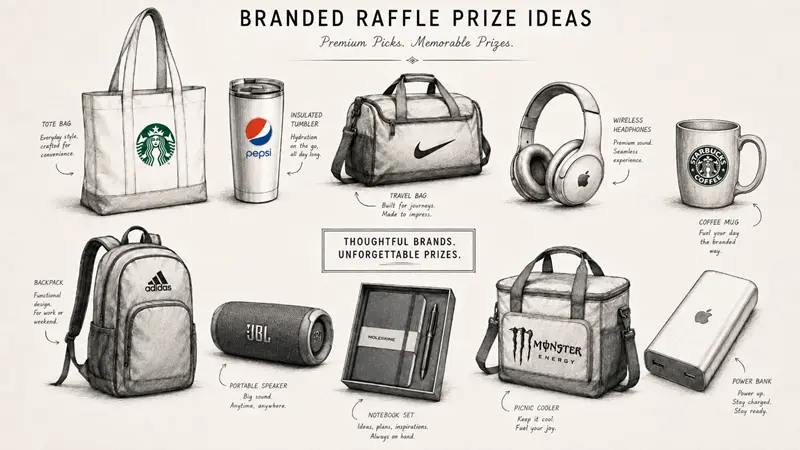
Support can include initial product sketches, prize and packaging design, and prototypes for evaluation before production. This gives teams an opportunity to review the appearance, dimensions, materials, branding, and presentation of the prize before moving forward.
Make the Prize Part of the Campaign Story
People may enter because they want to win, but they remember a promotion when the reward feels relevant, useful, and exclusive.
The best raffle prize ideas are not selected from a generic catalog at the last minute. They are planned around the audience, entry mechanics, brand message, budget, distribution model, and campaign objective.
A thoughtfully designed merchandise prize can generate participation during the promotion and continue representing the brand long after the winner receives it.
Planning a purchase-to-win, loyalty, retail, or nationwide raffle campaign? Contact ODM Group to develop custom prize concepts, product sketches, packaging, and prototypes that turn your promotional idea into a reward customers genuinely want to win.
More Raffle Prize Ideas


Frequently Asked Questions About Raffle Prize Ideas
What makes a good raffle prize?
A good raffle prize should be desirable, useful, and relevant to the target audience. It should also match the effort required to enter and connect naturally with the campaign theme. For merchandise prizes, practical features and strong presentation often matter more than simply adding a large logo.
How many raffle prizes should a campaign offer?
The ideal number depends on the budget, campaign reach, and expected participation. A tiered structure usually works well: one major prize, several mid-tier rewards, and a larger number of smaller merchandise prizes. This keeps the campaign exciting while making winning feel more achievable.
Are branded merchandise prizes better than cash prizes?
Both can be effective, but they serve different purposes. Cash attracts broad interest, while branded merchandise can support the campaign theme and continue promoting the brand after the raffle ends. Many campaigns combine headline prizes with branded merchandise for lower prize tiers.
How early should custom raffle prizes be developed?
Custom prizes should be planned as early as possible, especially when they require original shapes, special packaging, tooling, or prototype revisions. The process may include design, material selection, prototyping, production, quality checks, and delivery. Starting early gives teams more time to improve the product without delaying the campaign.
Latest Blogs
LED Screen Backpack: Smart Walking Billboards for Campaigns
Static outdoor signage and traditional promotional merchandise often struggle [...]
Marketing Gift Game Ideas to Connect Teams Through Play
A marketing gift game can offer much more than [...]
Food Cooling Fan: Make Your Brand Mascot Part of the Meal
A food cooling fan may seem like a simple [...]
LED Light Up Ice Cubes: A Bright Idea for Beverage Promotions
LED light up ice cubes can turn an ordinary [...]
Halloween Marketing: Giveaways, Merchandise, and Retail Inspiration
Halloween marketing gives shoppers a reason to stop, explore, [...]
Mug Stuffer Ideas: Small Gifts to Add Inside Promotional Mugs
A branded mug becomes a more personal gift when [...]