
Tea marketing is no longer driven by origin, flavor, or wellness claims alone. These messages still matter, but they often appear across dozens of competing products on the same shelf. Brands need to make tea relevant to a specific routine, occasion, or lifestyle.
Promotional products, packaging, and POS displays can help. However, they work best when they support one clear campaign idea rather than appearing as separate retail add-ons.
Tea Marketing Should Start With the Consumer Ritual
Tea is rarely consumed without context. It can be part of a morning routine, an afternoon break, a family meal, a wellness habit, or an on-the-go refreshment occasion. This gives tea brands a useful starting point.
Instead of asking which promotional item to give away, brands should first consider the role their tea plays in the consumer’s life.
A premium loose-leaf tea may be associated with gifting, hosting, or slow preparation. A bottled tea may be linked to commuting, lunch, or outdoor refreshment. A functional tea may sit within a broader wellness routine.
The campaign should strengthen that connection.
A branded cup can reinforce a daily ritual. A reusable bottle can make a multipack feel more practical. A gift box can turn an everyday product into a seasonal present. A POS display can show shoppers how the tea fits into their lives.
The objective is not simply to add value. It is to make the brand more meaningful.
How Tea Marketing Can Move Beyond Price-Led Promotions
Discounts can encourage trial, but they rarely give consumers a stronger reason to remember a brand.
Tea brands that rely too heavily on price can also become trapped in a cycle where each promotion needs to be more aggressive than the last. A relevant gift offers another way to improve perceived value without reducing the product to price alone.
The key is relevance.
The promotional product should support the way the tea is prepared, served, stored, carried, or enjoyed. When that connection is weak, the campaign feels generic. When it is strong, the promotion becomes part of the product experience.
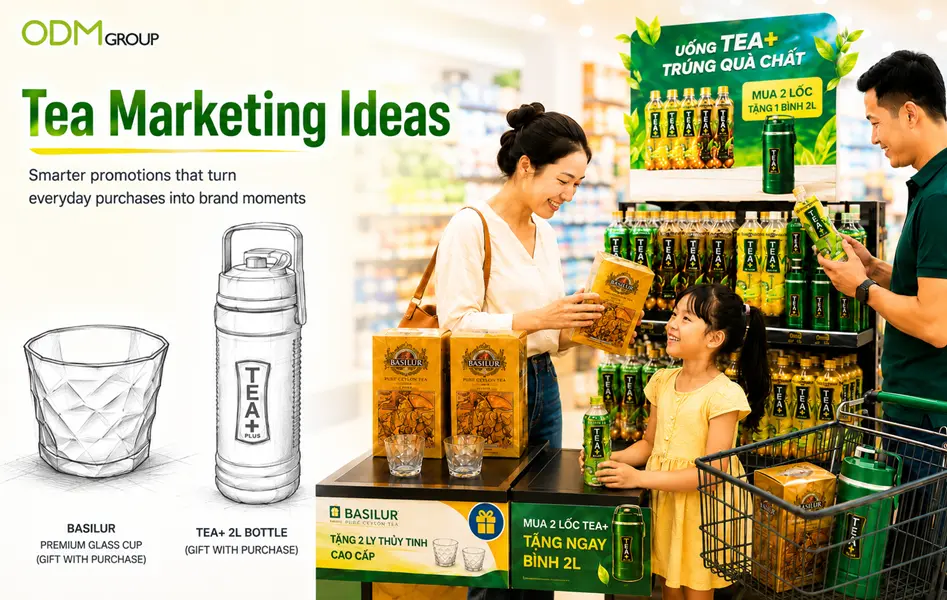
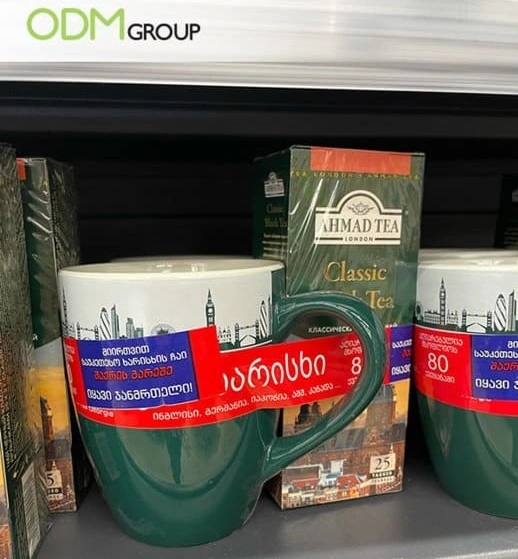
The Basilur retail promotion is a simple example. The boxed tea is paired with glassware, creating an immediate link between the product and the serving occasion. The gift does not need a long explanation because consumers can see how it relates to the tea.
The lesson is not that every tea brand should give away glasses. It is that the promotional product should make the brand’s consumption experience easier to imagine.
Use Promotional Products to Reinforce Positioning
Promotional products should communicate something about the brand, not just display its logo.
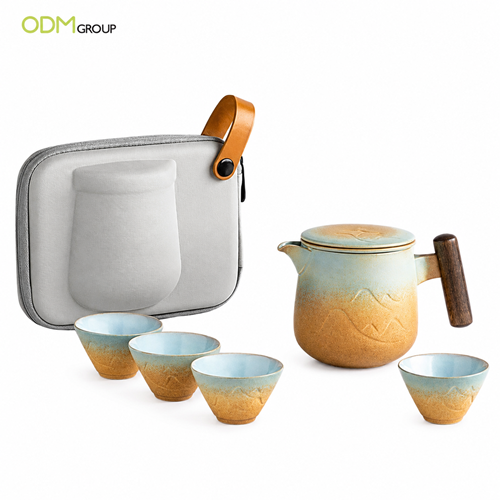
A premium tea brand may choose refined glassware, a ceramic set, or a well-designed storage tin. A family-focused brand may offer a larger jug, lunch container, or practical kitchen item. A ready-to-drink tea brand may use a reusable bottle, tumbler, or travel accessory.
Each choice sends a different message.
1. Premium and Giftable
Premium tea marketing often depends on presentation. Consumers are not only buying the product; they are buying the ritual, the story, and the feeling of giving or receiving something considered.
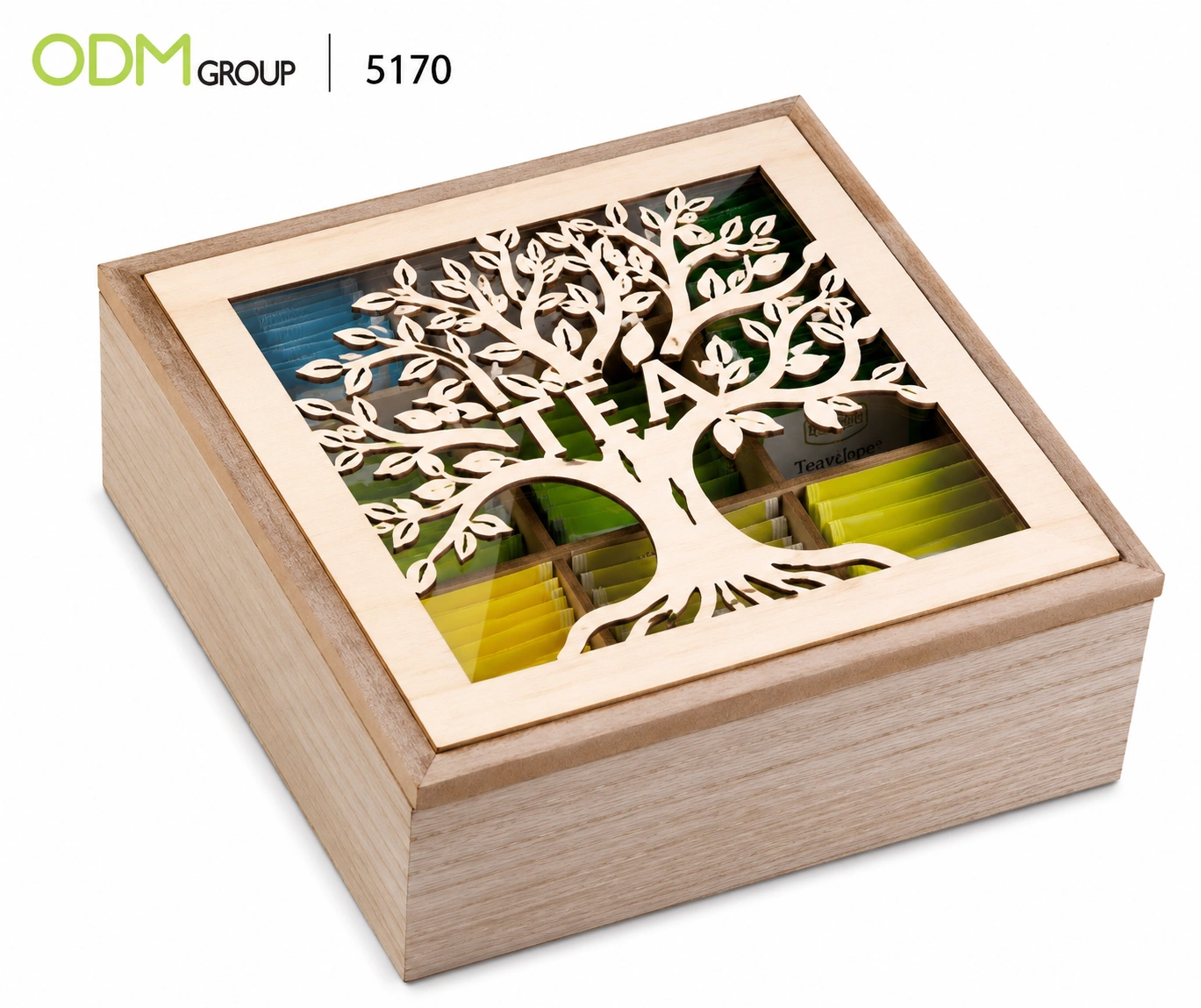
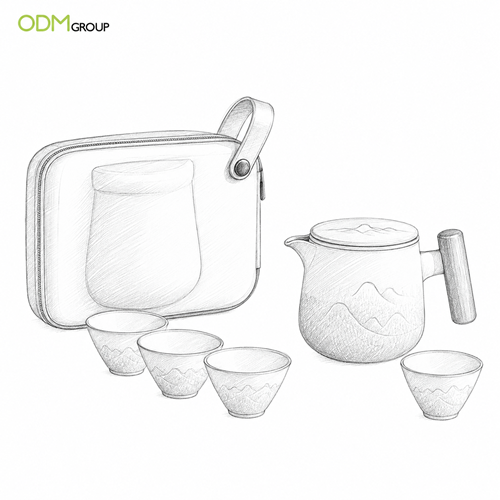
Glassware, tea tins, serving trays, infusers, and carefully structured gift boxes can help communicate this value.
The design should remain restrained.
Overbranding can make the gift feel like advertising rather than an item people want to keep.
2. Practical and Everyday
For mass-market and family-oriented tea brands, usefulness may be more persuasive than luxury.
Large bottles, tumblers, food containers, shopping bags, or storage accessories can make a promotional bundle feel relevant to everyday life.
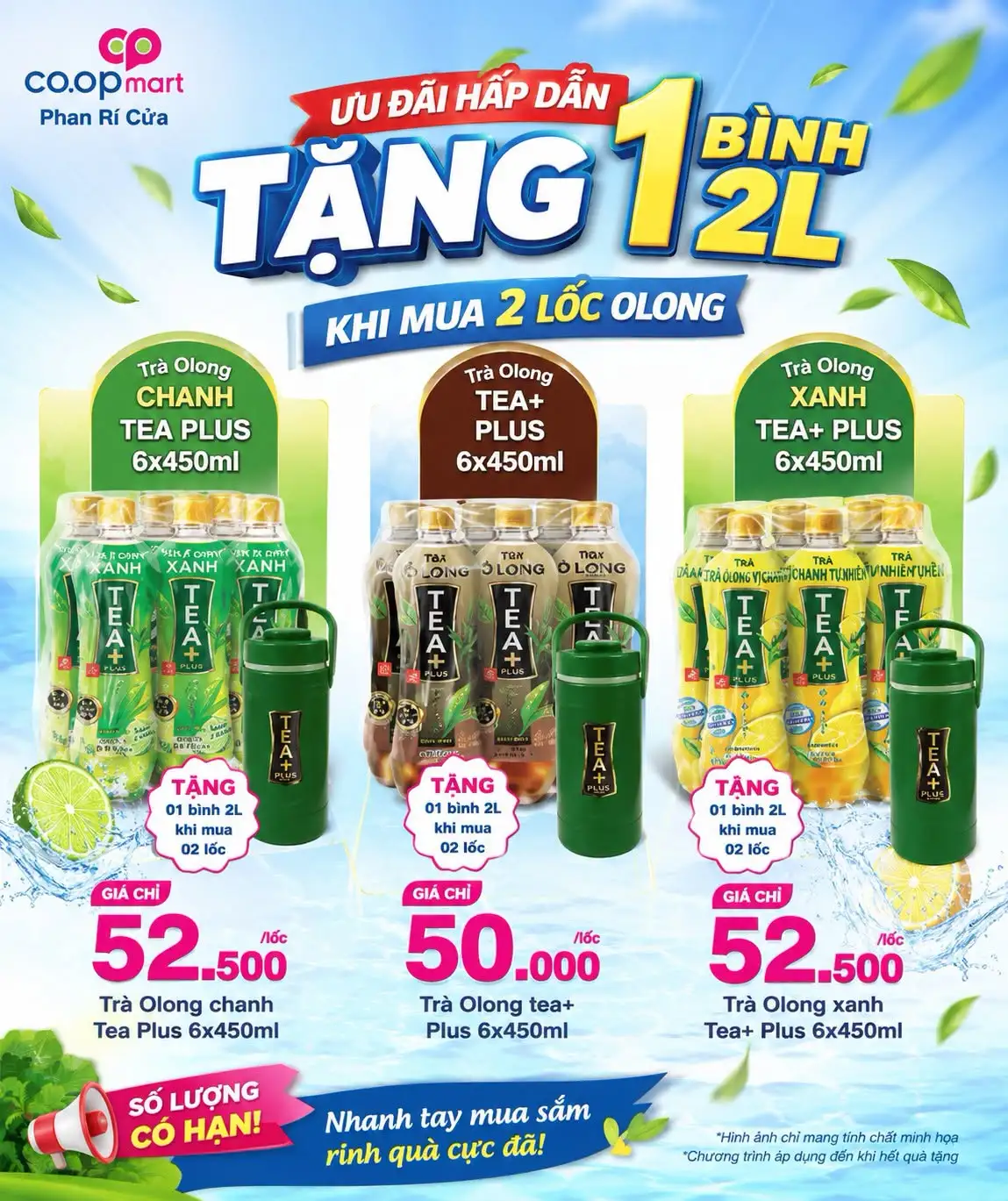
The Tea+ campaign demonstrates this approach.
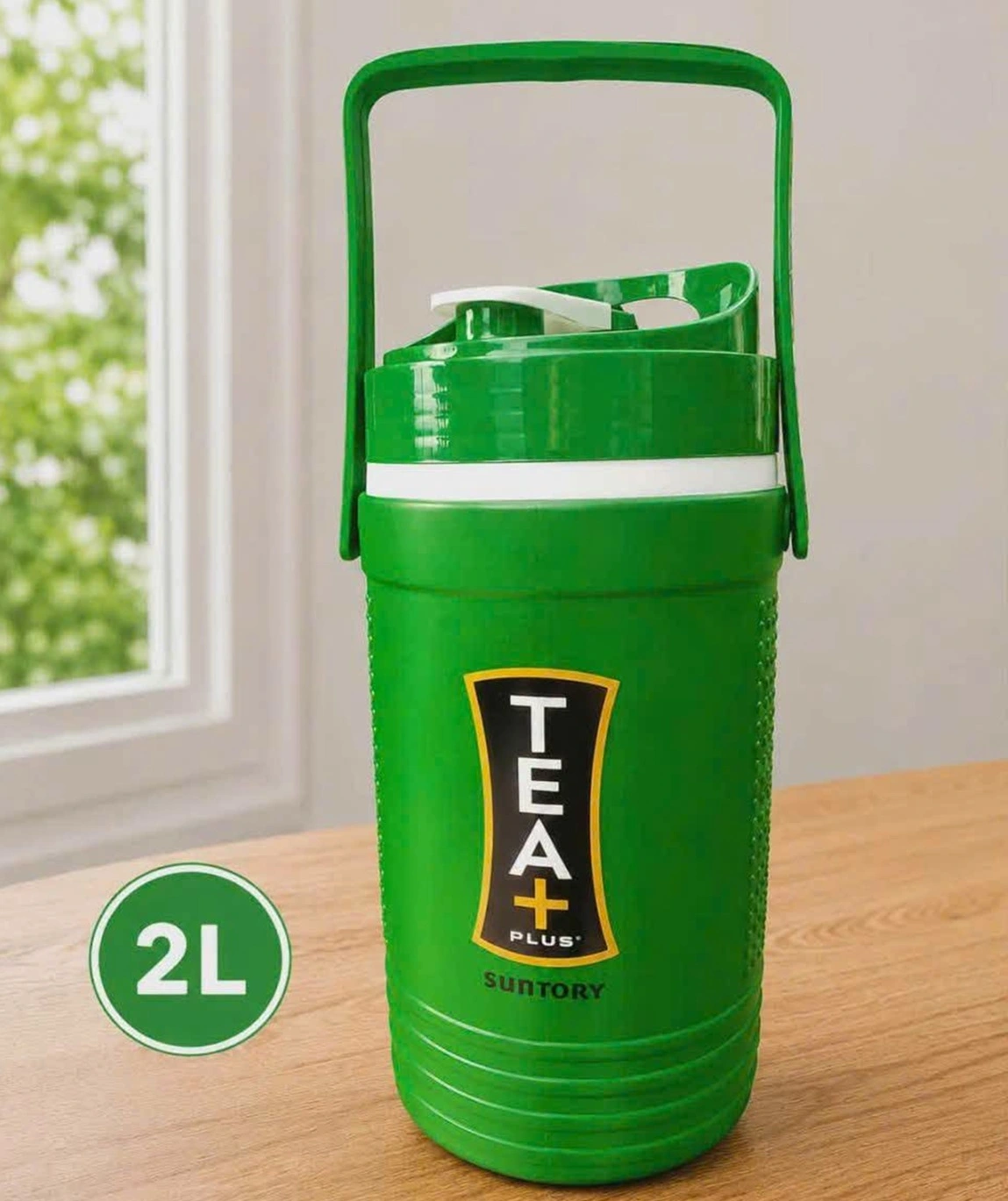
Consumers purchasing two multipacks receive a two-liter branded bottle.
The gift supports a practical household or on-the-go use case, while the purchase mechanic encourages volume.
The promotion succeeds because the product, gift, and qualifying purchase are easy to understand at a glance.
3. Wellness and Routine
Functional and wellness-led tea brands can use promotional products to support consistency.
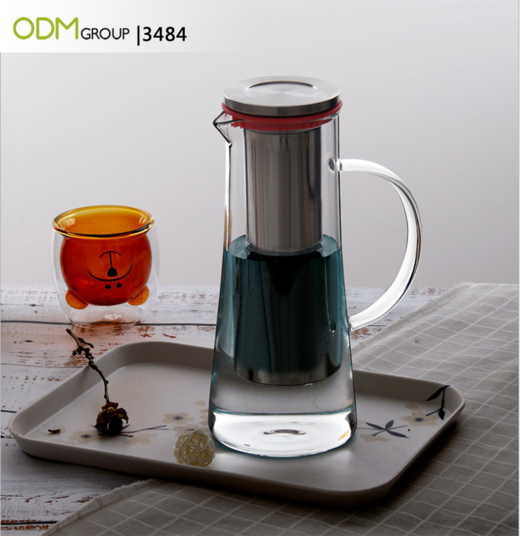
A brewing bottle, infuser, hydration tracker, portable cup, or tea organizer can reinforce the idea that the product is part of a daily habit.
The most effective campaigns avoid making exaggerated claims.
Instead, they help consumers build a routine around preparation and consumption.
4. Social and Collectible
Younger audiences may respond to limited-edition designs, collectible cups, character merchandise, color variations, or seasonal collaborations.
These campaigns can encourage repeat purchases, but the range should remain manageable. Too many designs can create confusion, while too little variation may not feel collectible.
The products should also be desirable without relying entirely on the brand logo.
Packaging Should Carry the Campaign Idea
Packaging is more than a container. It is where product positioning, promotional value, gifting, and retail communication come together.
Strong tea packaging should quickly answer several questions:
This becomes especially important when the campaign contains several components.
A tea-and-glass set should look like one complete offer rather than two unrelated products placed together. A multipack promotion should make the purchase mechanic visible without overloading the design.
Structure matters as much as graphics.
A clear window can reveal the gift. Internal compartments can keep the products organized. A carry handle can improve convenience. A seasonal sleeve can refresh an existing pack without requiring a complete redesign.
The goal is not to add more decoration. It is to make the campaign easier to understand and more appealing to pick up.
Make POS Displays Work Harder
A POS display should do more than hold stock. It should attract attention, explain the promotion, and help shoppers make a decision.
Tea brands often have only a few seconds to communicate an offer. The display therefore needs a clear hierarchy.
Shoppers should quickly notice:
- The tea brand
- The main campaign message
- The qualifying purchase
- The promotional gift or benefit
When every message receives equal emphasis, the display becomes difficult to process.
A simple hierarchy makes the campaign easier to understand from a distance.
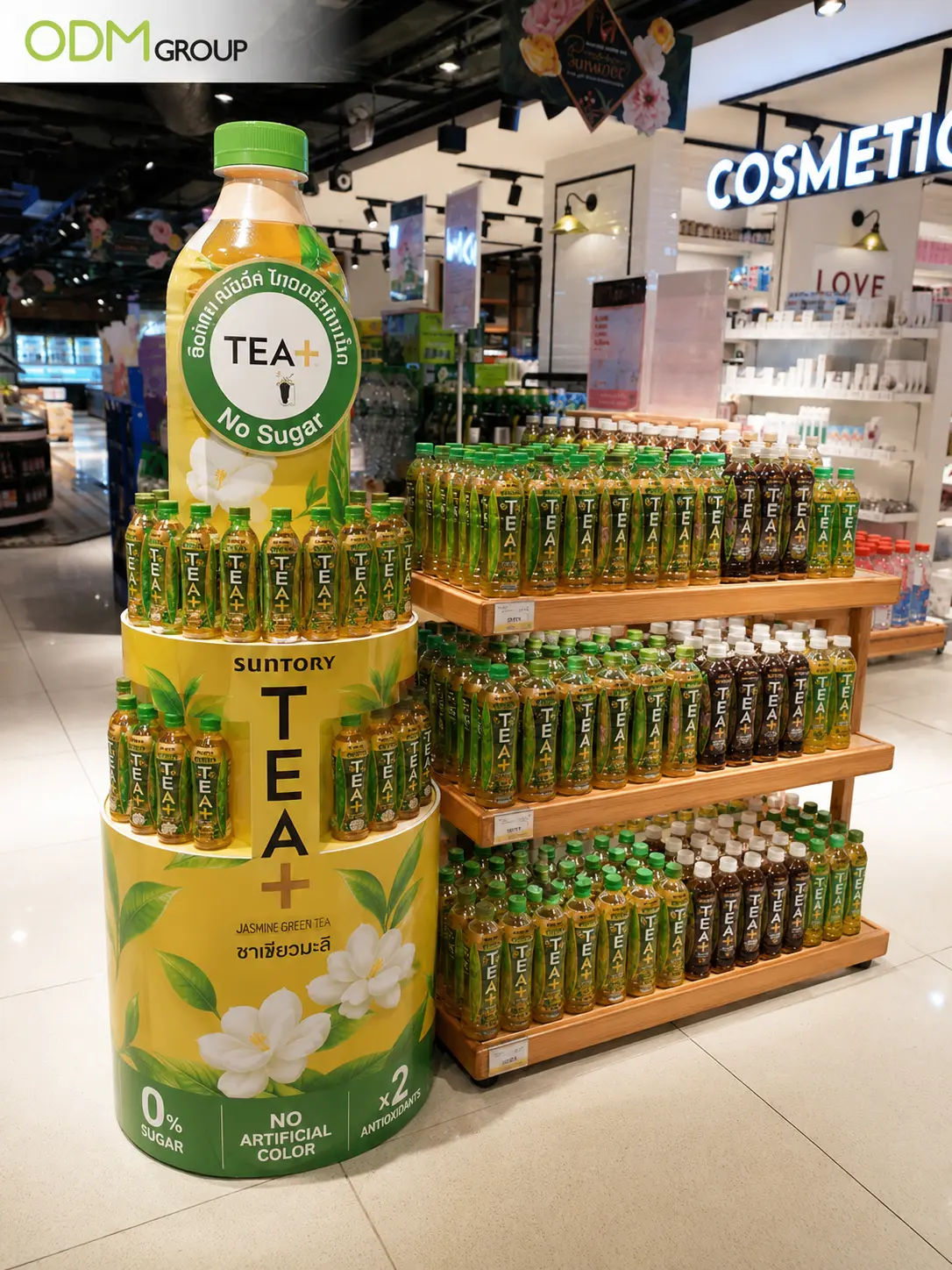
Displaying the actual promotional product can also strengthen the offer. Shoppers can judge its size, material, and usefulness more easily than they can from a small printed image.
The display can also help create a consumption occasion.
A premium range may use visual cues associated with gifting or afternoon tea. A bottled tea promotion may focus on travel, refreshment, or outdoor use. A wellness brand may create a calmer and more organized retail presentation.
The display should help consumers picture the product in use.
More Tea Marketing Ideas
Check out these beau-TEA-ful product packaging ideas for tea products by Basilur tea. We spotted them during our trip to Sri Lanka. From the packaging itself, we can see that their tea is world class!
Battler Tea is winning a lot of shoppers thanks to their iconic tea packaging designs. We certainly love the colors and the patterns used in each canister. Furthermore, the containers come in bespoke shapes.
For this GWP promotion, Ahmad Tea offers shoppers the chance to get its iconic Fenjan tea glass in every purchase of its English Breakfast tea variant.
With a wide selection of beverage promotions, Trà Ô Long TEA+ keeps creating a buzz in Vietnam stores. Here are the reasons why.
How ODM Supports Tea Marketing Campaigns
ODM Group works with tea brands seeking a strategic partner to align promotional products, packaging, and POS displays around a single campaign direction.
Our role begins with the marketing objective. We help brands consider how the promotional product supports the tea’s positioning, how the packaging presents the full offer, and how the POS display communicates it in the intended retail environment.
By developing these elements together, brands can create campaigns that feel more coherent and relevant rather than combining unrelated components late in the process.
Whether the objective is to increase multipack sales, support a seasonal launch, strengthen premium positioning, or create a more visible retail experience, ODM helps turn the campaign idea into a practical and consistent execution.
More Ideas


FAQs about Tea Marketing
Which promotional products work well for tea brands?
Options include cups, glassware, tumblers, reusable bottles, tea tins, infusers, serving trays, organizers, and practical lifestyle accessories. The right choice depends on the audience, product format, and brand positioning.
How can packaging support tea marketing?
Packaging can present the tea and gift as one clear offer, explain the purchase mechanic, improve shelf visibility, and make the product more suitable for gifting or seasonal campaigns.
Why are POS displays important for tea promotions?
POS displays help shoppers notice and understand the campaign quickly. They can highlight the qualifying product, show the promotional gift, and create a stronger visual story around the offer.
How can ODM help tea brands develop a campaign?
ODM helps tea brands align the promotional product, packaging, and POS display with the wider marketing strategy. This creates a more consistent retail experience from the initial concept through to campaign execution.
Latest Blogs
Event Branding Ideas: Make Every Touchpoint a Brand Experience
Event branding ideas turn separate venue elements into one [...]

Waterproof Camping Blanket: Take Your Brand Into the Outdoors
A waterproof camping blanket gives brands a useful role [...]
Custom Letter Envelope Opener Ideas for Corporate Gifts
A letter envelope opener may be a simple desk [...]
LED Screen Backpack: Smart Walking Billboards for Campaigns
Static outdoor signage and traditional promotional merchandise [...]
Marketing Gift Game Ideas to Connect Teams Through Play
A marketing gift game can offer much more than [...]

Food Cooling Fan: Make Your Brand Mascot Part of the Meal
A food cooling fan may seem like a simple [...]