
Chinese New Year 2027 falls on Saturday, 6 February, bringing temporary factory closures and potential manufacturing delays across China.
For businesses sourcing promotional products, custom packaging, corporate gifts, and retail displays, preparation should begin well before the holiday.
ODM recommends three key alerts: November 2026 for the three-month shutdown warning, December 2026 for major factory slowdowns, and 1–15 February 2027 for the Chinese New Year disruption period.
Understanding these timelines can help businesses secure production capacity, avoid delays, and keep projects on schedule.
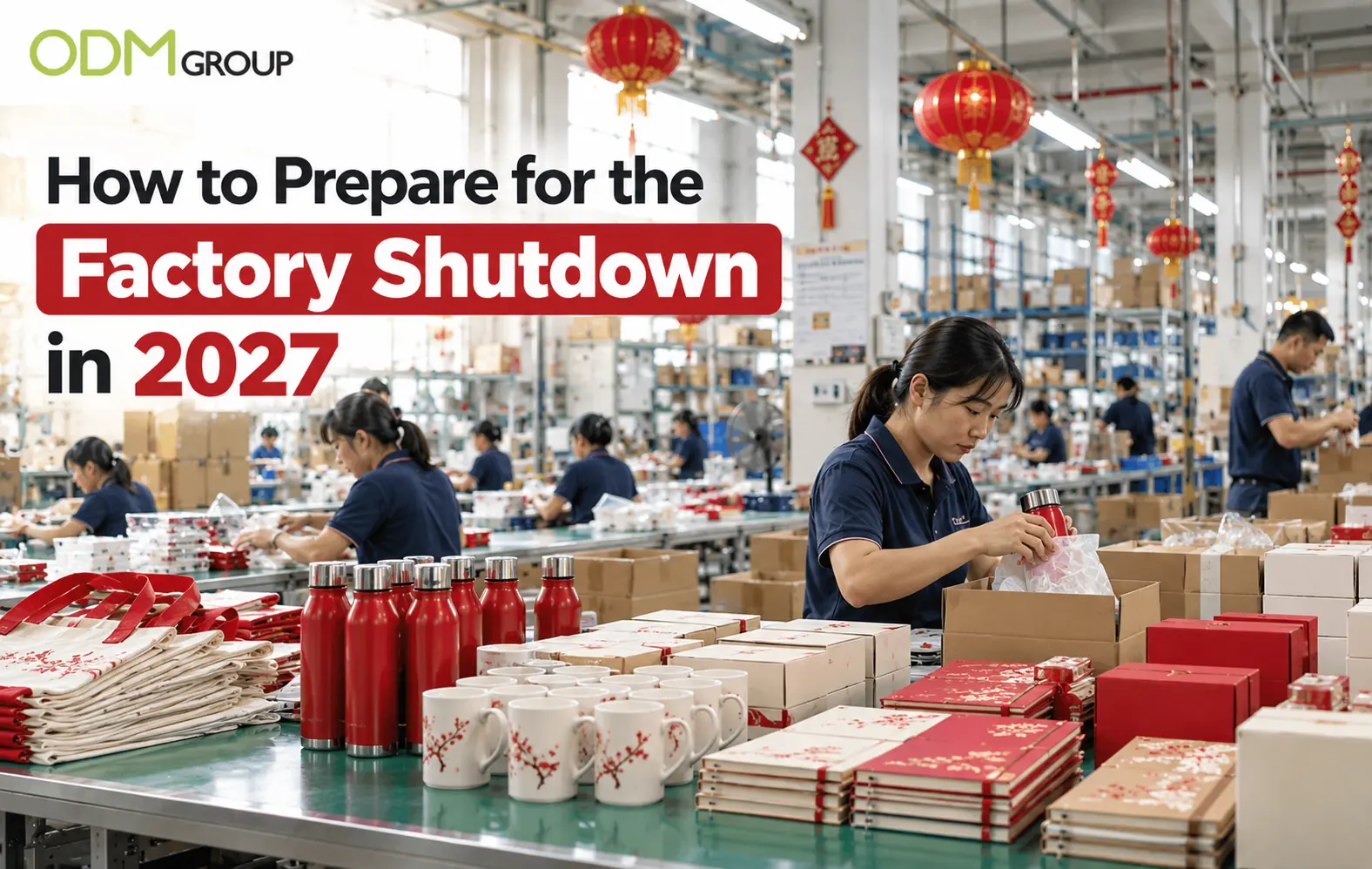
China Factory Shutdown Schedule for Chinese New Year 2027
Chinese New Year factory shutdowns do not follow one universal schedule. Closing and reopening dates depend on the factory’s location, workforce, production capacity, order backlog and business arrangements.
However, businesses sourcing products from China should prepare well in advance. ODM recommends following a three-stage alert system to anticipate manufacturing disruptions in 2027.
| Alert period | Expected situation | Recommended action |
|---|---|---|
| November 2026 | Three-month alert before the expected full shutdown | Start product development, confirm requirements and secure production capacity |
| December 2026 | Two-month alert before major factory slowdowns | Finalize samples, approve orders and confirm manufacturing schedules |
| 1–15 February 2027 | Chinese New Year disruption alert | Anticipate factory closures, reduced production and logistics disruption |
November 2026: Three-Month Factory Shutdown Alert
November is the time for businesses to begin preparing for the Chinese New Year manufacturing shutdown.
Companies planning promotional merchandise, custom packaging, corporate gifts or retail displays should already be discussing their requirements with their manufacturing partners.
Starting early provides more time for product development, sampling, material sourcing and production planning.
Businesses should use this period to:
- Finalize product concepts and specifications.
- Confirm manufacturing requirements and estimated lead times.
- Approve prototypes and samples where possible.
- Discuss material availability with suppliers.
- Identify orders that must be completed before the holiday.
- Secure production capacity for important projects.
December 2026: Two-Month Major Slowdown Alert
By December, factories may begin experiencing increased production pressure as businesses rush to complete orders before the holiday.
Some suppliers may have limited capacity for new projects, particularly those involving complex customization, specialized materials or multiple production stages.
This is an important deadline for confirming purchase orders, approving samples and finalizing product specifications.
Businesses should prioritize:
- Confirming purchase orders and production slots.
- Completing outstanding sample approvals.
- Finalizing artwork, packaging and branding requirements.
- Monitoring production progress.
- Arranging quality inspections and freight bookings.
Avoid leaving important production decisions until January, when available manufacturing capacity may be more limited.
1–15 February 2027: Chinese New Year Factory Shutdown Alert
The first half of February should be treated as a major manufacturing disruption period.
Chinese New Year falls on 6 February 2027, and many factories are expected to suspend operations around the holiday. Some may close before the official celebration, while others may take additional time to resume normal production.
Buyers should anticipate:
- Temporary suspension of production.
- Reduced availability of factory personnel.
- Delays in material sourcing and component deliveries.
- Limited communication and order processing.
- Disruptions to cargo collection and shipping arrangements.
The exact shutdown and reopening dates will depend on individual factory schedules. Buyers should confirm these directly with their manufacturing partners rather than assume every factory will close and reopen on the same dates.
Why Do Chinese Factory Close Before the Official Holidays?
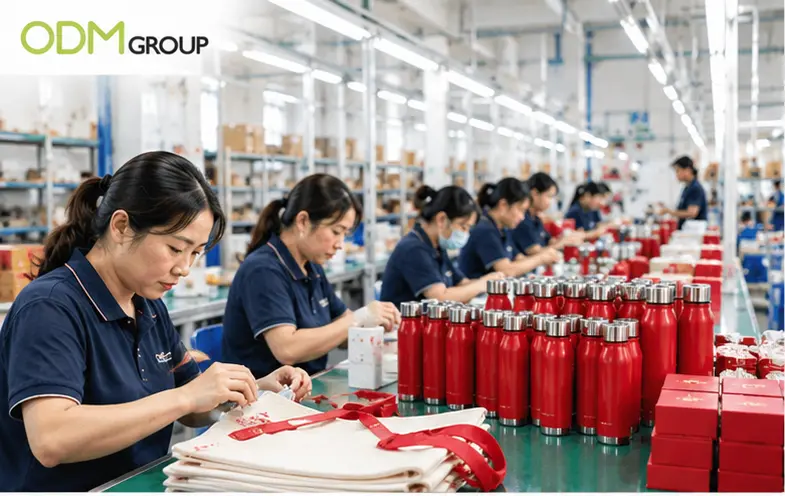
One common mistake among international buyers is assuming that manufacturing continues normally until Chinese New Year begins.
In reality, several factors can affect production weeks before the official holiday.
1. Workers Travel Home Early
China has a large manufacturing workforce, with many employees traveling from different provinces to work in industrial centers.
Chinese New Year is an important opportunity for workers to reunite with their families. As a result, some employees begin travelling home before the official holiday.
This can gradually reduce available labor in factories, affecting assembly, printing, finishing, packaging and other production processes.
Factories with labor-intensive operations may experience a more significant slowdown.
2. Raw Material Suppliers Reduce Operations
Custom product manufacturing often involves several suppliers working together.
For example, a branded promotional gift may require plastic components, metal fittings, printed packaging, fabric accessories, and customized labels.
Even if the main factory remains operational, production can be delayed if one of its material suppliers has already closed.
Businesses developing customized merchandise should confirm the availability of all essential materials before production begins.
3. Production Backlogs Increase
Many international buyers want their orders completed and shipped before Chinese New Year.
As a result, factories may experience an increase in orders towards the end of the year. Production schedules become tighter, and businesses that confirm their requirements late may struggle to secure their preferred manufacturing slots.
This is particularly challenging for products that require mould development, multiple sampling stages or complex assembly.
4. Shipping and Logistics Become More Congested
Factory closures are not the only concern. Logistics providers also experience increased demand as businesses try to move their goods before the holiday.
This can affect:
- Container availability and vessel bookings.
- Freight rates and shipping schedules.
- Trucking availability between factories and ports.
- Warehouse capacity and cargo handling.
- Customs processing and export documentation.
Businesses should arrange shipping early rather than waiting until production is complete to discuss transportation.
How Chinese New Year 2027 Affects Custom Product Manufacturing
The impact of factory closures depends on the type of product being developed. Some orders are relatively straightforward, while others require several stages of design, engineering and production. Here are some examples of projects that need additional planning.
Promotional Products and Corporate Gifts
Custom promotional products often involve branding, material selection, printing, engraving or other decoration processes.
A simple branded notebook may require less development time than a customized electronic gift or a specially engineered promotional item.
For businesses preparing marketing campaigns, corporate events or seasonal giveaways, production delays can affect the availability of merchandise when it is needed most.
Custom Packaging
Packaging projects may involve structural design, material sourcing, printing, prototyping and assembly.
For example, a custom-shaped gift box may require several rounds of sampling before the structure and finishing are approved.
If the packaging factory or printing supplier closes before the main production facility, the entire project may be delayed.
Retail Displays and Point-of-Sale Materials
Retail displays often involve multiple materials and manufacturing processes, including metal fabrication, acrylic components, printing, lighting and assembly.
These projects require careful coordination because different components may come from different suppliers.
A delay in one component can prevent the complete display from being assembled and delivered on time.
Custom Molded Products
Products requiring specialized molds or tooling need additional preparation.
The process may involve industrial design, engineering drawings, mould development, sample production, testing and revisions.
Businesses planning these products should begin well ahead of the Chinese New Year shutdown rather than relying on last-minute production.
How to Prepare for Chinese New Year Factory Shutdowns in 2027
The best way to minimize disruption is to incorporate the holiday into your product development and procurement schedule from the beginning. Here are six practical steps businesses should consider.
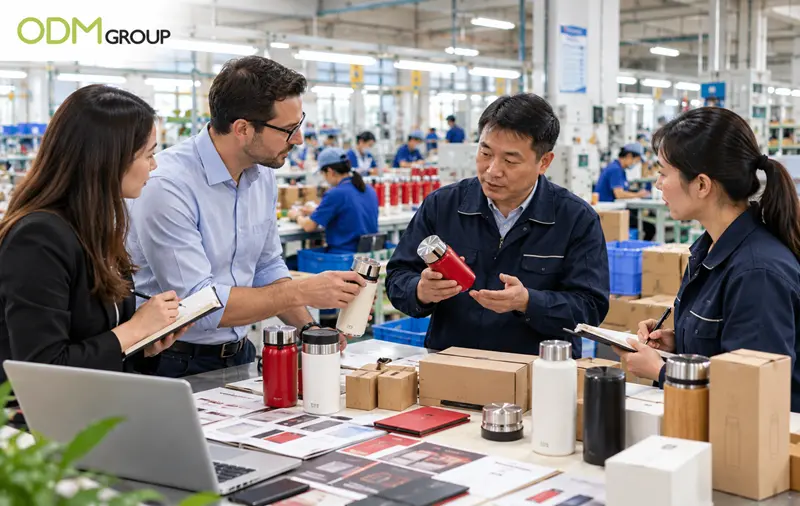
Begin discussing your product requirements with your development and sourcing partners during the second half of 2026. This provides sufficient time to explore product concepts, assess manufacturing feasibility, compare materials and prepare quotations.
For customized merchandise, early planning also allows time to address design changes before production capacity becomes limited.
Avoid making major changes once mass production has started. Confirm the following before approving an order:
- Product dimensions and specifications.
- Materials, colours and finishes.
- Branding artwork and placement.
- Packaging requirements.
- Production quantities.
- Quality standards and inspection criteria.
Clear specifications help reduce misunderstandings and minimise the risk of costly production revisions.
Sampling is an important stage in custom product development. It allows businesses to assess the product’s appearance, functionality, construction, materials and branding before committing to full production.
For more complex products, allow additional time for revisions and re-sampling. Do not assume that a factory can accommodate last-minute sample changes immediately before its holiday closure.
Ask your manufacturing partner to provide a detailed holiday operating schedule. This should include:
- Last date for accepting new orders.
- Final date for material purchasing.
- Sample approval deadline.
- Last production date.
- Final quality inspection date.
- Last shipment or cargo collection date.
- Official factory closing date.
- Expected reopening date.
- Estimated date for normal production capacity to resume.
These details provide a more realistic foundation for project scheduling.
Quality inspections should be included in the production timeline rather than treated as an optional final step. If goods are completed shortly before the factory closes, there may be limited time to identify and correct defects.
Depending on the product, consider:
- Pre-production checks to confirm materials and approved specifications.
- During-production inspections to identify problems early.
- Final random inspections before shipment.
- Packaging and quantity verification.
For orders that cannot be completed before the holiday, arrange a suitable inspection plan for the post-holiday production period.
Once the production schedule is established, coordinate with your logistics provider to determine the most suitable shipping arrangement. Consider the destination, required delivery date, cargo volume, shipping method and available freight capacity.
If products are needed for a fixed campaign launch, trade show or retail promotion, build contingency time into the delivery schedule. Avoid relying on the earliest estimated arrival date when planning time-sensitive activities.
What Happens When Chinese Factories Reopen?
The end of the official holiday does not necessarily mean that every factory immediately returns to full production.
Employees may return at different times, and some factories need additional time to rebuild their normal workforce.
Businesses may also encounter:
Production backlogs: Factories need to process orders that accumulated during the holiday period.
Reduced workforce availability: Some employees may return later than others, affecting production capacity.
Material supply delays: Suppliers and subcontractors may also be working through their own backlogs.
Quality considerations: Production teams should verify that materials, equipment, approved samples and manufacturing specifications remain consistent after the break.
For this reason, businesses with orders scheduled after Chinese New Year should confirm revised production dates and maintain appropriate quality checks.
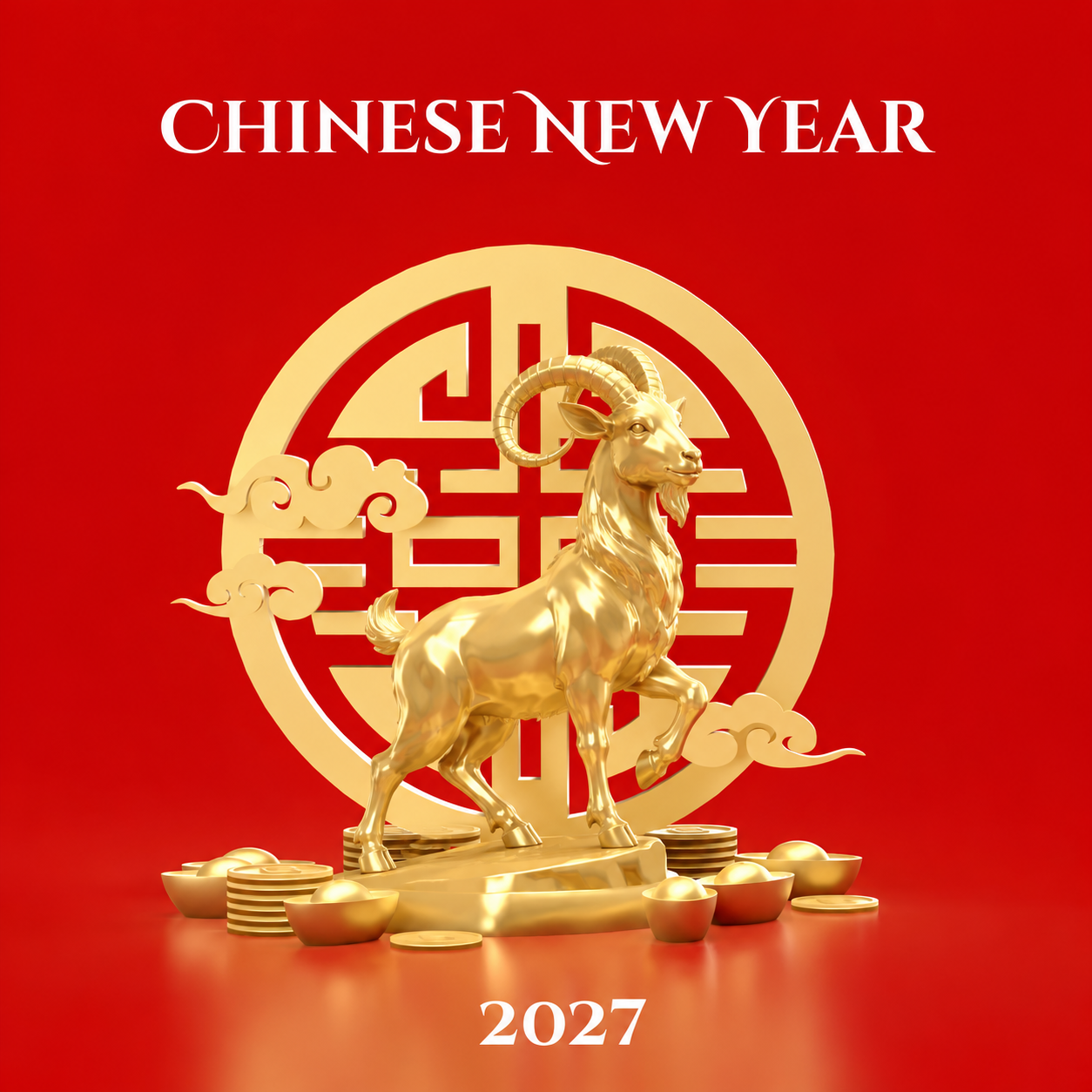
Introducing Our Goat Socks
The Goat is the eighth of the 12 animals in the Chinese zodiac, symbolizing creativity, kindness and a gentle nature. People born in the Year of the Goat are traditionally associated with qualities such as compassion, imagination and a love of harmony.
Our socks feature Gary, our iconic character for 2027 – the Goat!
Our Year of the Horse socks are a fun and memorable way to celebrate the Chinese New Year, stand out from the crowd, and make a lasting impression on your target audience!

Plan Your 2027 Product Development Projects with ODM
Chinese New Year factory shutdowns are a predictable part of the manufacturing calendar, but their impact on individual projects can vary considerably.
For businesses developing promotional merchandise, branded packaging, corporate gifts and retail displays, the key is to plan beyond the factory’s official closing dates.
Product development, material sourcing, sampling, production, quality inspections and shipping must all be considered when establishing a realistic delivery schedule.
At ODM, we help businesses turn product ideas into commercially viable merchandise through creative development, industrial design, factory coordination, quality assurance and delivery management.
Whether you are preparing a promotional campaign, launching a new product, or developing customized retail displays, our team can help coordinate the process and plan around important manufacturing deadlines.
Plan Ahead For Other Chinese Holidays
Chinese New Year may be the most significant holiday, but other Chinese holidays could affect your business. Make sure to check them out below.
February – Lunar New Year

April – Qing Ming Festival

May – Labour Day


September – Mid-Autumn Festival

October – The Golden Week
Get ready for the Chinese New Year! Check out our list of Year of the Goat merchandise.
If you are interested to learn more about the manufacturing process in China, you might love to read through this case study.
From the struggles of entering the Asian Supply Chain, the reasons why you should consider manufacturing in Asia and how can we help you in the entire process will be tackled here.
Tet Festival: The Vietnamese New Year
Tet Nguyen Dan is the most important and widely celebrated public festival of the year in Vietnam. It is the occasion for the Vietnamese to express their respect for their ancestors as well as welcome the Lunar New Year with their friends and family members.
Tet falls on the first night of the new moon in the first month of the Lunar Calendar, which in the Gregorian calendar usually takes place between the last week of January and the third week of February.
For the year 2026, Tet will also fall on Tuesday, February 17th. Though there is a one-hour time difference between Vietnam and China, this can sometimes cause alternate calculations of when the new moon occurs.
Since the majority of our staff are now headquartered in Vietnam, we would also like you to be aware of this holiday. It is important to take note that most of the country will close down for Tet.
The local transport services are stretched to the limit and international flights will be very busy catering to Vietnamese people returning home from overseas for Tet. This means that it will also be a critical time for retailers and manufacturers, thus you should also plan ahead of time if you are sourcing products from the country.
Here’s an insightful blog about our recent visit to one of the manufacturing factories in Vietnam. In this trip down, we see the significance of industrial factory tours and quality control checks to more readily oversee product creation and client satisfaction.
Chinese New Year Frequently Asked Questions
All you need to know about Chinese New Year!
When is Chinese New Year 2026?
Chinese New Year in 2026 falls on February 17th.
What are the Chinese Zodiac Animal for 2024 and 2025?
In 2026, the zodiac animal is the Horse, according to the Chinese zodiac cycle.
Why Are Factories Closed for The Chinese New Year?
For most factory workers, this is the only time of the year when they see their families. Not to mention the long journey they have to make before reaching their homes, primarily from the remote and rural areas of this vast country. Consequently, it causes them to leave way before the holiday officially begins.
What Should We Do Before the Factory Shutdown?
Despite all the issues that you might encounter, there is still a way to reduce the impact of the Chinese New Year shutdown on your business. Setting up your game plan or simply planning for the upcoming public holiday this early can bring you surprising advantages and save you from the predicament.
Read More About China:

Contract Manufacturing in China: Which Province for What Products?
Contract manufacturing, also known as outsource manufacturing, is the practice of having products manufactured by a company other than […]

Sourcing 101: Why Do You Need A Buying Agent In China?
Picture this, you’re a brand marketer looking at affordable promotional merchandise in China and you want to know more details […]

3 Reasons Why ODM is Your Preferred China Buying Agent!
Although China has the reputation of producing quality products at an incredibly low cost, but not all factories are quality […]

4 Reasons Why You Should Source Your Promotional Gift From China
Being the world’s most populous country has its own benefit. China is home to one of the most skilled and […]

Making Products In China: How Have Factory Conditions Improved?
The conditions for factory workers has long been a concern for people looking to produce their promotional products. Previously the […]

Power Crisis in China: How to Handle the Business Impacts of Stagnation?
Transforming the economic model, ensuring the harmony between economic development and environmental protection, and taking appropriate revolutionary steps are the […]

Trade Fair Marketing: How to Prepare for China Expos?
Spring is trade fair season in China. As usual, these events will see hundreds of exhibitors and attendees. We recently attended […]

WAREHOUSING IN CHINA: The Perfect Solution?
Improve business efficiency today with less time and money wasted. All done with warehousing in China! A ton of elements […]

10 Successful Promotional Products from China
Promotional products from China have shown big potential for branding and innovation, even for overseas brands. Even big tech […]

How Long Does it Take to Manufacture Products in China?
Many companies prefer to manufacture products in China for many reasons. Due to the low manufacturing and production costs, companies […]

Shipping Merchandise: Why are Shipping Costs from China Soaring?
Sea Freight is a popular option for shipping promotional products from China as it is more affordable and is recommended […]

Factors that Affect MOQ in China & How to Lower Order Quantity
MOQ in China is high and for good reason. If you are looking to manufacture promotional products in China, then […]