
Travel retail promotion is often treated as a visibility play. Products are placed, displays are installed, and brands hope to capture attention in busy transit environments.
But here’s the reality: Attention is not the problem. Engagement is.
Airports, duty-free stores, and transit hubs are high-intent environments. Consumers are already in a purchasing mindset. They have time to browse, a reason to buy, and often a willingness to spend more on items that feel exclusive or meaningful.
The brands that win in travel retail are not the most visible. They are the most relevant, interactive, and easy to take along for the journey.
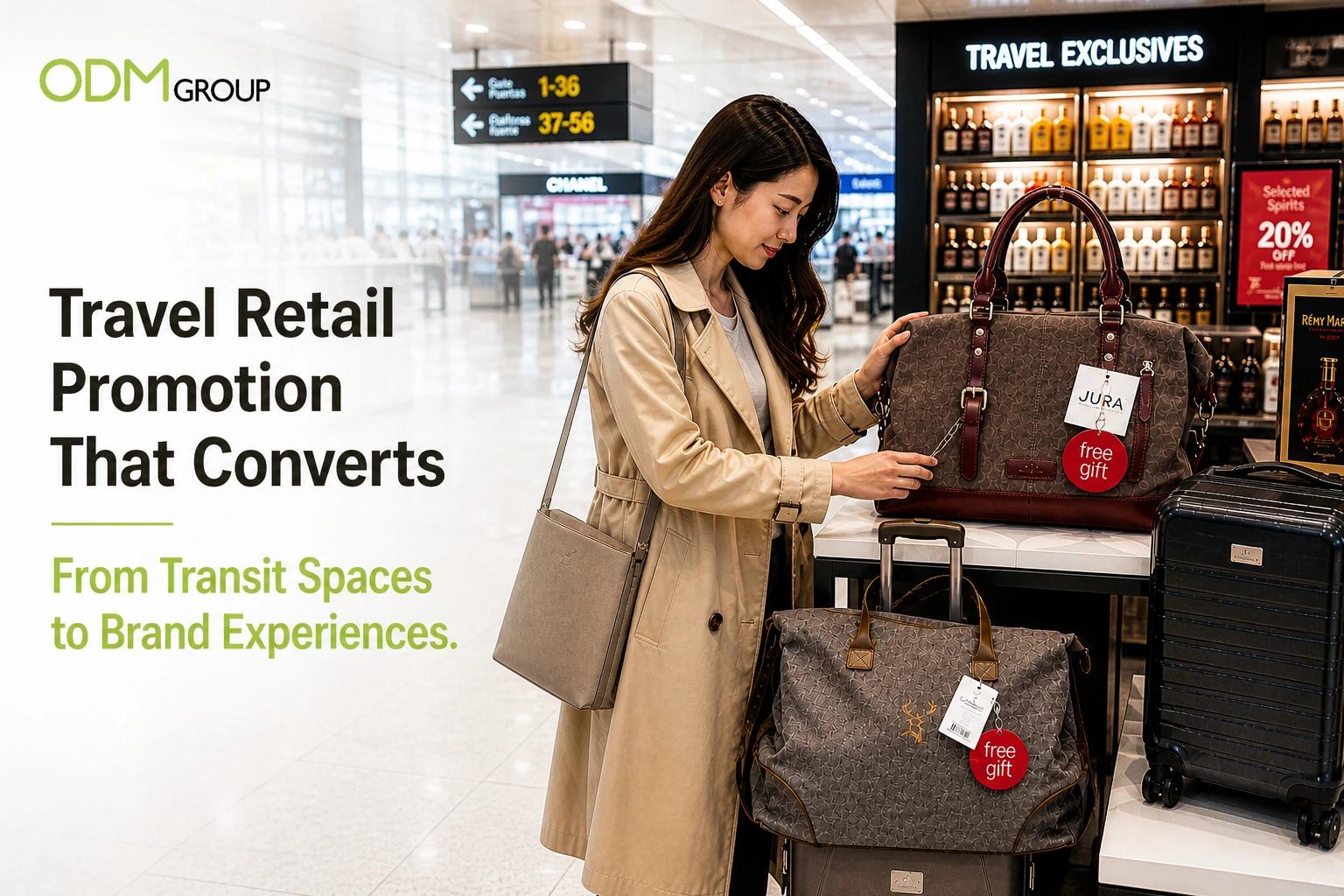
Where Travel Retail Promotion Actually Wins
Most strategies focus on store placement. But performance is driven by context, not just location.
1. Pre-Purchase Browsing Zones
This is where discovery happens. Travelers are open to exploring, especially when products feel unique or locally relevant.
2. Checkout and Impulse Areas
Quick decisions dominate here. Products must be easy to understand and immediately valuable.
3. Waiting Areas (Gates and Lounges)
Time slows down. This is where interaction matters—products that can be used or experienced instantly gain an advantage.
4. Cross-Border Gifting Mindset
Travelers often buy for others. Items that are easy to gift, carry, and explain perform significantly better.
The Shift From Visibility to Interaction
For years, travel retail promotion has been built around visibility—prime shelf space, bold displays, and high-traffic placement.
But visibility alone no longer guarantees results.
Travelers move quickly. Attention spans are short. And in an environment filled with competing brands, being seen is not enough to influence decision-making.
What drives impact today is interaction. Consumers expect more than passive exposure. They are drawn to experiences that allow them to:
- Touch and explore the product
- Try or engage with it in real time
- Take something memorable with them
This is where promotional products create a clear advantage over traditional displays.
A well-designed item does more than attract attention. It becomes part of the journey:
- It extends engagement beyond the retail space, continuing after the purchase
- It travels with the consumer, increasing exposure across multiple locations
- It reinforces brand recall through repeated use, not just a single impression
The result is a shift in how value is created. Instead of a moment of visibility, brands gain ongoing interaction and long-term presence.
What Makes a Travel Retail Product Actually Work
Instead of asking “What product should we use?”, the better question is:
1. Portability
If it’s bulky or inconvenient to carry, it becomes a problem, not a purchase. Travelers are already managing luggage, security restrictions, and limited space. Products that are compact, lightweight, and easy to pack remove that friction and feel like a safe choice at checkout.
2. Immediate Use
Products that can be used during the journey feel more valuable right away. Whether it’s something that improves comfort, solves a small travel need, or enhances the experience, immediate usability creates a stronger connection and reduces hesitation to buy.
3. Cultural Neutrality
Travelers come from everywhere. Simple, universal designs work better than niche ideas that rely on language, local references, or specific tastes. Clean visuals and practical functionality make the product easier to understand and more appealing across markets.
4. Giftability
Many people are buying for others, not just themselves. That means the product needs to feel appropriate as a gift—easy to carry, visually appealing, and premium enough to give without explanation. If it feels like something worth bringing home, it’s much easier to justify the purchase.
Campaign Thinking: From Single Item to Retail Experience
One of the biggest missed opportunities in travel retail promotion is treating products as standalone items.
Top-performing campaigns think in systems.
1. Build Product Kits
Combine multiple items into a cohesive travel set. This increases perceived value and creates a stronger brand story.
2. Create Location-Based Exclusives
Limited editions tied to specific airports or destinations encourage purchase urgency.
3. Introduce Collectability
Series-based products drive repeat engagement across multiple trips.
4. Integrate Digital Touchpoints
QR codes or NFC tags can connect users to:
- Promotions
- Loyalty programs
- Brand storytelling
This transforms a simple product into a multi-layered campaign tool.
Case Study: Gift-With-Purchase That Fits the Travel Mindset
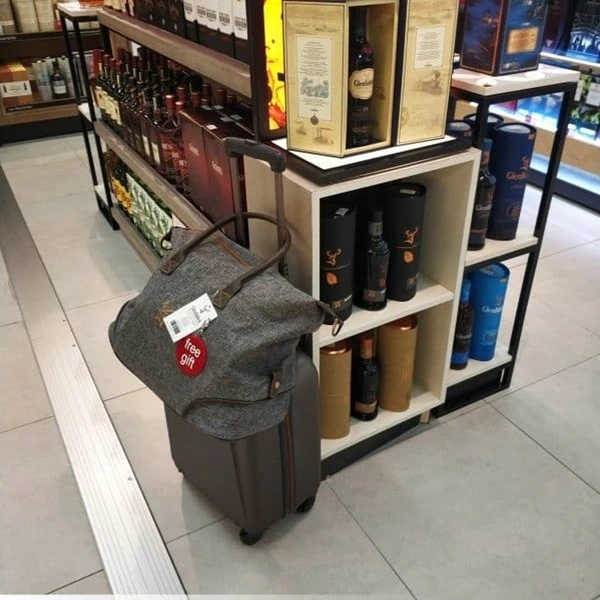
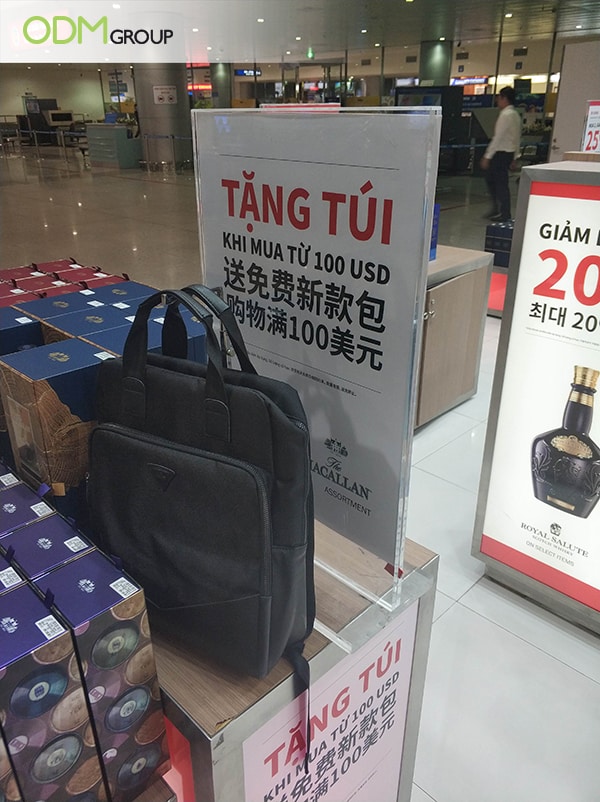
A strong example of effective travel retail promotion comes from premium spirits brands like Glenfiddich, Jura, and Rémy Martin, all of which offer custom travel bags as gift-with-purchase (GWP).
The mechanic is simple: Buy selected products and receive a trolley bag or tote bag as a reward.
But the success of this campaign is not in the offer itself. It’s in how well the product fits the travel environment.
Glenfiddich: Consistency and Gift-Ready Design
Glenfiddich offers a coordinated set of tote and trolley bags featuring its iconic stag logo.
The tote comes in a neutral grey tone, suitable for a wide range of travelers.
The result is a complete set that feels intentional, not promotional.
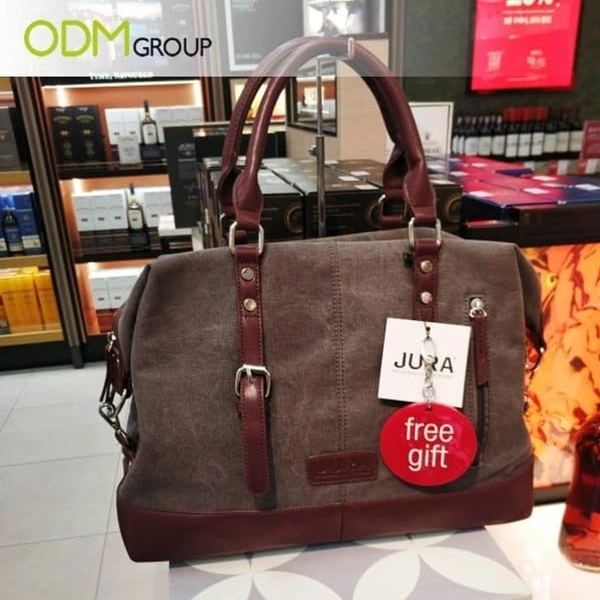
Jura: Subtle Branding, Premium Appeal
A minimum spend unlocks a travel tote in a muted burgundy tone. Leather trims and debossed branding elevate the perceived quality of the product.
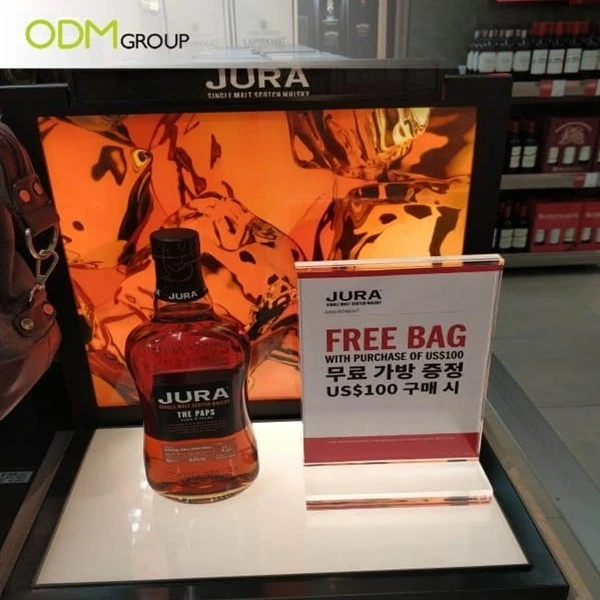
They also support the promotion with a custom counter display, using warm lighting and clear visual instructions to guide shoppers—especially important in a multilingual retail environment.

Rémy Martin: High-Value Incentive for High-Intent Buyers
Rémy Martin positions its GWP at a higher threshold, offering a sleek trolley bag for larger purchases.
The design is clean, durable, and aligned with premium travel expectations.
The product feels like a true companion for international travel, not just a giveaway
Final Thoughts: Travel Retail Is About Relevance, Not Just Presence
Travel retail works best when brands focus on relevance, not just visibility. Being present in a high-traffic environment is not enough if the product does not fit how people actually travel, shop, and make decisions.
The most effective campaigns are built around real behavior. Products need to be easy to carry, useful during the journey, and appropriate for gifting. When these elements come together, the promotion feels natural rather than forced.
This is what turns a simple retail moment into a lasting brand experience. Instead of being seen once, the product continues to travel with the consumer, creating repeated exposure over time.
Ready to Build a Travel Retail Campaign That Works?
If you are planning a travel retail promotion, the product is only one part of a much bigger system. The real impact comes from aligning product design, retail environment, and campaign strategy into one cohesive experience.
ODM Group works as a strategic partner, helping brands move from idea to execution. From concept development and product design to sourcing, production, and delivery, every step is built around how the campaign will perform in the real world.
Contact ODM Group today to create a travel retail campaign that goes beyond visibility.
ODM Services
Frequently Asked Questions
What types of promotional products work best in travel retail?
Portable, useful, and giftable items such as travel kits, drinkware, and compact accessories perform best.
Why do some travel retail promotions fail?
Common issues include poor product quality, lack of relevance to travelers, and overbranding.
How can brands increase engagement in travel retail?
Focus on interaction—use products that can be touched, used, or experienced immediately.
Is travel retail only for premium brands?
No. However, products must match the environment in quality and perceived value.
Can travel retail campaigns be measured?
Yes. QR codes, NFC, and digital integrations allow brands to track engagement and extend interaction beyond the purchase.
What to Read Next?

The Power of Brand Mascots: Benefits, Tips, and Examples
Brand mascots have become increasingly popular in the world [...]
How To Choose The Right Custom Travel Gifts for Your Brand?
Travelling opens up new experiences that usually leave a lasting [...]
Branded Souvenirs: Enhancing the Authenticity of Tourism Experiences
In an era where the tourism industry is continuously [...]
5 Quick Tips to Increase Sales with Custom Tourist Souvenir Ideas
People love receiving and buying customized memorabilia from the [...]
How Al Jaber Gallery Drive Foot Traffic With Tourist Souvenir Merchandise
It's pretty normal to see different types of bespoke [...]

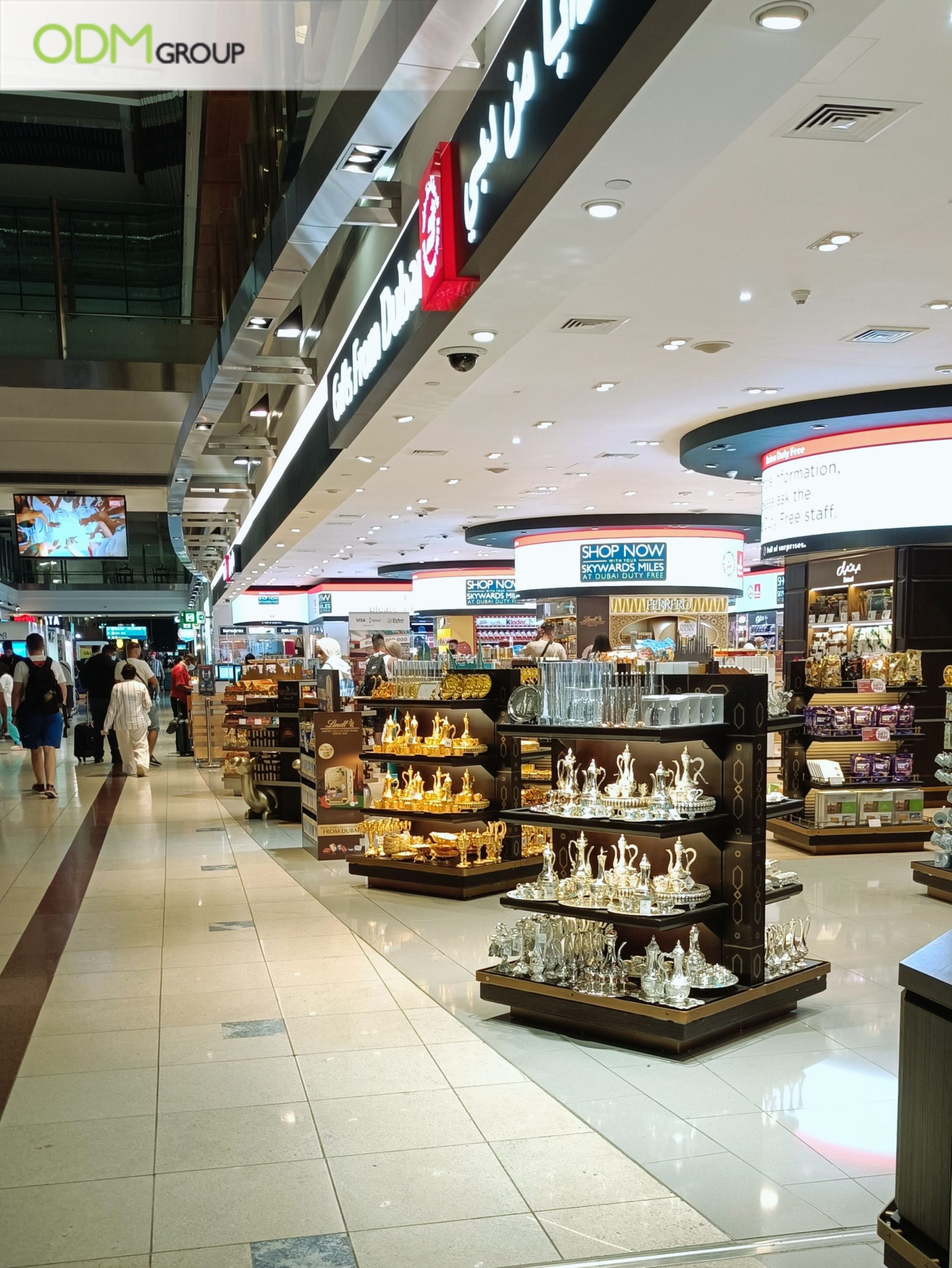
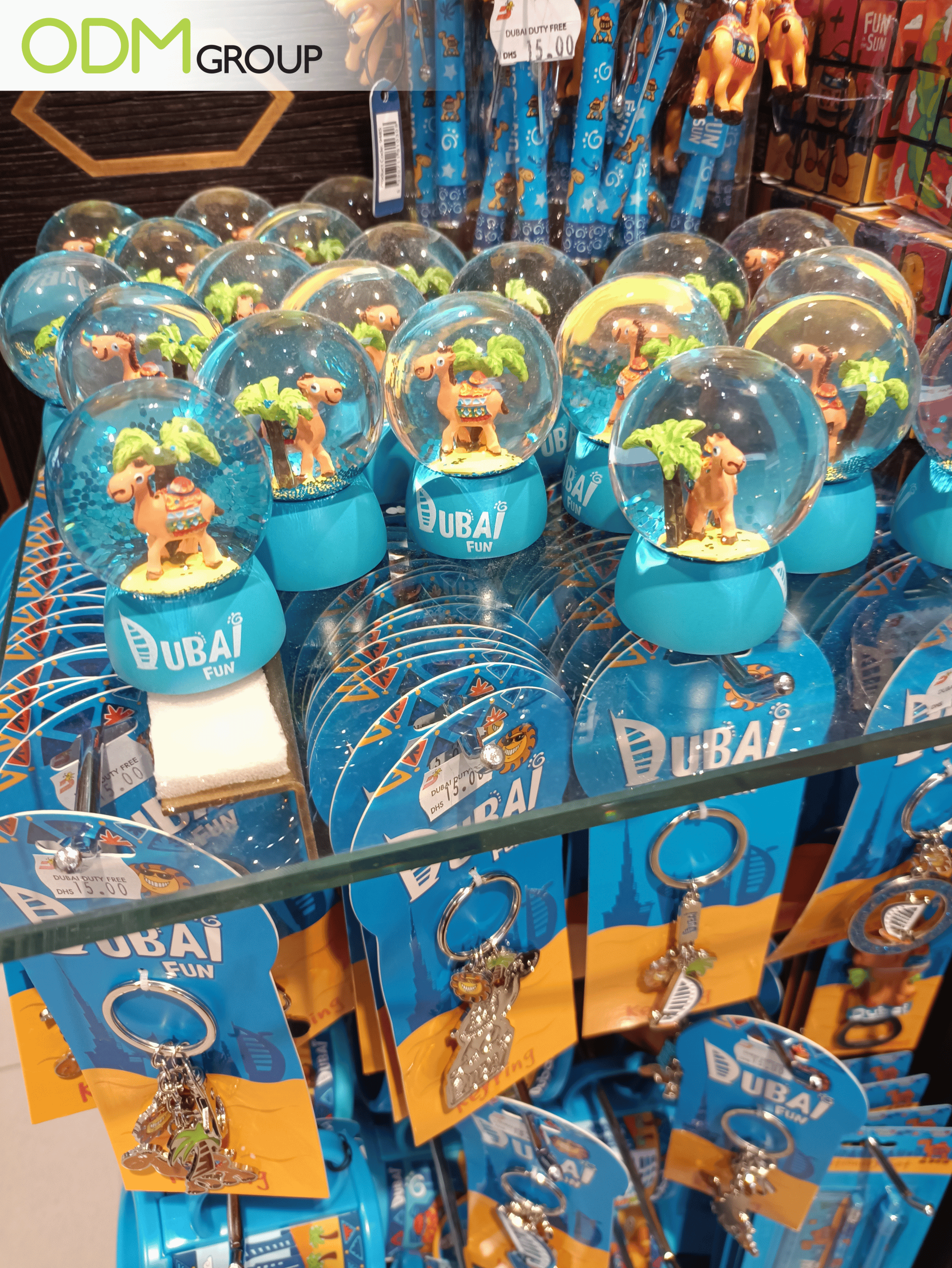
Travel Souvenir Ideas: 5 Tips on How to Attract Tourists to Your Business
The world is full of amazing destinations, and travellers [...]
Related posts:
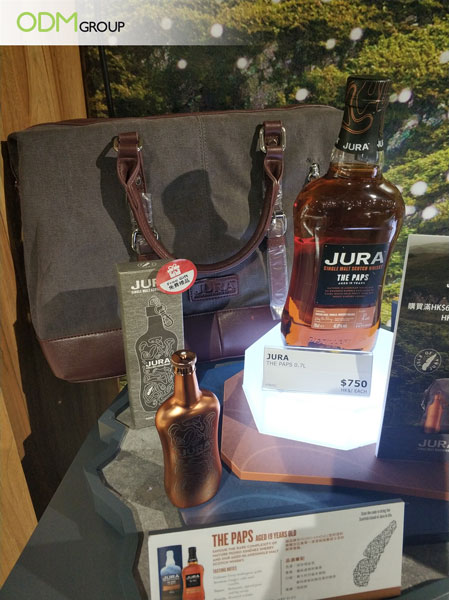 Travel Retail Merchandise- Jura GWP Turns Heads
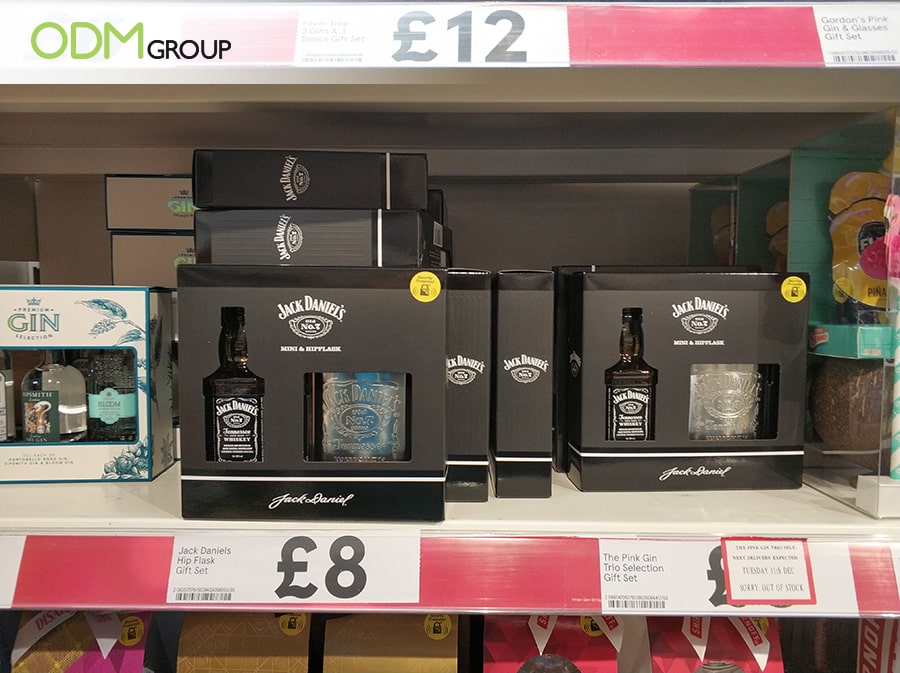 3 Surprising Ways Cardboard Beverage Packaging Drives Sales
 The Anatomy of an Effective Travel Retail Gift: Macallan GWP Bag
 Beauty Promotion: Why L’Oréal Travel Pouches Make a Smart Gift With Purchase
 Custom Printed Beer Glass: How Heineken GWP Drives More Sales In-Store?