
A branded packaging box has only seconds to communicate value. Yet appearance is only part of its job. The box must also protect the product, support the campaign, survive distribution, and remain practical to manufacture at the required quantity.
When these elements work together, packaging becomes more than a container. It creates anticipation, reinforces positioning, and gives customers a more memorable way to experience the product.
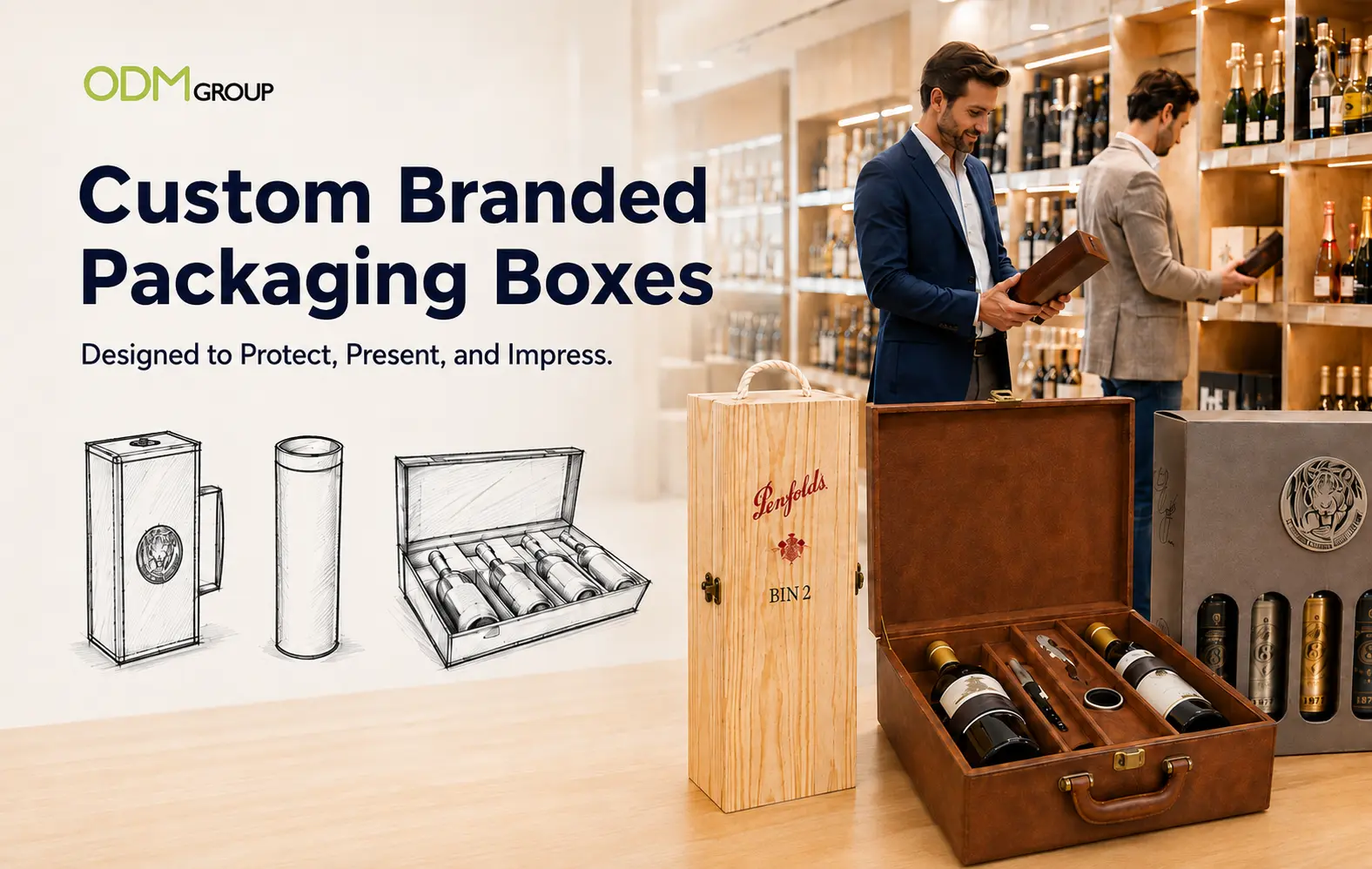
What Is a Branded Packaging Box?
A branded packaging box is packaging designed around a company, product, or campaign. It may use custom colors, graphics, logos, structural features, inserts, finishes, or opening mechanisms to create a distinct presentation.
Unlike a standard box with a logo added at the end, effective branded packaging is developed as a complete system. Its dimensions, materials, structure, graphics, and internal components should work together from the beginning.
Depending on the objective, a custom box can serve as primary packaging, a premium presentation case, a gift set, an influencer kit, a seasonal pack, or reusable packaging that remains useful after opening.
Why Invest in Custom Branded Packaging?
1. Strengthen Product Presentation
The packaging sets expectations before the customer sees or uses the product. A carefully developed box can communicate whether an item is premium, playful, technical, natural, collectible, or gift-ready.
2. Improve Perceived Value
Materials, structure, print quality, and opening experience can make a product feel more considered. This is particularly valuable for gift sets, limited editions, product launches, and products competing in visually crowded categories.
3. Protect the Product
Good packaging should reduce movement, abrasion, crushing, and other forms of damage during handling and transport. The outer box and internal insert must be designed together around the product’s dimensions, weight, and vulnerable areas.
4. Create a More Memorable Unboxing Experience
Layers, reveals, compartments, and opening mechanisms can guide customers through the contents. This makes the experience more engaging without relying on excessive material or decorative features.
5. Support a Specific Campaign
A branded box can unite several products under one story. It can introduce a new range, package a gift with purchase, deliver samples to media contacts, or turn a seasonal offer into a complete gift proposition.
7 Branded Packaging Box Ideas
1. Leather-Covered Bottle Box
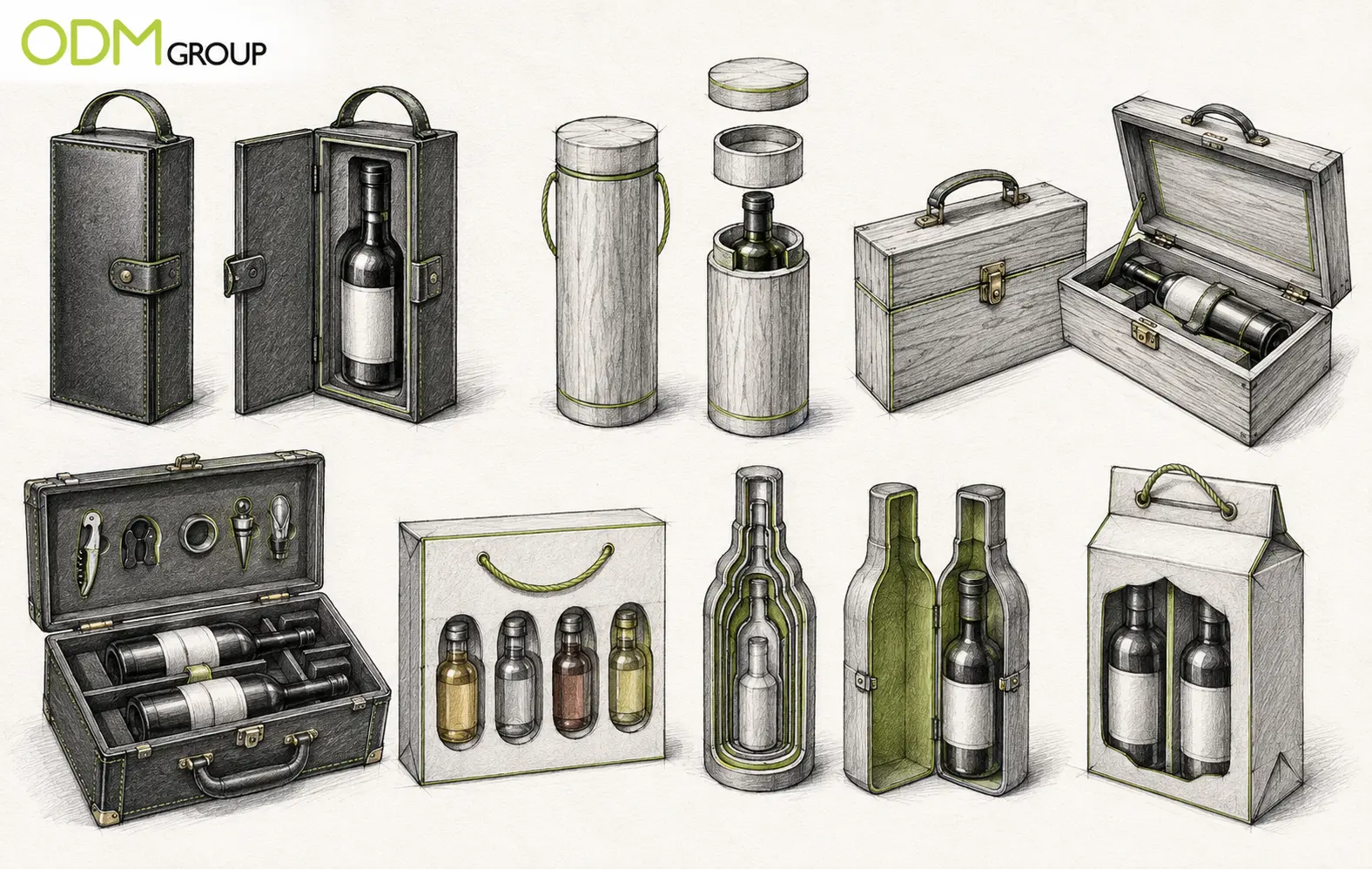
A leather-covered bottle box gives drinks packaging a refined, gift-ready appearance. In the featured example, contrasting black and brown surfaces, a structured handle, metal hardware, and a central medallion transform a protective case into a presentation piece.
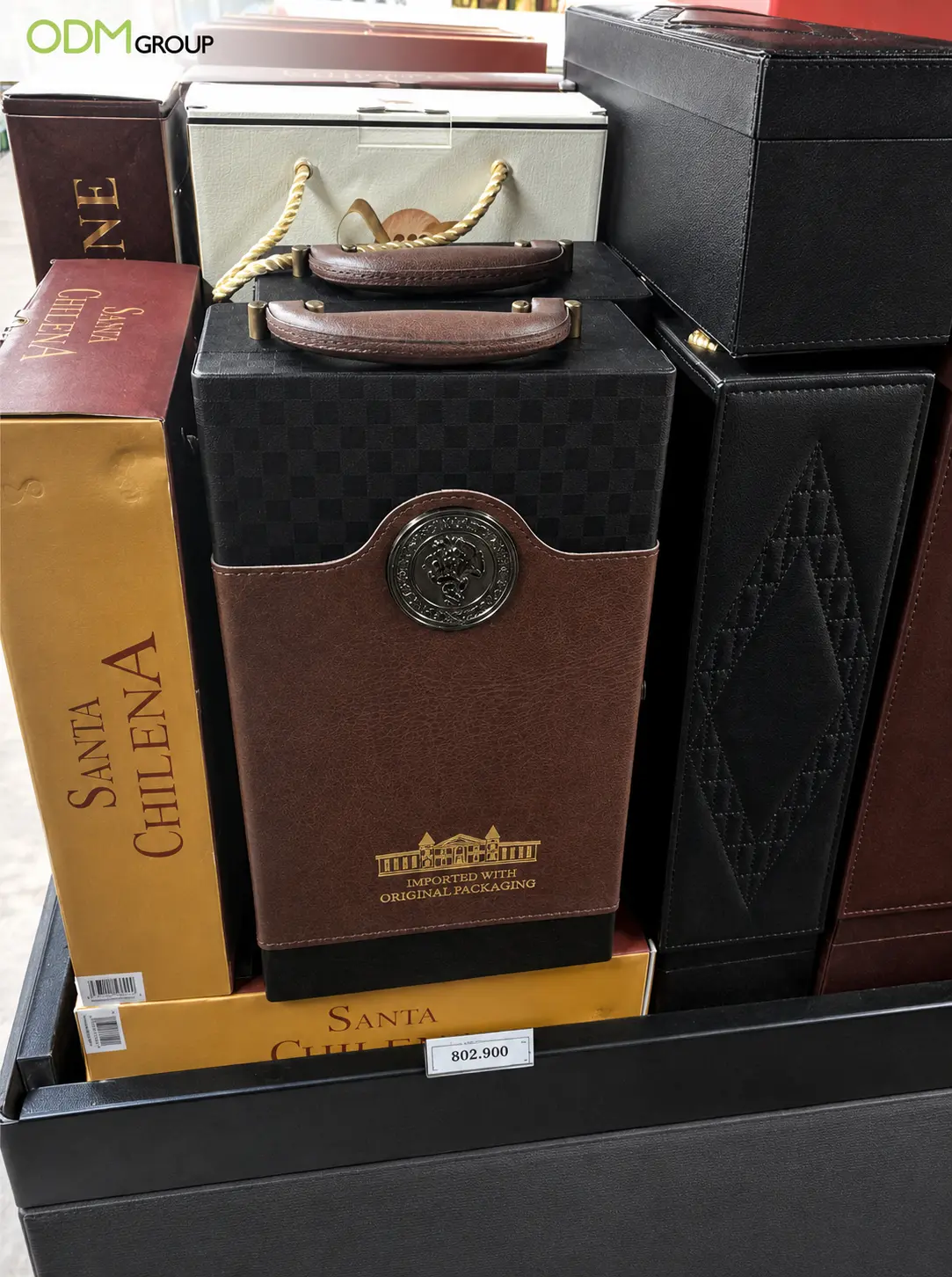
The covering may use PU, recycled-content synthetic material, bonded leather, or genuine leather, depending on the budget and positioning. Development must account for corner wrapping, stitching, handle strength, adhesive performance, surface consistency, and resistance to scuffing. A fitted internal insert should hold the bottle securely and prevent contact with the hardware.
Best for: premium wines and spirits, festive gifting, travel retail, VIP programs, and high-value purchase-with-purchase campaigns.
2. Cylindrical Wooden Bottle Tube
Cylindrical wooden packaging creates a distinctive alternative to a conventional rectangular box. Its tall profile follows the bottle shape, while engraving or printing can turn the exterior into a strong branding surface.
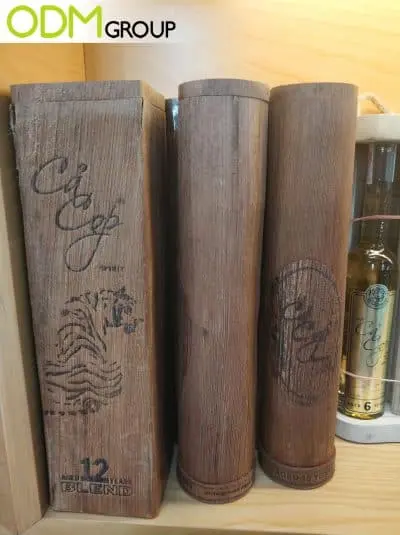
The body may be produced from solid wood, veneer-wrapped board, plywood, or an engineered wood composite. The lid must fit securely without becoming difficult to remove. Wall thickness, moisture content, surface finishing, internal cushioning, and dimensional consistency are important production considerations.
Best for: whisky, wine, specialty spirits, commemorative bottles, and nature-led or heritage brand campaigns.
3. Wooden Hinged Wine Case
A wooden hinged wine case delivers a substantial presentation and can remain useful for storage after the bottle is removed. The light-wood example uses a vertical format, carrying handle, metal clasps, and prominent front branding to create a recognizable gift pack.
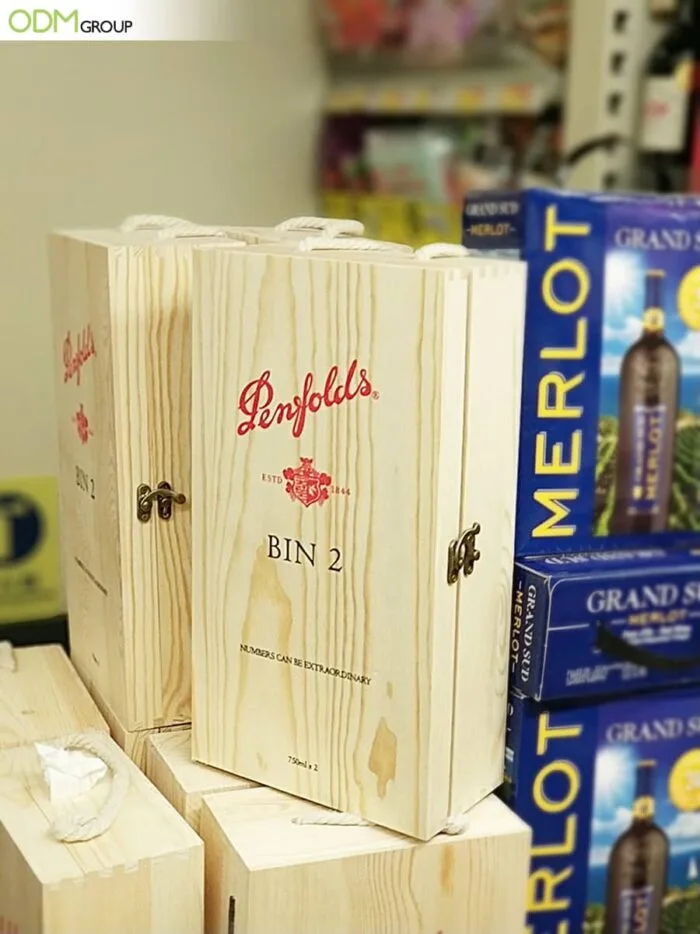
Brands can add laser engraving, screen printing, direct UV printing, metal badges, stains, or painted finishes. Hinges, clasps, handle fixings, edge finishing, internal supports, and bottle clearance should be checked carefully during prototyping. Because wood adds weight, the master-carton and freight configuration should be planned early.
Best for: premium wine releases, corporate gifts, anniversaries, limited editions, and luxury retail promotions.
4. Multi-Bottle Presentation Case
A multi-bottle presentation case brings several products into one coordinated package. The featured format opens like a suitcase and uses individual compartments, bottle restraints, and dedicated spaces for accessories.
The internal layout should keep bottles from touching during transport while making each item easy to remove. Brands must consider weight distribution, handle capacity, hinge and latch strength, bottle orientation, accessory retention, and the amount of manual packing required. Inserts can be made from wrapped board, molded pulp, EVA, PE foam, or other materials appropriate to the product and destination market.
Best for: tasting collections, sales presentation kits, hospitality gifts, membership rewards, and premium seasonal sets.
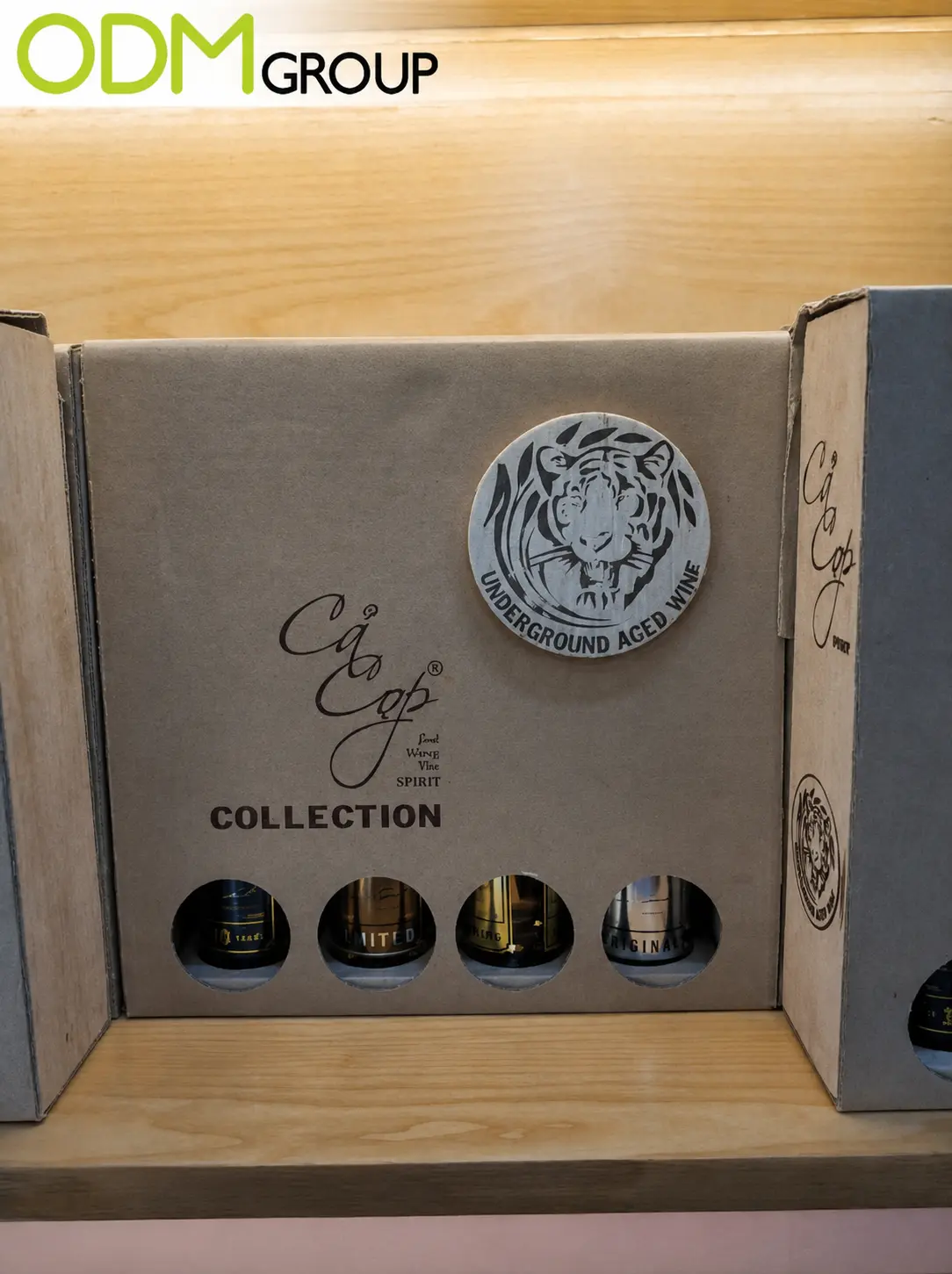
5. Windowed Bottle Collection Box
A windowed collection box gives customers a preview of the bottles while keeping them grouped inside one branded pack. In the reference example, a row of circular openings reveals key parts of the products and creates a clear visual rhythm across the front panel.
Windows may be left open or backed with transparent film. Their size and placement should showcase recognizable product details without weakening the box. The insert behind the front panel must align each bottle precisely with its opening. Brands should also assess glare, dust protection, film scratching, and the ease of separating mixed materials after use.
Best for: miniature spirit collections, sampling sets, discovery packs, duty-free retail, and promotional multipacks.
6. Russian Nesting-Doll Packaging
Russian nesting-doll packaging turns the container itself into a collectible object. The series uses progressively smaller forms that fit inside one another, creating an interactive reveal and a highly recognizable display.
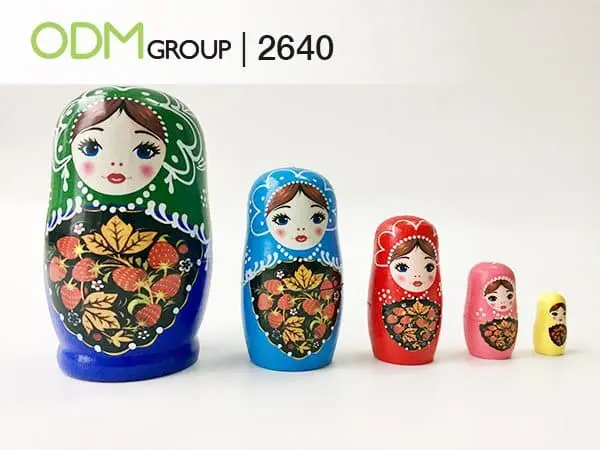
This concept requires more development than a standard printed box. Each shell must open smoothly, nest correctly, protect the contents, and maintain consistent artwork across multiple sizes. Material choice, wall thickness, closure tolerance, decoration alignment, packing sequence, and the final display arrangement must all be tested.
Best for: limited editions, cultural campaigns, confectionery, miniature products, collectibles, and promotional sets designed to encourage repeat purchases.
7. Branded Carton Carry Case
A branded carton carry case offers a lighter and potentially more economical alternative to rigid wood or leather packaging. Handles, rope grips, reinforced panels, and printed surfaces can create a gift-ready format while retaining the production and shipping advantages of paper-based materials.
The structure should be designed around the weight of the bottle or product set. Handle tear resistance, base strength, board grade, fold lines, print durability, and internal support are critical. Supplying the case flat may improve storage and freight efficiency, but assembly and packing time must be included in the campaign plan.
Best for: retail gift packs, seasonal drinks promotions, corporate gifting, event giveaways, and higher-volume campaigns.
Choosing the Right Packaging Material
The best material depends on the product, positioning, budget, quantity, distribution method, and expected life of the packaging.
Folding Carton
Folding carton is lightweight, printable, and typically supplied flat. It suits retail products and higher-volume campaigns where efficient storage and transport are important.
Corrugated Board
Corrugated board offers greater cushioning and structural strength. It can be used for shipping boxes, e-commerce packaging, gift packs, and larger retail formats. Fine-flute options can provide a cleaner presentation than standard shipping cartons.
Rigid Greyboard
Rigid board creates a substantial feel and holds its shape well. It is commonly used for magnetic, book-style, drawer, and lift-off-lid boxes. Because these boxes are usually heavier and more labor-intensive, freight and assembly should be considered early.
Wood
Wood offers durability and reuse potential, but its weight, surface consistency, origin, finish, and destination-market requirements need careful review.
Tin or Metal
Metal packaging can be durable, collectible, and highly reusable. Tooling, minimum order quantities, artwork tolerances, dent protection, and lead time may be more demanding than paper-based alternatives.
Material should not be described as sustainable based on appearance alone. Responsible sourcing, material efficiency, recyclability, coatings, component separation, production location, and shipping volume all influence environmental impact.
More Alcohol Packaging
8 Cutting-Edge Sustainable Packaging Ideas for Eco-Conscious Brands
Shifting to sustainable packaging ideas is a great start [...]
Custom Rigid Boxes: Innovative Packaging Solutions in Beverage Industry
Custom rigid boxes, known for their strong build and [...]
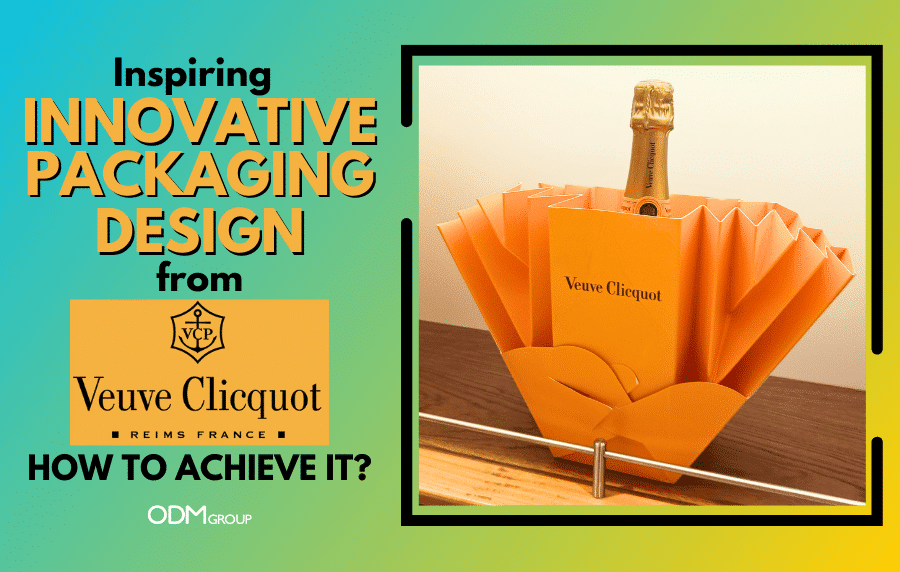
How Can Packaging Design Innovation Benefit Your Business?
In today's highly competitive market, brands must find ways [...]
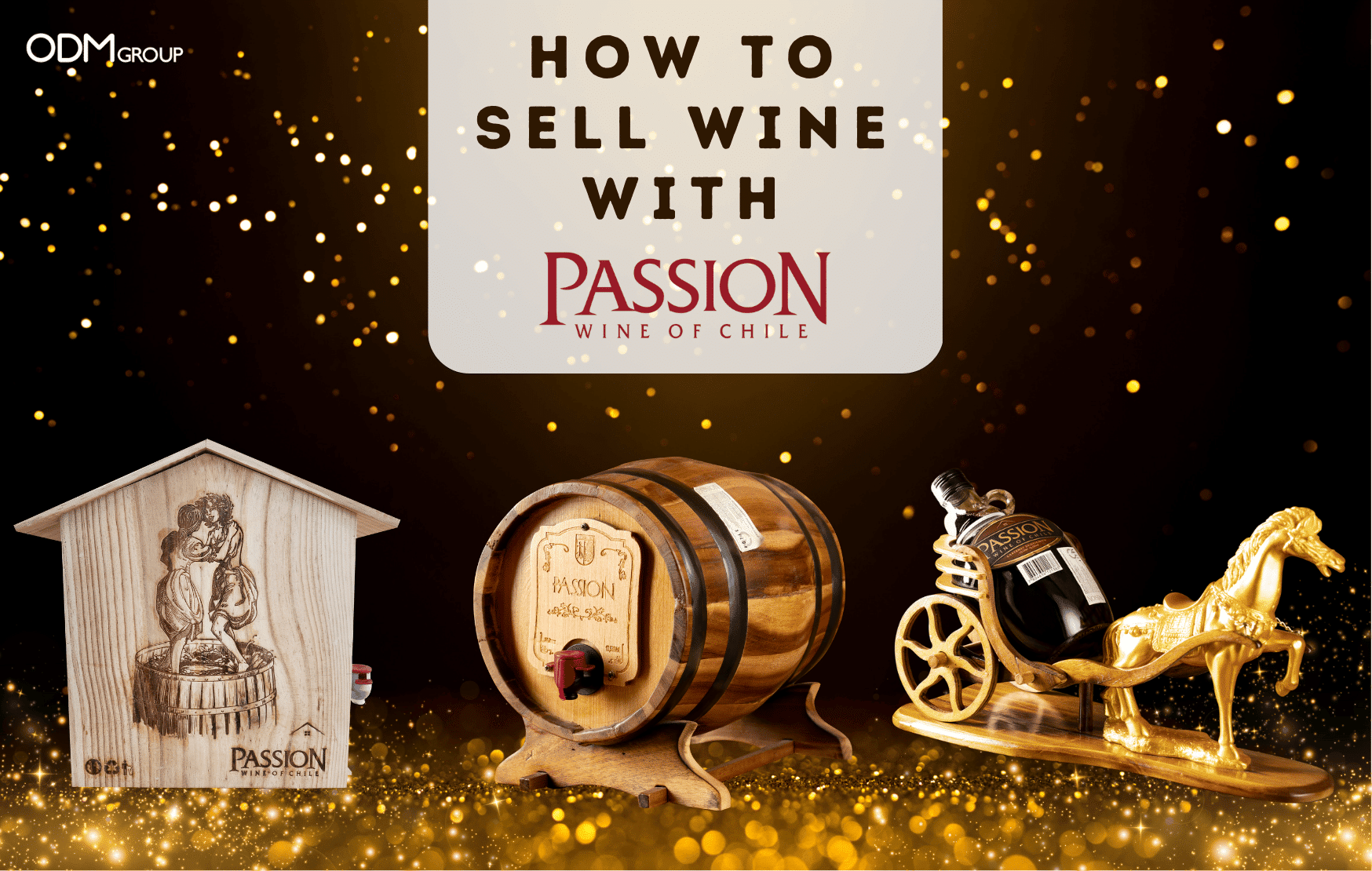
5 Guide Questions to Craft Enticing Wine Gift Box Packaging
Product packaging informs consumers a lot about the brand [...]
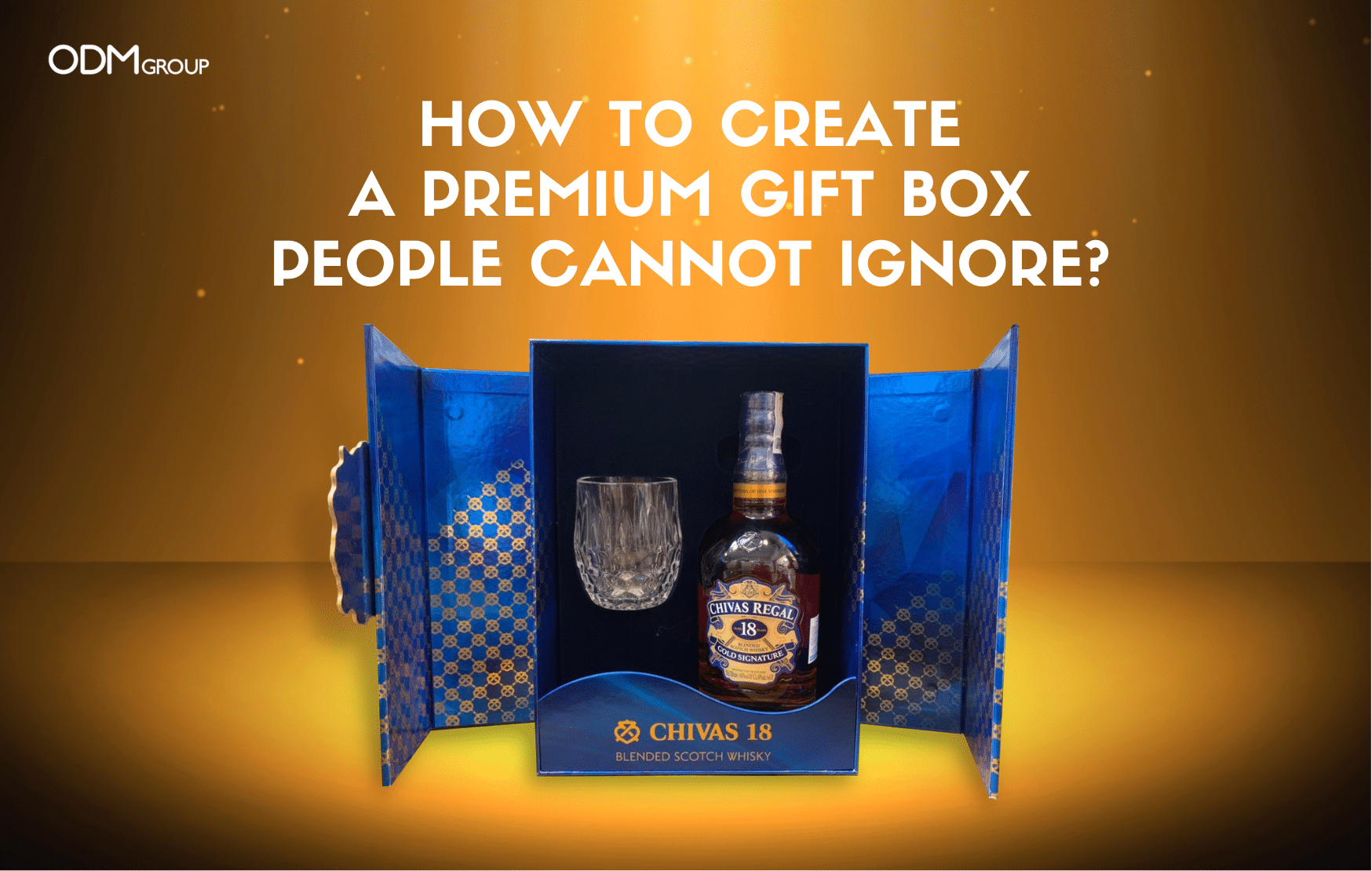
3 Ways Chivas Elevates Marketing With Premium Gift Box Ideas
Chivas is indeed one of the most popular whiskey [...]
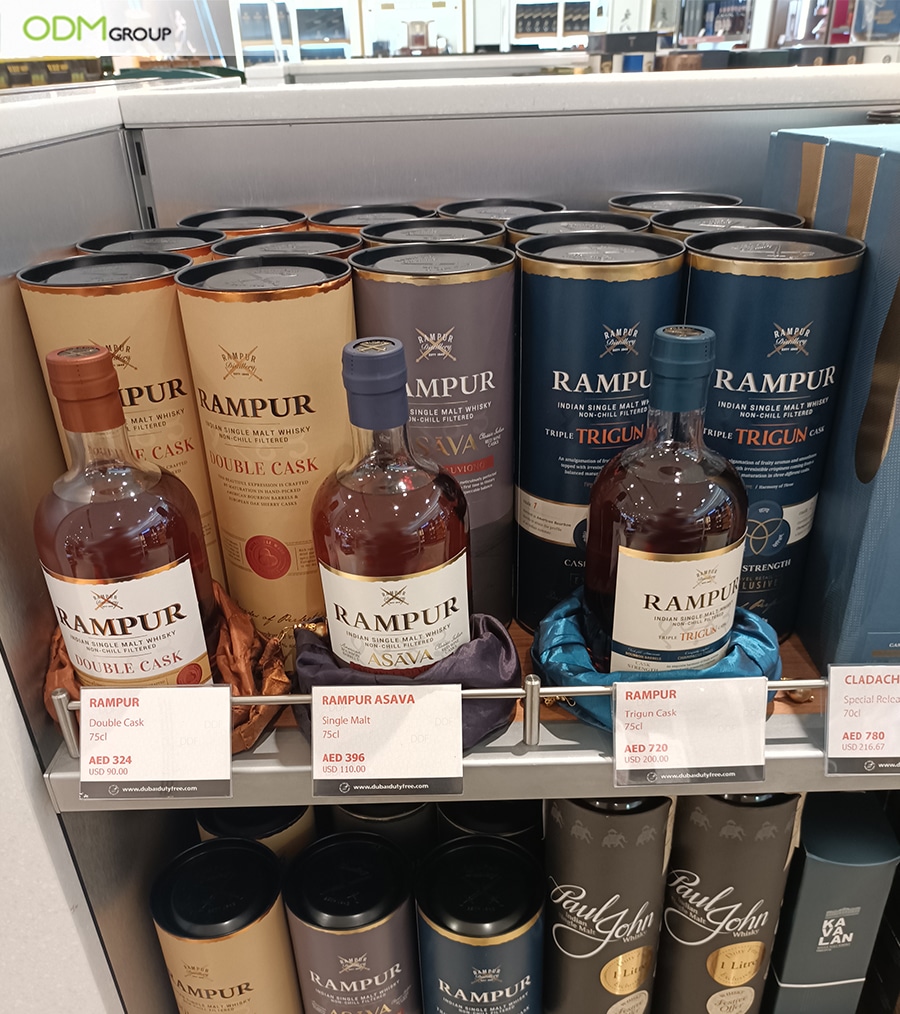
5 Reasons Rampur’s Whiskey Bottle Packaging Stand Out In-Store
Whiskey bottle packaging comes in different forms. They are [...]
How ODM Supports Branded Packaging Development
The ODM Group helps brands develop packaging around the product, campaign objective, target market, and distribution plan. We treat the box as both a brand asset and a functional packaging system.
Our team can support campaign ideation, packaging concepts, sketch design, 3D visualization, material and decoration recommendations, prototype coordination, factory identification, sample assessment, production management, on-site quality control, packaging configuration, and logistics.
During development, we consider how the box will be manufactured, assembled, packed, shipped, opened, and used. This helps identify potential issues before mass production and gives brands greater control over the finished result.
We sell ideas, not simply products. Our role is to turn a marketing objective into branded packaging that is relevant, producible, protective, and ready for its intended market.
Final Thoughts
A successful branded packaging box does more than display a logo. It creates a clear first impression, protects the product, supports the campaign story, and delivers an opening experience appropriate to the brand.
The strongest results come from developing the structure, insert, graphics, materials, and logistics as one connected system. Whether the project is a retail box, premium gift case, product-launch kit, or reusable presentation pack, early planning can prevent expensive compromises later.
Planning a custom packaging project? Contact The ODM Group to discuss your campaign, product requirements, target quantity, timeline, and destination market.
More Product Ideas


Frequently Asked Questions
What is a branded packaging box?
A branded packaging box is custom packaging developed around a company, product, or campaign. It may combine custom graphics, colors, materials, structures, inserts, finishes, and opening mechanisms to protect and present the product.
Which material is best for a custom packaging box?
The best material depends on the product's weight and fragility, the desired presentation, budget, quantity, distribution method, and expected packaging life. Common options include folding carton, corrugated board, rigid greyboard, wood, and metal.
Why are packaging inserts important?
Inserts hold products in position, reduce movement, improve presentation, and help protect vulnerable surfaces or components. They should be tested with actual products or representative weighted samples before production.
Can premium packaging be supplied flat?
Yes. Folding cartons, corrugated boxes, and some collapsible rigid boxes can be supplied flat to improve storage and freight efficiency. Assembly time, closure strength, and final shape should be tested during development.
What should be checked before mass production?
Brands should review dimensions, product fit, insert performance, opening mechanisms, print color, finishing, surface durability, assembly, transit protection, master cartons, and any required compliance documentation before approving production.
How can ODM support a branded packaging project?
ODM can support ideation, design, structural development, visualization, prototyping, factory coordination, sample assessment, production management, on-site quality control, packaging configuration, and logistics.
What to Read Next?
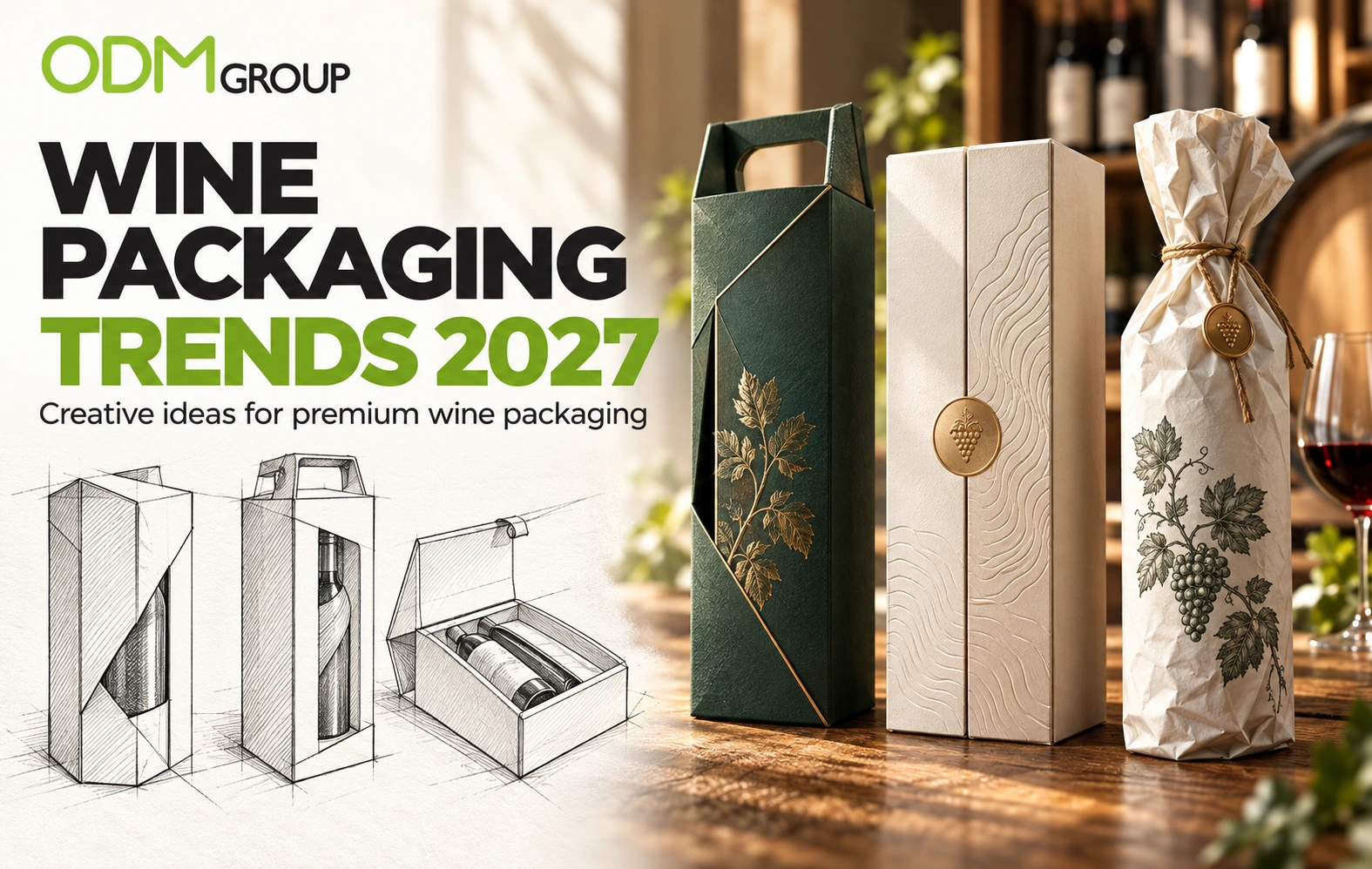
Tear Off Your Old Design And Unfold New Wine Packaging Trends
Wine packaging trends in 2027 are being shaped by [...]
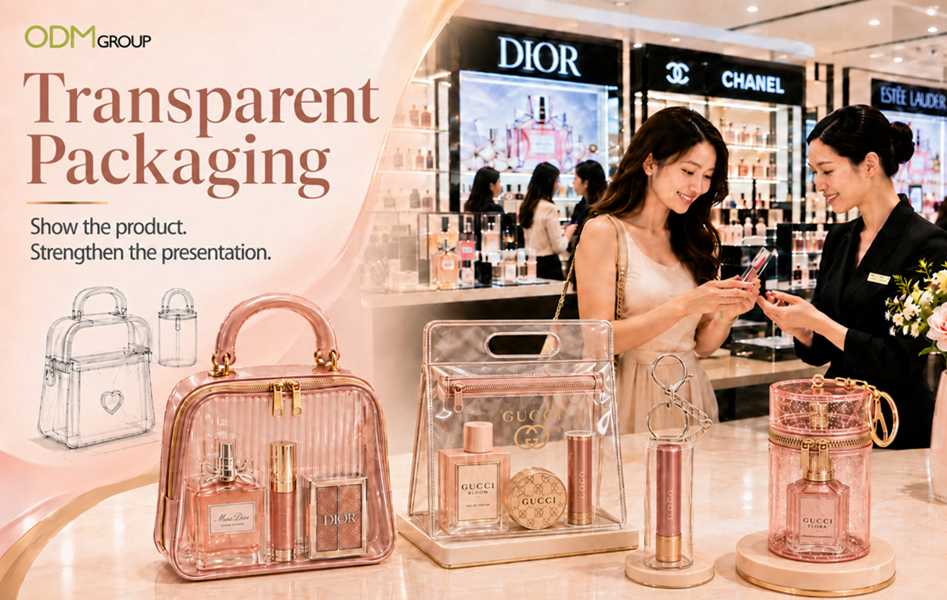
Why Fashion and Beauty Brands Choose Transparent Packaging
Customers often decide whether a product feels desirable before [...]
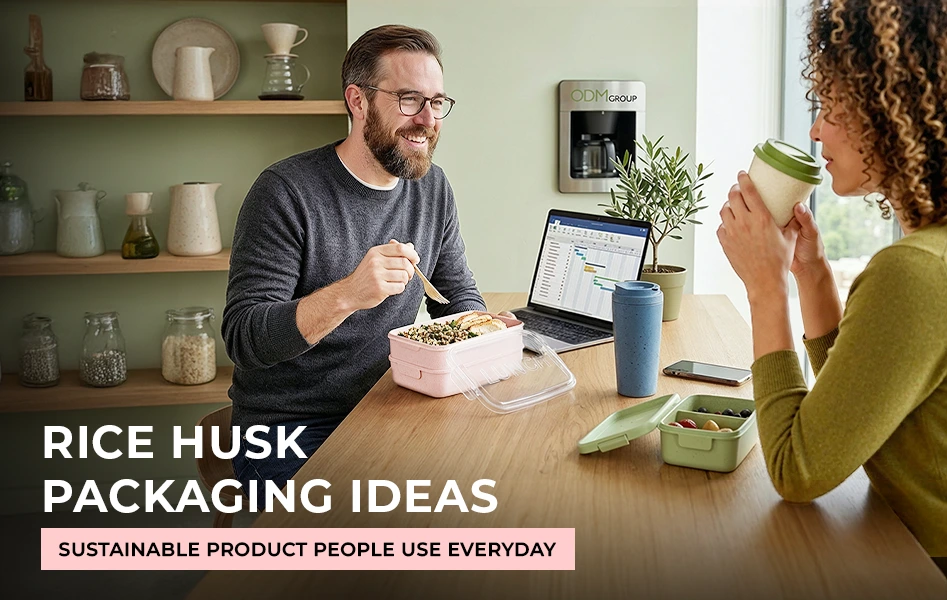
Rice Husk Packaging for Daily Use Products and Brand Visibility
Most sustainable packaging looks good in a presentation, but [...]

How Aluminum Tube Cosmetic Packaging Are Made and Tested
As sustainability becomes a core focus in the cosmetics [...]
Sparkle on a Budget: Affordable Jewelry Packaging Ideas
When it comes to launching a jewelry business, presentation [...]
Inspiring Product Packaging Ideas from Famous Brands
Feeling overwhelmed when searching for packaging inspiration? Don’t be. [...]