
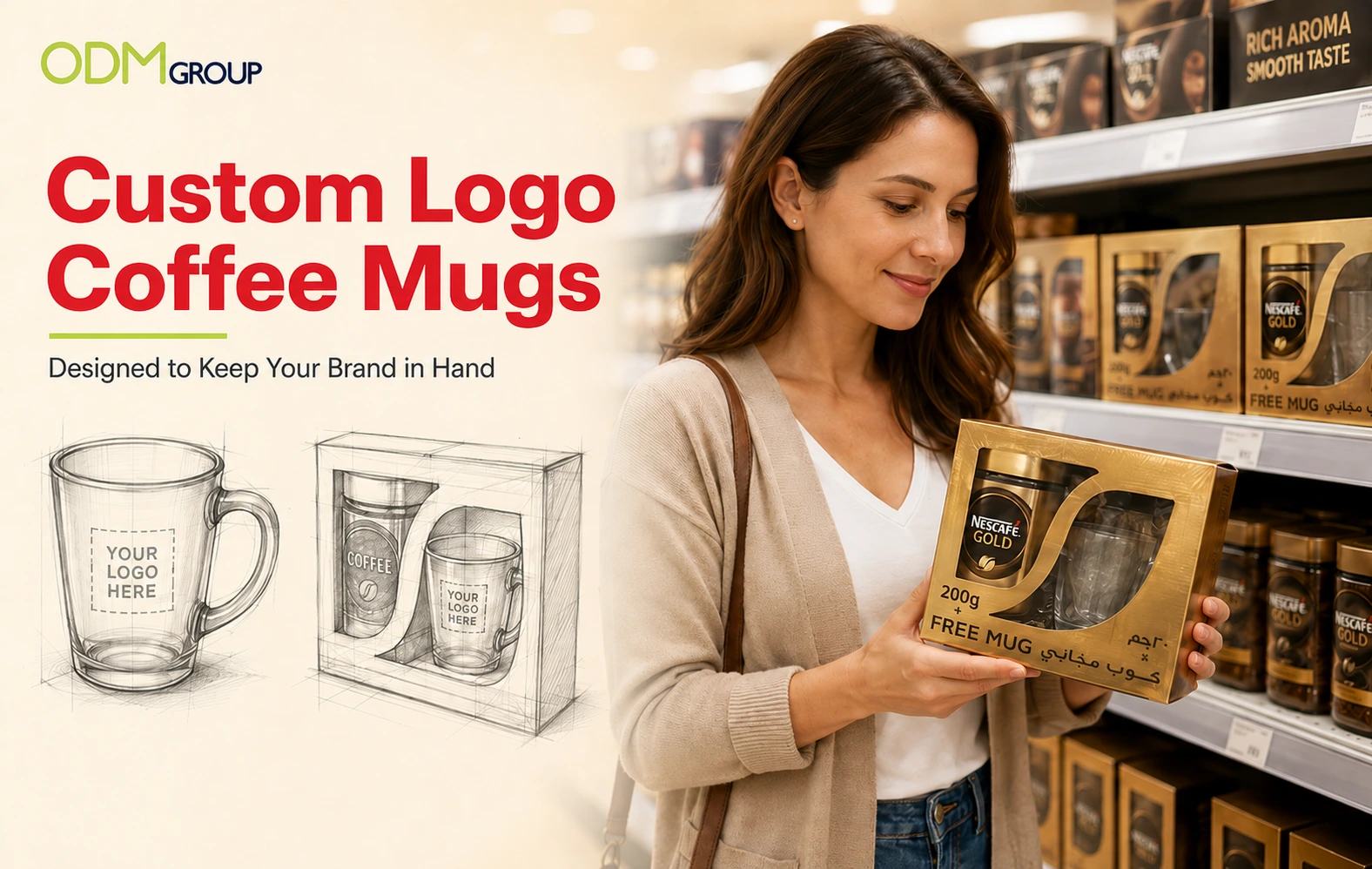
A coffee mug with logo gives brands more than a place to display their identity. When the mug fits the main product, audience, and campaign, it can increase the perceived value of an offer while keeping the brand visible after the promotion ends.
Coffee, beverage, hospitality, retail, and corporate brands can use custom mugs in gift-with-purchase campaigns, loyalty programs, seasonal collections, event giveaways, and employee gift sets. The strongest programs connect the mug design, packaging, and promotional message into one clear concept.
A Nescafé retail promotion observed by the ODM team in Hurghada, Egypt, provides a useful example.
Why Does a Coffee Mug With Logo Work?
Promotional mugs are familiar products, but familiarity does not make them ineffective. Their value comes from repeated use, visible branding, and a natural connection with everyday beverage routines.
A well-developed mug can support a campaign in several ways:
- It adds perceived value to the main product.
- It gives shoppers another reason to choose one brand over another.
- It places the logo in homes, offices, cafés, and shared spaces.
- It can reinforce a specific product range, launch, or seasonal theme.
- It encourages repeat purchases when offered as part of a collection.
- It creates an opportunity for coordinated promotional packaging.
The product itself is only one part of the strategy. Material, shape, decoration, packaging, and distribution must all support the campaign objective.
Nescafé Coffee Mug Promotion
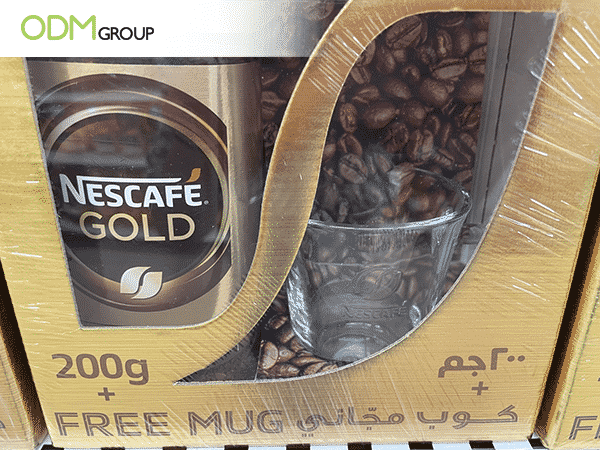
During a retail visit, our team found a Nescafé Gold promotion that included a clear glass mug with the purchase of a 200g coffee pack. The mug was presented beside the coffee in coordinated retail packaging, allowing shoppers to see the promotional gift immediately.
Coffee Mug with Logo
This was an effective product pairing. Coffee and mugs are part of the same consumption occasion, so customers can understand the offer without needing a lengthy explanation. The mug also extended the experience beyond the initial purchase: customers could use it whenever they prepared the coffee at home or at work.
Although this campaign was observed several years ago, its core principles remain relevant to modern gift-with-purchase planning.
This is not the first time we have featured Nescafé’s in-store promotion. Earlier this year, we wrote a case study about how the brand utilized branded mugs in its marketing in Russia. The same applies to its promotional activity in Egypt; the promotion is exclusive to Nescafé Gold only.
Seven Lessons From Nescafé’s Branded Mug Promotion
1. Choose Merchandise That Fits the Main Product
The strongest promotional gifts have an obvious relationship with the product being sold. A coffee mug supports the preparation and consumption of coffee, making the connection immediate and practical.
This type of relevance reduces the need to explain why the gift is included. It also allows the customer to use the promotional item alongside the purchased product.
Brands should consider the complete consumption occasion when selecting merchandise. A tea company might develop a mug with an infuser, while a hot chocolate brand could offer an insulated cup for seasonal campaigns.
2. Make the Logo Part of the Design
Placing a logo on a standard mug is the simplest approach, but it should not be the only design consideration. The shape, colors, proportions, handle, surface finish, and packaging should also reflect the brand.
Logo placement must remain visible without making the product feel overly promotional. Depending on the design, brands can use:
- Screen printing
- Pad printing
- Decals
- Sublimation printing
- Laser engraving
- Etching
- Embossed or debossed branding
- Molded brand elements
- Branded handles or custom shapes
The appropriate method depends on the mug material, order quantity, artwork, budget, and required durability.
3. Consider Collectible Potential
A coffee mug with logo can become more desirable when it belongs to a coordinated series. Brands can vary the artwork, color, shape, character, location, or seasonal theme across several designs.
A collection can encourage repeat purchases, particularly when different mugs are released in phases. However, each design should remain useful on its own. Collectibility works best when it adds value to a practical product rather than replacing functionality.
Possible collection themes include:
- Brand heritage
- Regional destinations
- Limited-edition colors
- Seasonal illustrations
- Licensed characters
- Product flavors
- Artist collaborations
- Anniversary designs
A phased release also allows brands to refresh a campaign without developing a completely different merchandise category.
4. Use Packaging to Explain the Promotion
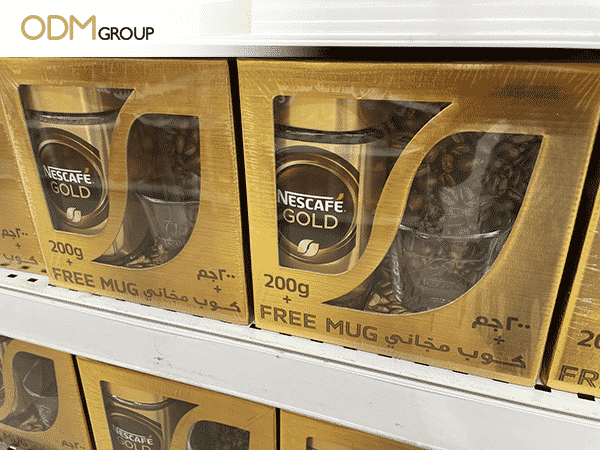
The packaging in the Nescafé example helped shoppers identify the free mug and understand the purchase requirement. This is important in busy retail environments, where customers often make decisions quickly.
Promotional packaging should answer three questions:
- What is the gift?
- How can the customer receive it?
- Why is the offer worth considering?
A window, cutout, product illustration, or clear image can make the mug visible. Short promotional messaging can then indicate whether it is free, limited-edition, exclusive, or available while supplies last.
The structure must also protect both the mug and the main product during packing, transport, shelf display, and customer handling.
Coffee Mug with Logo
5. Match Material to Campaign Positioning
The material affects durability, perceived value, decoration options, weight, and shipping requirements. Brands should not select a material based only on appearance.
Ceramic Mugs
Ceramic provides a familiar coffee-drinking experience and offers a large surface for artwork. It works well for office gifts, retail promotions, seasonal collections, and corporate programs.
Glass Mugs
Clear glass can create a clean, premium presentation and allow the beverage to remain visible. Double-wall glass and colored glass can further differentiate the design.
Stainless Steel Mugs
Stainless steel is suitable for outdoor, travel, workplace, and premium gifting campaigns. Double-wall construction can improve temperature retention, although it may increase cost and complexity.
Plastic and Composite Mugs
These materials can reduce weight and provide greater flexibility in color and shape. Material and food-contact requirements must be reviewed for each market.
Lower-Impact Material Options
Brands exploring environmental improvements can consider recycled-content materials, durable reusable formats, plastic-free packaging, and designs intended for long-term use. Sustainability claims should be supported by appropriate documentation rather than based only on appearance.
6. Design for Daily Use
A visually distinctive mug will not deliver long-term brand exposure if it is uncomfortable or impractical. Industrial design decisions should address the complete user experience.
Important details include:
- Mug capacity
- Handle comfort
- Rim thickness
- Product weight
- Base stability
- Heat transfer
- Lid performance, when applicable
- Ease of cleaning
- Storage and stacking
- Dishwasher or microwave suitability
- Resistance to fading and wear
These features should be considered during the sketch and prototype stages. Resolving them before mass production can help reduce the risk of usability problems later.
7. Plan Production and Logistics Early
Mugs can be fragile, heavy, and expensive to ship if the packaging is not designed efficiently. A successful campaign therefore requires more than an attractive concept.
Brands should confirm:
- Target quantity
- Campaign launch date
- Destination markets
- Mug material and capacity
- Decoration method
- Individual and master-carton packaging
- Drop-test expectations
- Food-contact testing requirements
- Production lead time
- Quality inspection standards
- Shipping method
Early planning gives the design, packaging, and sourcing teams more room to balance appearance, cost, protection, and delivery requirements.
If you’re a brand that is also considering using custom mugs for promotion, these ideas might interest you.
These ceramic mugs are undeniably unique! The first one is a trophy-shaped mug, while the second one comes in an adorable design. Learn how else you can leverage them for your own promotions through this case study.
These stainless mugs can offer you comprehensive options for promotion. Durable, practical, and customizable, these mugs can help you build better branding.
Looking for another sustainable mug concept? Why not consider getting these wooden coffee mugs? Made from sustainable jujube wood, each mug comes with a smooth finish and impressive Nordic style.
Looking for other branded corporate gift ideas for coffee promotions? Make sure to check out this compilation that can help you pep up your coffee marketing strategy!
Where Brands Can Use Custom Coffee Mugs
Gift-With-Purchase Campaigns
A mug can be offered with coffee, tea, chocolate, milk, cereal, or other beverage-related products. The gift can be attached to the main pack, placed inside a promotional box, or displayed as part of a bundled retail offer.
Purchase-With-Purchase Promotions
Brands can allow customers to purchase an exclusive mug at a reduced price after meeting a spending requirement. This approach can support premium designs that may be difficult to offer completely free.
Loyalty and Redemption Programs
Customers can collect points, codes, stamps, or digital rewards and exchange them for a branded mug. A series of designs can encourage continued participation.
Corporate and Employee Gifts
A custom mug can be combined with coffee, tea, stationery, or desk accessories in an employee welcome kit, client gift, or year-end package.
Hospitality Programs
Hotels, cafés, airlines, restaurants, and resorts can develop mugs for guest use, retail merchandise, room amenities, or loyalty campaigns. The design should reflect the service environment and expected frequency of use.
Events and Product Launches
Limited-edition mugs can support exhibitions, pop-up stores, press events, product launches, and influencer kits. Custom packaging can provide additional space for campaign messaging and product storytelling.
How ODM Supports Custom Mug Programs
ODM works as a product development and sourcing partner for branded mug campaigns. Our team can support the project from the initial idea through delivery coordination.
Mug Sketch Design
Our design team can translate a campaign idea into professional product sketches. This stage allows brands to explore mug shapes, handles, proportions, materials, colorways, logo placement, and special features before moving into detailed development.
Sketches also make it easier for stakeholders to compare options and select a direction aligned with the campaign budget and audience.
Packaging Design
ODM can develop packaging around the mug and the main promotional product. Our team considers shelf communication, product protection, pack size, unboxing experience, and shipping efficiency.
This can include initial packaging concepts, structural layouts, graphic direction, inserts, windows, handles, and retail display considerations.
Factory Identification and Coordination
Different factories specialize in different mug materials, decoration methods, order volumes, and quality levels. ODM can identify and evaluate suitable production partners based on the project requirements.
Our team coordinates communication between the brand and the selected factory, helping clarify specifications, samples, artwork, packaging, lead times, and production expectations.
Quality Control
Quality control is especially important for food-contact products and fragile merchandise. ODM can arrange inspections according to the agreed quality standards and approved samples.
Checks may cover:
- Dimensions and capacity
- Color and surface finish
- Logo placement and print quality
- Cracks, chips, scratches, or deformation
- Handle attachment
- Lid or accessory fit
- Packaging assembly
- Carton markings
- Quantity verification
Testing and compliance requirements should be defined according to the product material and destination market.
Logistics Coordination
Mug packaging affects carton size, breakage risk, freight cost, and delivery performance. ODM can coordinate logistics planning with the factory and shipping partners, taking the campaign deadline and destination into account.
This support can include carton planning, shipping-document coordination, freight options, and delivery scheduling.
Final Thoughts
The Nescafé promotion demonstrates why a coffee mug with logo remains a practical retail marketing tool. The mug was relevant to the main product, clearly presented in the packaging, and capable of keeping the brand visible beyond the initial purchase.
For brands planning similar campaigns, the opportunity is not simply to print a logo on an existing mug. Stronger results come from developing the mug, decoration, packaging, production plan, quality standards, and logistics as one coordinated program.
ODM can support that process through mug sketch design, packaging development, suitable factory identification, production coordination, quality control, and logistics planning. Contact our team to discuss a branded mug campaign for your next retail promotion, gift program, or product launch.
If you are interested in Nescafe’s previous marketing activities before, take the time to read these case studies we wrote about before.
This is a gift with purchase offered by Nescafe before. In this promotion, the brand is giving away a free coffee tumbler with logo. This merchandise is practical as it allows customers to bring their coffee whenever and wherever they want.
Nescafe improved its customers’ coffee-drinking experience with its free custom insulated mug. This in-pack offer is available for Nescafe Gold Blend only.
Check out Nescafe’s promotion in Thailand. Each box of Nescafe Dolce Gusto comes with a coffee cup coaster as a gift with purchase.
Nescafe made coffee drinkers nostalgic with its vintage coffee mug ideas. Learn more about this promotion here.
More Product Ideas


FAQs about Coffee Mug with Logo
What materials can be used for a coffee mug with logo?
Common options include ceramic, glass, stainless steel, and selected plastics or composite materials. The best option depends on the campaign budget, desired appearance, decoration method, shipping conditions, and intended use.
Which branding method is best for a promotional mug?
There is no single method suitable for every project. Screen printing, decals, sublimation, laser engraving, etching, and molded branding offer different results. The mug material, artwork complexity, quantity, and durability requirements should guide the decision.
Can a custom mug be used as a gift with purchase?
Yes. Coffee mugs work particularly well with coffee, tea, chocolate, and other products connected with beverage consumption. They can be attached to the main pack, placed in a promotional carton, or presented as a retail bundle.
How does ODM help manage a custom mug project?
ODM can support sketch design, packaging development, factory identification, sample coordination, quality control, and logistics. The scope can be adjusted according to the campaign’s design, sourcing, and delivery requirements.
What to Read Next?
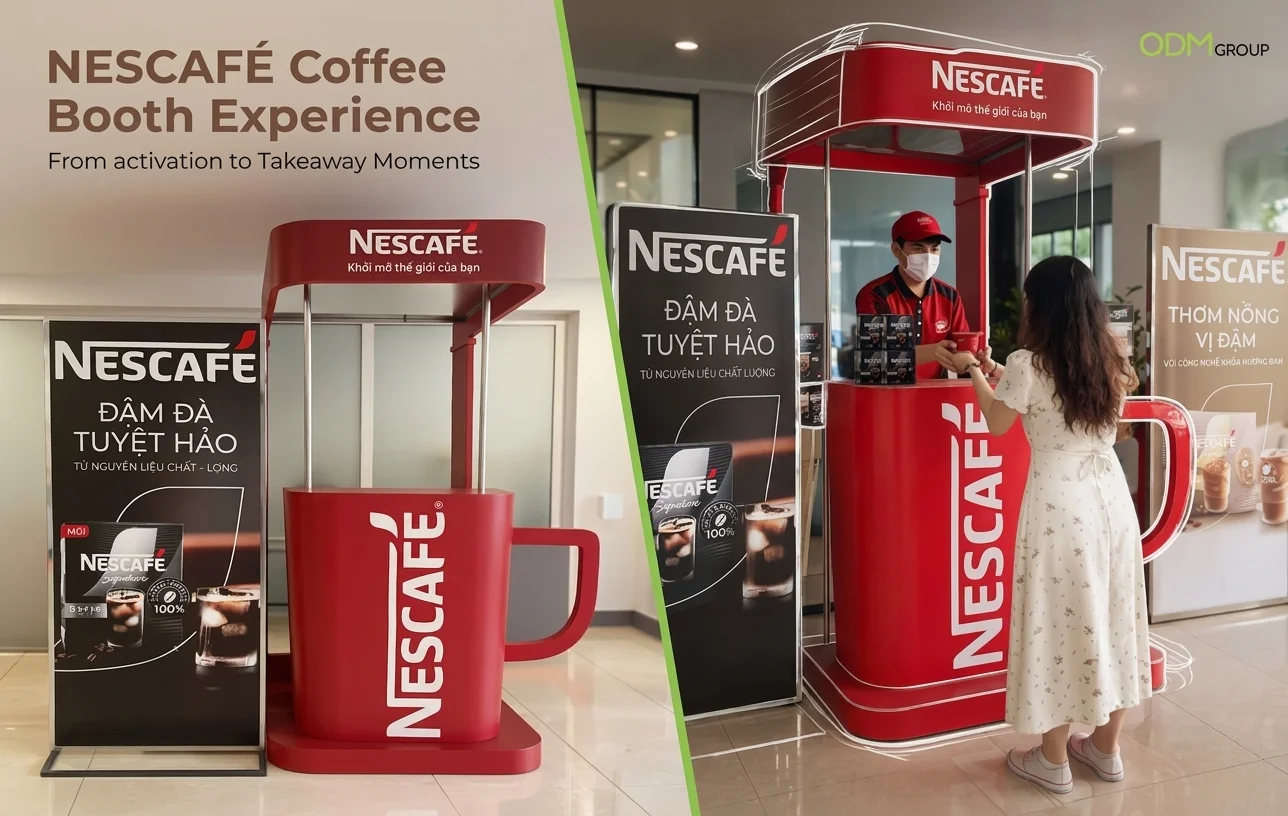
How Nescafe Coffee Booth Activations Drive Real Engagement in Office Spaces
Discover how a Nescafe coffee booth turns sampling into a daily brand experience using smart design, POS displays, and packaging strategies.
How Can Marketers Boost Sales with a Custom-Designed Mug?
In the highly competitive world of coffee, where every [...]
Lights, Coffee, Action: Why Movie Promo Coffee Mugs Always Works?
Looking to expand your target market? Tap the loyal [...]
Branded Mug Merchandise: 4 Marketing Lessons from Phin Deli
A good conversation is prolonged with a good cup [...]
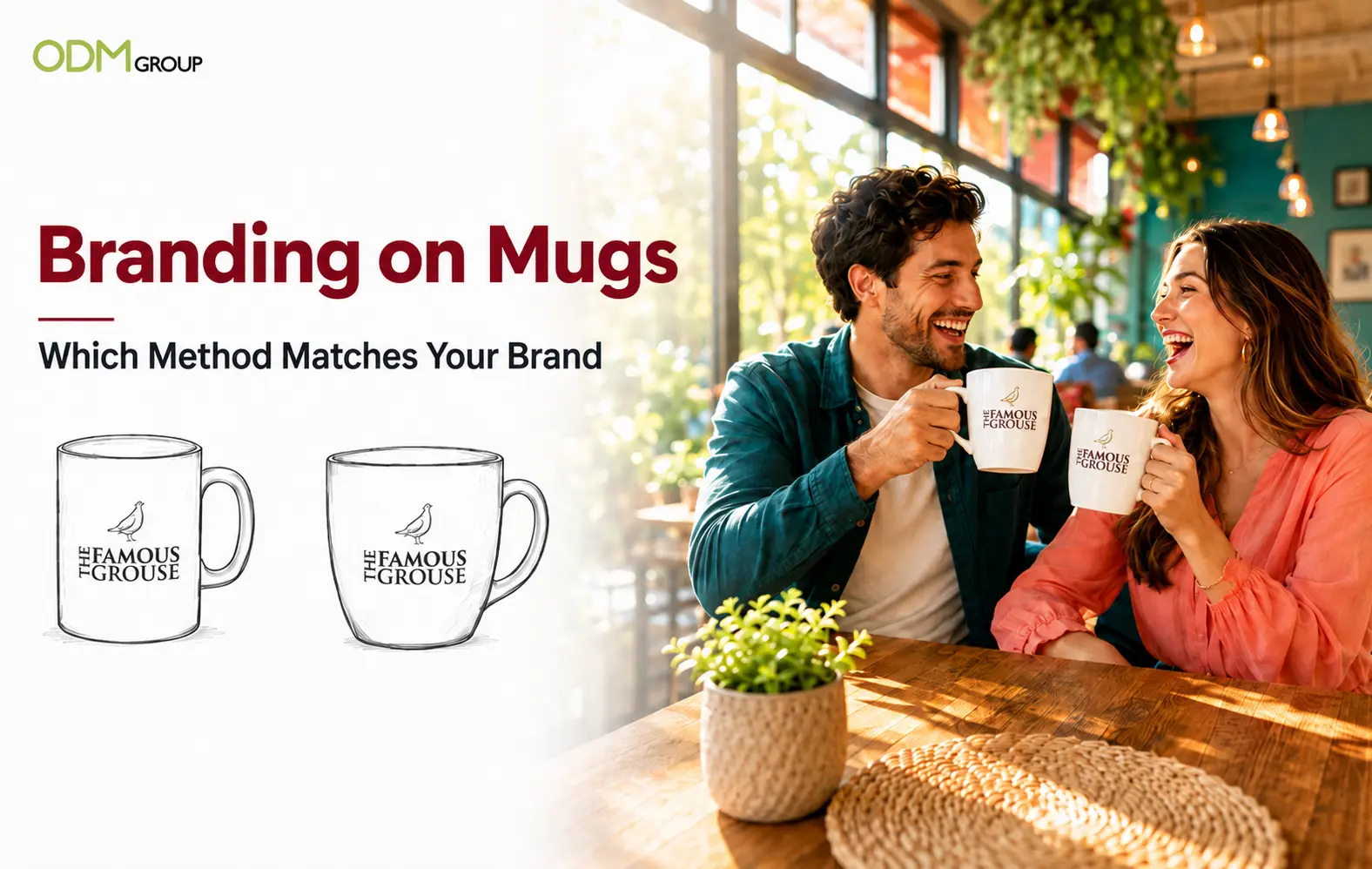
Branding on Mugs: How to Choose the Perfect Method for Your Brand
Branding on mugs involves placing a company's logo or [...]
19 Crimes Custom Logo Mugs: Which Drinkware Is Perfect For You?
Drinkware, like wearable merchandise, are promotional products that transcend [...]