
Confectionery is one of the most impulse-driven categories in retail. Shoppers may not plan to buy chocolate, candy, or snack products, but the right confectionery displays can change that decision in seconds.
Visibility is not enough anymore. Brands need displays that stop shoppers, guide product discovery, support promotions, and make the purchase feel easy. From simple hangsell units to LED-lit retail zones and interactive displays, a strong POS display can turn a confectionery product into a retail experience.
Why Confectionery Displays Matter in Retail
Confectionery products compete in a fast-moving space. Many packs are small, price-sensitive, and surrounded by similar products. This makes the display just as important as the packaging.
A well-designed confectionery display helps brands:
For trade marketing teams, the goal is not only to place products in-store. The goal is to create a branded selling space that shoppers notice and retailers can easily maintain.
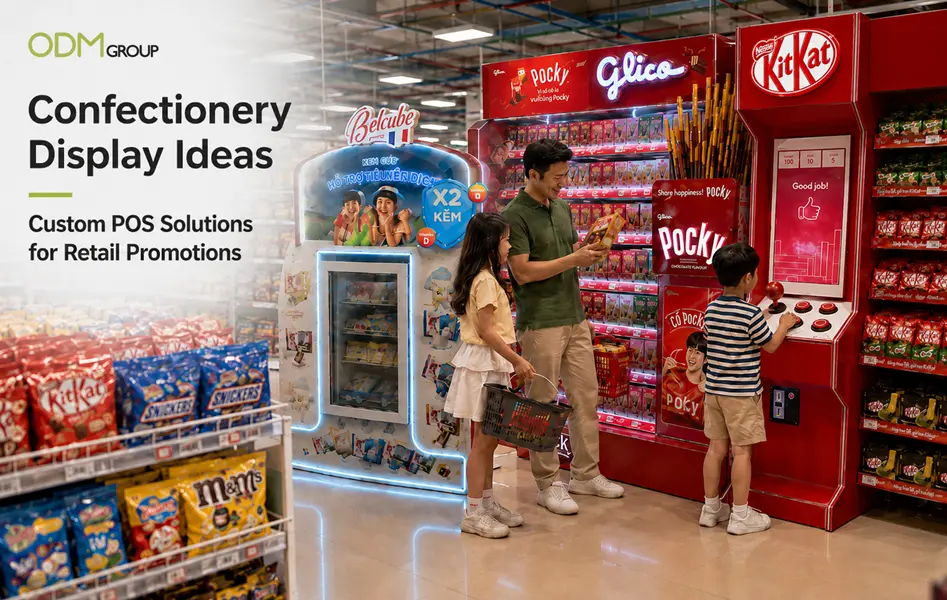
We recently visited a shopping mall in Vietnam and spotted these eye-catching confectionery displays. Discover how KitKat, Glico, and Belcube use interactive, illuminated, and refrigerated display concepts to attract shoppers and enhance the retail experience.
Custom Confectionery Display Ideas and Real-World Examples
Here are practical confectionery display ideas brands can use to improve in-store presence and drive stronger campaign results.
1. Gamified and Interactive Displays
Interactive displays give shoppers a reason to stop. The KitKat arcade-style display is a strong example of how a confectionery brand can move beyond shelving and create a more engaging in-store moment. Instead of only showing products, the display invites shoppers to interact with the brand.
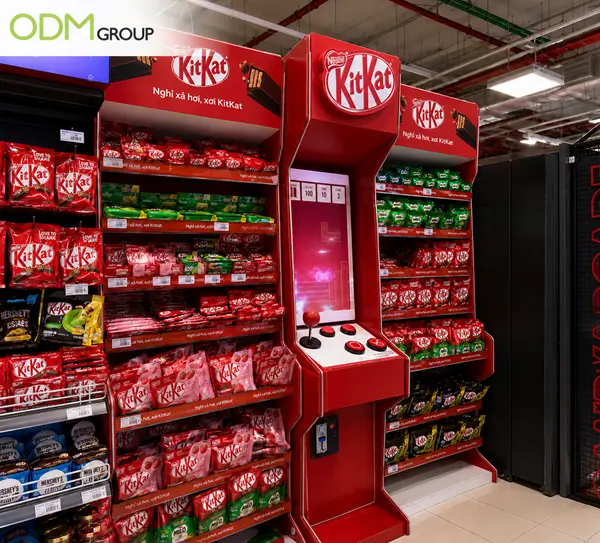
Gamified confectionery displays can include:
- Spin-the-wheel promotions
- Arcade-inspired product displays
- QR code games
- Digital screens
- Prize redemption mechanics
- Motion-activated lights or sounds
- “Buy and play” campaign mechanics
This type of display works well for youth-focused brands, family campaigns, seasonal promotions, and product launches that need more buzz.
The best interactive displays are simple. Shoppers should understand what to do within a few seconds. If the mechanic feels too complicated, they may walk away.
For brands, gamification can also connect the display to data collection, loyalty programs, digital coupons, or social media campaigns.
2. Countertop Displays for Checkout Conversion
Countertop displays are small, but they can be highly effective.
They work best for confectionery products that shoppers can buy quickly, with little decision-making. Mini chocolates, candies, mints, gum, and small seasonal packs are perfect for this format.
Good countertop displays should be:
- Compact
- Easy to refill
- Strongly branded
- Clear in pricing
- Positioned at hand level
- Simple to shop
This display type is especially useful for convenience stores, cafés, pharmacies, cinemas, event counters, and checkout areas.
For brands with smaller budgets, countertop displays can be a practical entry point into custom POS marketing.
3. Oversized Product Displays for Instant Recognition
Oversized product displays help brands create a visual landmark in-store.
The Pocky display with a large cup and oversized biscuit sticks is a good example. Even from a distance, shoppers can immediately recognize the product and understand the campaign.
Huge product displays work well for:
- Hero product launches
- Photo-friendly retail activations
- Supermarket aisle takeovers
- Seasonal campaigns
- Mall promotions
- Youth-focused snack brands
The oversized element should be accurate to the real product or packaging.
A giant chocolate bar, candy pack, biscuit stick, or branded cup can create stronger recall when it closely reflects the actual product.
This type of display also supports social sharing. If the structure is fun, colorful, and photo-worthy, shoppers are more likely to notice it and engage with it.
4. LED Displays for Stronger Shelf Visibility
LED lighting can instantly make a confectionery display feel more premium and more noticeable.
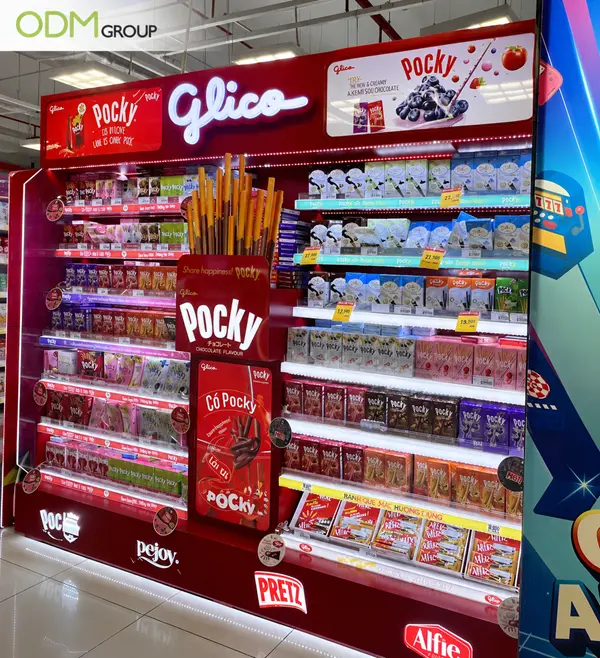
The Glico and Pocky display example shows how illuminated signage, shelf lighting, and glowing edges can help a brand dominate the retail space. The display does not rely only on product packaging. It uses light to create a stronger brand zone inside the supermarket.
LED confectionery displays can include:
- Backlit logos
- Lightbox headers
- Shelf-edge lighting
- Illuminated product trays
- Glowing display borders
- LED highlight panels
This approach is especially useful for large retail campaigns, imported snack brands, premium confectionery, and new product launches.
However, LED displays require careful planning. Brands need to consider store approval, power access, wiring, installation, maintenance, safety, and display lifespan. This is where early design and production planning become important.
5. Refrigerated Displays for Chilled Snacks and Dessert Products
Not all confectionery-style products belong on dry shelves. Some chocolate drinks, chilled desserts, dairy snacks, ice cream products, and snackable cheese products need refrigerated displays.
The Belcube display shows how a branded fridge can become more than a storage unit. With LED outlines, playful graphics, and strong branding, the refrigerated unit becomes part of the retail campaign.
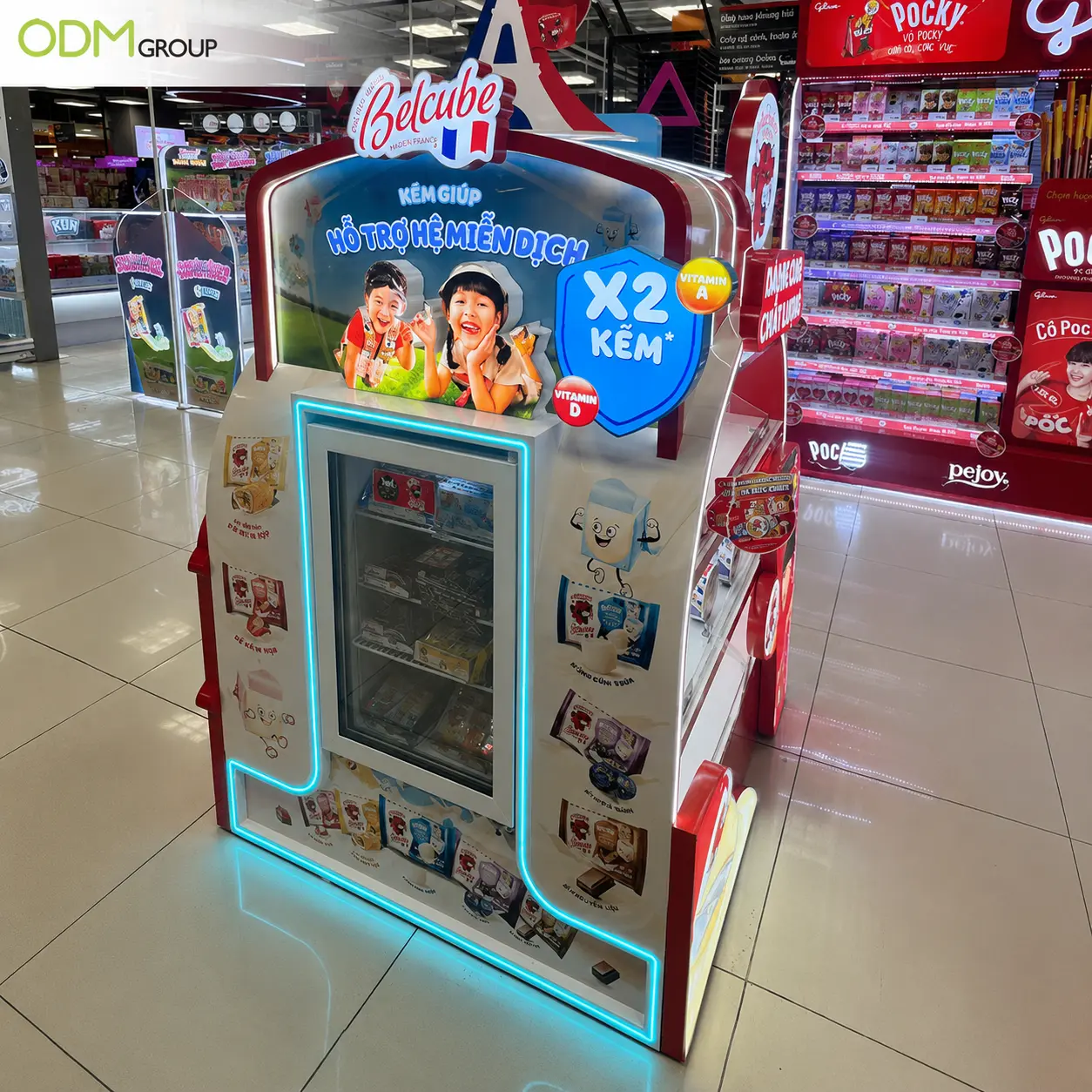
Refrigerated displays can help brands:
- Protect product quality
- Build a branded product environment
- Improve product visibility
- Support sampling or bundle campaigns
- Encourage shoppers to explore chilled snack options
For confectionery and snack brands expanding into chilled formats, branded refrigerated displays can create stronger differentiation inside the store.
6. Diagonal Displays for Shelf Disruption
Most supermarket shelves follow the same horizontal layout. This makes it easy for shoppers to overlook products, especially in crowded confectionery aisles. Diagonal confectionery displays break that pattern.
This type of display works well for chocolate bars, wafer sticks, biscuit sticks, and slim-pack products because the structure can follow the shape of the product.
The angled design creates movement and makes the fixture look more dynamic compared with standard shelving.
For brands, diagonal displays are useful when the objective is to:
- Launch a new product
- Highlight a hero SKU
- Stand out beside regular shelves
- Create a more energetic product presentation
- Encourage shoppers to notice the product from different angles
A display does not need to be complicated to be effective. Sometimes, changing the shelf angle is enough to create stronger visual impact.
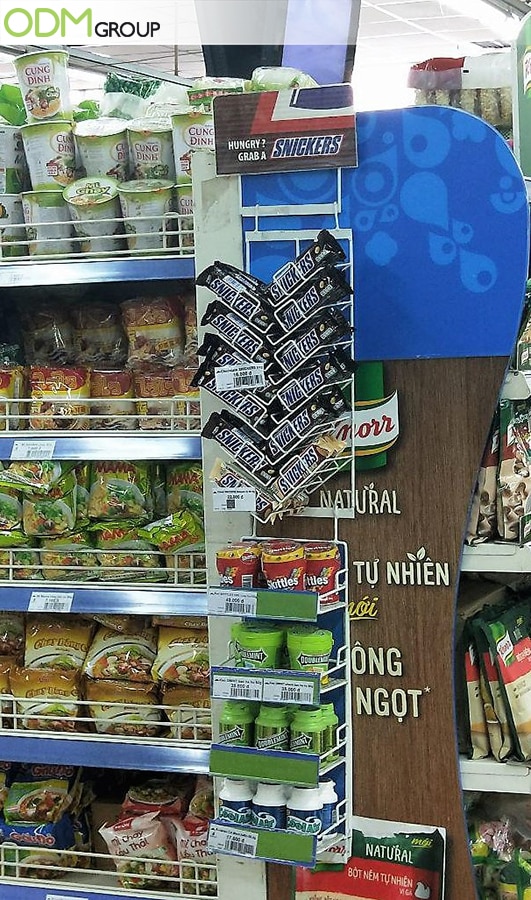
7. Hanging Displays for Impulse Purchases
Hanging displays are ideal for small, lightweight confectionery products such as mini chocolates, candies, gum, mints, and trial packs.
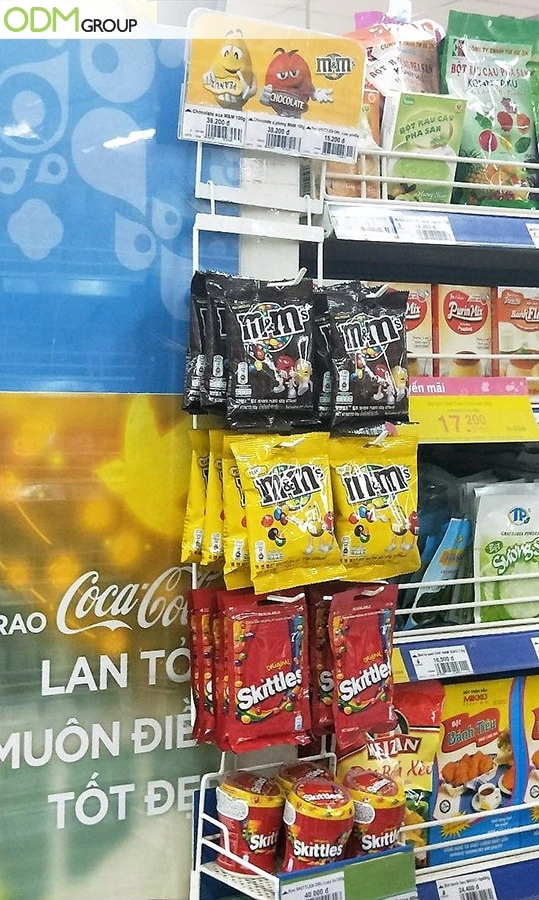
Instead of stacking products on shelves, brands can use hooks, pegboards, or hangsell strips to present the products vertically.
This makes the display easier to browse and allows shoppers to quickly pick up individual packs.
Hanging confectionery displays work especially well in:
- Checkout areas
- Convenience stores
- Aisle ends
- Secondary selling spaces
- Near related snack categories
- Promotional bundle zones
This format is also useful when floor space is limited. It gives brands extra visibility without requiring a large retail footprint.
The key is to keep the arrangement clean. Overcrowded hanging displays can look messy, while a well-spaced layout makes the product easier to shop.
8. Shelved Displays for Product Variety
Shelved displays remain one of the most reliable POS solutions for confectionery brands.
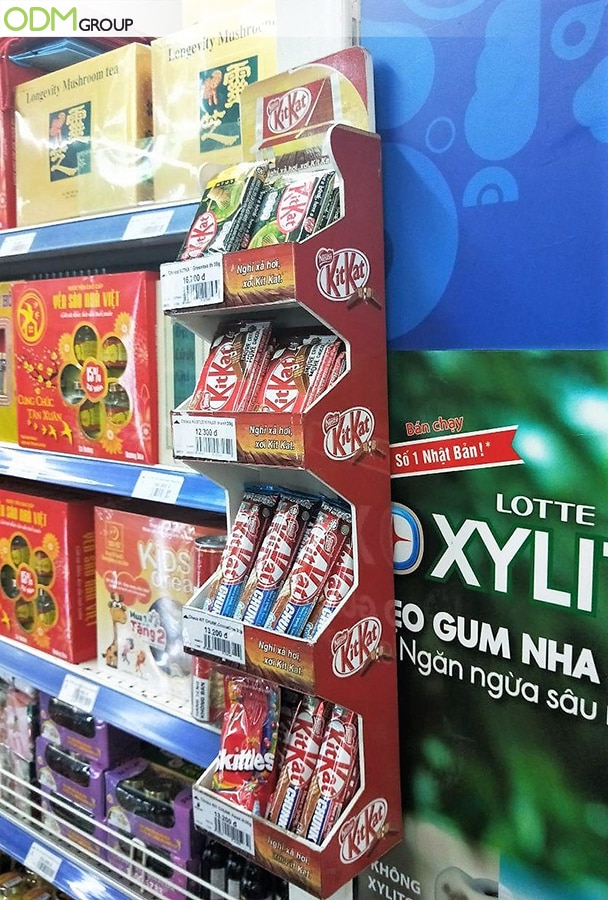
They are practical, easy to stock, and effective for showing different flavors, pack sizes, and product ranges. A good example is a KitKat-style display that uses strong red branding, organized shelving, and flavor blocking to make the range easy to understand.
Shelved confectionery displays are useful when brands need to:
- Display multiple SKUs
- Organize products by flavor
- Promote family packs or multipacks
- Support long-term retail placement
- Make restocking easier for store teams
Cardboard shelving can work well for short-term campaigns, product launches, and seasonal promotions. For longer use, brands may consider metal, acrylic, wood, or mixed-material displays for better durability.
For retailers, practicality matters. A good shelved display should look attractive but still be easy to refill, clean, move, and maintain.
9. Branded Retail Zones for Stronger Category Presence
Some confectionery display units are no longer just racks. They are complete branded retail zones.
The Glico and Pocky supermarket setup is a strong example. It combines product shelving, LED lighting, overhead signage, branded graphics, and hero display elements into one unified brand space.
This approach is valuable when a brand has several product lines or flavors to promote. Instead of spreading products across different shelves, a branded zone brings the range together and makes the brand feel more dominant.
A strong branded retail zone should include:
- Clear brand signage
- Consistent color application
- Organized product categories
- Easy access for shoppers
- Promotional messaging
- Lighting or visual highlights
- Space for hero products and new launches
For confectionery brands, this type of display can support market entry, brand refresh campaigns, major product launches, and retailer partnerships.
10. Seasonal Displays and Gift Packaging
Confectionery is closely connected to gifting and celebration. This makes seasonal displays especially powerful.
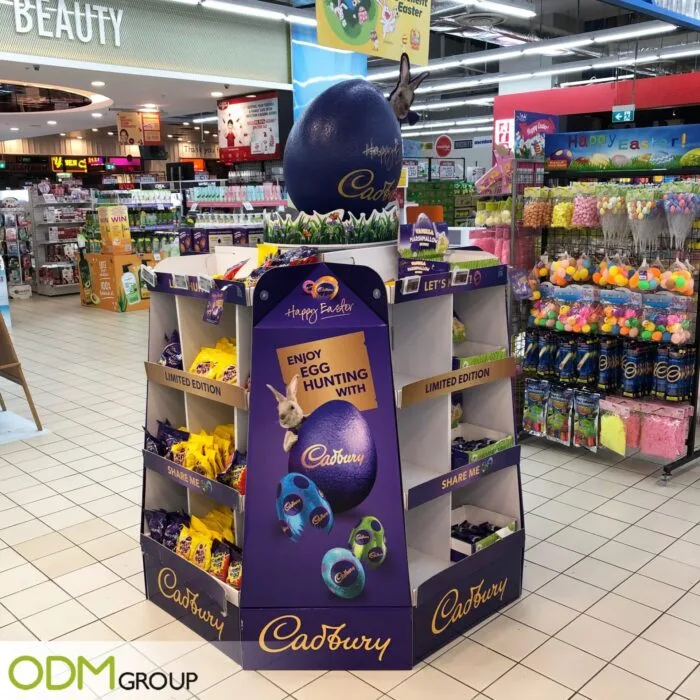
Brands can design retail displays around:
- Valentine’s Day
- Christmas
- Lunar New Year
- Mid-Autumn Festival
- Halloween
- Easter
- Back-to-school campaigns
- Store anniversaries
- Limited-edition product launches
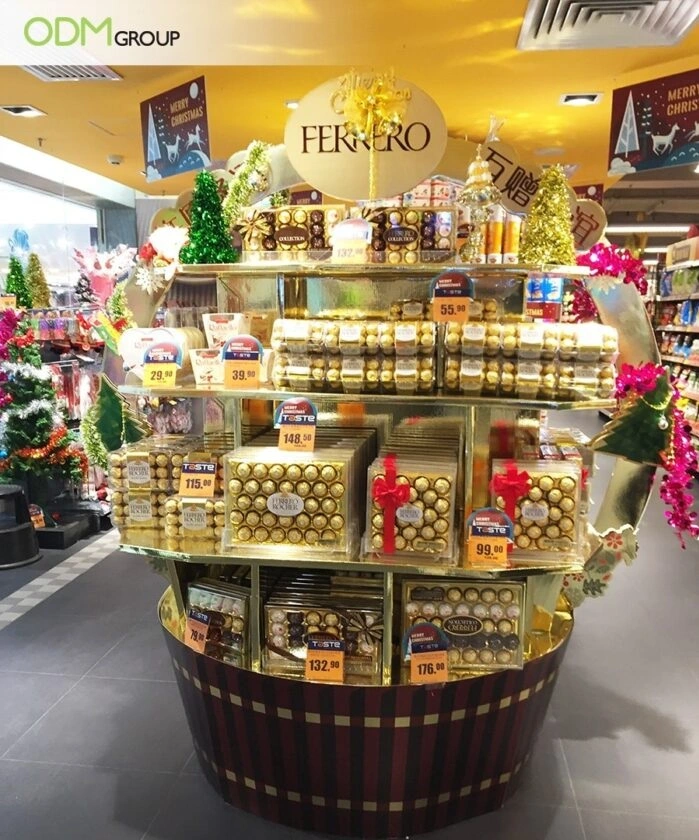
Seasonal displays work best when the display, packaging, and campaign message are connected. A Christmas Day chocolate promotion, for example, should not rely solely on a holiday display. It should include gift-ready packaging, bundle options, and a clear reason for shoppers to buy now.
How Packaging Strengthens Confectionery Promotions
Aside from creative displays, custom packaging also helps sell confectionery products. Indeed, packaging is not separate from the display. It helps shoppers quickly understand the product, compare flavors, and decide whether the item is worth picking up. Even a strong POS display can lose impact if the packaging does not support the campaign message, color system, and product arrangement.
This is especially important for seasonal and gift-focused confectionery promotions. Custom boxes, tins, sleeves, pouches, trays, and window packaging can make chocolates, candies, and snack products feel more premium, collectible, or gift-ready. Good confectionery packaging also helps small products stand out on busy shelves, countertop displays, and hanging units.
When packaging and POS displays are designed together, the retail campaign feels more complete. The display attracts shoppers from a distance, while the packaging helps close the sale at the point of sale.
What Brands Should Consider Before Designing a Display
A display should not be designed only to look good in a presentation. It must work in the store. Before developing a confectionery display, brands should ask:
These questions help brands avoid attractive but impractical displays. The strongest POS displays balance creativity, cost, durability, logistics, and retail execution.
How ODM Supports Confectionery Brands
ODM Group helps confectionery brands turn retail campaign ideas into custom packaging and POS display solutions that are creative, practical, and production-ready.
Through ODM’s product development, sourcing, and production network, brands can move from concept to execution with better control over design, materials, cost, and quality.
ODM’s in-house design team, Mindsparkz, can also help create 3D concepts, packaging visuals, display mockups, and campaign-ready product ideas. This is especially useful for confectionery brands planning product launches, retail activations, festive promotions, or multi-market campaigns.
Conclusion
Confectionery displays play a direct role in how shoppers discover, compare, and buy snack products in-store. A strong display can turn a small product into a high-impact retail moment.
From diagonal shelves and hanging units to LED displays, gamified activations, oversized product structures, and seasonal packaging, brands have many ways to make confectionery promotions more effective.
The most successful displays are not only attractive. They are easy to shop, easy to maintain, aligned with the campaign, and designed for real retail conditions.
For confectionery brands looking to improve shelf visibility, launch new products, or create stronger seasonal promotions, ODM Group can help design and develop packaging and POS displays that turn retail space into a stronger sales opportunity. Contact our team today and let’s help you turn your ideas into a reality!
ODM Services
FAQs about Confectionery Displays
Why are POS displays important for confectionery brands?
POS displays help confectionery brands stand out in crowded retail environments. Since many confectionery purchases are impulse-driven, a well-designed display can attract attention, highlight promotions, and encourage shoppers to add the product to their basket.
What type of display is best for confectionery products?
The best display depends on the product, campaign goal, and retail space. Hanging displays work well for small packs, shelved displays are useful for multiple SKUs, LED displays create stronger visibility, and interactive displays are effective for campaigns that need shopper engagement.
Can confectionery displays be customized for seasonal campaigns?
Yes. Confectionery displays can be customized for Christmas, Valentine’s Day, Lunar New Year, Halloween, Easter, Mid-Autumn Festival, and other seasonal events. Brands can also combine custom packaging, gift sets, and POS displays to create a complete retail campaign.
How can ODM help with confectionery display design?
ODM can help confectionery brands design and develop custom POS displays, packaging, gift sets, LED displays, interactive retail units, and seasonal promotional kits. The team can support concept development, 3D design, sourcing, prototyping, production, quality control, and logistics.
What to Read Next?
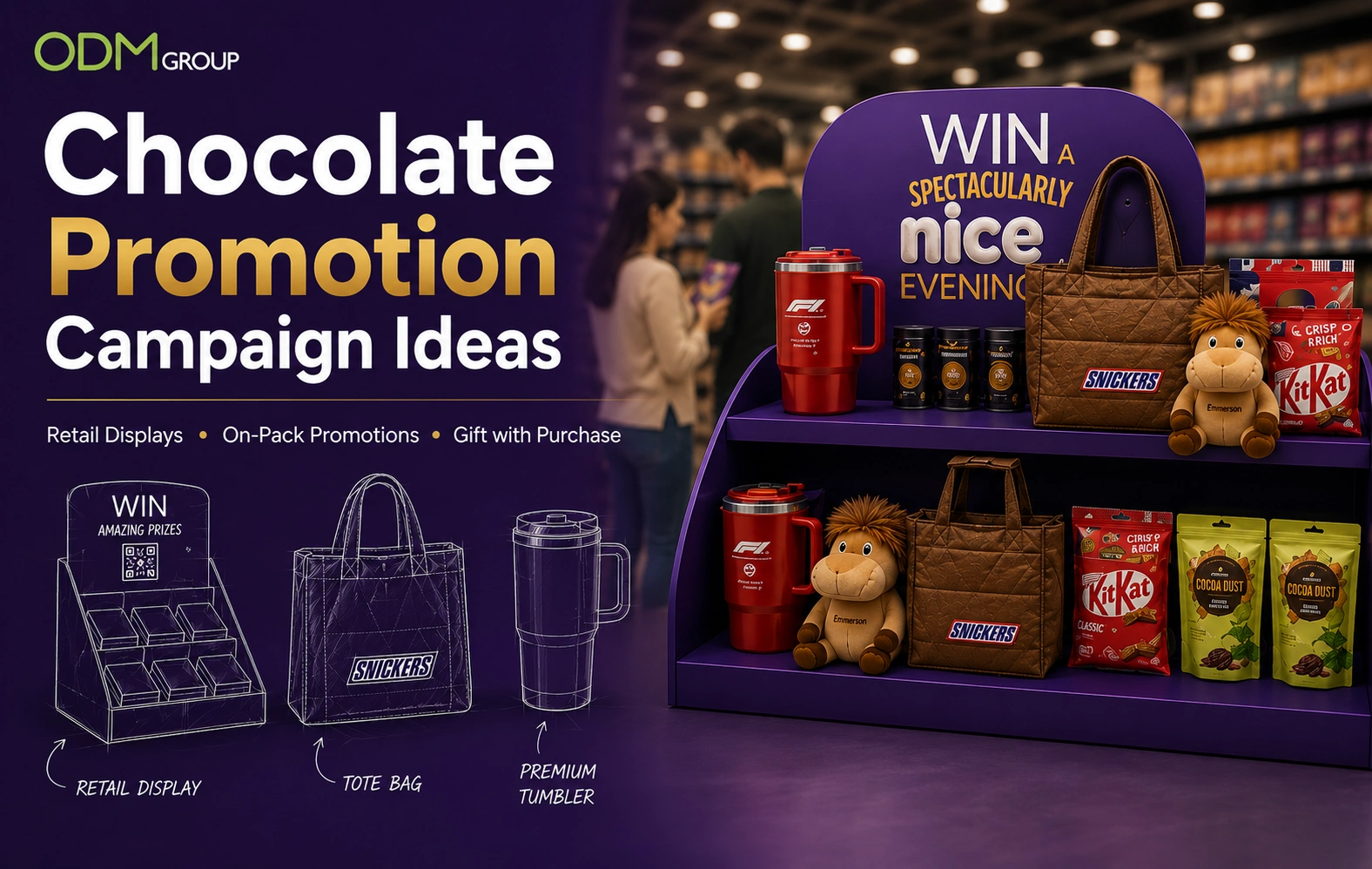
Winning Chocolate Promotion Ideas Inspired by Global Brands
A well-planned chocolate promotion can increase product visibility, encourage [...]
Custom Confectionery Displays: Ideas That Win Attention In-Store
Confectionery is one of the most impulse-driven categories in [...]
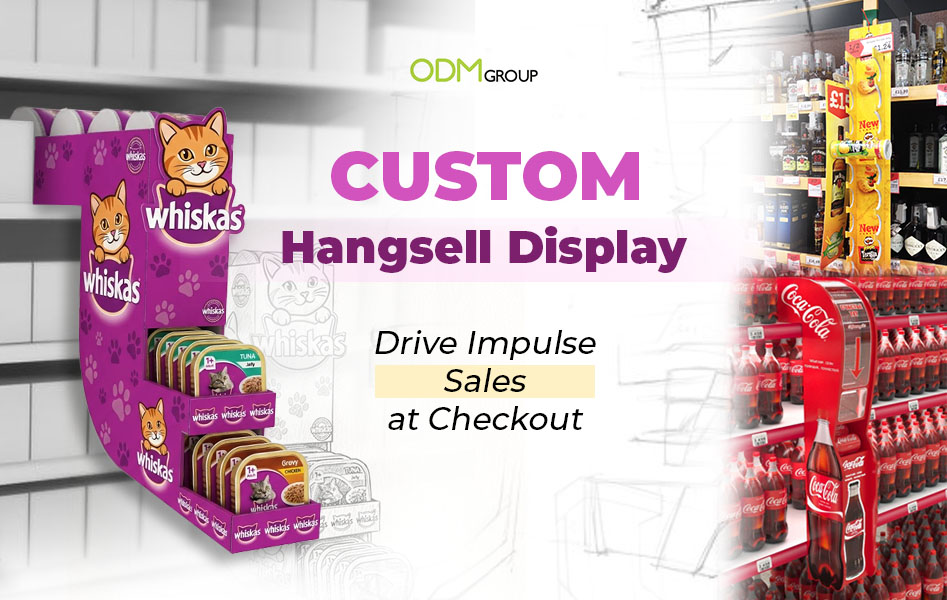
Hangsell Display Benefits for Retail and FMCG Promotions
A well-designed hangsell display is one of the most [...]
Custom-Printed Cup: Chupa Chups’ Irresitible GWP Merchandise
Imagine a world where a single cup can stir [...]
4 Reasons Al Nassma Unique Product Display is a Real Head-Turner
Aside from products, displays also play a crucial role [...]
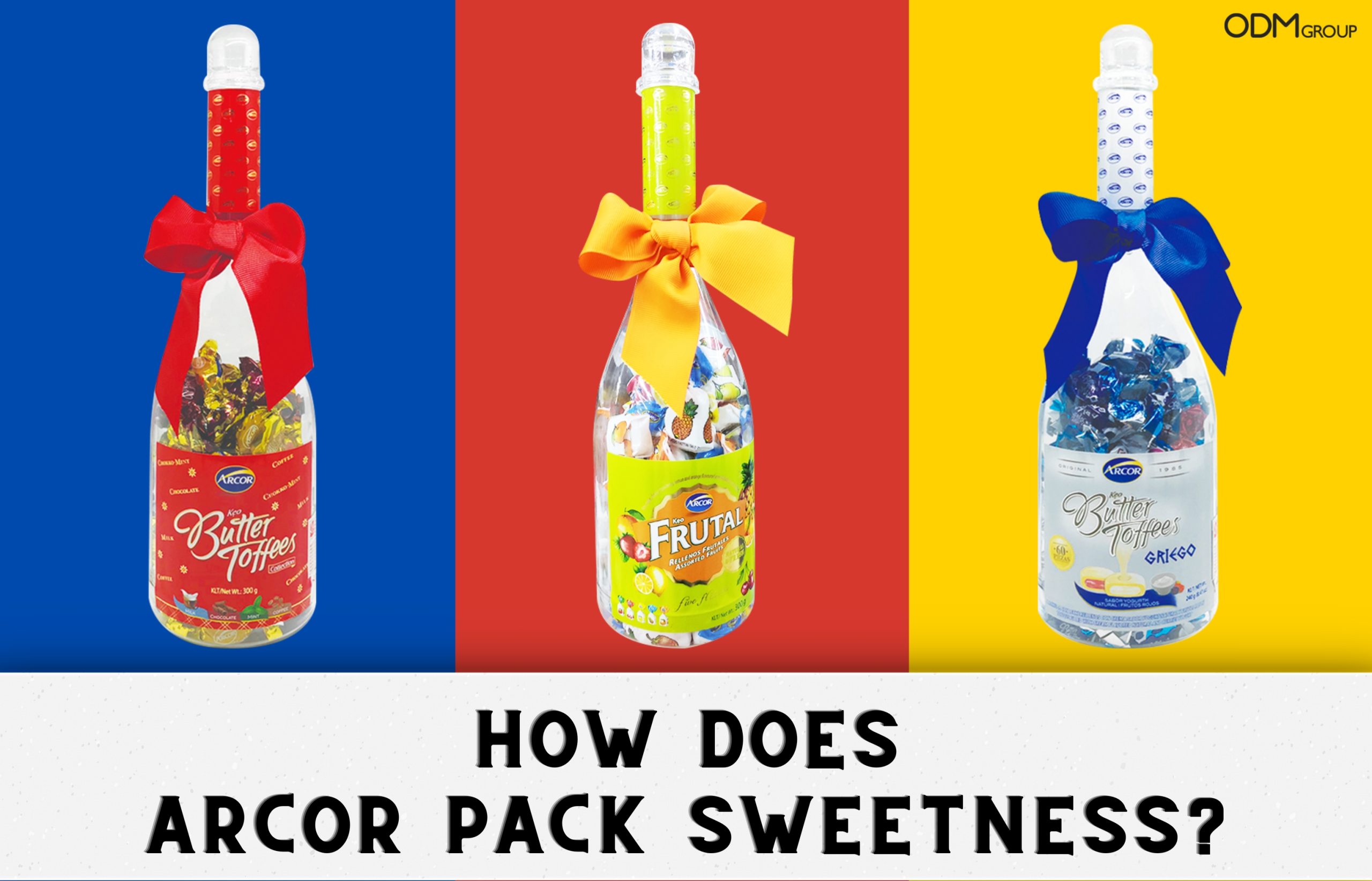
5 Ways this Multi-Purpose Packaging Idea Drives Sales
Your product packaging is your brand's first point of [...]