
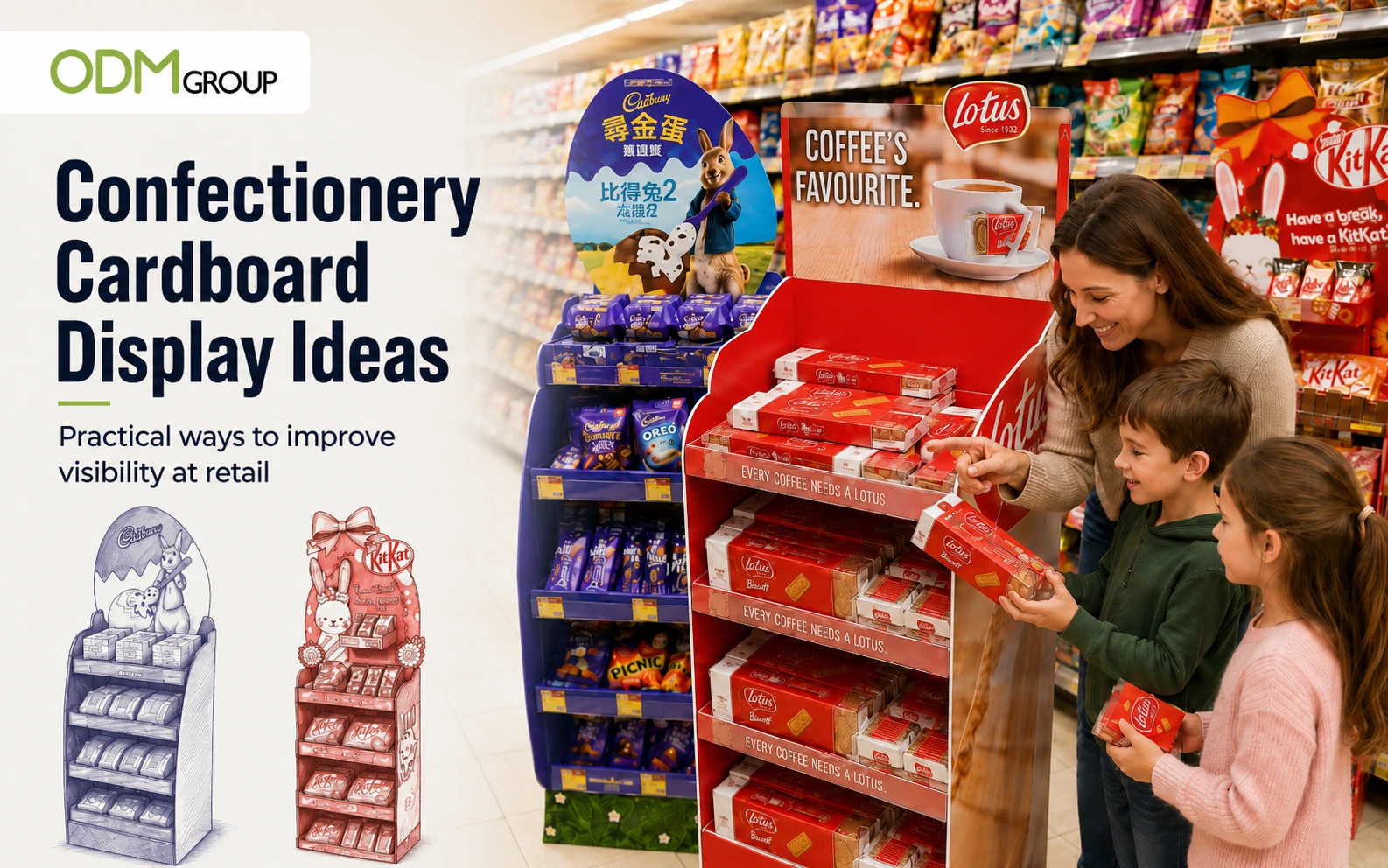
A well-designed confectionery cardboard display can help snack brands stand out in crowded retail environments. Confectionery aisles are usually filled with colorful packaging, familiar products, and competing promotions, making it difficult for one product to hold a shopper’s attention. A dedicated display creates more space for branding, campaign messaging, product storytelling, and promotional offers.
Cardboard displays are also flexible enough to support product launches, seasonal campaigns, gift-with-purchase promotions, cross-merchandising, and limited-edition collections. From compact counter displays to full freestanding units, the structure can be customized around the product, available retail space, and campaign objective.
Why Confectionery Cardboard Displays Work
Confectionery is a highly visual and impulse-driven category. Shoppers may already have a preferred brand in mind, but an attractive display can introduce another product, highlight a promotion, or encourage an unplanned purchase.
Unlike products placed within a standard shelf arrangement, a standalone display gives the brand more control over how the product is presented. It can combine the product, campaign message, visual theme, and call to action in one dedicated structure.
This makes cardboard displays particularly useful for:
- New product launches
- Seasonal confectionery campaigns
- Promotional bundles
- Limited-edition packaging
- Gift-with-purchase programs
- Sampling activities
- Cross-brand collaborations
- Retail events
The most effective displays do more than hold stock. They help shoppers understand why the product is relevant and give them a reason to stop.
Lotus’ Confectionery Cardboard Display
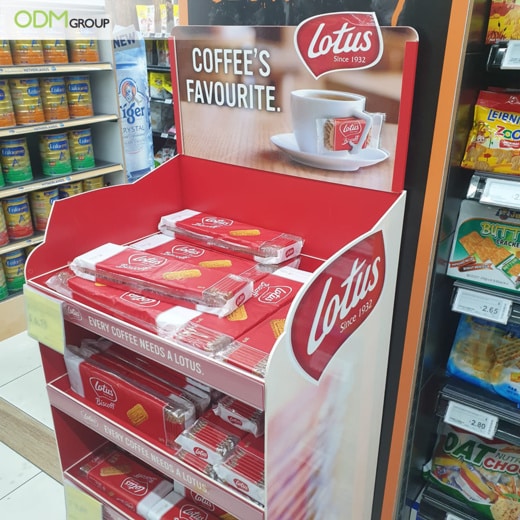
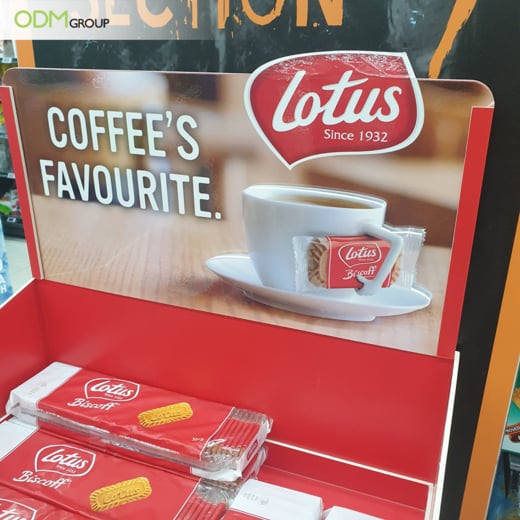
Lotus offers a useful example of how a simple cardboard display can communicate a clear product message. The display uses the brand’s recognizable red color, a prominent logo, and a raised teacup graphic holding a Lotus biscuit. This three-dimensional feature adds depth to the back panel and helps the structure attract more attention than a standard flat display.
Confectionery Cardboard Display
What Brands Can Learn From the Lotus Display
The Lotus example shows that a confectionery display does not always need complicated technology or an oversized structure to be effective.
The campaign works because its core message is easy to understand. Shoppers can quickly identify the brand, recognize the product, and understand when they might consume it.
There are several practical lessons other confectionery brands can apply.
Use Brand Colors Consistently
The Lotus display makes strong use of the brand’s signature red. This creates an immediate visual connection between the display and the product packaging.
For confectionery brands, consistency is especially important because shoppers often make decisions quickly. The display should feel like a natural extension of the product rather than a separate marketing piece.
Brand colors, typography, logos, and product photography should remain consistent across the:
- Display structure
- Product packaging
- Promotional signage
- Campaign materials
- Gift packaging
- Digital content
Strong consistency helps shoppers recognize the brand from a distance and reinforces recall after the campaign.
Build the Campaign Around a Consumption Moment
Lotus connects its biscuits with coffee, which gives the product a clear role in the shopper’s routine.
Other confectionery brands can build campaigns around relevant occasions such as:
- Afternoon coffee breaks
- Family movie nights
- Children’s lunchboxes
- Holiday gatherings
- Office snack breaks
- Travel
- Gifting
- Weekend celebrations
This approach helps shoppers imagine when and how they might use the product.
It can also support cross-merchandising. Biscuits can be placed near coffee, premium chocolate near wine or gifting products, and children’s snacks near lunchbox accessories.
The most important point is relevance. The chosen occasion should feel natural for the product and target customer.
Add Depth Through Structural Design
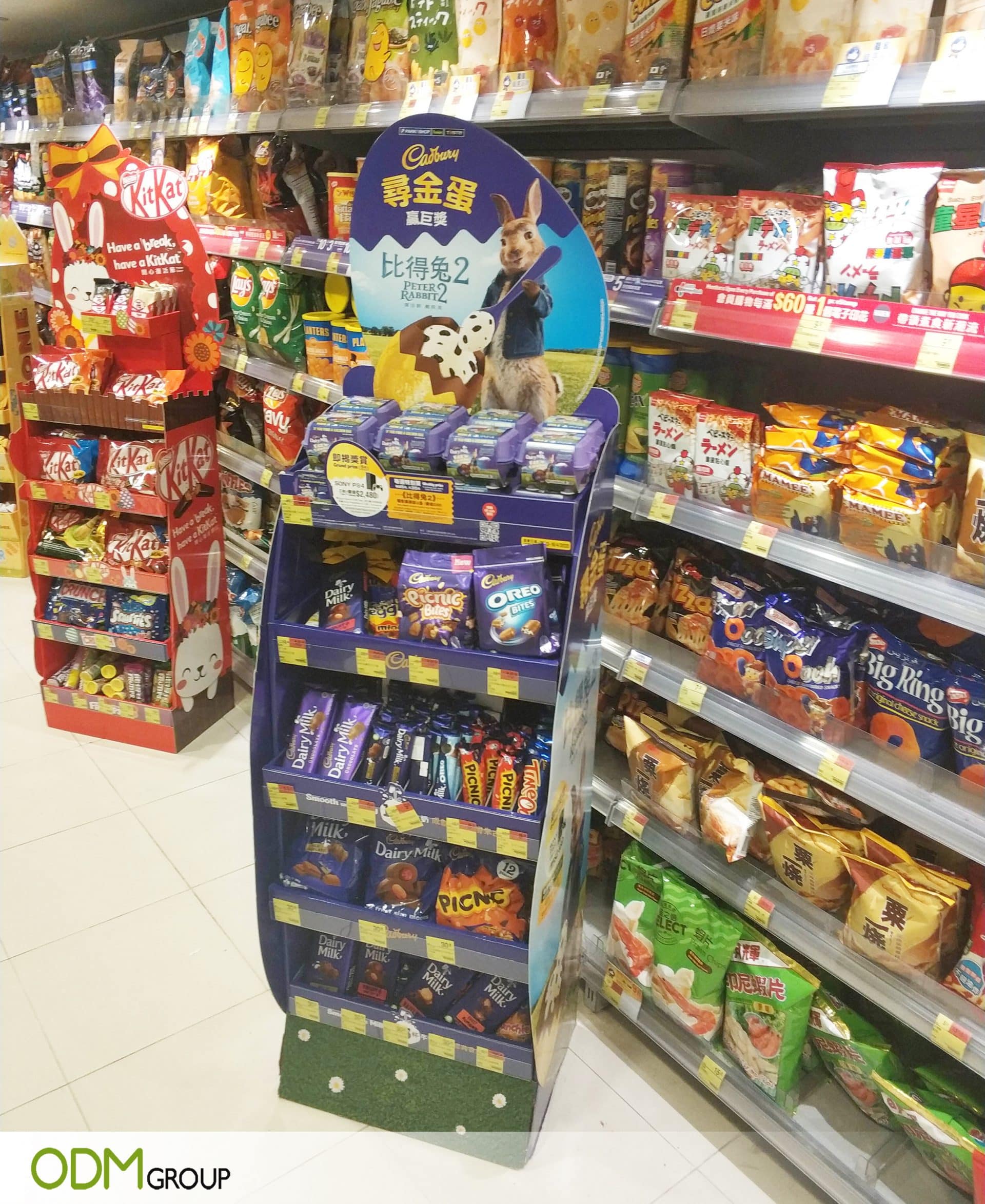
A flat display can still be effective, but dimensional elements often create a stronger visual impression.
The raised teacup graphic on the Lotus display is a good example. It adds depth without requiring a completely different structure.
Confectionery brands can use similar techniques through:
- Layered cardboard graphics
- Raised product replicas
- Die-cut character elements
- Oversized packaging shapes
- Projecting headers
- Shaped side panels
- Three-dimensional product scenes
These features can make the display easier to notice while helping the brand communicate its campaign idea.
However, structural details should never make the display difficult to assemble, transport, or replenish. The best concepts balance visual impact with practical retail use.
Choose the Right Cardboard Structure
Cardboard is one of the most flexible materials for temporary retail displays. It can be cut, folded, printed, layered, and shaped into many different formats.
Common options include:
- Freestanding display units
- Counter displays
- Shelf-ready displays
- Dump bins
- Pallet displays
- Sidekick displays
- Promotional backboards
- Product-shaped displays
The right structure depends on the product size, product weight, campaign period, and retail environment.
For example, individually wrapped candy may work well in a dump bin, while boxed biscuits may require shelves with stronger support. Premium confectionery may benefit from a cleaner counter display with fewer products and more space for branding.
The display should be designed around the product rather than forcing the product into a standard format.
Make the Display Easy to Shop
Visual impact is important, but the display must also work for shoppers and retail staff.
Products should be easy to see, reach, and remove. Staff should also be able to replenish the display without dismantling the structure.
A practical confectionery cardboard display should include:
- Clear product organization
- Easy access to every shelf
- Stable product placement
- Visible pricing
- Simple promotional mechanics
- Adequate stock capacity
- Easy replenishment
- Safe and stable construction
If a display looks impressive but is difficult to shop, its performance may suffer.
The same applies to overcomplicated messaging. Shoppers should be able to understand the campaign within a few seconds.
Keep the Message Simple
Confectionery brands often want to include several product claims, campaign details, and promotional messages on one display. This can quickly make the design feel crowded.
Confectionery Cardboard Display
A stronger display usually prioritizes four elements:
- The brand
- The product
- The campaign benefit or consumption occasion
- The call to action
For example, a seasonal chocolate display might communicate:
- The brand logo
- The featured gift box
- “Made for Holiday Gifting”
- “Available for a Limited Time”
This is clearer than presenting several long claims at once.
The main message should be visible from a distance, while smaller information can be placed closer to the product.
Confectionery Cardboard Display Ideas
There are many ways brands can adapt cardboard displays for different campaign objectives.
Seasonal Display Units
Confectionery performs strongly around holidays and gifting periods. Displays can be designed around Christmas, Chinese New Year, Easter, Valentine’s Day, Halloween, and local festivals.
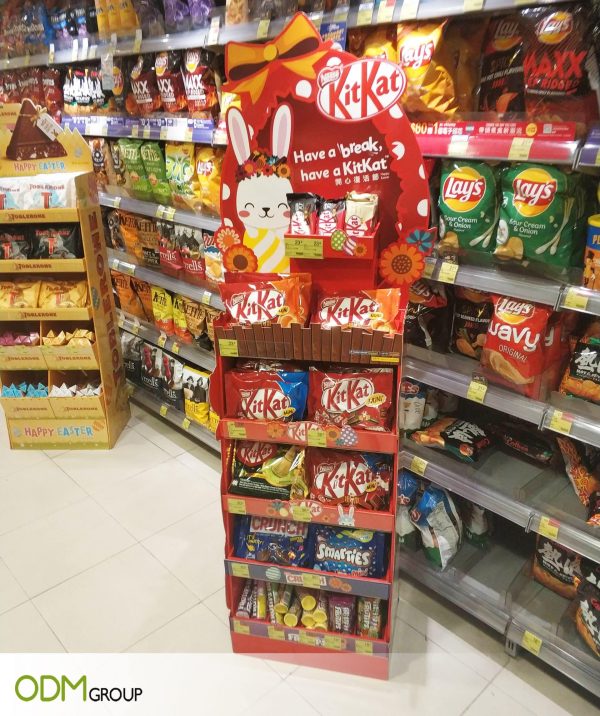
Seasonal structures may include:
- Gift-box shapes
- Festive arches
- Character cutouts
- Decorative headers
- Product bundles
- Limited-edition packaging
- Gift-ready compartments
A seasonal display should still maintain the brand’s identity rather than relying only on generic holiday graphics.
Oversized Product Displays
Oversized replicas can help brands create recognition from farther away.
A chocolate bar, biscuit pack, candy container, or product character can be enlarged and incorporated into the header or full structure.
These displays work well for:
- New product launches
- High-traffic stores
- Retail events
- Family-focused campaigns
- Sampling activations
The size should still suit the retail location and avoid blocking customer movement or surrounding products.
Interactive Displays
Interactive elements can encourage shoppers to spend more time with the brand.
Ideas include:
- Spin-to-win wheels
- Flavor selectors
- Product-matching games
- Mechanical dispensers
- Sound buttons
- QR-code games
- Photo opportunities
- Sampling sections
Interactive features should support the campaign rather than distract from the product.
They also need to be evaluated for cost, durability, maintenance, power requirements, and ease of use.
Gift-with-Purchase Displays
A confectionery display can also promote and hold a free gift.
Suitable gifts may include:
- Branded mugs
- Reusable food containers
- Lunch bags
- Collectible toys
- Kitchen accessories
- Travel pouches
- Storage tins
The gift should be clearly visible so shoppers immediately understand the added value.
Campaign mechanics should also be simple. Details such as the required purchase quantity, qualifying products, and redemption process should be easy to read.
Cross-Merchandising Displays
Confectionery brands can also partner with complementary categories to create stronger retail stories.
Examples include:
- Biscuits with coffee
- Chocolate with wine
- Candy with cinema promotions
- Snack bars with sports products
- Children’s treats with lunchbox items
- Premium confectionery with gifting merchandise
This approach can introduce the product within a more relevant usage occasion and create opportunities for joint promotions.
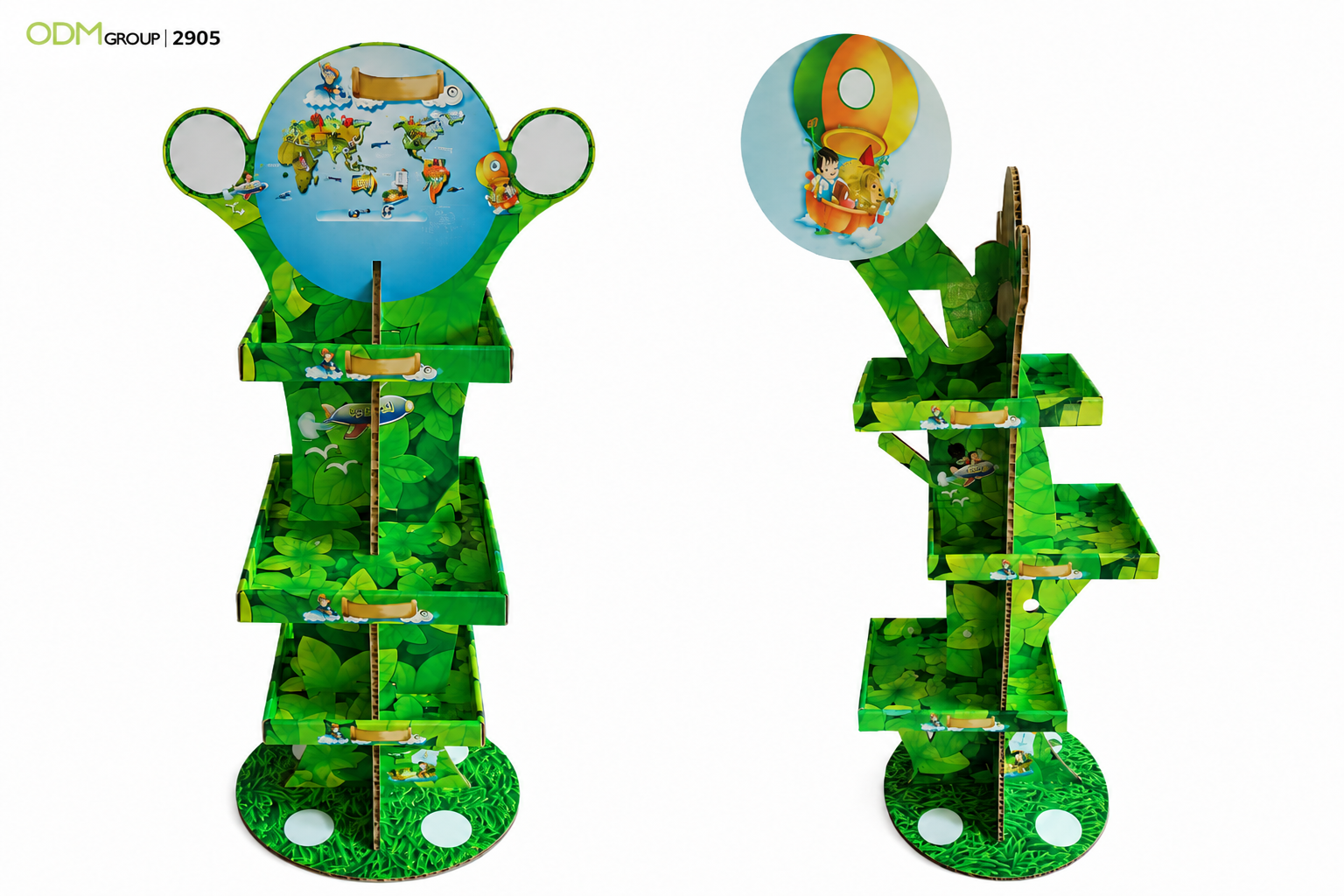
Check out this honeycomb cardboard display you may include in your retail display.
Final Thoughts
The Lotus confectionery cardboard display shows how recognizable branding, dimensional graphics, and a clear consumption message can strengthen a relatively simple retail structure.
The wider lesson is that a strong display should do more than store products. It should help shoppers understand the campaign, recognize the brand, and connect the product with a relevant moment.
For confectionery brands planning a product launch, seasonal promotion, retail activation, or gift-with-purchase campaign, the creative concept and practical retail requirements should be developed together.
ODM Group can support the process from initial strategy and design through prototyping, production management, quality control, and delivery. Contact our team to discuss a custom confectionery cardboard display designed around your product, campaign goals, and retail environment.
More Display Ideas


FAQs about Cardboard Displays
Are cardboard displays suitable for heavy products?
They can be, provided the board grade, shelf structure, internal reinforcement, and weight distribution are properly designed. Prototyping and load testing are important for heavier products.
Can a cardboard display include lights or moving parts?
Yes. Displays can include LED lighting, rotating elements, sound features, and mechanical interactions. These additions should be assessed for cost, power requirements, durability, and retail maintenance.
How long can a cardboard retail display last?
The lifespan depends on the board quality, store conditions, product weight, handling, and construction. Cardboard displays are generally best suited to temporary or seasonal campaigns.
What should brands prepare before designing a display?
Brands should define the campaign objective, product dimensions, product weight, required stock capacity, retail space, campaign duration, target budget, and rollout locations. These details help guide the design process.
What to Read Next?
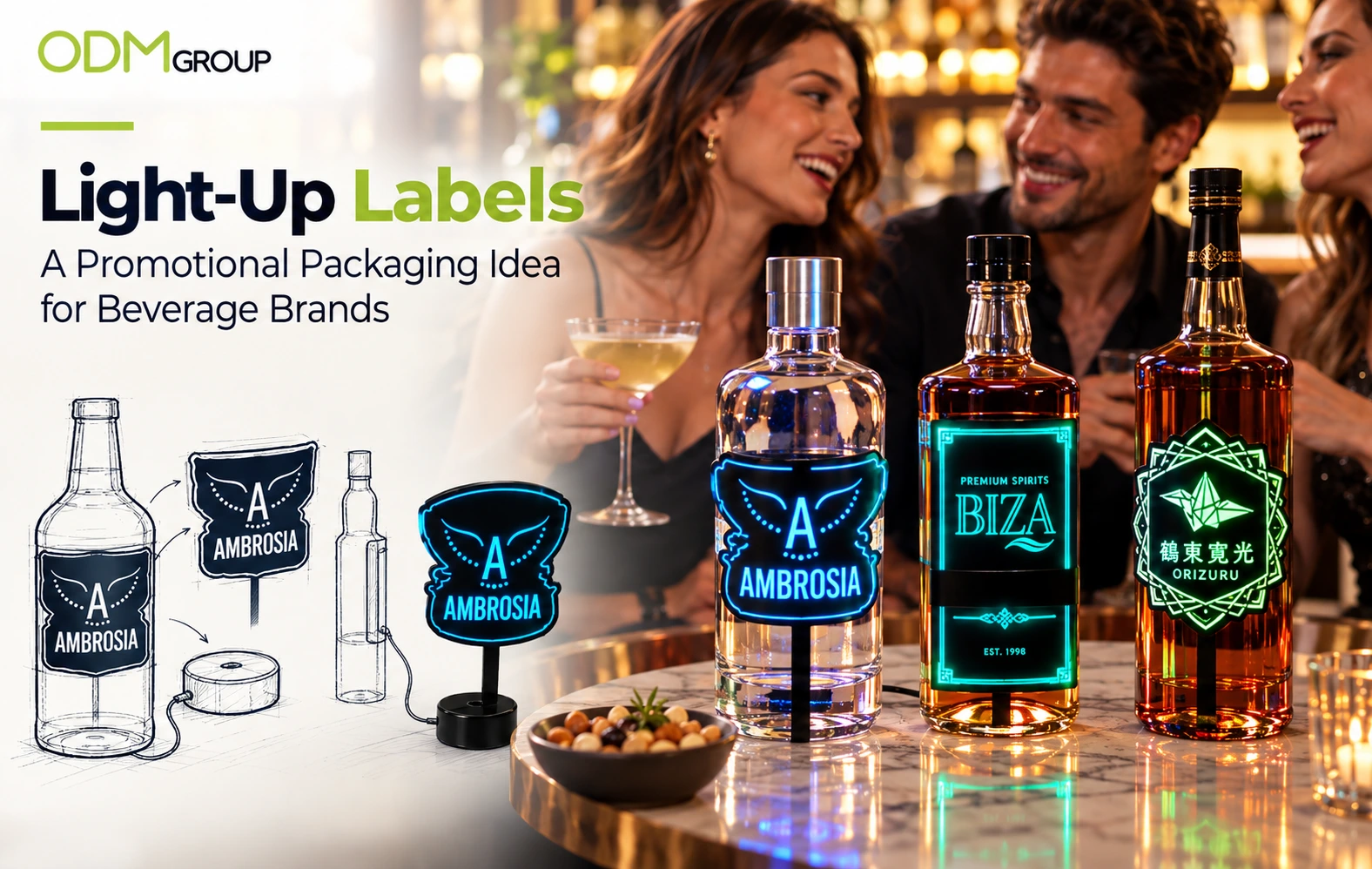
Light-Up Labels for Beverage Promotions and Custom Packaging
Light-up labels give beverage brands another option when standard [...]
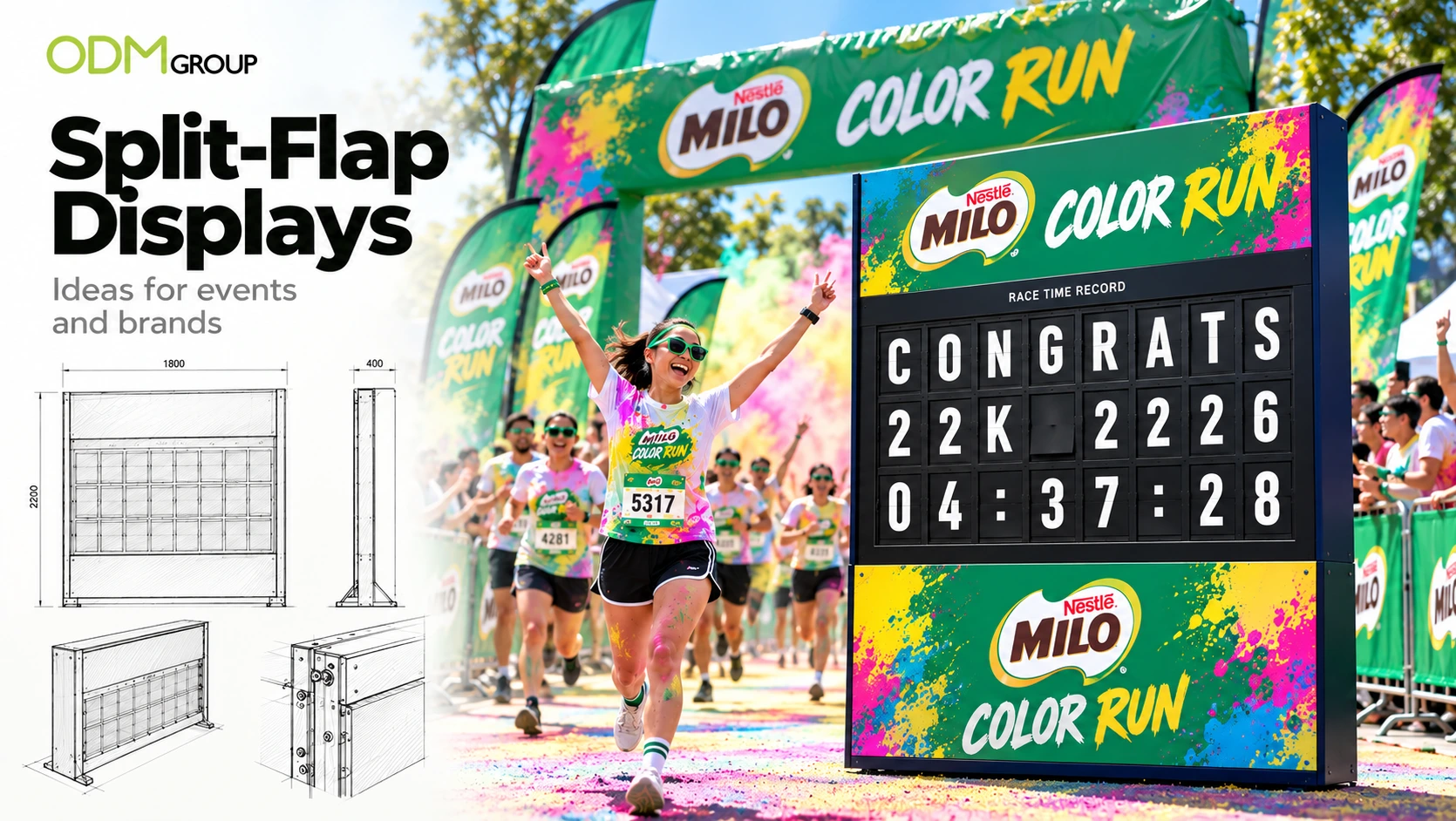
Split-Flap Displays for Events, Retail and Brand Activations
Struggling to make your brand stand out in a crowded [...]
Beer Swag Ideas: Lessons from Heineken Silver’s Taiwan Campaign
Beer swag is evolving beyond traditional bottle openers and [...]

Car Tissue Holder: A Creative Automotive Promotional Gift
A car tissue holder can be more than a [...]
6 Tips for a Sustainable and Functional Promotional Travel Kit
A promotional travel kit combines practical travel essentials with [...]
Promotional Products for Pets: Ideas Inspired by SmartHeart Pet’s Homie
During a visit to Vietnam, the ODM team came [...]