
Visibility can decide whether a shopper stops or walks past. A wine POS display gives brands a practical way to break away from standard shelving, present bottles more clearly, and create a stronger retail moment at the point of purchase.
Designed well, it can help shoppers compare options faster, understand the brand story, and spot the product in a busy supermarket.
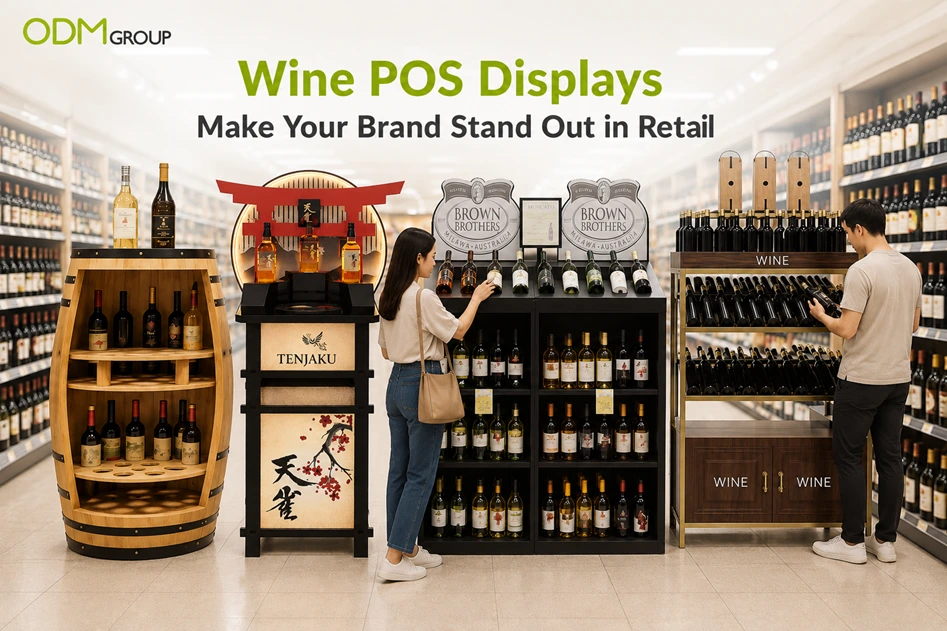
Why Wine Brands Need Better In-Store Visibility
Wine is a highly visual category. Before shoppers read tasting notes or compare regions, they usually respond to what they see first: the bottle shape, label design, shelf position, price tag, and surrounding retail environment.
This creates a challenge for wine brands. Even a strong product can be overlooked if it sits in a crowded aisle with dozens of similar bottles. A wine POS display helps solve this by giving the product a dedicated selling space.
- A strong display can help brands:
- Increase visibility outside the standard wine shelf.
- Guide shoppers toward a featured range or campaign.
- Create a more premium impression through material and finish.
- Communicate a simple brand message quickly.
- Support limited-edition, gifting, or seasonal promotions.
- Make the product easier to browse and compare.
- Encourage shoppers to pause before making a purchase decision.
The goal is not only to decorate the store. The goal is to make the buying journey clearer, faster, and more memorable.
Wine POS Displays as a Shopper Decision Tool
Many wine purchases are influenced by occasion. A shopper may be buying a bottle for dinner, a gift, a party, a holiday meal, or personal enjoyment. In these moments, the display can help reduce decision fatigue.
Instead of expecting shoppers to search through a full aisle, a POS display can organize the products around a specific message.
For example:
- A premium wine display can highlight quality, origin, and craftsmanship.
- A holiday wine display can focus on gifting and celebration.
- A supermarket promotion display can highlight value, bundle offers, or limited-time deals.
- A new product launch display can introduce the story behind the bottle.
- A food-pairing display can help shoppers connect wine with meal occasions.
This is why the best POS displays are not only product holders. They act as retail guides. They help shoppers understand why this wine deserves attention now.
What Makes a Wine POS Display Effective?
A successful wine POS display should balance shopper appeal, brand storytelling, and retail practicality. It needs to look attractive, but it also needs to work in-store.
1. Clear Bottle Presentation
Wine labels need to be visible. Shoppers should be able to see the bottle, read the label, and compare options without difficulty.
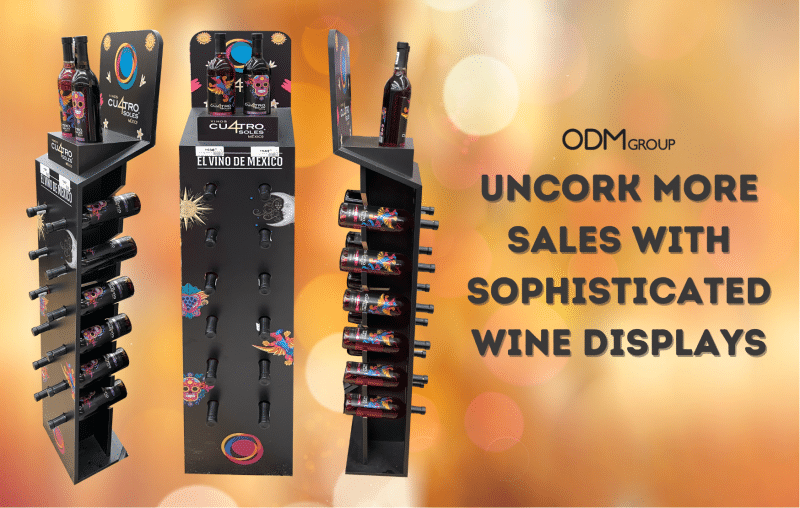
Display structure matters here. Angled racks, tiered shelves, open shelving, and front-facing bottle layouts can make the product easier to browse. If the bottles are hidden, overcrowded, or difficult to reach, the display loses impact.
For wine, presentation should answer one simple shopper question: “What am I looking at, and why should I consider it?”
2. Strong Brand Visibility
A wine POS display should make the brand name easy to recognize from a distance. The logo, campaign message, and visual identity should not be hidden behind bottles or crowded graphics.
In-store messaging should be short. Shoppers rarely stop to read long descriptions. A strong display usually uses one main message, supported by simple visual cues.
This could be:
- product launch message
- gifting message
- premium range message
- seasonal campaign line
- price or value message
- brand story cue
The display should not try to say everything. It should say the most important thing clearly.
3. Material That Matches the Brand
Material choice affects how shoppers perceive the wine. Wood can create a warm, crafted, vintage, or premium feeling. Metal can make the display feel durable, modern, or industrial.
Moreover, acrylic can create a clean and polished look. While cardboard can work well for short-term supermarket campaigns. Mixed materials can help create a more distinctive retail presence.
The right material depends on the brand image, campaign duration, retail channel, logistics, and budget. A premium wine brand may need a display that feels more permanent and refined, while a short-term supermarket promotion may need something lightweight, cost-effective, and easy to roll out.
4. Stable and Safe Structure
Wine bottles are heavy and fragile. This makes structure one of the most important parts of display design.
A wine POS display must hold weight properly, stay balanced, and remain safe when shoppers interact with it. It also needs to be easy for store teams to restock.
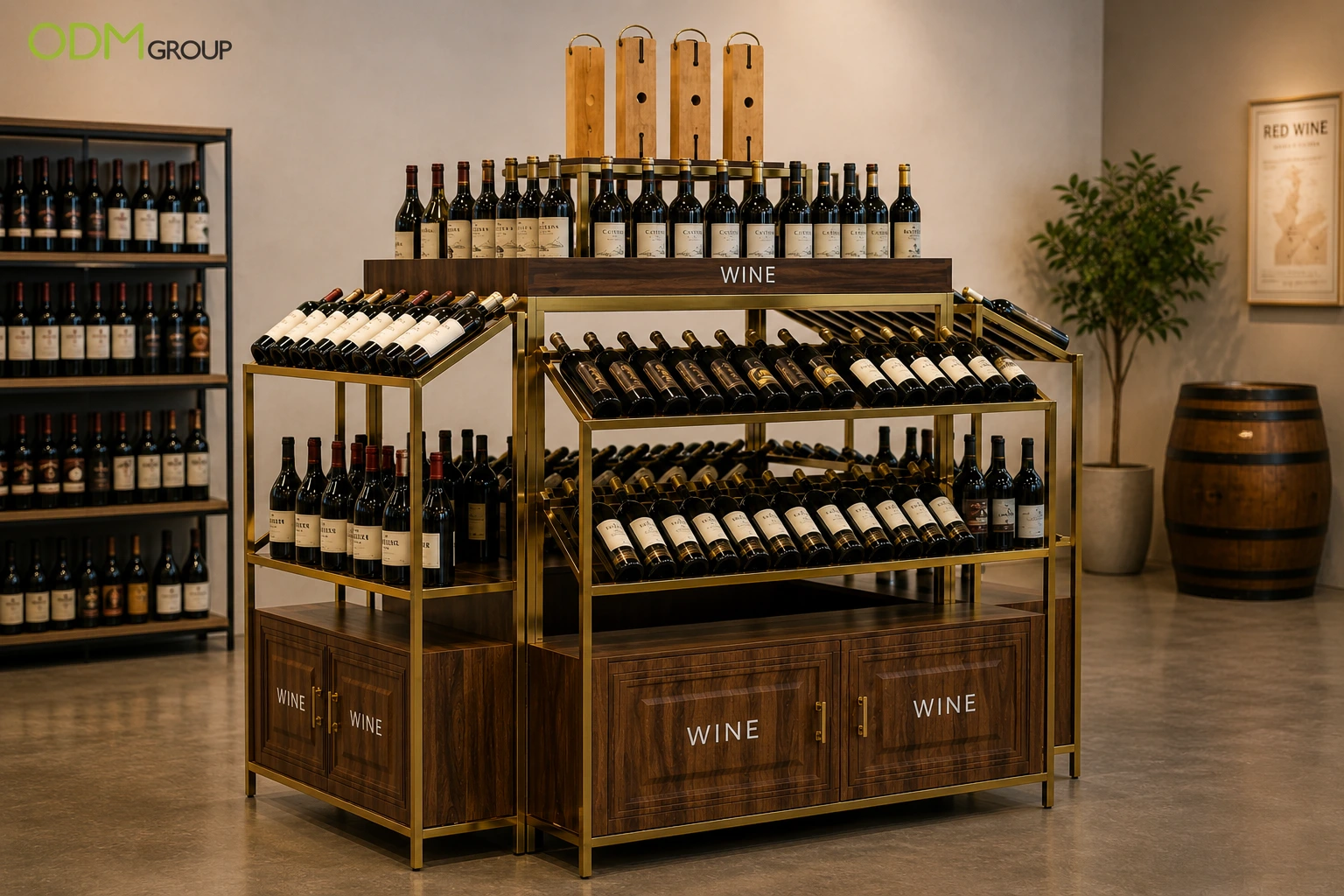
Brands should consider:
- Bottle weight.
- Number of bottles per shelf.
- Shelf angle.
- Base stability.
- Restocking access.
- Transport and assembly.
- Store floor conditions.
A display that looks good but fails in daily retail use can create problems for both the brand and the retailer.
5. Strategic Store Placement
Placement can change the role of the display.
- A standalone floor display can create a strong interruption in a high-traffic area.
- An end-cap display can capture attention at the end of an aisle.
- A shelf-adjacent display can support discovery within the wine section.
- A checkout-adjacent display can work for smaller bottles, gifting items, or impulse purchases.
- A seasonal display area can help position wine around holidays, celebrations, or gift-buying occasions.
Before designing the display, brands should understand where it will be placed and how shoppers will approach it. A display viewed from the side needs strong side graphics. A display placed at the aisle entrance needs clear front branding. A display placed in a premium retail setting may need higher-quality materials and finishes.
Wine POS Idea by Brown Brothers
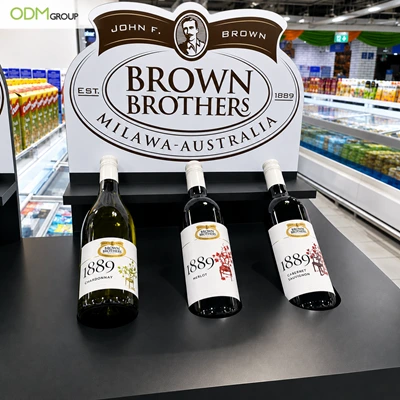
One supermarket wine POS display we observed used a standalone wooden structure to separate the brand from the main wine aisle. This helped the products stand out rather than blend into rows of competing bottles.
The display included a wine rack shelf on top, making the bottles easier to view and compare. This is a useful detail for wine retailers because shoppers often want to see the label clearly before making a choice.
The dark wooden finish gave the setup a premium and vintage look, which worked well for the wine category. It created a warmer retail impression than standard supermarket shelving.
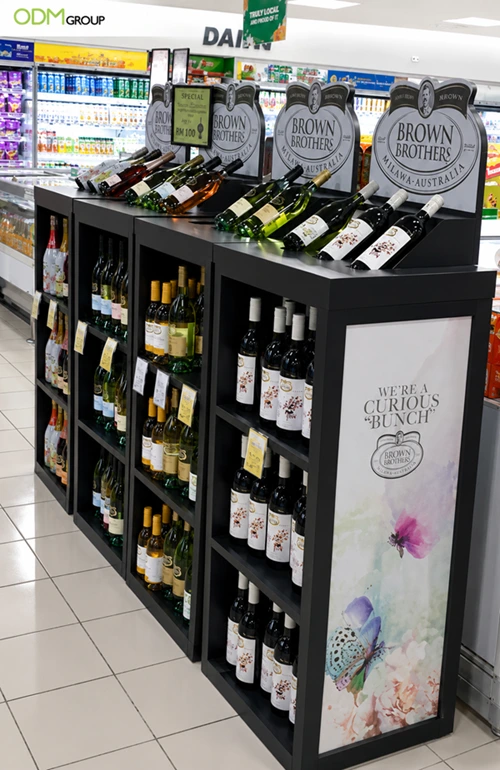
The side poster added personality with the tagline, “We’re a Curious Bunch.” This short message gave the display a stronger brand voice without overwhelming shoppers. The prominent logo also helped improve brand recall.
This example shows how a wine POS display can do more than hold stock. It can create a dedicated brand moment, improve product visibility, and support shopper engagement inside the supermarket.
How ODM Helps Brands Design Wine POS Displays
ODM works with brands to develop POS displays that support real retail objectives. This includes concept development, sketch design, 3D visualization, material recommendations, prototyping, sourcing, quality control, and logistics.
Through our in-house design team, Mindsparkz, ODM helps brands turn campaign goals into practical display solutions. Whether the objective is to launch a new wine range, support a seasonal promotion, highlight a premium product, or improve supermarket visibility, the display needs to be designed around both shopper behavior and retail execution.
Final Thoughts
A wine POS display is not just a place to hold bottles. It is a retail communication tool.
For wine brands competing in supermarkets, the right display can improve visibility, support brand storytelling, make product comparison easier, and create a stronger point-of-purchase moment.
The best displays are not always the most complicated. They are the ones that match the campaign objective, support the shopper journey, and work smoothly in the retail environment.
If your brand is planning a wine POS display, supermarket activation, gifting campaign, or custom retail fixture, ODM can help develop a solution from concept to production. Connect with our team today to start designing your POS display units.
More Ideas
[/fusion_text]


FAQs about Wine POS Display
How can wine brands use POS displays beyond discounts?
Brands can use them for gifting campaigns, food pairing, limited editions, seasonal launches, regional wine stories, or “choose by occasion” themes.
What is often overlooked in wine POS display design?
Restocking flow. A display should be easy for store teams to refill, keep tidy, and maintain throughout the campaign.
How can a wine POS display support premium branding?
Material, spacing, lighting, and clean messaging can make the product feel more considered. A premium display should look polished without becoming cluttered.
What should brands avoid in wine POS display design?
Avoid too much text, weak structure, hidden labels, poor bottle access, and visuals that do not match the wine’s positioning.
What to Read Next?

How to Wow Customers with these Stunning Drinks Display Ideas?
With countless alcoholic drink brands around, how do you [...]
Elevating Drinks Promotion with this Premium Wine Display Stand!
When it comes to marketing drinks, presentation is everything! [...]

Make Your Brand Stand Out with this Wine Bottle Holder Design!
Product presentation is definitely one of the most important [...]
Wooden Wine Display: Unique & Sustainable Product Presentation
Presentation is always key when it comes to marketing [...]
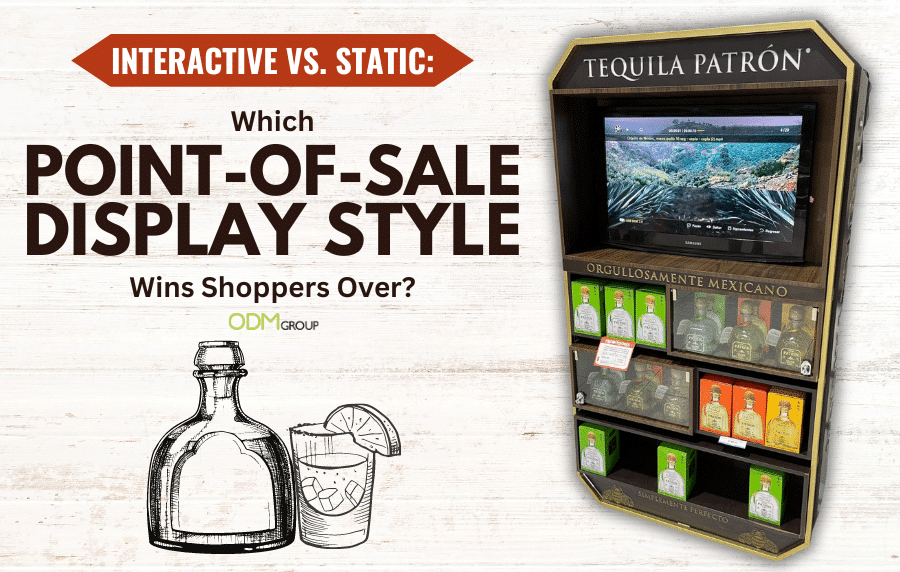
Drinks Marketing Idea: The Power of Point of Sale Video Display
In today's competitive retail environment, it is essential to [...]

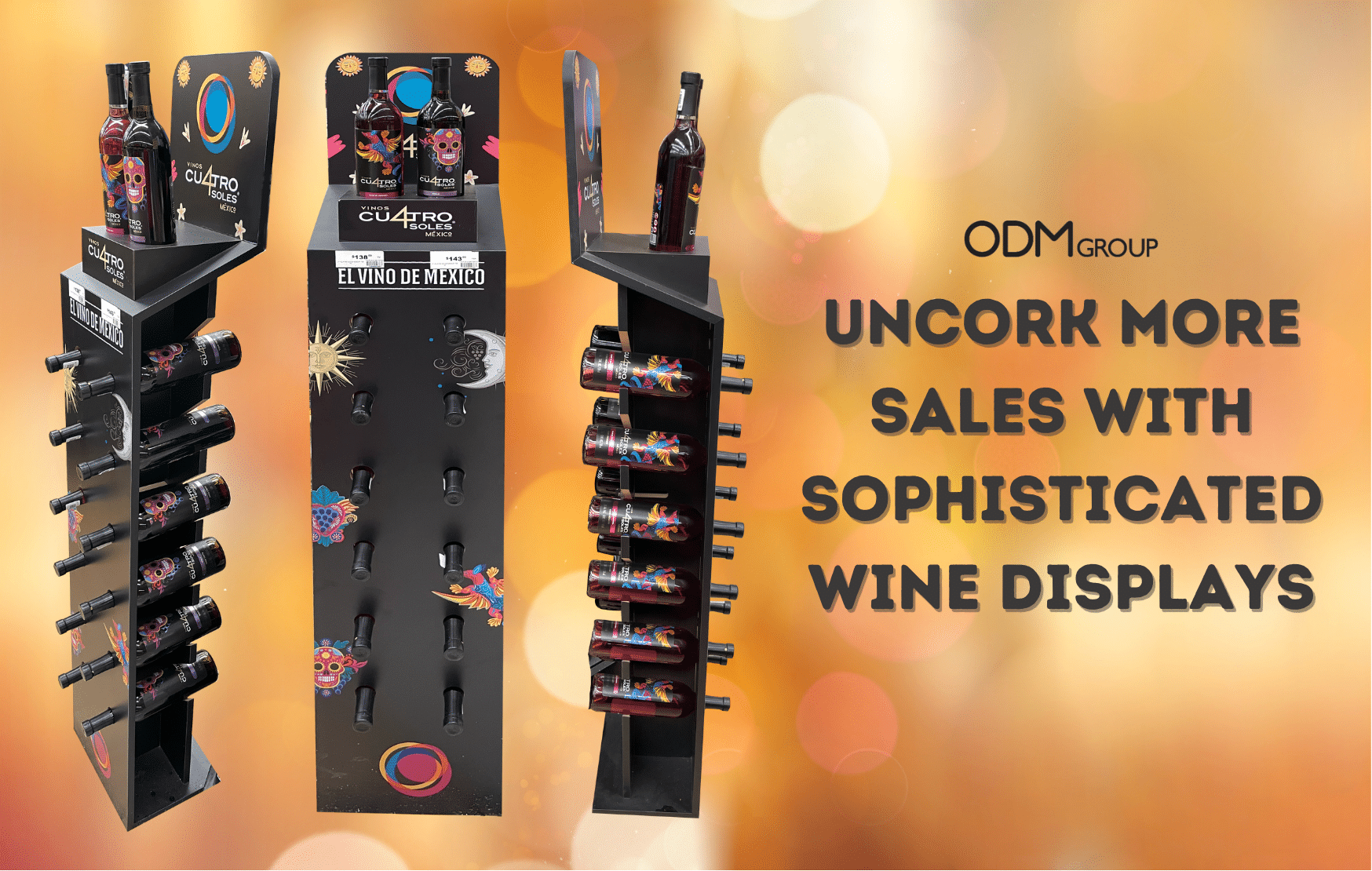
How Cu4tro Soles Attracts Shoppers with Unique Retail Wine Display?
Most of the beverage displays we see in retail [...]
Related posts:
 Stand Out From The Crowd With A Custom Retail Display
 Stand Out from Dull Retail Shelves with a Custom Electronic Display
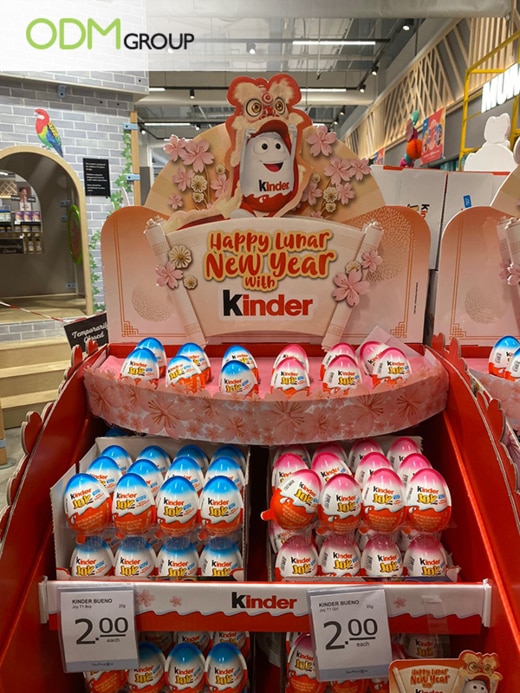 Celebrate CNY with Kinder Bueno’s Retail Chocolate Display Stand!
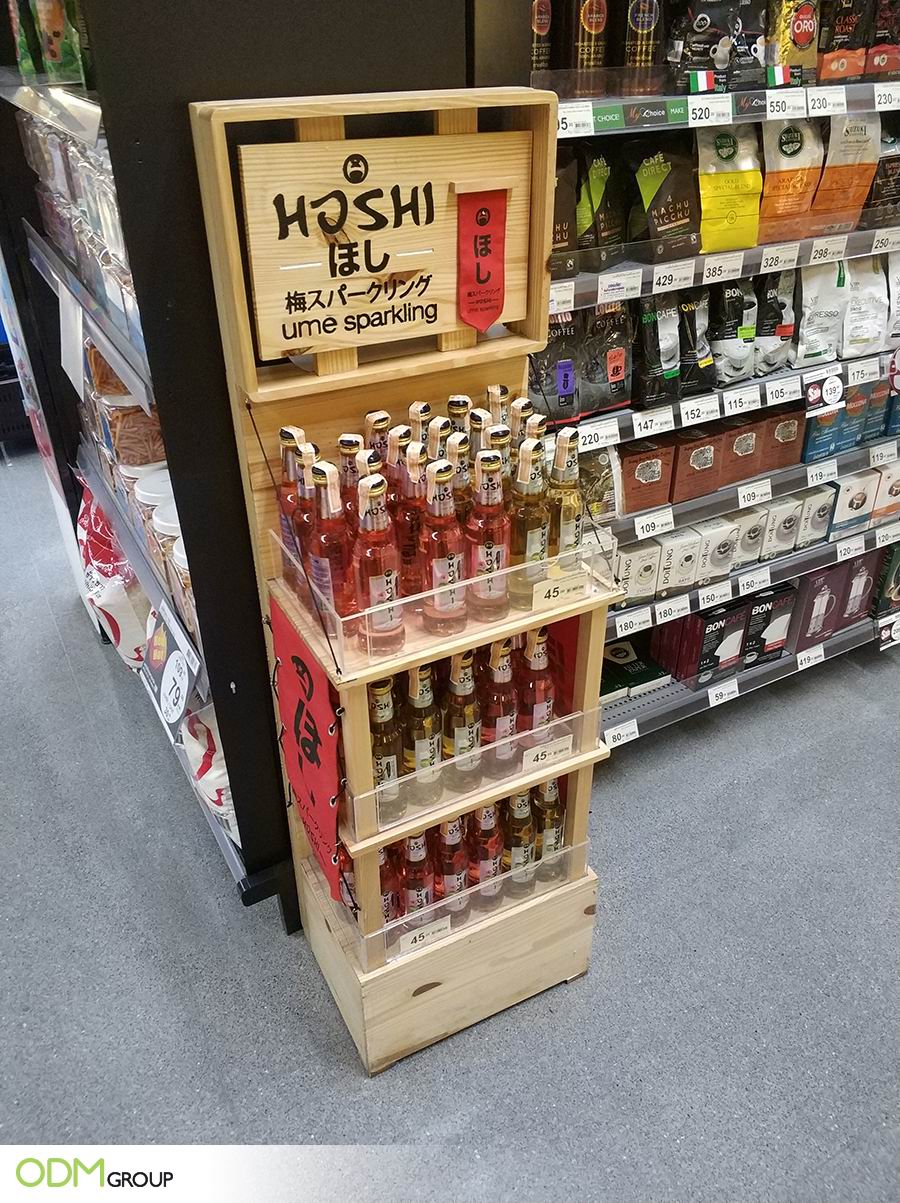 Make Your Brand Stand Out in Retail with Wooden POS Display Idea!
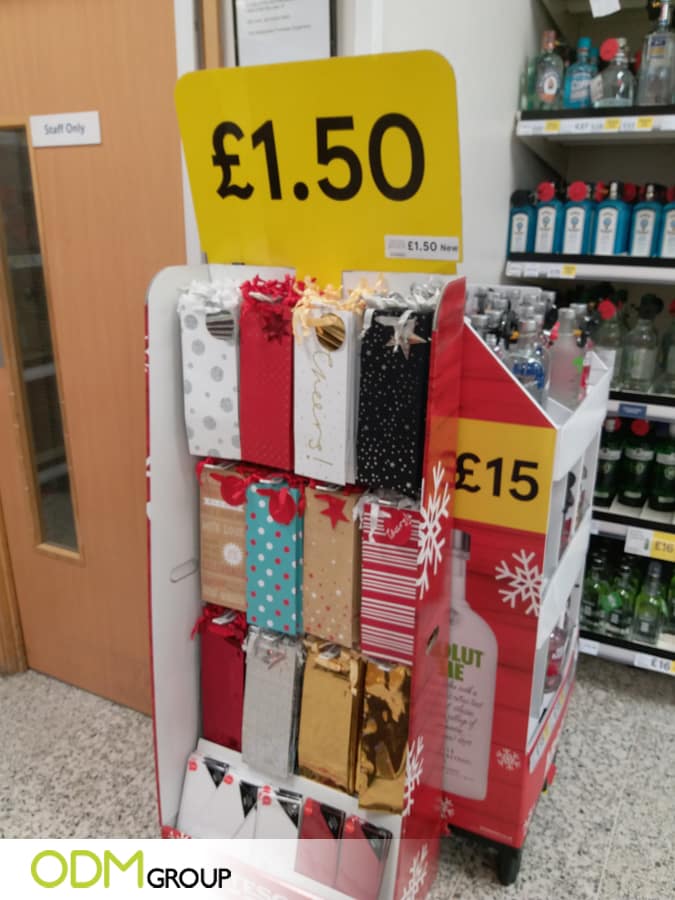 Why Use Custom Wine Bottle Bags and POS Display for Drinks Promos?