
A well-designed supermarket shelf display can turn a standard retail fixture into a more visible and engaging brand space. By combining campaign graphics, custom structures, product organization, and promotional messaging, brands can attract attention without relying entirely on freestanding floor displays.
Shelf displays are particularly useful in supermarkets, where products must compete with dozens of alternatives in the same category. The right design can help shoppers recognize the brand, understand the promotion, compare products, and make purchasing decisions more quickly.
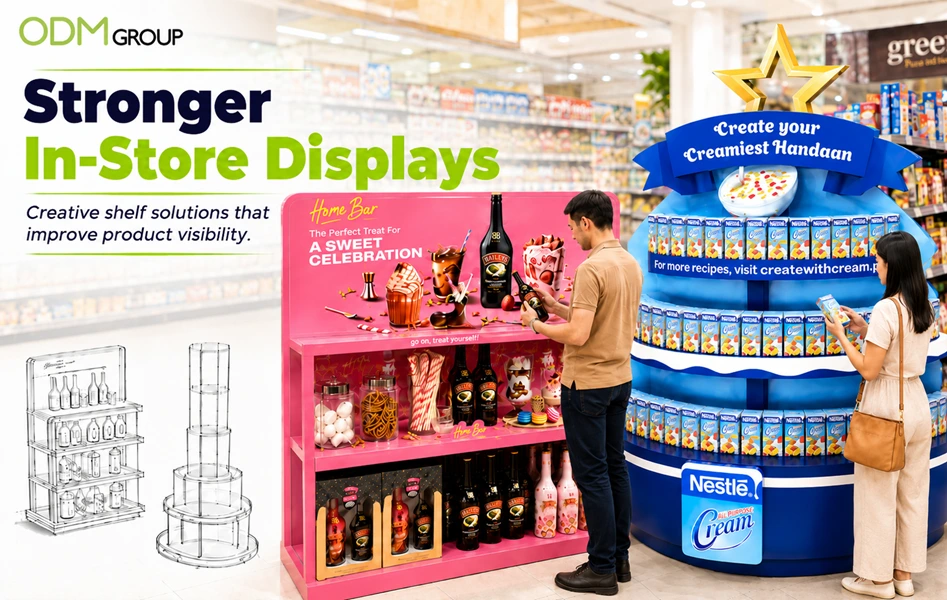
Why Supermarket Shelf Displays Matter
Supermarket shelves are crowded with packaging, price labels, promotional signs, and competing brand messages. Even a strong product can become difficult to notice when every item is presented in a similar way.
A custom supermarket shelf display creates visual separation around the featured products. It can support several commercial goals, including:
- Increasing visibility in a competitive category
- Introducing a new product or flavor
- Supporting a seasonal marketing campaign
- Promoting product bundles
- Displaying gifts with purchase
- Encouraging shoppers to explore more of the range
- Improving brand consistency across stores
Unlike a freestanding display, a shelf-integrated unit works with the retailer’s existing fixtures. This can be useful when floor space is limited or when the products need to remain within their usual category.
Supermarket Shelf Display Ideas for Brand Campaigns
A shelf display does not have to be complicated to be effective. The structure, materials, graphics, and promotional features should all support one clear campaign message.
1. Full Shelf Takeover
A full shelf takeover uses branded back panels, shelf strips, side panels, headers, dividers, and product trays to create a clearly defined promotional area.
This approach helps distinguish the brand from surrounding products while maintaining the retailer’s existing shelving system. A strong color palette and consistent visual language can make the space recognizable from farther down the aisle.
Full shelf takeovers can work well for:
- Product launches
- Seasonal campaigns
- Limited-edition collections
- Brand anniversaries
- Major retail promotions
The products should remain easy to access, restock, and compare, even when the shelf includes several decorative elements.
2. Seasonal Shelf Displays
Brands can redesign supermarket shelves around key shopping occasions such as Valentine’s Day, Christmas, Lunar New Year, summer, back-to-school season, or major sporting events.
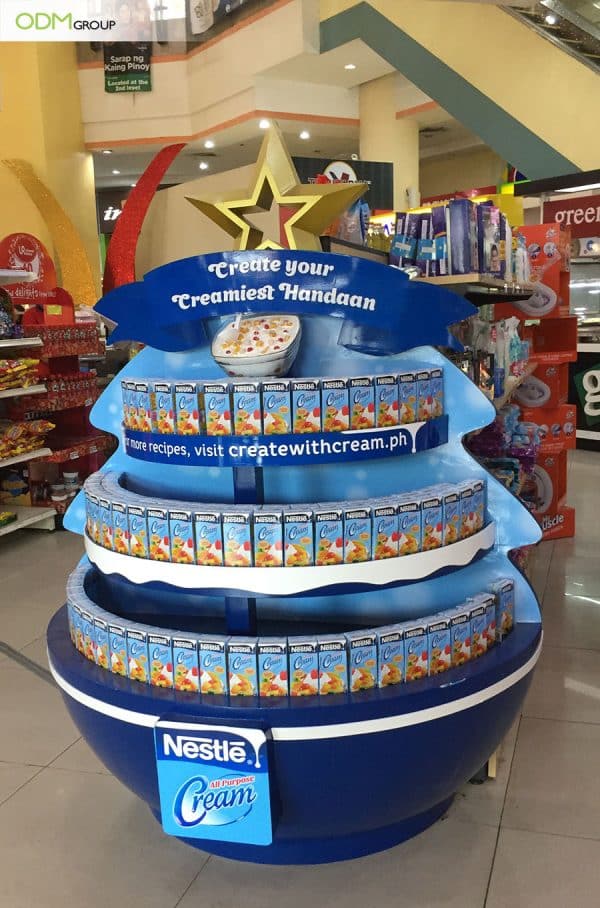
Seasonal elements may include custom headers, themed graphics, product-shaped panels, gift pack sections, or decorative props. However, the display should still communicate the product and offer clearly.
The most effective seasonal displays do not rely on decoration alone. They connect the occasion to a relevant reason to buy, such as gifting, sharing, entertaining, travel, or family activities.
3. Product-Usage Displays
A product-usage display shows shoppers how an item can fit into everyday life.
A beverage brand might present serving suggestions or recipe ideas. A food brand could show meal combinations. A personal care company may organize products into a simple routine.
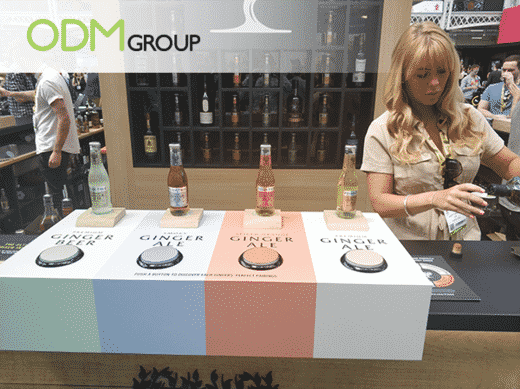
These displays help shoppers imagine the product after purchase. They can also encourage cross-selling when several complementary products are presented together.
4. Gift-With-Purchase Displays
Promotional gifts can become much more persuasive when shoppers can see the actual item instead of only reading about it on a shelf label.
Brands can integrate a sample gift into the supermarket shelf display alongside the qualifying products. The display should clearly explain:
- What the promotional gift is
- Which products customers need to purchase
- How many items are required
- Whether the offer is limited
- Where the gift can be collected
Suitable promotional products may include reusable cups, lunch containers, serving accessories, collectible plates, storage items, travel accessories, or branded merchandise connected to the product category.
5. Product Bundle and Gift Pack Displays
Dedicated shelf areas can help brands introduce multipacks, gift sets, sample collections, or limited-edition bundles.
An open sample pack may be displayed so shoppers can see what is included. Clear windows, carry handles, structural inserts, and premium printed finishes can make the packaging feel more suitable for gifting.
Bundling can also introduce customers to a new product by pairing it with a more familiar option.
6. Transparent Product Showcases
Clear acrylic, PET, or transparent plastic panels can create a more premium shelf presentation without hiding the merchandise.
These materials can be used for:
- Product covers
- Ingredient showcases
- Display risers
- Protective windows
- Sample holders
- Decorative enclosures
Transparent structures are particularly useful when the brand wants to present product demonstrations, serving inspiration, collectibles, or delicate props.
The display must still allow convenient access for store staff to clean and replenish the products.
7. Modular Shelf Display Systems
Supermarket shelf dimensions may vary between retailers, store formats, and countries. A modular display system helps brands adapt one campaign to different locations.
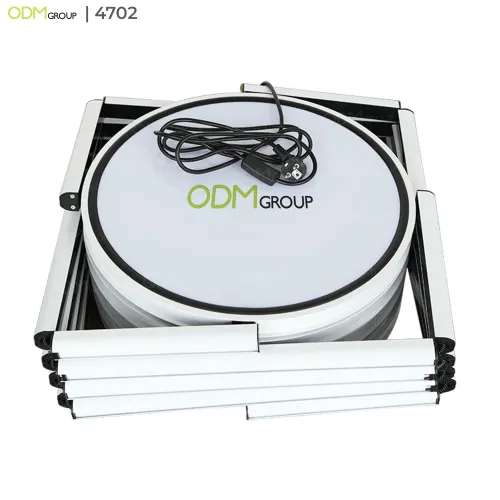
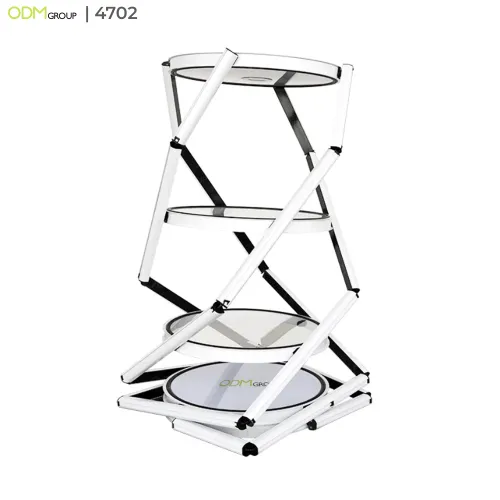
A modular kit may include:
- Adjustable shelf dividers
- Interchangeable header panels
- Removable product trays
- Magnetic graphic panels
- Clip-on signage
- Extendable side panels
This approach can reduce the need to create a completely different unit for every store. It can also make installation, replacement, storage, and transportation more manageable.
8. Interactive Shelf Displays
Simple interactive elements can encourage shoppers to spend more time with the campaign.
Possible features include QR codes, sliding information panels, recipe cards, product selectors, small digital screens, lighting effects, or rotating components.
Any interactive feature should help shoppers understand the product or promotion. It should not make the display difficult to operate or distract from the purchase.
Baileys’ Treat Bar Supermarket Shelf Display
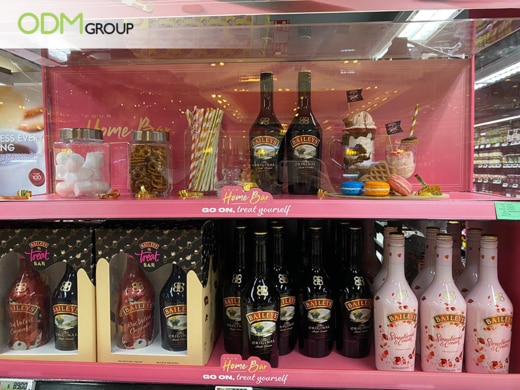
We came across a Baileys Treat Bar Display in a supermarket in Singapore. It stood out to us due to its incorporation of the display into a normal grocery store shelf. It provides a useful example of how an existing supermarket shelf can become a complete branded environment.
The campaign uses a distinctive pink backdrop, printed shelf panels, clear acrylic casing, mirrored surfaces, dessert-inspired props, and coordinated promotional packaging. Together, these elements separate the Baileys section from the surrounding liquor shelves.

supermarket display shelf
Creating a Recognizable Branded Zone
The strong pink color gives the display immediate visual impact. It appears across the header, shelf edges, graphics, background panels, and serving area.
Rather than adding one small promotional sign, Baileys created a coordinated shelf takeover. This helps customers recognize the campaign from different points in the aisle.
Showing Shoppers How to Enjoy the Product
The upper section is presented as a “Home Bar.” Baileys bottles appear alongside dessert drinks, marshmallows, pretzels, colorful straws, macarons, and other sweet ingredients.
supermarket display shelf
These elements are not simply decorative. They show shoppers how the product can be used to create indulgent drinks and desserts at home.
By presenting a consumption occasion, the display goes beyond basic product information and helps customers imagine the experience associated with the purchase.
Supporting Product Discovery Through Packaging
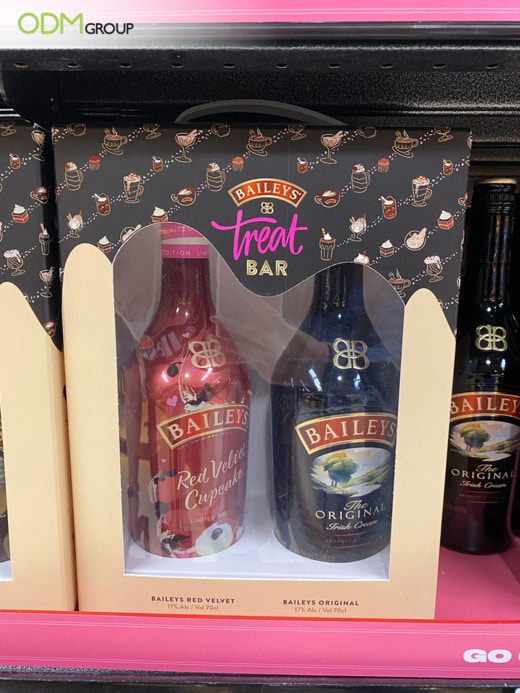
The campaign also includes a “Treat Bar” promotional pack containing Baileys Original and Red Velvet Cupcake.
The packaging uses a large transparent window, dessert-themed graphics, and a carry handle. It keeps both bottles visible while presenting them as one coordinated gift set.
supermarket display shelf
Pairing a familiar variety with a more distinctive flavor may encourage customers to try something new. The bundle can also increase the perceived value of the purchase during gifting or celebration periods.
Balancing Inspiration and Product Access
The decorative showcase is positioned above the bottles available for purchase. This creates a clear visual hierarchy.
The upper section draws attention and conveys the campaign theme, while the lower shelves hold retail stock. Shoppers can enjoy the branded presentation without struggling to locate the products.
What Brands Should Consider When Designing a Supermarket Shelf Display
An attractive concept must also work within real retail conditions.
Retailer Guidelines
Before developing the design, brands should confirm the retailer’s requirements for dimensions, materials, installation, weight limits, safety, branding, and promotional messaging.
A design that looks effective in a rendering may still require changes before it can be installed.
Product Visibility
The display should highlight the products rather than hide them behind graphics or decorations.
The brand name, product range, promotional offer, and purchase requirement should follow a clear hierarchy. Shoppers should be able to understand the campaign within a few seconds.
Restocking and Maintenance
Store staff need convenient access to the merchandise. Displays that are difficult to replenish or clean may lose their visual impact during the campaign.
Product trays, removable panels, access points, and shelf dividers should be considered from the beginning of the design process.
Material Selection
The right material depends on the campaign duration, product weight, desired finish, retail environment, and budget.
Possible materials include:
- Corrugated cardboard for short-term promotions
- Acrylic for transparent or premium displays
- PET and PVC for lightweight components
- Metal for durable structural elements
- Wood for premium or natural presentations
- Vacuum-formed plastic for custom product holders
Mixed-material structures can combine visual impact with strength and practical retail performance.
Packaging and Installation
The display should also be designed for efficient shipping and store installation.
Flat-packed components can reduce transportation volume, while preassembled sections may make installation easier. Clear instructions and labeled parts can help retail teams complete the setup correctly.
How ODM Group Supports Supermarket Display Campaigns
ODM Group works with brands as a strategic partner for the development of custom supermarket displays, promotional packaging, retail merchandise, and in-store campaign materials.
We help brands connect the display concept with their wider commercial objectives. This means considering not only how the unit looks, but also how it functions in the store, supports the products, communicates the promotion, and performs throughout the campaign.
Our development process can include:
- Creative product and design sketches
- 3D visualization
- Prototyping
- Quality control
- Packaging design
- International logistics
Through our design agency, Mindsparkz, we can explore different visual directions before the display moves into production. This allows brands to assess the layout, customer interaction, branding, materials, product capacity, and assembly method at an early stage.
ODM can also develop the supporting elements around the display, including gift packs, promotional bundles, branded merchandise, gifts with purchase, and retail packaging. This creates a more consistent campaign rather than treating each component as an isolated item.
Turning a Standard Shelf Into a Stronger Brand Experience
Effective supermarket shelf display ideas combine visibility, communication, product access, and commercial purpose.
The Baileys Treat Bar campaign shows how color, storytelling, product presentation, and promotional packaging can transform ordinary shelving into a more engaging retail experience. However, the same principles can be adapted for food, beverages, personal care, cosmetics, household products, toys, and many other consumer categories.
ODM Group helps brands move from an initial retail idea to a practical, production-ready display solution. From creative development and prototyping to quality control and delivery, our team can manage the process while keeping the campaign objective at the center of the project.
Contact ODM Group to discuss a custom supermarket shelf display, promotional packaging solution, or wider in-store marketing campaign.
More Display Ideas


FAQs about Supermarket Retail Display
How is supermarket retail display different from a freestanding display?
A shelf display uses the retailer’s existing shelving, while a freestanding display operates as an independent unit on the shop floor. Shelf displays are useful when floor space is limited or products need to remain within their normal category.
Which materials are suitable for supermarket shelf displays?
Common materials include corrugated cardboard, acrylic, PET, PVC, wood, metal, foam board, and vacuum-formed plastic. The selection depends on the campaign duration, product weight, budget, desired appearance, and retailer requirements.
Can one display design be adapted for different supermarkets?
Yes. Modular panels, adjustable dividers, interchangeable graphics, and multiple size configurations can help adapt one display concept for different stores and shelving systems.
Can promotional gifts be incorporated into the display?
Yes. Brands can present gifts with purchase, collectible merchandise, bundles, or limited-edition products within the shelf display. Showing the physical promotional item can help shoppers understand its design and value.
More Blogs
Creative LED POP Signage Ideas for In-Store Promotions
In a busy retail aisle, shoppers do not always [...]
Marketing Advantages of Using A Liquor Bottle Lighting
Creating a captivating and memorable experience is the key [...]
What are the Pros & Cons of a Custom Acrylic Display Stand in Retail?
POS display units are very common to see in various [...]
How Tiger Beer Grabs Shoppers’ Interest with its 3D POP Display?
In the fiercely competitive world of beverage marketing, standing [...]
Elevating Drinks Promotion with this Premium Wine Display Stand!
When it comes to marketing drinks, presentation is everything! [...]
Bottle to Work of Art: 5 Benefits of Using Custom LED Bottle Glorifier
Standing out in the competitive liquor industry requires brands [...]
Related posts:
 12 In-Store Display Ideas to Boost Brand Conversation – Shelf Talkers, Wobblers and More!
 In-store Display: Promotional Shelf Talkers by Sunlight Vietnam
 Supermarket POS Display Idea: Supermarket Standout!
 On-Shelf Point of Purchase Display: Marketing that Converts
 How Store Shelf Display Ideas Drive Sales — 6 Brilliant Examples