
Packaging concepts influence how customers perceive a product before they even open it. For eco-conscious buyers, thoughtful packaging can signal quality, responsibility, and attention to detail while helping brands reduce unnecessary waste.
Sustainable packaging is no longer limited to replacing plastic with paper. Brands now need to consider the full packaging experience, from material choice and product protection to shipping efficiency, recyclability, reuse, and disposal.
The strongest packaging concepts support both commercial and environmental goals. They protect the product, strengthen presentation, communicate the brand story, and give customers a clear reason to keep, reuse, refill, return, or recycle the packaging.
Below are practical eco-friendly packaging concepts that can be adapted for retail products, promotional campaigns, corporate gifts, influencer kits, and limited-edition launches.
What Makes Packaging Concepts More Sustainable?
A material may look natural without necessarily being the most responsible choice for every application.
Bamboo, cork, recycled paper, and fabric can all support more sustainable packaging strategies, but brands still need to evaluate how each material is processed, combined, transported, and disposed of.
A strong packaging concept should consider:
- The amount of material required
- Product protection and durability
- Recycled or renewable content
- Shipping weight and volume
- Whether different components can be separated
- Local recycling or composting options
- The likelihood of customer reuse
- The use of coatings, plastic windows, foam, or magnets
- How clearly disposal or reuse instructions can be communicated
The goal is not to select the material that looks the greenest. It is to develop a packaging solution that makes sense for the product, customer, campaign, and distribution channel.
9 Eco-Friendly Packaging Concepts for Modern Brands
1. Reusable Bamboo Packaging
Bamboo can be developed into premium boxes, containers, cases, and presentation packaging.
Its natural appearance is well suited to tea, confectionery, jewelry, eyewear, cosmetics, wine, wellness products, and corporate gifts. It can also be engraved, printed, stained, or paired with paper-based inserts for a more distinctive branded finish.
The main strength of these packaging concepts is their potential for reuse. A small bamboo box can become a storage container for accessories, stationery, tea bags, or personal items. Larger formats may be reused as keepsake boxes, desk organizers, or home storage.
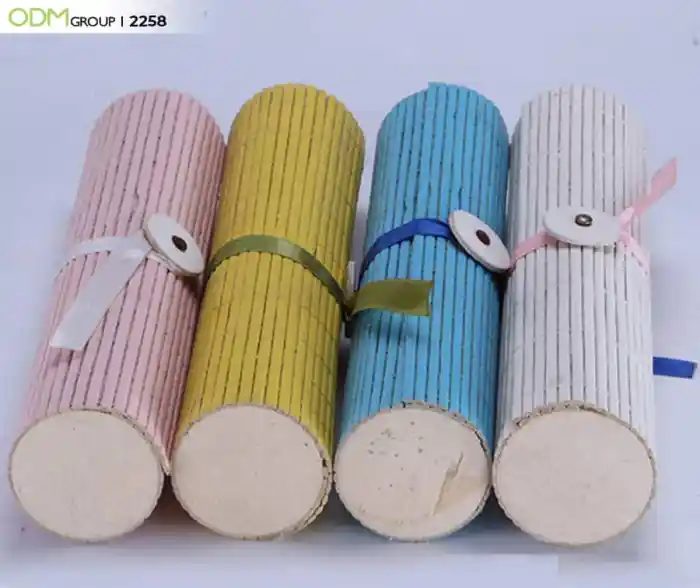
This gives the packaging value beyond the initial purchase and can increase the likelihood that customers keep it.
Brands should still review the complete structure. Hinges, synthetic linings, foam inserts, coatings, and permanent magnets can affect recyclability and material separation.
For similar ODM Group references, brands may quote product codes ODM-3374 and ODM-3373.
2. Cork Cases and Protective Sleeves
Cork is often associated with wine packaging, but its applications extend far beyond bottle stoppers.
It can be used for eyewear cases, pouches, bottle wraps, protective sleeves, cosmetic packaging, wallets, and accessory cases. Its texture gives packaging a natural, tactile quality that can help a product stand out.
Cork packaging concepts work particularly well for wine, travel, fashion, beauty, wellness, and lifestyle brands.
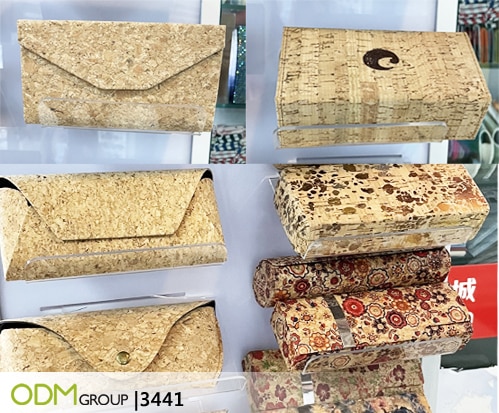
Packaging Concepts – Spectacle Case Made from Cork
A cork spectacle case, for example, protects the product during purchase and continues to serve as a useful storage accessory. This extends the life of the packaging and creates a practical branded item.
Branding can be added through printing, debossing, laser engraving, or stitched labels while allowing the natural surface to remain visible.
Brands interested in developing a similar concept may reference ODM product code ODM-3441.
3. Molded Pulp Inserts
Molded pulp offers an alternative to plastic trays and expanded foam inserts.
It is commonly made from recycled paper fibers and shaped to hold products securely. This makes it useful for cosmetics, electronics, drinkware, bottles, gift sets, accessories, and small appliances.
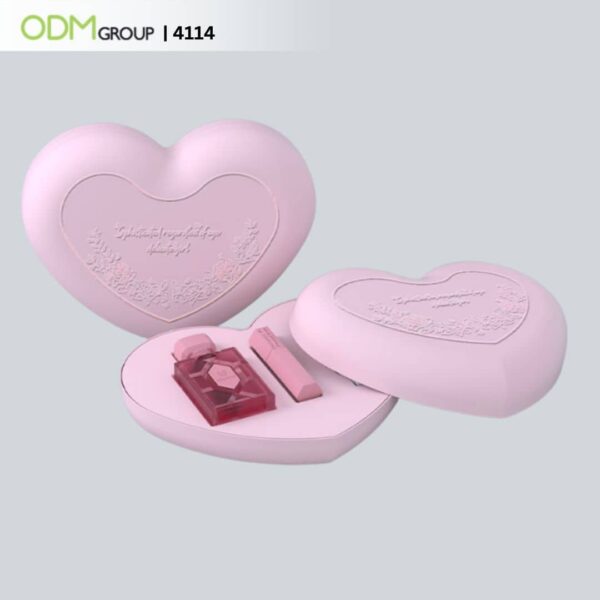
These packaging concepts help organize products while improving the unboxing experience. They can also support a more natural visual presentation than glossy plastic trays.
For a more premium finish, molded pulp can be combined with a printed paper sleeve, a rigid paperboard box, or a debossed logo.
The key advantage is that brands can reduce plastic while still protecting the product and maintaining a strong presentation.
4. Recycled Paperboard Boxes
Recycled paperboard remains one of the most versatile options for custom packaging.
It can be used for folding cartons, rigid boxes, sleeves, trays, retail packs, subscription boxes, and influencer kits. It also provides ample space for branding, product information, campaign messaging, and instructions.
Paperboard packaging concepts can be improved through:
- Recycled or responsibly sourced paper stocks
- Water-based inks
- Plastic-free windows
- Paperboard locking tabs
- Removable inserts
- Minimal coatings
- Compact flat-pack structures
A paperboard box can still feel premium without excessive material. Strong structure, thoughtful typography, tactile finishes, and good product organization often create more value than unnecessary layers.
5. Reusable Fabric Pouches
Fabric pouches can replace disposable plastic sleeves, lightweight cartons, or single-use wrapping for selected products.
Cotton, canvas, felt, jute, and recycled polyester may be used for cosmetics, travel products, accessories, stationery, drinkware, and promotional merchandise.

The value of these packaging concepts comes from secondary use. Customers may reuse the pouch for cables, cosmetics, accessories, personal items, or travel organization.
A skincare set presented in a branded drawstring pouch, for example, can feel more useful and considered than the same products placed inside a disposable tray.
The pouch should be durable enough to support repeated use. A poorly made textile package is unlikely to provide a meaningful advantage.
6. Minimal Paper Sleeves and Belly Bands
Not every product requires a complete box.
Paper sleeves and belly bands can reduce material while still providing space for branding, barcodes, instructions, and campaign messages.
They work well for notebooks, candles, textiles, bottles, gift sets, food containers, and home accessories.
These packaging concepts also keep the product visible, which can be useful in retail environments where customers want to see the item before purchasing.
A printed sleeve can communicate a limited-edition release, seasonal promotion, gift-with-purchase offer, collaboration, or sustainability message without requiring a completely new pack.
7. Refillable Packaging Systems
Refillable packaging can be effective for products customers purchase regularly.
Beauty, personal care, fragrance, cleaning, food, and beverage brands can use durable primary containers supported by lighter refill formats.
The initial container should be designed for repeated use, while the refill should reduce the material required for future purchases.
Successful refill packaging concepts depend on convenience. Customers are less likely to participate if the process is messy, difficult, or confusing.
Clear instructions, easy closures, visible refill indicators, and loyalty incentives can improve adoption and help turn refilling into part of the brand experience.
8. Returnable Packaging
Returnable packaging can support direct-to-consumer brands, subscription businesses, local delivery services, and closed-loop retail systems.
The package may take the form of a reusable bottle, jar, shipping box, protective case, or delivery container. Customers return it so that the packaging can be inspected, cleaned, and reused.
These packaging concepts require careful planning around collection, tracking, cleaning, product safety, and customer incentives.
They work best when the return process is simple, convenient, and clearly communicated.
9. Modular Packaging for Gift Sets
Promotional kits and gift sets often include several products, each with its own box, tray, or wrapping.
Modular packaging can reduce this duplication by using one outer structure with removable or adjustable paperboard inserts.
The same box can then be adapted for different product combinations, gift tiers, or campaign formats.
These packaging concepts work particularly well for influencer kits, employee gifts, subscription boxes, product launches, corporate gifting, and seasonal campaigns.
A modular approach also helps brands maintain a consistent visual identity across different kits without redesigning the full structure each time.
More Packaging Ideas from ODM
Here are high-impact packaging structures beverage brands are using to elevate perception, increase sales potential, and strengthen campaign performance.
If you’re looking for a fresh creative product packaging idea to present to your target audience, this mini wooden coffee barrel might be perfect for you!
Rice husk packaging sits in a different space. It is not just about reducing waste. It is about creating products people actually carry, reuse, and keep in their daily routine.
How to Choose the Right Packaging Concept
The most visually impressive option is not always the most effective.
Brands should begin by defining the main objective. The packaging may need to reduce plastic, improve product presentation, protect a fragile item, support a refill system, create a premium gift, or encourage reuse.
The product itself should guide the structure. Weight, size, fragility, shelf life, moisture sensitivity, and retail requirements all influence what is practical.
Distribution is equally important. A rigid bamboo box may be suitable for a premium in-store gift but less appropriate for a large direct-mail campaign where weight and shipping volume matter.
Cost should also be evaluated across the full packaging system. Material price is only one factor. Assembly, storage, transport, breakage, packing time, and customer experience all affect the final value.
The strongest packaging concepts support the product and campaign without adding unnecessary complexity.
How to Communicate Sustainability Clearly
Brands should avoid vague claims such as “completely green” or “100% eco-friendly” unless they can be substantiated.
Clear, specific language is more credible.
For example, brands can explain that:
- The box contains recycled paperboard
- A plastic insert has been replaced with molded pulp
- The pouch is designed for repeated use
- The container can be refilled
- The package has been reduced in size
- Individual components can be separated for recycling
Customers should also be given simple guidance on how to reuse, recycle, refill, return, or dispose of the packaging.
This helps the sustainability message feel practical rather than promotional.
Develop Better Packaging Concepts with ODM Group
ODM Group helps brands develop packaging concepts that balance sustainability, customer experience, branding, and commercial practicality.
We work with marketing managers, procurement teams, product developers, and brand owners to shape packaging ideas around the product, audience, campaign objective, and distribution channel.
This may include reusable packaging, retail packs, gift sets, influencer kits, promotional campaigns, and limited-edition launches.
Through Mindsparkz, brands can explore different design directions using hand sketches, structural concepts, branded mockups, 3D renderings, and product visualization. These tools make it easier to compare ideas, communicate internally, and refine the concept before moving forward.
Thoughtful packaging does more than contain a product. It can strengthen perceived value, support a clearer sustainability message, and create an experience customers are more likely to remember.
If you need sustainable and practical packaging for your products, feel free to contact our team. We’ll help you bring your packaging ideas to life!
FAQs about Packaging Concepts
What are packaging concept?
Packaging concepts are initial design ideas that define how a product will be protected, presented, branded, opened, and experienced. They may include the material, structure, inserts, graphics, closures, and potential secondary use.
What makes packaging concepts more sustainable?
Sustainable packaging concepts aim to reduce environmental impact through lower material use, recycled or renewable materials, reusable formats, refill systems, efficient transportation, or easier recycling.
Which material is best for sustainable packaging?
There is no single best material for every product. The right choice depends on product protection, transport, material quantity, local recycling systems, and whether customers are likely to reuse the package.
Can sustainable packaging still look premium?
Yes. Premium presentation can come from structure, texture, typography, printing, embossing, and product arrangement rather than excessive material.
What to Read Next?
Why Fashion and Beauty Brands Choose Transparent Packaging
Customers often decide whether a product feels desirable before [...]
How Aluminum Tube Cosmetic Packaging Are Made and Tested
As sustainability becomes a core focus in the cosmetics [...]
Sparkle on a Budget: Affordable Jewelry Packaging Ideas
When it comes to launching a jewelry business, presentation [...]
6 Eco-friendly Soap Packaging Ideas To Elevate Your Brand
Proper packaging is a powerful tool for brand identity, [...]
Custom Rigid Boxes: Innovative Packaging Solutions in Beverage Industry
Custom rigid boxes, known for their strong build and [...]
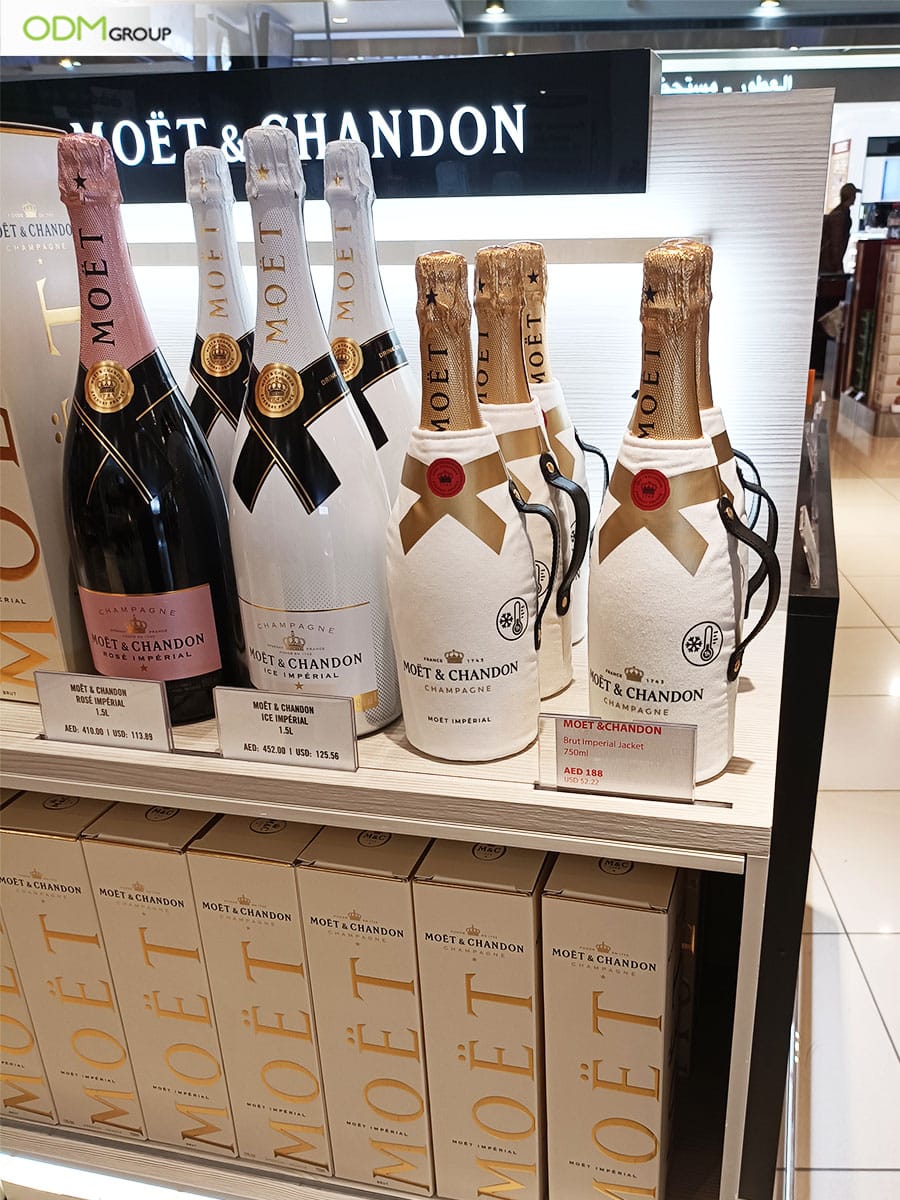
5 Reasons this Custom Champagne Ice Jacket Turn Heads
As seasons change, certain products are affected by this [...]