
In-store display marketing is one of the last physical touchpoints a brand can control before a shopper makes a purchase decision.
A strong display does more than hold products. It interrupts the aisle, simplifies choice, supports store execution, and makes the brand easier to buy in a crowded retail environment.
For beverage, FMCG, beauty, lifestyle, and seasonal retail campaigns, the difference between a display that performs and one that becomes store clutter usually comes down to planning.
Retail Displays Are No Longer Just Product Holders
In-store display marketing refers to branded display units used inside retail spaces to attract attention, promote products, and influence purchase decisions at the point of sale. These include end-cap displays, floor-standing displays, countertop units, pallet displays, dump bins, gondola displays, shelf-ready displays, and custom POS display units.
But the real value is not the display format itself. It is how well the display supports the brand’s commercial objective.
A display should be planned around questions such as:
This is where many projects go wrong. The conversation starts with shape, size, or material before the team has fully defined what the display needs to achieve in store.
A good display is not only made to look attractive. It is made to work in the retail environment.
Visibility Is Not the Same as Retail Impact
Being visible is important, but visibility alone does not guarantee performance.
A display can sit in a high-traffic area and still fail if the message is unclear, the products are difficult to shop, or the layout feels too crowded. Shoppers often make decisions quickly, especially in supermarkets, convenience stores, pharmacies, beauty retailers, and other fast-moving retail spaces.
A strong in-store display should help shoppers understand three things within seconds:
- What is the brand?
- What is being offered?
- Why should they stop?
That first moment matters. Color, structure, signage, product blocking, and shelf placement all affect whether shoppers notice the display or walk past it.
For brands, this means the display should not be treated as decoration. It should be planned as part of the shopper journey.
It needs to work from:
- a distance
- up close
- the front
- the side
- the natural traffic flow of the store
A strong display creates recognition before the shopper reads anything.
Case Study: Coca-Cola’s In-Store Display
A beverage end-cap display spotted in Vietnam offers a useful example of how in-store display marketing works when retail placement, branding, and product presentation are aligned.
The display was positioned at the end of a gondola shelf facing the main aisle. This gave the brand strong visibility before shoppers entered the aisle and created a dedicated selling space outside the standard shelf layout.
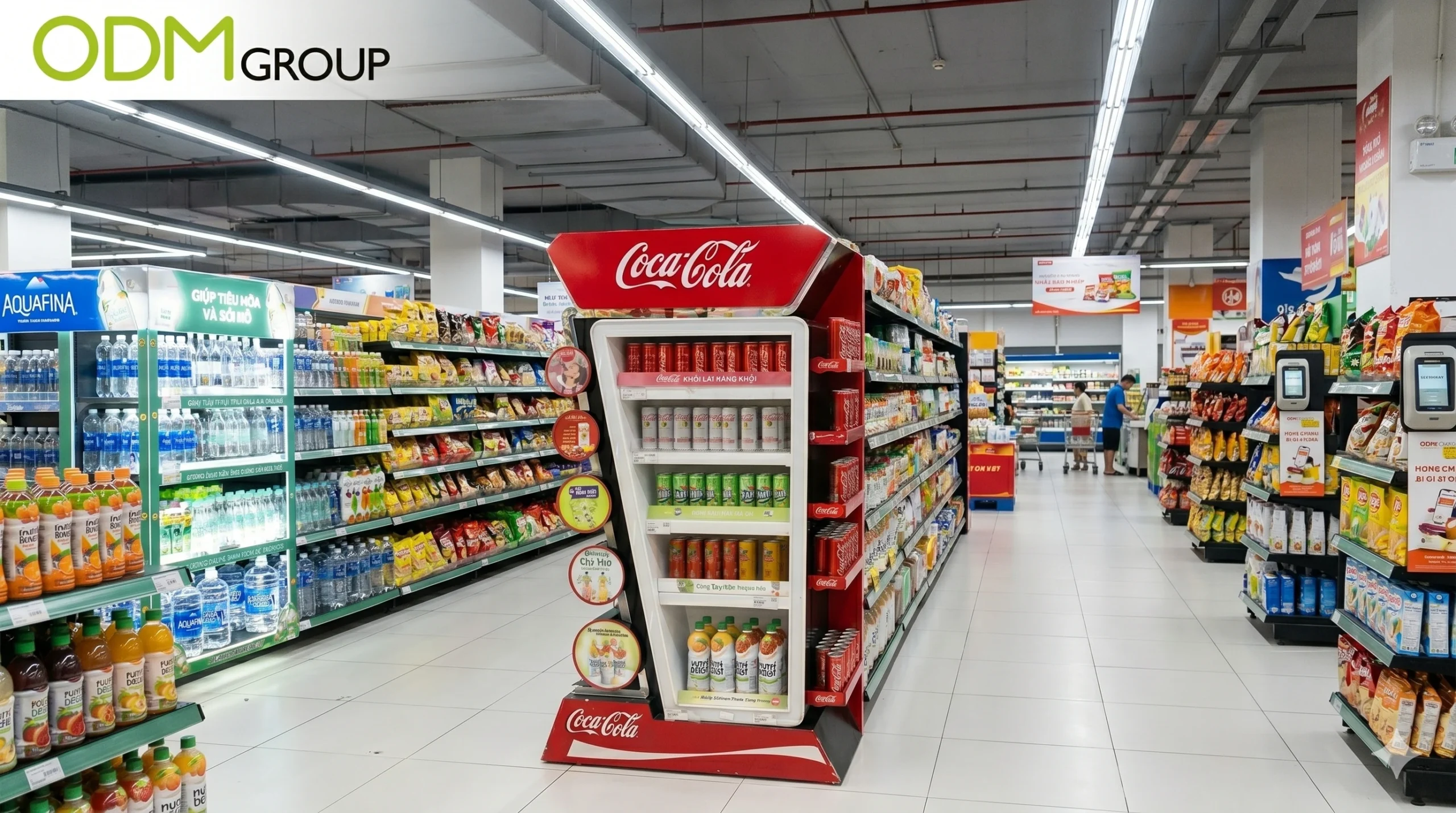
Several details made the execution effective:
- The end-cap position gave the display strong aisle visibility.
- The color blocking made the brand recognizable from a distance.
- The front and side sections were both used to showcase products.
- Multiple beverage options were grouped together for easier comparison.
- The custom shape helped break the usual supermarket shelf pattern.
- The layout made the display easy to shop without overwhelming the customer.
The main lesson is not that every brand needs a large end-cap display. The lesson is that effective in-store display marketing depends on the alignment between location, visibility, product access, and retail practicality.
The Display Format Should Follow the Campaign Objective
One of the most important decisions in display planning is choosing the right format for the job.
An end-cap display can help a brand dominate a high-traffic aisle location. A countertop display is useful for impulse purchases near checkout. A floor-standing display can support product launches, multi-SKU promotions, or seasonal campaigns. A pallet display may be better for high-volume retail programs. Shelf-ready displays can help improve product organization and replenishment.
The format should follow the campaign objective, not the other way around.
Here is how brands can think about it:
Campaign Objective |
Display Direction |
|---|---|
| Build awareness | Use strong branding, height, color, and high-traffic placement |
| Drive trial | Add sampling space, product education, or interaction |
| Push seasonal sales | Prioritize stock capacity, visibility, and fast replenishment |
| Promote impulse purchase | Use countertop or checkout-area displays |
| Support premium positioning | Use stronger materials, refined finishes, lighting, or detail |
| Launch multiple SKUs | Use clear product grouping and hierarchy |
Without a clear objective, brands risk producing a display that looks good but does not solve the right retail problem.
Product Hierarchy Matters More Than Product Quantity
Many brands want to show as many products as possible on one display. That is understandable, especially when the product range is wide. But more products do not always create a stronger display.
In many cases, too many options make the display harder to read.
Good in-store display marketing creates product hierarchy. It helps shoppers understand what to notice first, what to compare, and what to pick up.
A strong display usually gives priority to:
- Hero products
- Bestsellers
- New launches
- Campaign SKUs
- Supporting products or add-on items
Product hierarchy can be created through:
- shelf position
- product grouping
- colour contrast
- signage
- lighting
- display shape
- product quantity
- eye-level placement
The goal is not to give every item equal attention. The goal is to make the shopper’s decision easier.
A display should feel organised even when it carries several SKUs. If shoppers need too much time to understand the offer, the display has already lost part of its impact.
Where In-Store Display Campaigns Usually Go Wrong
Most display campaigns do not fail because the idea is weak. They fail because the details are not aligned.
Common issues include:
1. Designing only for the mockup
A display may look impressive in presentation materials, but it becomes unrealistic when production, packing, shipping, assembly, and store placement are considered.
2. Using too much text
Shoppers do not have time to decode complicated campaign stories in an aisle. The message needs to be short, visible, and directly connected to the product offer.
3. Weak product hierarchy
When too many products or claims compete for attention, the display becomes harder to shop.
4. Poor branding from a distance
A display may look detailed up close but fail to stand out in a crowded retail space.
5. Wrong material choice
A weak structure, poor load-bearing design, or unsuitable finish can affect both appearance and performance.
6. Difficult replenishment
If store teams cannot easily refill the display, it may stop looking campaign-ready after only a few days.
A successful display is not only judged by how it looks before launch. It is judged by how well it performs across the full campaign period.
Excellent In-Store Display Ideas
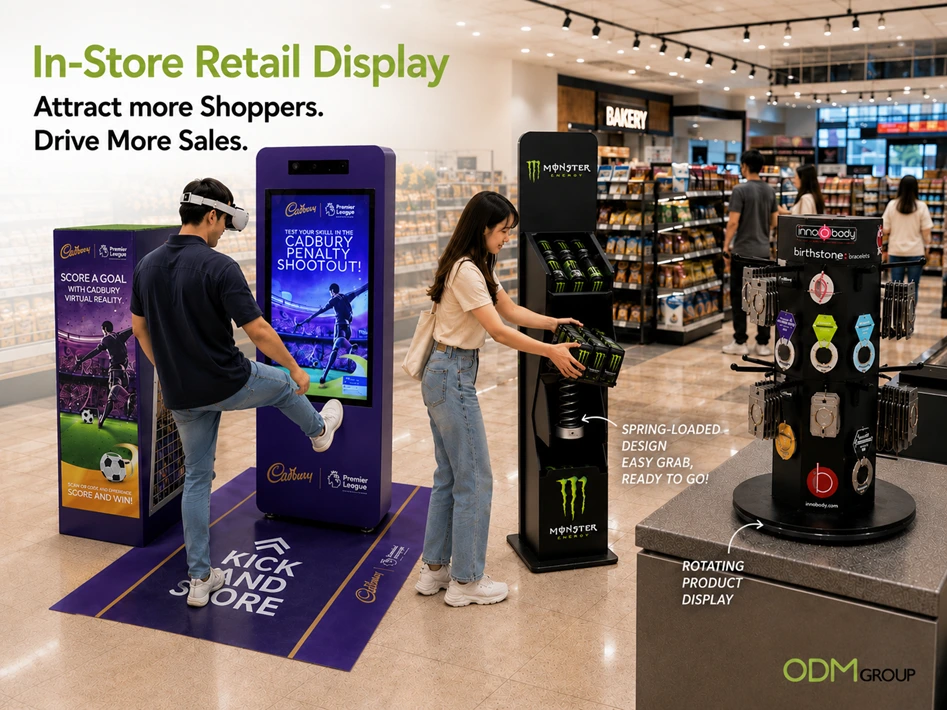
Cadbury never fails to surprise customers when promoting its products. The interactive POS display is getting a lot of attention from customers because of its state-of-the-art virtual reality feature.
At first glance, these displays might seem like a magician’s trick, but the truth is rooted in clever engineering. Imagine a stack of canned beer packs neatly arranged, with the topmost pack standing proudly at attention. As a customer selects and removes that top pack, the magic unfolds.
This rotating display stand is not merely a static fixture but a dynamic tool crafted to showcase products in an engaging and visually captivating manner. Here are the unique features of this interactive retail display.
How ODM Group Helps Brands Build Campaign-Ready Retail Displays
ODM Group works with brands as a strategic partner for in-store display marketing, promotional products, and retail campaign execution. Our role is not limited to sourcing or manufacturing display units. We help brands connect creative retail ideas with practical production and store-level requirements.
This support can begin at the concept stage, where brands are still deciding what type of display best fits the campaign. From there, ODM can assist with:
With teams based close to manufacturing networks in Asia, ODM helps brands manage development more transparently and efficiently. We support the practical details that affect cost, quality, timeline, and final retail execution.
The goal is not simply to produce a display. It is to help brands create retail-ready display solutions that support the campaign from concept through to store placement.
Final Thoughts
In-store display marketing works best when it is treated as part of a retail strategy, not just visual merchandising.
The strongest displays are designed around shopper behavior, campaign objectives, retail placement, product hierarchy, material practicality, and store execution. They help brands stand out, but they also help shoppers make decisions more easily.
For brands planning product launches, supermarket campaigns, convenience store activations, beauty launches, seasonal promotions, or FMCG retail programs, custom displays can turn limited retail space into a stronger brand experience.
The real opportunity is not simply to create a display that looks attractive. It is to create one that performs in the retail environment where purchase decisions actually happen.
Get in touch with the ODM Group, and will help you turn your creative ideas into life!


FAQs about In-Store Display Marketing
How early should we plan an in-store display campaign?
Start early enough to allow for design, sampling, retailer approval, production, packing, and shipping. More complex displays with metal, acrylic, lighting, or mixed materials need longer development time.
What details are needed for a custom display quotation?
Prepare the product size, weight, number of SKUs, target store type, display quantity, branding needs, preferred materials, packing requirements, and delivery destination.
Why do some displays look good in mockups but fail in store?
Most issues come from poor planning around real store conditions. The display may be too large, hard to assemble, weak for the product weight, or difficult for staff to replenish.
What type of in-store display is best for a product launch?
It depends on the launch goal. End-cap and floor-standing displays work well for visibility, countertop displays suit impulse products, and sampling displays are better when shoppers need to try or understand the product.
What to Read Next?
The Power of End Cap Displays: A Retailer’s Secret Weapon
First impressions and strategic placement can make or break [...]
Drinks Marketing Idea: The Power of Point of Sale Video Display
In today's competitive retail environment, it is essential to [...]
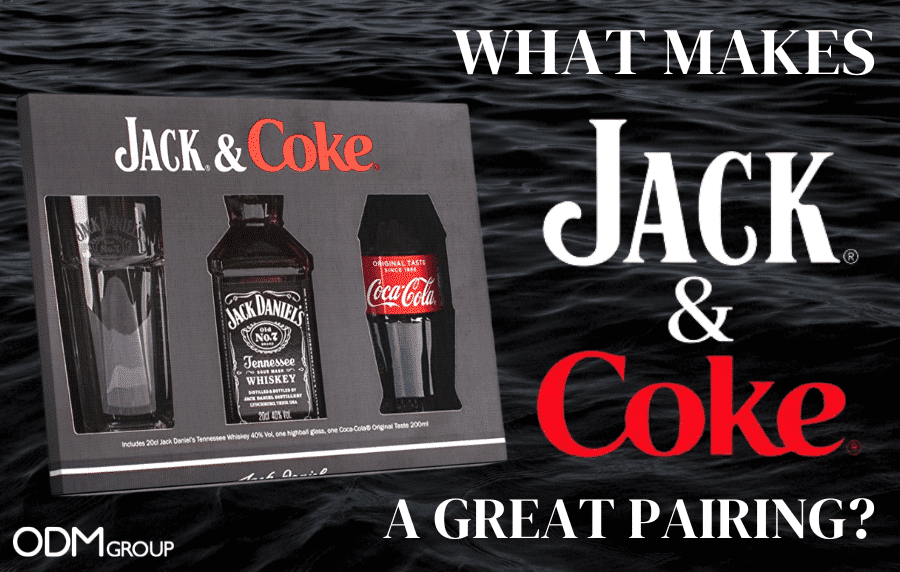
5 Huge Benefits of Promotional Gift Packs for Marketing Drinks
Offering a promotional gift pack is a simple way [...]
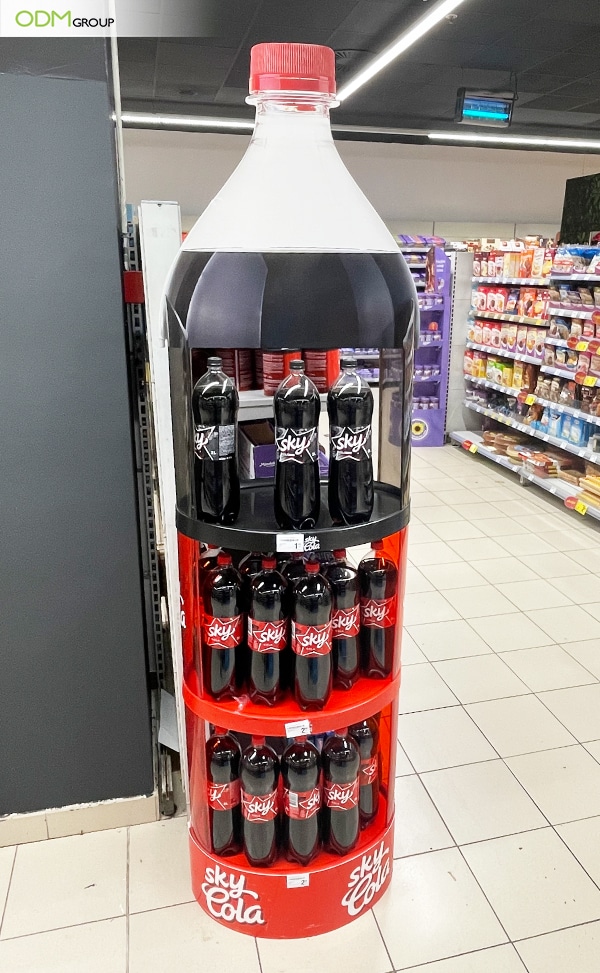
4 Ways A Creative Retail Display Unit Made Sky Cola Stand Out!
Every product in a retail market has to vie [...]
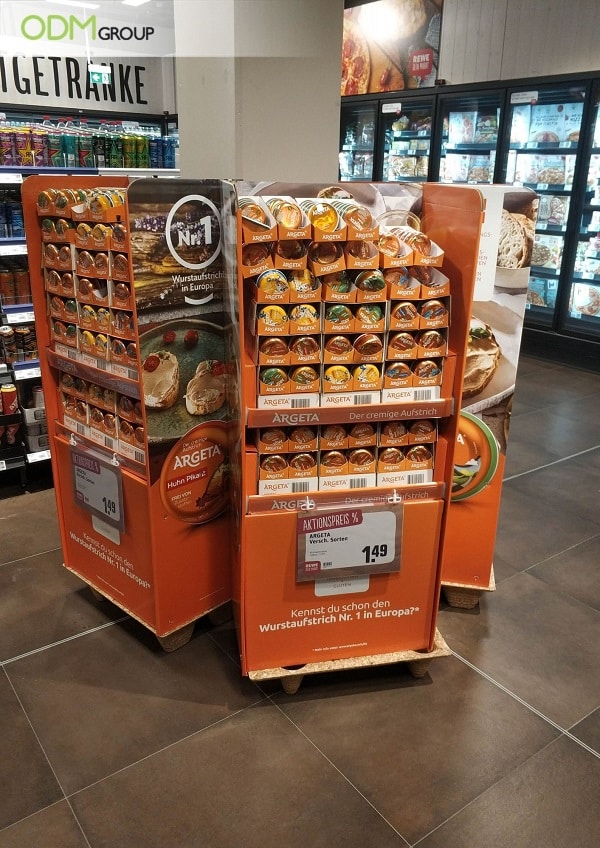
What Makes Argeta’s Retail Cardboard Displays Steal-Worthy?
Whether you are planning to introduce your new products [...]
Get Your Brand Noticed In Store With Creative Custom Retail POP Display!
If you want to market your merchandise and brand at [...]
Related posts:
 In-Store Advertising Ideas That Turn Attention Into Action
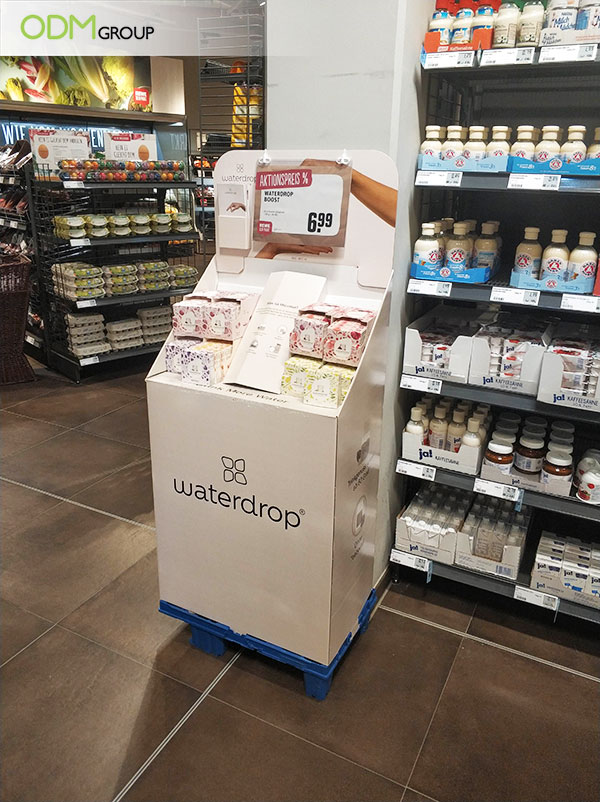 Get Your Brand Noticed In Store With Creative Custom Retail POP Display!
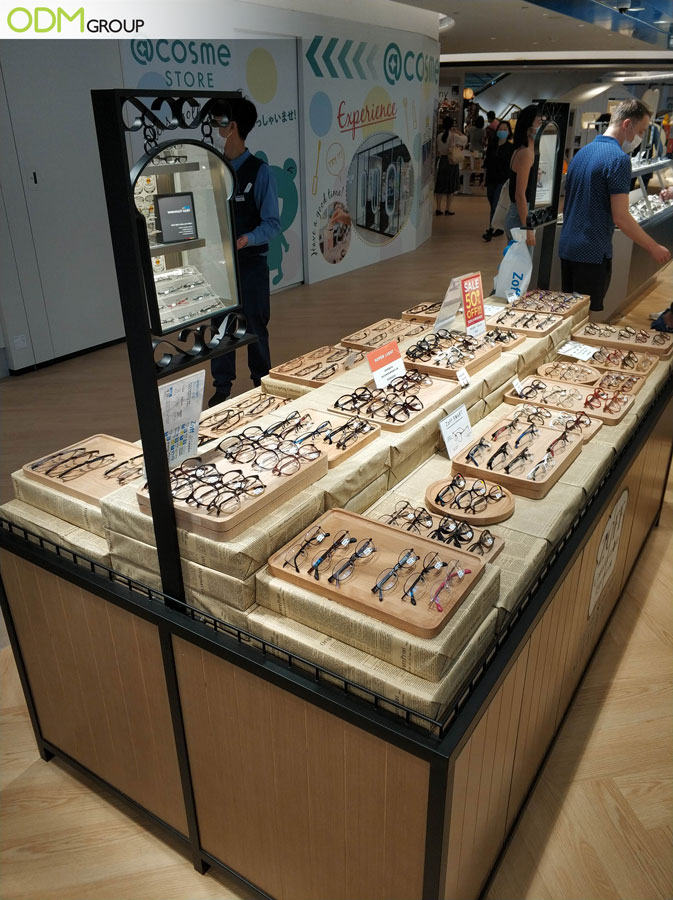 5 Easy Tips for a Head Turning Retail Merchandising Display
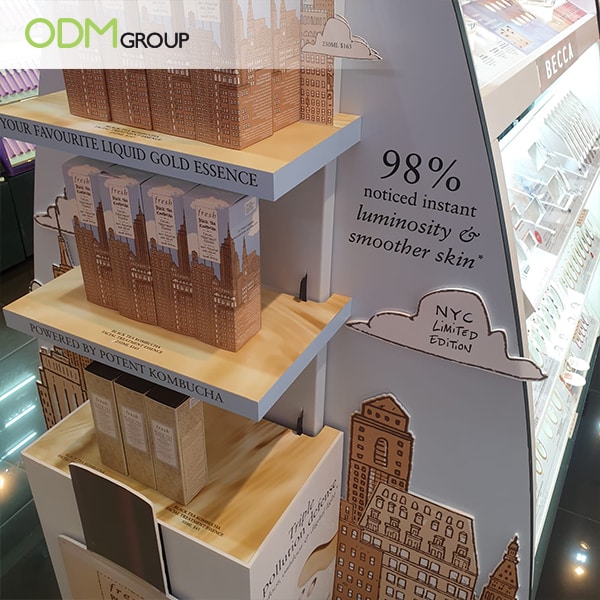 Maximise Your In-Store Promotion with a Custom Retail End Cap Display
 Outsell Your Competition- Use a Retail Store Floor Display!