
A well-designed custom point of purchase display can help a product attract attention, communicate an offer, and secure a stronger presence inside a busy retail environment. Unlike standard store shelving, a custom display can be developed around a brand’s products, campaign theme, and customer journey.
From temporary cardboard units to interactive displays with digital features, brands have many ways to create an effective in-store experience.
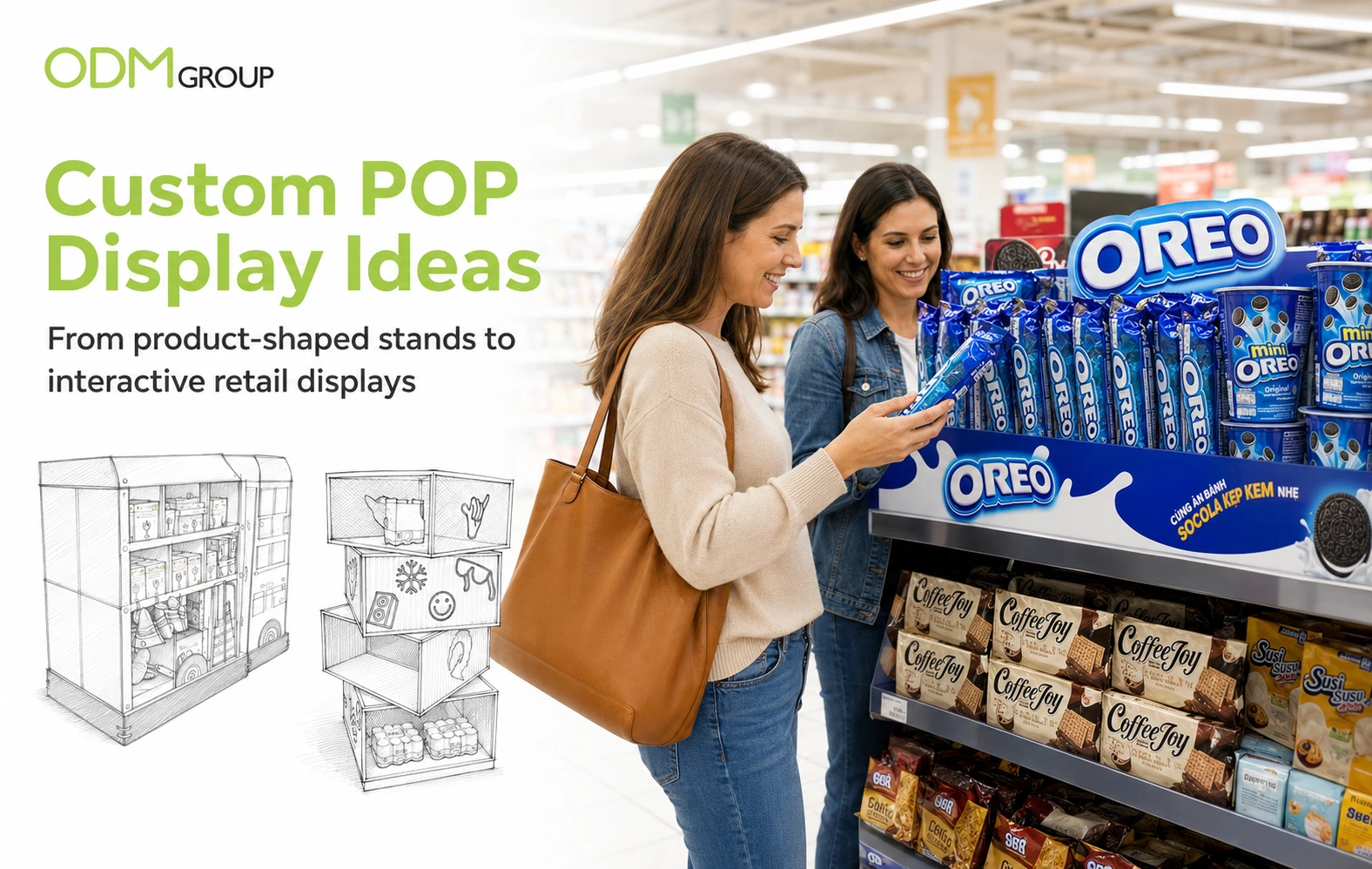
Oreo Custom POP Display: A Retail Example
During a supermarket visit in Vietnam, our team noticed a custom Oreo display featuring bold brand colors, dedicated shelving, and large promotional graphics.
The freestanding structure separated the cookies from competing products on the regular shelves. Its raised graphics improved visibility, while the open shelves made the products easy to browse and reach.
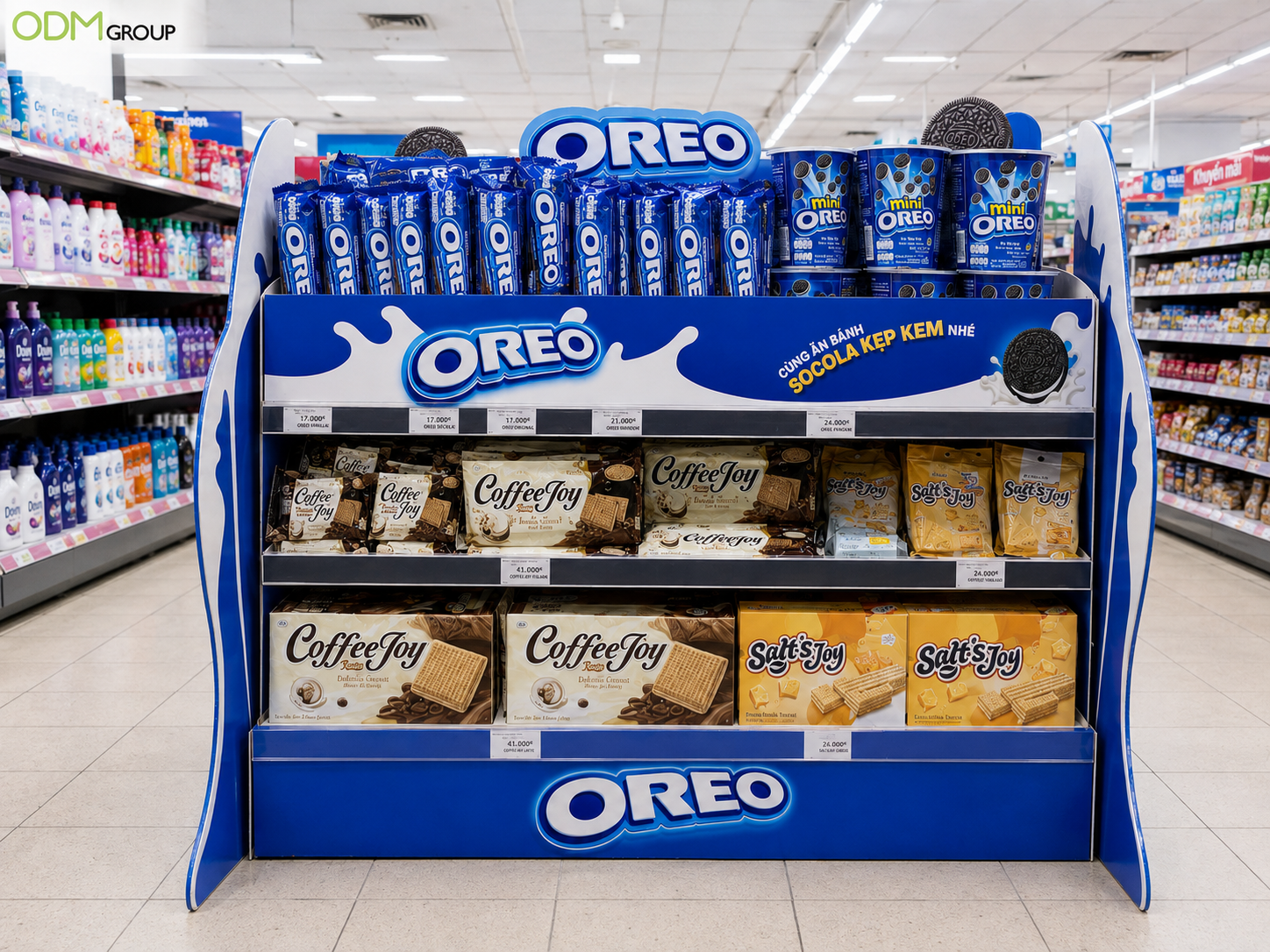
This example shows how recognizable branding and dedicated product space can help a brand establish a more noticeable presence in a crowded supermarket. However, this is only one of many possible approaches to POP display design.
Custom POP Display Ideas for Different Campaigns
1. Product-Shaped Display
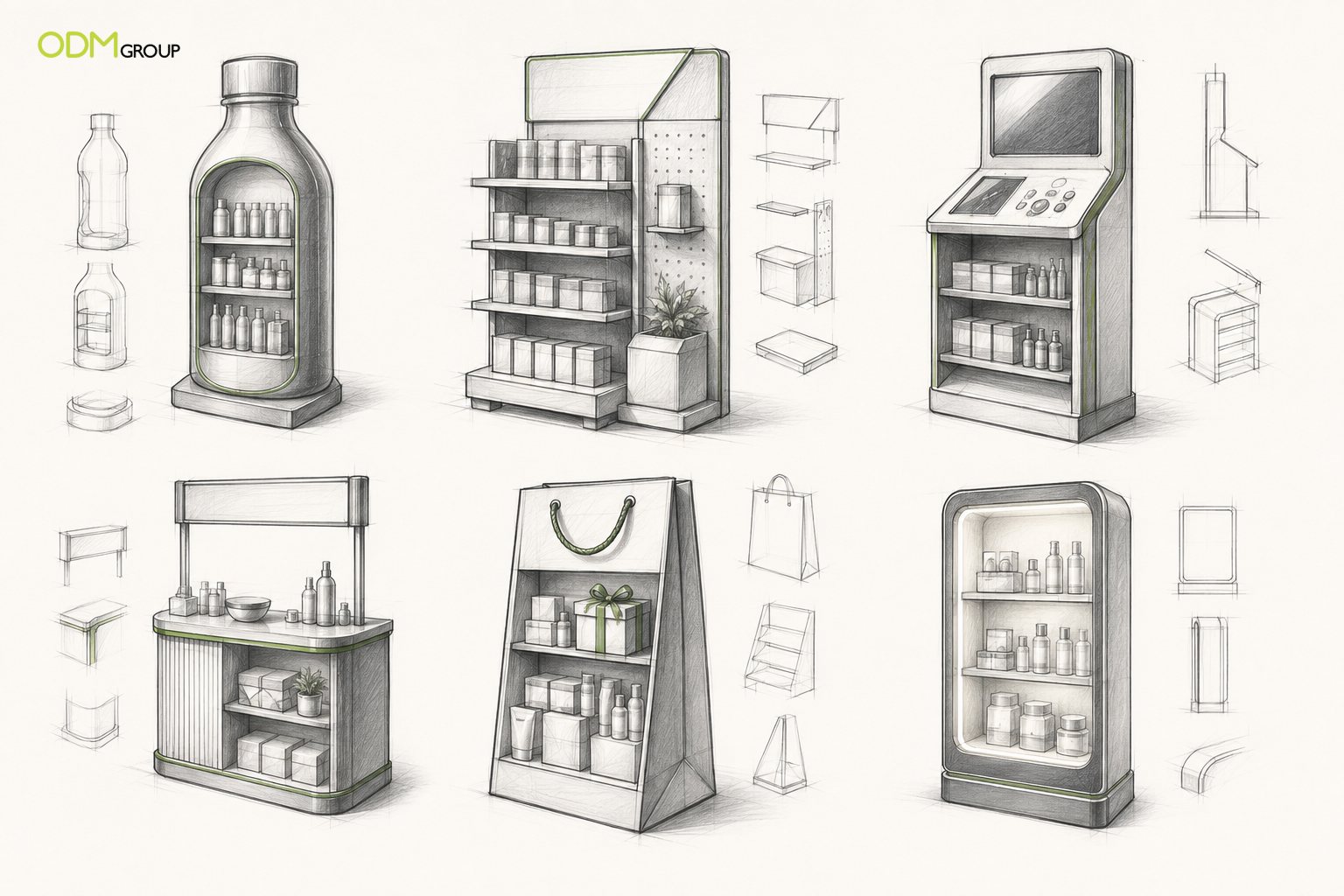
Design the display around the product, packaging, or brand mascot. An oversized bottle, snack pack, or recognizable product silhouette can attract attention from across the store and create a memorable brand presence.
2. Modular Display System
A modular display uses interchangeable shelves, headers, and graphic panels. Brands can adapt it to different store sizes, product ranges, and campaigns while reusing the main structure.
3. Interactive Product Discovery Display
Interactive features encourage customers to explore the products. These may include testers, rotating holders, comparison panels, QR codes, touchscreens, or buttons that activate lights and demonstrations.
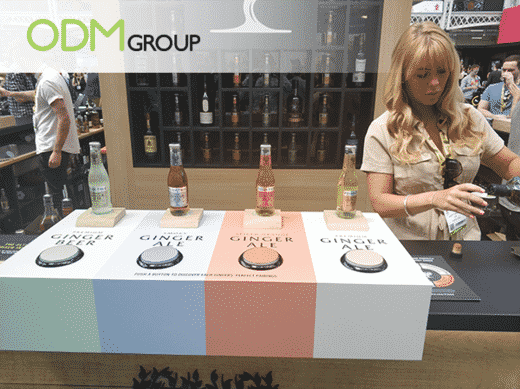
Interactive Marketing Display
4. Sampling and Demonstration Station
An integrated counter gives brand representatives space to offer samples or demonstrate products. Storage compartments, product shelves, and waste collection areas can also be incorporated into the design.
5. Gift-With-Purchase Display
This display presents the qualifying product and promotional gift together. Showing the actual gift and clearly explaining the redemption requirements can strengthen the offer’s perceived value.
6. Countertop Display
Compact countertop displays place smaller products near checkout areas and service counters. Tiered shelves and transparent holders work well for confectionery, cosmetics, accessories, and travel-size items.
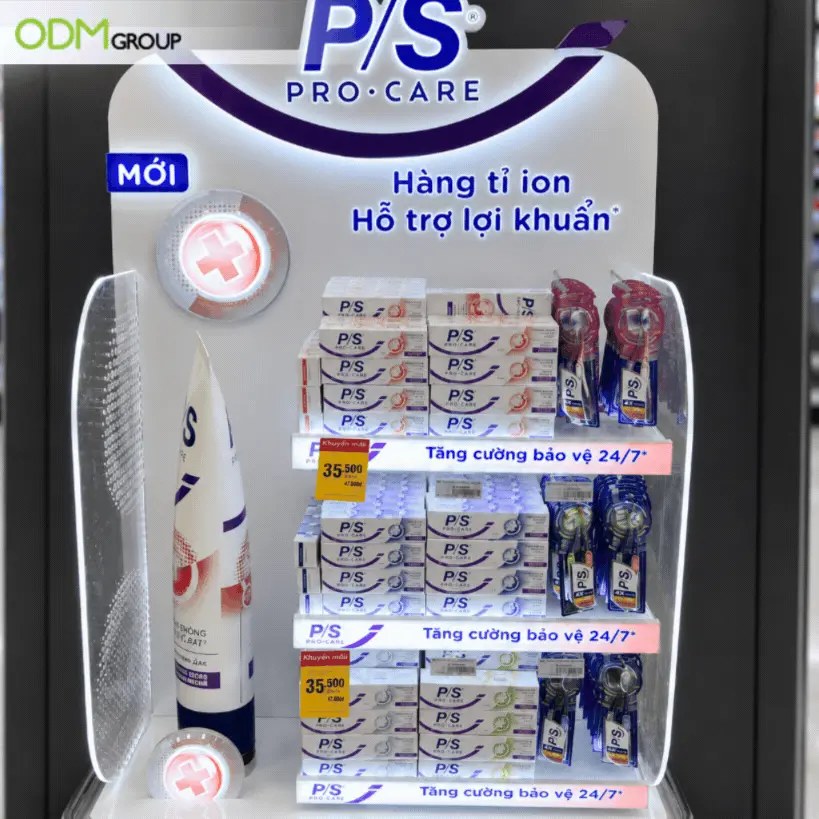
7. Illuminated POP Display
LED lighting can highlight shelf edges, logos, hero products, or campaign graphics. This approach is particularly suitable for cosmetics, electronics, beverages, jewelry, and premium merchandise.
8. Sustainable Cardboard Display
Corrugated cardboard displays are lightweight, printable, and suitable for temporary retail campaigns. Flat-pack construction, recyclable components, water-based inks, and reduced-material designs can also support sustainability goals.
Choosing the Right POP Display Concept
The most suitable design depends on the campaign objective, product characteristics, retail environment, and expected display duration. Before selecting a concept, brands should consider:
- Available floor or counter space
- Product dimensions and weight
- Required stock capacity
- Campaign duration
- Customer viewing and reaching height
- Retailer restrictions
- Assembly and replenishment
- Transportation volume
- Electrical requirements
- Opportunities for reuse or recycling
Every creative feature should serve a practical purpose, whether that is attracting attention, explaining the product, supporting interaction, or making selection easier.
How ODM Develops Custom POP Displays
ODM helps brands develop custom POP display ideas from initial research through production and delivery. Our Mindsparkz design team can create concept sketches, 3D visualizations, CAD models, and technical drawings based on the products, campaign identity, and retail environment.
We can also assist with material recommendations, prototyping, structural testing, factory selection, production management, quality control, protective packaging, and logistics planning. This process helps ensure that the finished display is visually engaging, practical to assemble, and suitable for its intended retail setting.
Final Thoughts
Oreo’s supermarket fixture demonstrates how bold branding and dedicated product space can improve visibility. However, effective custom POP displays can take many other forms, from compact countertop units to interactive stations and complete shop-in-shop environments.
Planning an upcoming retail campaign? Contact ODM to develop a custom point of purchase display tailored to your products, customers, and in-store objectives.
More Display Ideas


FAQs about Custom POP Displays
What is a custom point-of-purchase display?
A custom point-of-purchase display is a branded retail fixture designed around a specific product, promotion, or campaign. Unlike standard store shelving, it can include custom graphics, shelving, lighting, product holders, interactive features, or gift-with-purchase sections.
What materials are commonly used for custom POP displays?
Temporary displays are often made from corrugated cardboard because it is lightweight, printable, and suitable for flat-pack shipping. Semi-permanent and permanent displays may use metal, wood, acrylic, molded plastic, or a combination of materials for greater durability.
How do you choose the right POP display for a product?
The design should reflect the product’s size, weight, packaging, stock capacity, and campaign duration. Brands should also consider available retail space, customer reach, store regulations, assembly, replenishment, transportation, and whether the display will be reused.
How long does it take to develop a custom POP display?
The timeline depends on the display’s complexity, materials, order quantity, and testing requirements. The process generally includes concept development, 3D visualization, technical design, prototyping, approval, production, quality control, and delivery. Allowing time for structural testing and revisions can help prevent problems during installation.
What to Read Next?
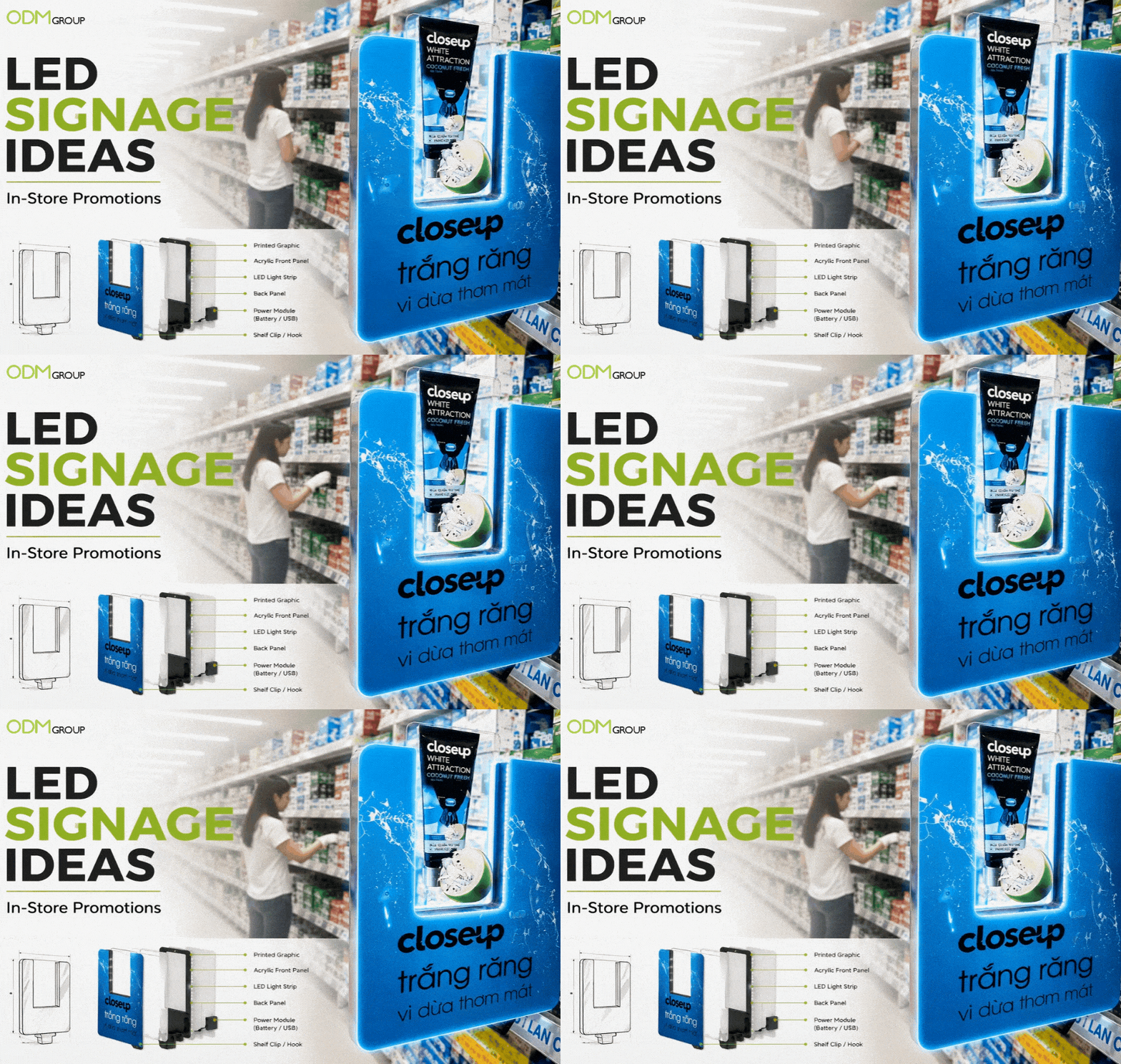
Creative LED POP Signage Ideas for In-Store Promotions
In a busy retail aisle, shoppers do not always [...]
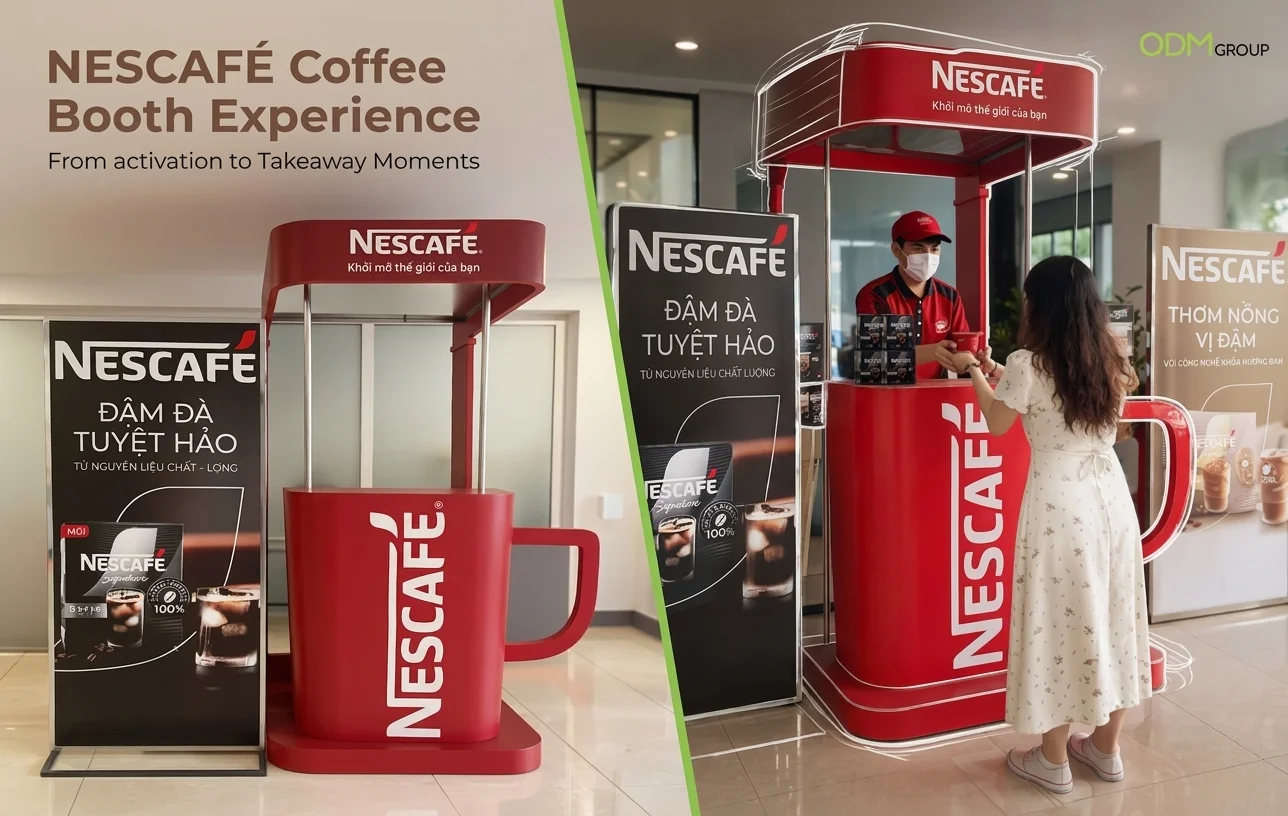
How Nescafe Coffee Booth Activations Drive Real Engagement in Office Spaces
Discover how a Nescafe coffee booth turns sampling into a daily brand experience using smart design, POS displays, and packaging strategies.
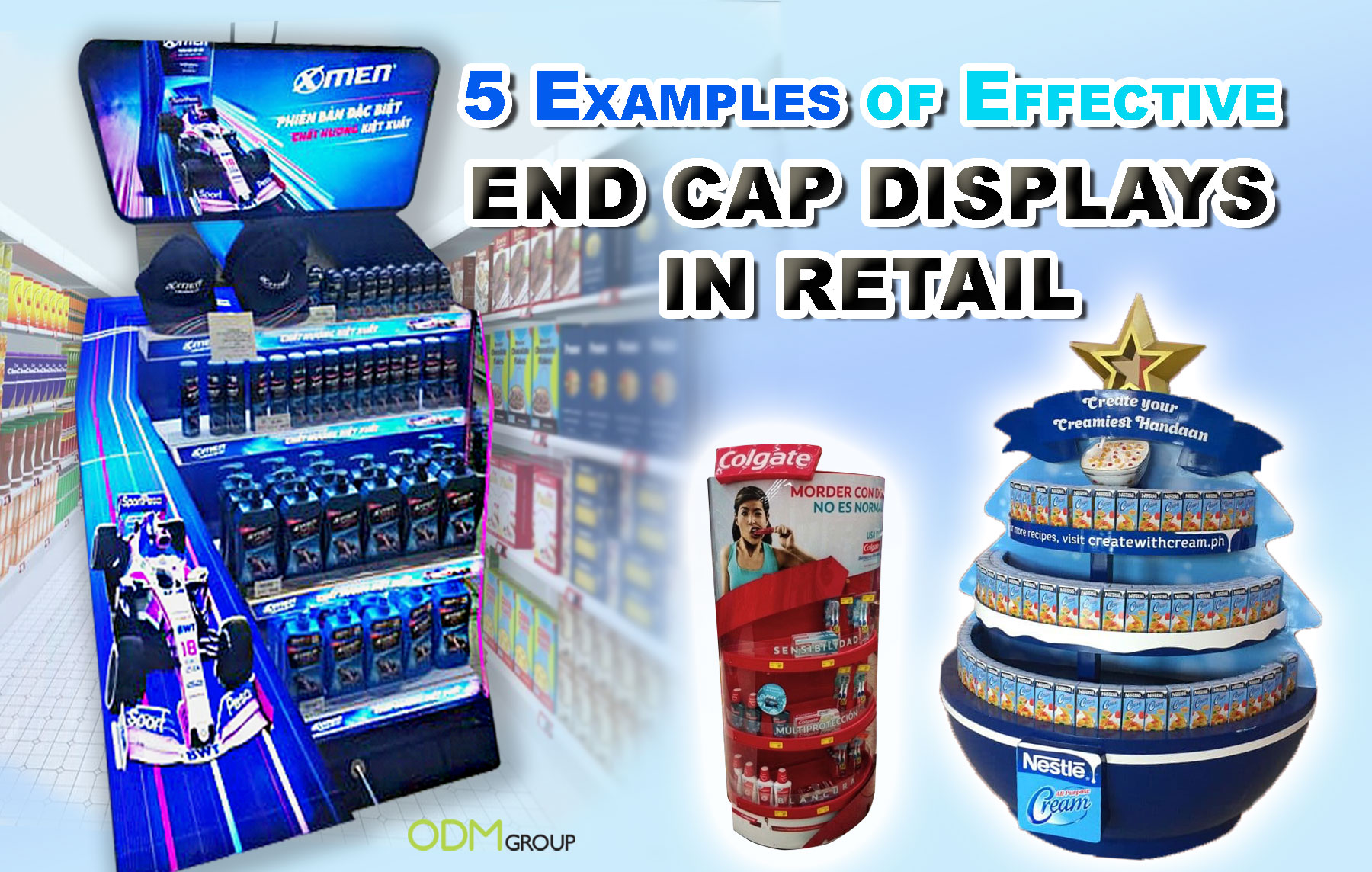
The Power of End Cap Displays: A Retailer’s Secret Weapon
First impressions and strategic placement can make or break [...]
How Tiger Beer Grabs Shoppers’ Interest with its 3D POP Display?
In the fiercely competitive world of beverage marketing, standing [...]
Drinks Marketing Idea: The Power of Point of Sale Video Display
In today's competitive retail environment, it is essential to [...]
Beer Discovery Zone: What Made Tiger Beer Store Display A Success?
Shoppers usually go to stores with lists of things [...]