
It goes without saying that liquor store displays play an integral role in your brand’s marketing campaigns. Thus, they must be powerful enough to pull customers away from your competition. They need to be so appealing that customers would be encouraged to purchase the displayed products. Moreover, these displays must have the qualities that make them worthy of your investment.
Why Liquor Store Displays Matter in Drinks Marketing
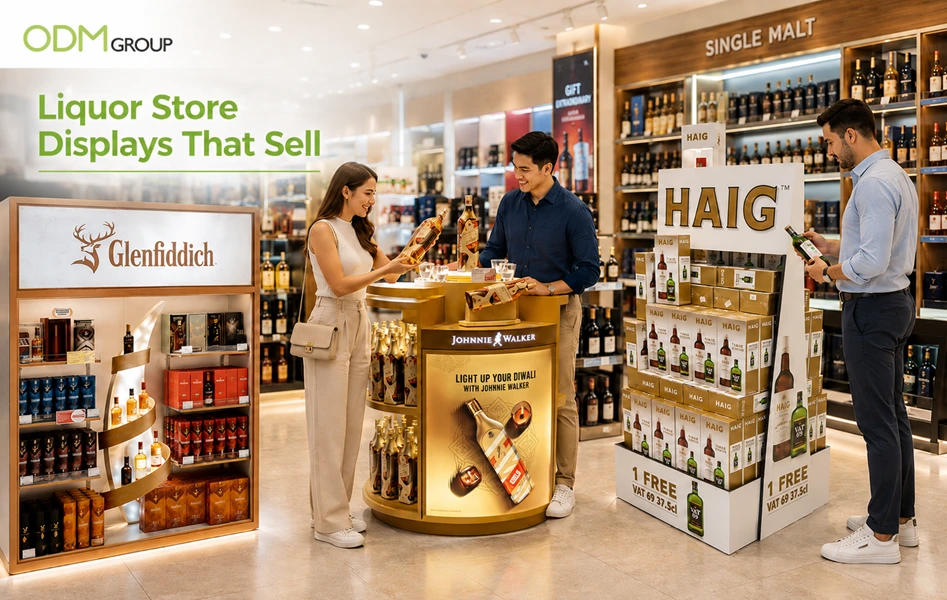
A liquor store display gives brands extra space to tell their story outside the standard shelf. It can highlight a new product launch, promote a limited-time offer, support seasonal gifting, or create a premium brand experience.
For whisky, wine, and spirits brands, the display can also help communicate product quality. Materials, lighting, structure, colors, and branding all affect how customers perceive the product. A simple display may work for a short-term promotion, while a more premium structure can help position a product as ideal for gifting or special occasions.
Good liquor store displays can help brands:
- Increase visibility in crowded retail spaces
- Guide shoppers toward featured products
- Communicate promotions clearly
- Support premium or seasonal campaigns
- Encourage impulse purchases
- Strengthen brand recall inside the store
This is why POS displays remain valuable for drinks marketing, even as brands invest more in digital campaigns. Retail visibility still matters at the point where customers make buying decisions.
Sample Display: What Brands Can Learn from Haig
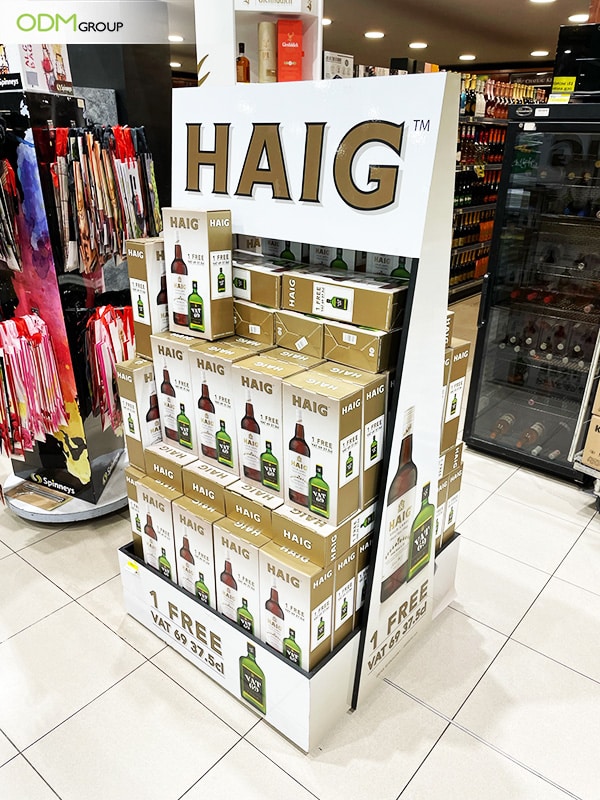
We are certain that Haig whisky understands the benefits and convenience that in-store displays bring to its brand and customers. We saw one of its store displays in Beirut. Its minimalistic appeal indeed adds class to the brand’s beverage display rack. We definitely love how it boldly advertises itself and its products inside the store.
Liquor Store Displays
In addition, the brand uses a highly recognizable font size to capture shoppers’ attention, which, for us, is a smart promotional tactic to consider. Also, each side of the display is printed with its promotional offer, making it even more attention-grabbing.
Other Liquor Display Ideas Worth Considering
Different brands use different display strategies depending on their campaign goals.
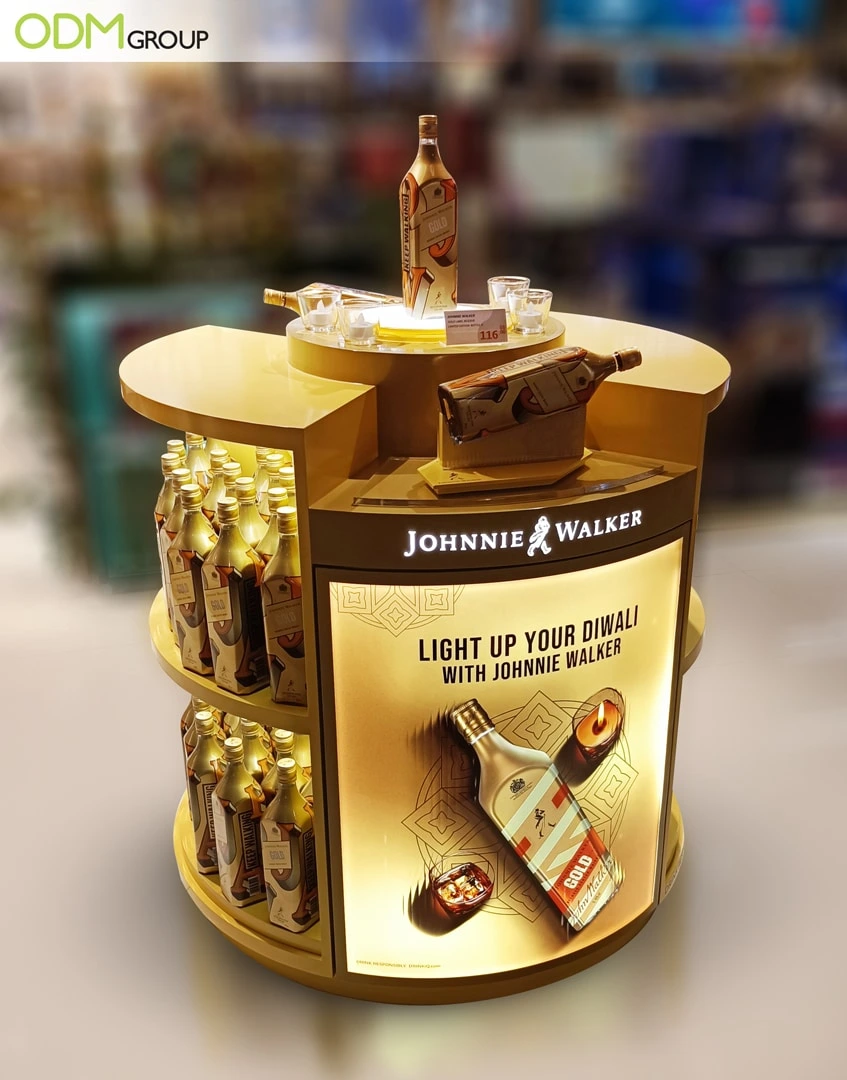
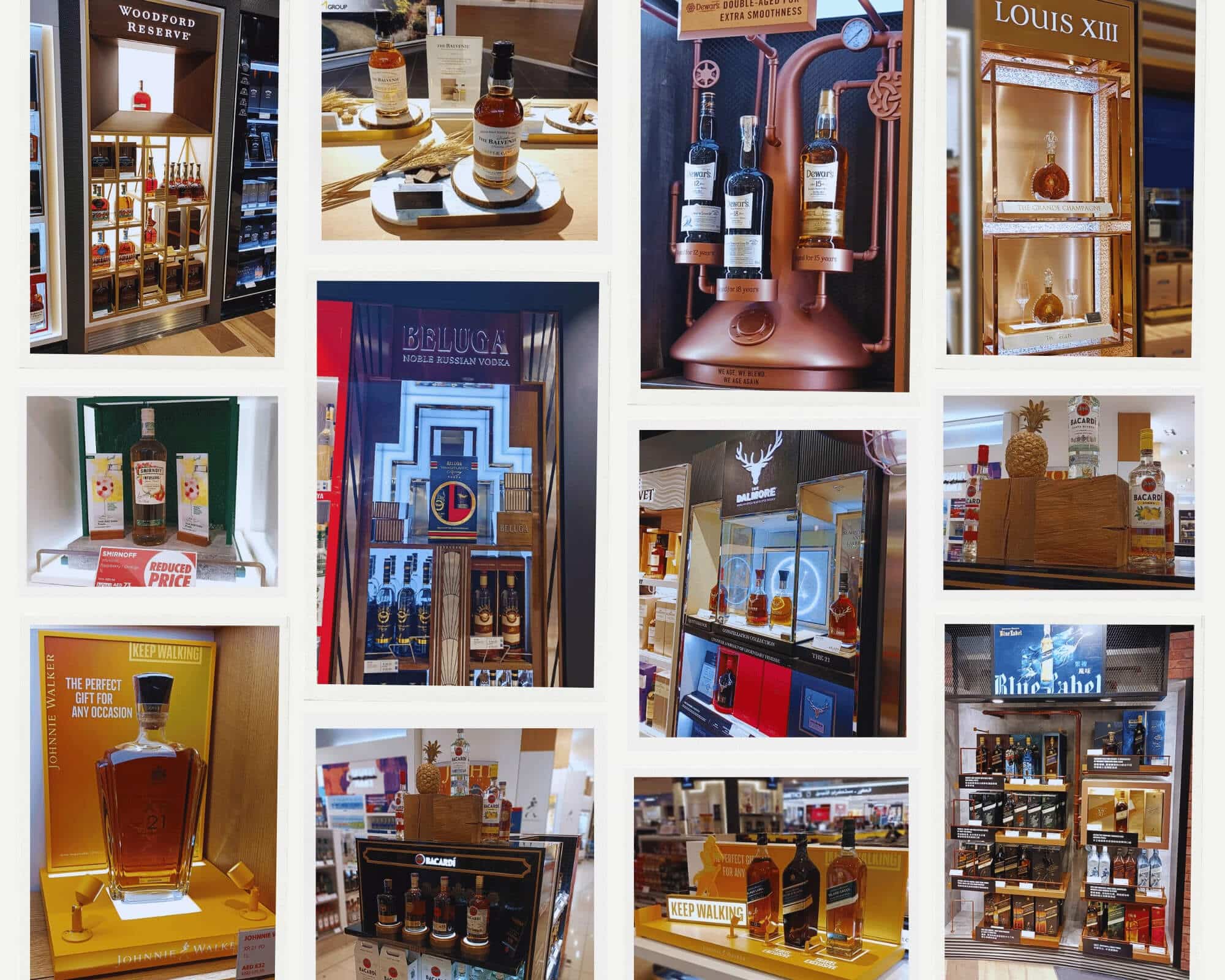
A premium whisky brand, for example, may use a branded display with wood, metal, acrylic, lighting, or high-end finishing to communicate craftsmanship and luxury. This kind of display works well for gifting campaigns, airport retail, department stores, and premium liquor shops.
Other brands may use an educational display to help shoppers compare bottle variants, flavor profiles, age statements, or product ranges. This is useful for whisky, wine, and spirits because customers often need more information before choosing a bottle.
For seasonal campaigns, brands may prefer cardboard or corrugated FSDUs. These are practical for short-term promotions, product launches, or festive campaigns because they are cost-effective, lightweight, and easier to roll out across multiple stores.
The best liquor store display depends on the product, retail location, campaign duration, budget, and shopper behavior. This is why display planning should begin with strategy, not just design.
5 Best Practices in Creating Your Liquor Store Displays
Of course, associating displays with your store marketing strategy is going to cost you money. But you have to make sure that your investments will never be wasted. Here are the best practices you need to keep in mind when planning and creating your own liquor store displays.
Liquor Store Displays
1. Making Customers the Priority
The main reason for putting displays in stores is to get your brand in front of your customers. However, you should also consider your customers while planning and creating your display. Are they accessible for customers? Would they offer convenience to them? Remember that providing a smooth and stress-free buying experience will eventually benefit your brand.
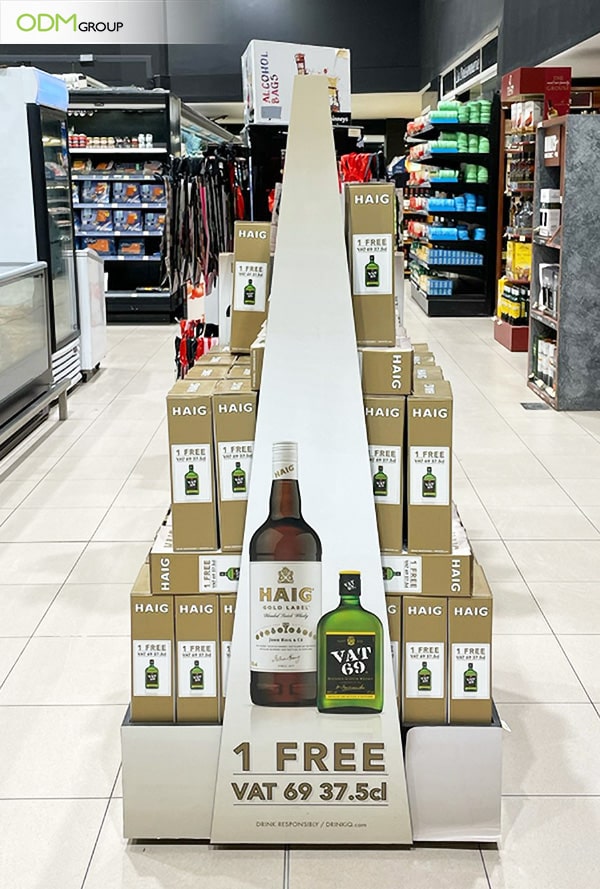
Let’s take Haig’s liquor display, for example. As you can see, all drink boxes are very accessible to shoppers. Therefore, we believe that the brand’s display is an ideal one.
2. Choosing the Right Materials
Liquor bottles are prone to damage; thus, choosing the right materials for your free-standing display units is a must. There is a wide range of materials you can choose from for your liquor store displays. These include metals, woods, high-pressure laminates (HPLs), aluminum, and acrylic. If you want to utilize your displays in the long run, these materials would be ideal. However, if you’re planning to use them for seasonal promotions, corrugated or cardboard FSDU would be practical.
When choosing materials, make sure they can properly hold products and prevent accidents that could harm customers.
3. Keeping Size in Mind
The size matters in creating your displays. Would they fit the store you are going to display them in? Would they not bother or distract shoppers from moving? Can they hold the number of products you want to display?
Considering your store’s floor space would help you to identify the size of your liquor display. But if you are going to install them in a convenience or retail store or in a mall, you have to be aware that some places have safety rules and regulations.
4. Considering the Design
The aesthetic appeal of your design is essential to attract customers. Thus, you have to be creative and smart in choosing designs. Some prefer colorful displays while others choose the “less is more” concept. But whatever you choose, make sure that it can represent your brand properly.
After all, your main reason for putting up a display is to advertise your brand and products. Failing to do so may cause you to consider your display a failure.
5. Good Choice of Manufacturers
Your idea wouldn’t come to life without the help of manufacturers. But before you decide which one will do the job for you, make sure to conduct a background check. How long have they been in the industry? What companies did they already work with? Can they provide you with the services you need?
Keeping these in mind will help you find the right POP display manufacturer. But if you already have a manufacturer that you’ve worked with before, and you prefer to let them do the project again, make sure to convey your ideas to them exactly as you need and expect.
If you’re curious about how FSDUs are made, here’s an article for you. It’s our company’s practice to visit our partner factories to ensure that everything runs smoothly and that the products our clients receive meet the results they expect.
Common Mistakes to Avoid
Even a creative display can fail if practical details are overlooked. Some common mistakes include using weak materials, overloading shelves, making products difficult to reach, placing too much text on the display, or creating a structure that does not fit retailer requirements.
Another common issue is focusing only on appearance. A display may look good in a photo, but if it is unstable, difficult to assemble, or expensive to ship, it can create problems during rollout.
Liquor brands should also avoid generic displays that do not communicate a clear campaign message. A POS display should do more than hold products. It should help explain the promotion, reinforce the brand, and encourage customers to take action.
What Can ODM Group Promise?
The ODM Group is a Promotional Products Marketing Agency founded in 2003. Our diverse approach makes us a great partner for international brands who want a team to manage their projects closely. Whilst we have strong regional coverage in Asia, ODM has also grown our scale and scope of services over the years.
Aside from manufacturing the finest liquor display ideas, we also provide other services such as manufacturing promotional bottle glorifiers and bottle neckers, creating bespoke produce packaging, and on-pack premiums for drink brands. We also have a superb team of POS designers that can help you in creating the best advertising tool for your business.
Putting It All Together,
Brands in the drinks and spirits industry are constantly looking for effective ways to connect and attract customers. Though POP displays have been among the oldest marketing tools, their advantages remain evident today.
What we’ve mentioned above are some practices to keep in mind when designing and creating your own liquor displays. Though there is still a lot to consider, these 5 are among the best to ensure the success and efficiency of your displays.
ODM has a lot in store for you! Feel free to connect with our team to see how we can help with your marketing campaigns.
More Products


FAQs about Liquor Store Displays
Can liquor store displays help premium brands justify a higher price point?
Yes. A well-designed liquor store display can make a product feel more premium before the customer even reads the label. Materials such as wood, acrylic, metal, lighting, and textured finishes can help communicate craftsmanship, exclusivity, and gifting value. This is especially useful for whisky, wine, and spirits brands that want to stand out from standard shelf displays.
How can liquor brands make displays more interactive without overcomplicating the design?
Interactive elements do not always need to be digital or expensive. Brands can use bottle glorifiers, QR codes, tasting notes, rotating product sections, gift pairing guides, or small information panels to help shoppers explore the product. The goal is to make the display more engaging while still keeping it easy to understand and practical for retail staff.
What should liquor brands consider when creating displays for seasonal gifting campaigns?
Seasonal liquor displays should highlight both the product and the gifting occasion. Brands should consider space for gift boxes, bottle sleeves, limited-edition packaging, on-pack premiums, and clear promotional messaging. The display should also be easy to assemble, strong enough to hold heavier bottles, and visually aligned with the season, whether it is Christmas, Lunar New Year, Father’s Day, or a travel retail campaign.
Why should liquor brands involve a POS display partner early in the campaign planning stage?
Involving a POS display partner early helps brands avoid design, material, cost, and production issues later. A strategic partner like ODM Group can help assess display structure, bottle weight, retail requirements, branding options, packing method, and production feasibility before the final design is approved. This makes the whole campaign easier to execute from concept to store rollout.
Related Blogs:
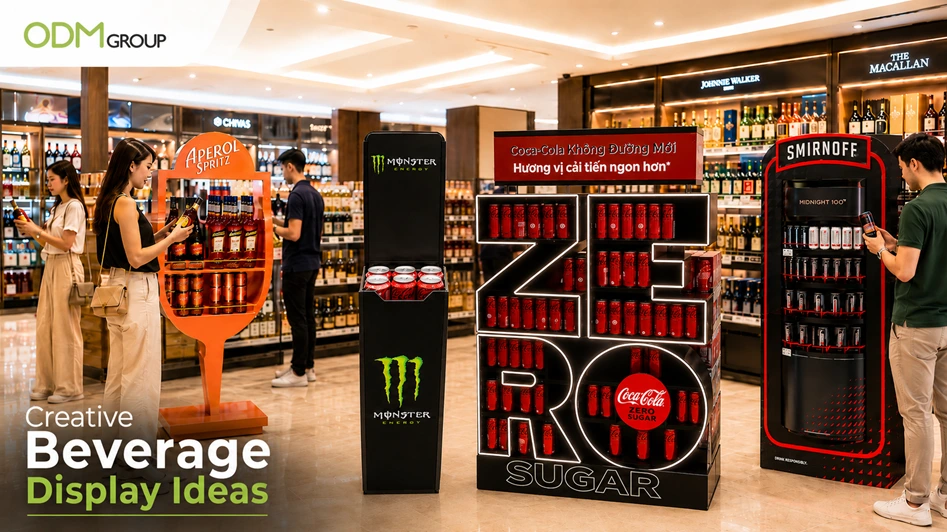
Custom Beverage Displays That Drive In-Store Sales
Beverage aisles are busy. Shoppers move quickly past rows [...]
Wooden Wine Display: Unique & Sustainable Product Presentation
Presentation is always key when it comes to marketing [...]
Drinks Marketing Idea: The Power of Point of Sale Video Display
In today's competitive retail environment, it is essential to [...]
Advertising in Retail: Entice Customers With Holographic Displays!
Retail advertising is a powerful tool for reaching and [...]
Alcohol Bottle Display: 5 Tips To Stand Out From Famous Brands
The competitive nature of the drinks industry made it [...]
Liquor Bottle Display Case: How Did Glenlivet Smoothly Compel Attention?
Airports serve as the first impression to travellers and [...]