
A well-designed retail store display can do more than organize products. It can help shoppers notice a brand, understand an offer, compare options, and make a purchase without needing assistance from store staff.
However, visibility alone does not make a display effective. Its location, structure, messaging, accessibility, and product arrangement must work together. Whether a brand is launching a new product, running a seasonal promotion, or strengthening its presence in stores, thoughtful display design can improve the overall shopping experience.
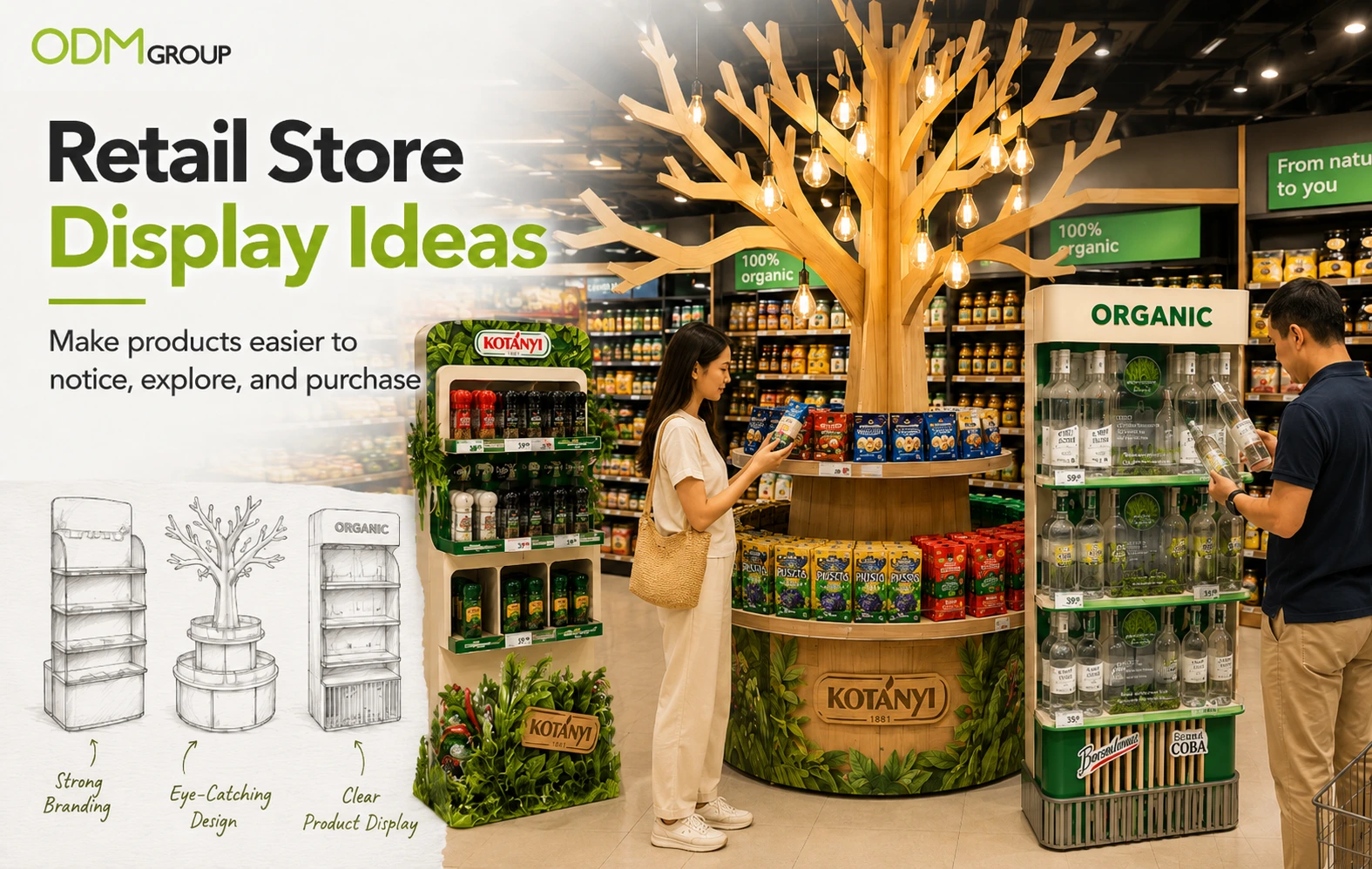
Why Retail Store Display Design Matters
Retail environments are filled with competing products, promotional messages, and visual distractions. A custom display gives brands a dedicated space to communicate with shoppers at the point of purchase.
An effective display can help:
- Improve product visibility
- Separate a brand from surrounding competitors
- Communicate promotions quickly
- Encourage product interaction
- Support impulse purchases
- Present multiple products in a clear format
- Reinforce brand positioning
The goal is not simply to create the biggest or brightest structure in the store. A successful display should guide attention toward the products and make it easier for shoppers to take the next step.
A Practical Retail Store Display Example
During a store visit in Vietnam, our team came across a large freestanding display featuring locally produced raisins, macadamia nuts, and other packaged products.
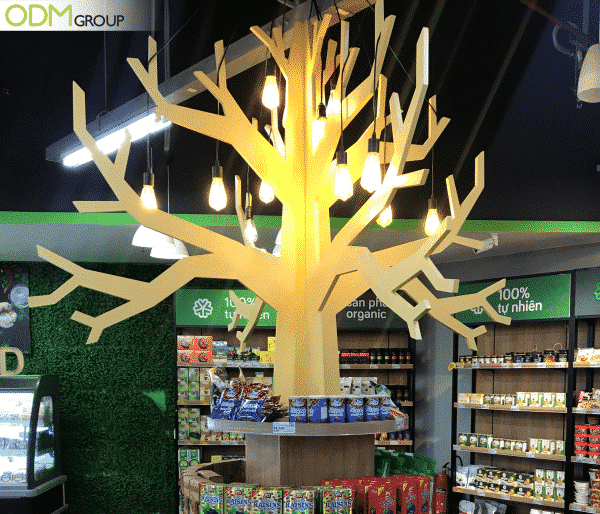
The structure used a wood-effect finish, tiered shelving, decorative yellow branches, and integrated lighting. Its distinctive design helped it stand apart from conventional grocery shelving while creating a more premium presentation for the products.
Several elements made the display particularly effective.
A Strong Visual Theme
The decorative branches created an immediate focal point. Their bright color and unusual form gave the display a recognizable identity without covering the merchandise.
A strong theme can help shoppers understand the intended story behind a display. Depending on the campaign, this may be connected to nature, wellness, travel, celebration, sustainability, or a seasonal event.
The theme should always support the products rather than distract from them.
Clear Product Hierarchy
The display arranged products across several levels. Smaller products were positioned closer to eye level, while larger packages were placed lower down.
This hierarchy made the assortment easier to scan. It also prevented smaller products from disappearing behind larger packages.
Good product hierarchy helps shoppers understand where to look first. Brands can use shelf height, package size, lighting, color, or signage to direct attention toward priority products.
Integrated Lighting
Lighting was incorporated into the decorative structure, helping the fixture remain visible from different areas of the store.
Used carefully, lighting can highlight hero products, premium packaging, promotional bundles, or newly launched items. It can also give permanent and semi-permanent displays a more polished appearance.
Lighting should not overpower packaging or make product information difficult to read. Its purpose is to support visibility, not become the entire experience.
Accessible Layout
The freestanding format allowed shoppers to approach the display from several directions. Products were not hidden behind barriers or placed too far from reach.
Accessibility is an important part of retail display design. Shoppers should be able to view product labels, compare options, and pick up merchandise without difficulty.
The Vietnam display provides a useful example, but these same principles can be applied across many retail categories, display formats, and campaign objectives.
5 Ways to Sell More With a Retail Store Display
1. Design Around Shopper Traffic
Display placement should reflect how customers move through the store.
High-traffic locations can include aisle intersections, category entrances, checkout areas, promotional zones, and the ends of aisles. The best location depends on the product, store format, campaign objective, and amount of time shoppers need to understand the offer.
For example, a small impulse item may perform well near the checkout. A product launch that requires more explanation may need a larger display in a category aisle where shoppers naturally slow down.
Before choosing a location, consider:
- Where customers enter the category
- Which direction they are likely to approach from
- Whether nearby fixtures block visibility
- How much floor space is available
- Whether the display will interrupt normal traffic
- How store staff will restock it
A strong display concept can underperform when it is placed in the wrong area. Location and design should therefore be planned together.
2. Communicate the Main Message Immediately
Shoppers should be able to understand the display within a few seconds.
The message may be a product benefit, limited-time offer, gift-with-purchase promotion, bundle, competition, new flavor, or seasonal campaign. Whatever the objective, it should be communicated clearly and without unnecessary text.
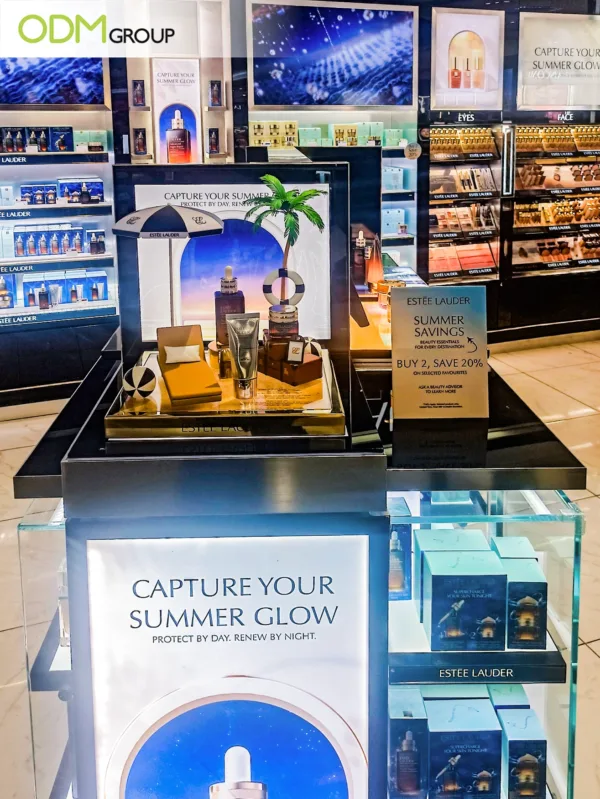
Effective retail messaging often includes:
- A short headline
- A visible brand logo
- A clear promotional mechanic
- Simple pricing information
- One primary call to action
Too many messages can make a display difficult to understand. Instead of giving every product feature equal attention, prioritize the information most likely to influence the purchase decision.
For example:
Buy Two and Receive a Free Gift is usually more effective at the point of sale than a paragraph explaining the complete campaign.
3. Organize Products With a Clear Hierarchy
A retail display should make the assortment feel easy to explore.
Products can be grouped by:
- Flavor
- Size
- Product type
- Price
- Customer need
- Promotional bundle
- Best seller
- New arrival
Hero products should receive the strongest visual position. This may be at eye level, in the center of the display, beneath the main signage, or next to a lighting feature.
However, the display should not be overloaded simply to increase product capacity. Too many packages can make the fixture look cluttered and make individual products harder to notice.
A useful display balances three priorities:
- Product visibility
- Stock capacity
- Ease of replenishment
The right balance depends on expected sales volume, packaging dimensions, campaign duration, and how often store teams can restock the display.
4. Make the Display Interactive and Accessible
Interaction can help shoppers move from interest to consideration.
Depending on the product category, an interactive display may allow customers to:
- Pick up and inspect a product
- Test a feature
- Smell a fragrance
- Sample food or beverages
- Compare materials or colors
- Scan a QR code
- Play a simple promotional game
- Enter a competition
- View a demonstration
Interactive elements should have a clear purpose. A digital screen, spinning wheel, tester, or product sample is most effective when it supports the buying decision or strengthens the campaign idea.
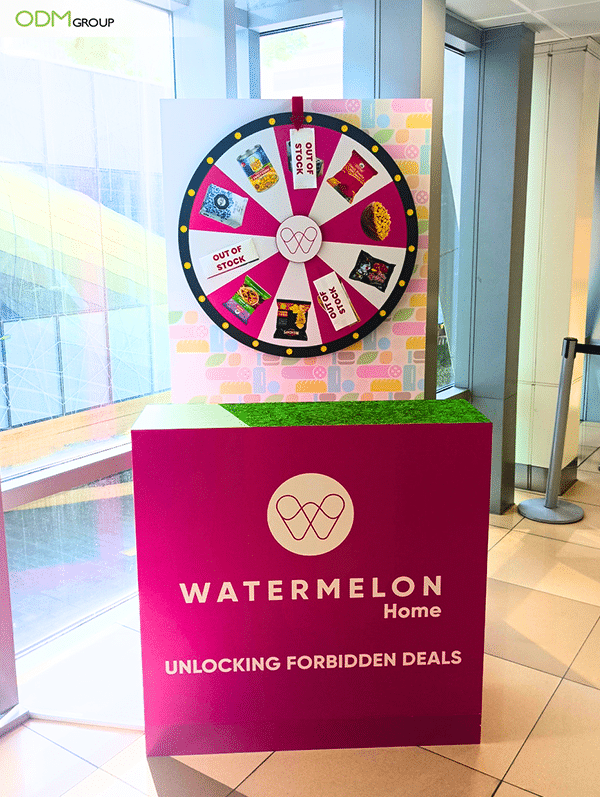
Accessibility is equally important. Products should be positioned at practical heights and should not require shoppers to move signage or reach behind structural elements.
For displays used by families, brands should also consider product placement, sharp edges, structural stability, and the overall safety of the fixture.
5. Refresh, Maintain, and Measure the Display
Even a strong retail display can lose effectiveness when it becomes damaged, empty, outdated, or poorly maintained.
Brands should plan how the display will be managed throughout the campaign. This includes checking:
- Stock levels
- Product arrangement
- Lighting
- Printed graphics
- Promotional dates
- Tester condition
- Cleanliness
- Structural stability
Temporary graphics should be easy to replace when prices or promotional messages change. Modular display components can also allow brands to update campaigns without replacing the complete structure.
Performance should be reviewed using practical indicators such as:
- Sales during the campaign
- Sales compared with standard shelf placement
- Product replenishment frequency
- Shopper interaction
- Promotional redemption
- QR code scans
- Store staff feedback
- Display condition over time
These insights can help improve future retail campaigns and reveal which design elements deliver the most value.
Choosing the Right Retail Display Format
Not every campaign needs a large permanent fixture. The most suitable format depends on the campaign duration, product weight, store environment, budget, and expected sales volume.
Temporary Retail Displays
Temporary displays are often used for short-term promotions, seasonal campaigns, launches, or gift-with-purchase programs.
Common materials include:
- Corrugated cardboard
- Printed board
- Lightweight plastic components
These displays can be cost-effective, easy to transport, and highly customizable.
Semi-Permanent Displays
Semi-permanent displays are designed for campaigns that run for several months.
They may combine:
- Reinforced board
- Plastic
- Acrylic
- Lightweight metal
- Laminated panels
These formats provide greater durability while still allowing brands to update graphics or promotional messaging.
Permanent Retail Displays
Permanent displays are suitable for longer-term installations, premium product ranges, or dedicated branded areas.
Common materials include:
- Metal
- Wood or engineered wood
- Acrylic
- Molded plastic
- Integrated lighting
- Digital components
The wooden display observed in Vietnam is closer to this category. Its finish, size, and decorative structure make it more appropriate for extended retail use than a short seasonal campaign.
Additional Retail Store Display Ideas
Brands can adapt retail display concepts to different products and campaign objectives.
Product-Shaped Displays
A display based on the shape of a bottle, package, mascot, or product can strengthen recognition from a distance.
Modular Displays
Interchangeable shelves, headers, and graphic panels make it easier to reuse the structure across different campaigns or store formats.
Sampling Stations
Food, beverage, fragrance, skincare, and personal care brands can use dedicated sampling areas to encourage trial.
Gift-With-Purchase Displays
The display can present both the qualifying product and the promotional gift, helping shoppers understand the offer immediately.
Educational Displays
Complex products can benefit from comparison charts, step-by-step demonstrations, material samples, or simple product explanations.
Sustainable Displays
Brands can reduce unnecessary material use by creating flat-packed, reusable, recyclable, or modular retail structures. Material selection should reflect the expected campaign life rather than relying on sustainability claims alone.
Common Retail Display Mistakes to Avoid
A retail display can lose impact when it is designed without considering how it will function inside the store.
Common problems include:
- Too much promotional text
- Products placed too low or too high
- Insufficient stock capacity
- Difficult assembly
- Poor structural stability
- Oversized decorative elements
- Limited access to products
- Inconsistent brand colors
- Graphics that are difficult to update
- A design that does not fit the allocated store space
Prototyping can help identify many of these issues before production. It allows teams to review dimensions, product capacity, assembly, branding, stability, and shopper accessibility.
How ODM Supports Retail Display Projects
ODM helps brands develop retail displays that connect creative campaign ideas with practical in-store requirements.
Our team can support:
- Display concept development
- Structural design
- Product and packaging integration
- Material recommendations
- 3D visualization
- Prototyping
- Factory coordination
- Quality control
- Packaging and logistics
Through our design division, Mindsparkz, we can also develop sketches, renderings, CAD files, and prototypes to help brands evaluate the display before moving into production.
Rather than treating the display as a standalone fixture, we consider how it will fit into the wider campaign, retail environment, product range, and customer journey.
Final Thoughts
A successful retail store display should attract attention, but it must also make products easier to understand, access, and purchase.
The wooden display observed in Vietnam is a strong example of how lighting, hierarchy, accessibility, and a distinctive theme can create a memorable retail presence. However, the same principles can be applied to compact countertop units, temporary cardboard displays, sampling stations, promotional islands, and permanent branded fixtures.
By designing around shopper behavior, product requirements, store conditions, and campaign objectives, brands can create displays that support both customer experience and commercial performance.
Contact ODM Group today and let our team help you design and develop effective displays for your retail campaigns.
More Product Ideas


FAQs about Retail Store Display
What makes a retail display effective?
An effective display combines strong visibility, clear messaging, accessible products, appropriate materials, practical stock capacity, and a design suited to the store environment.
Where should a retail display be positioned?
The best location depends on the product and campaign. Common positions include aisle ends, category entrances, checkout areas, promotional zones, and high-traffic intersections.
What materials are used for retail displays?
Common materials include corrugated cardboard, acrylic, plastic, metal, engineered wood, laminated board, and combinations of these materials. Selection should be based on campaign duration, product weight, budget, and store conditions.
How often should retail displays be updated?
Promotional graphics and products should be refreshed whenever the campaign changes or the display begins to look outdated. Permanent structures can be designed with interchangeable graphics to simplify updates.
What to Read Next?
Rotating Display Stand: 8 Ways to Enhance Impulse Purchases
Have you ever been to a store and got [...]
The Power of End Cap Displays: A Retailer’s Secret Weapon
First impressions and strategic placement can make or break [...]
Drinks Marketing Idea: The Power of Point of Sale Video Display
In today's competitive retail environment, it is essential to [...]
The Secret is You: 4 Marketing Benefits of Interactive Retail Display
People change along with the times. To keep up [...]

How to Design a Custom Retail Display Stand that Converts?
Starbucks indeed never fail to delight its customers with [...]

How Does Dior Pull in Customers With its High-End Retail Display Ideas?
With over 70 years in the industry, Christian Dior [...]