
In the FMCG industry, consumer goods packaging does more than protect a product. It also influences how shoppers notice, evaluate, and remember a brand at the point of sale.
One packaging strategy that continues to attract attention is the use of reusable customized food containers. These containers can be incorporated into product bundles, gift-with-purchase campaigns, or value-added retail promotions. Instead of being discarded after opening, the packaging remains useful inside the customer’s home.
During a visit to a supermarket in the Philippines, we noticed several food brands using reusable containers to make their products more appealing. The containers added visible value to the products while giving shoppers another reason to consider the promotion.
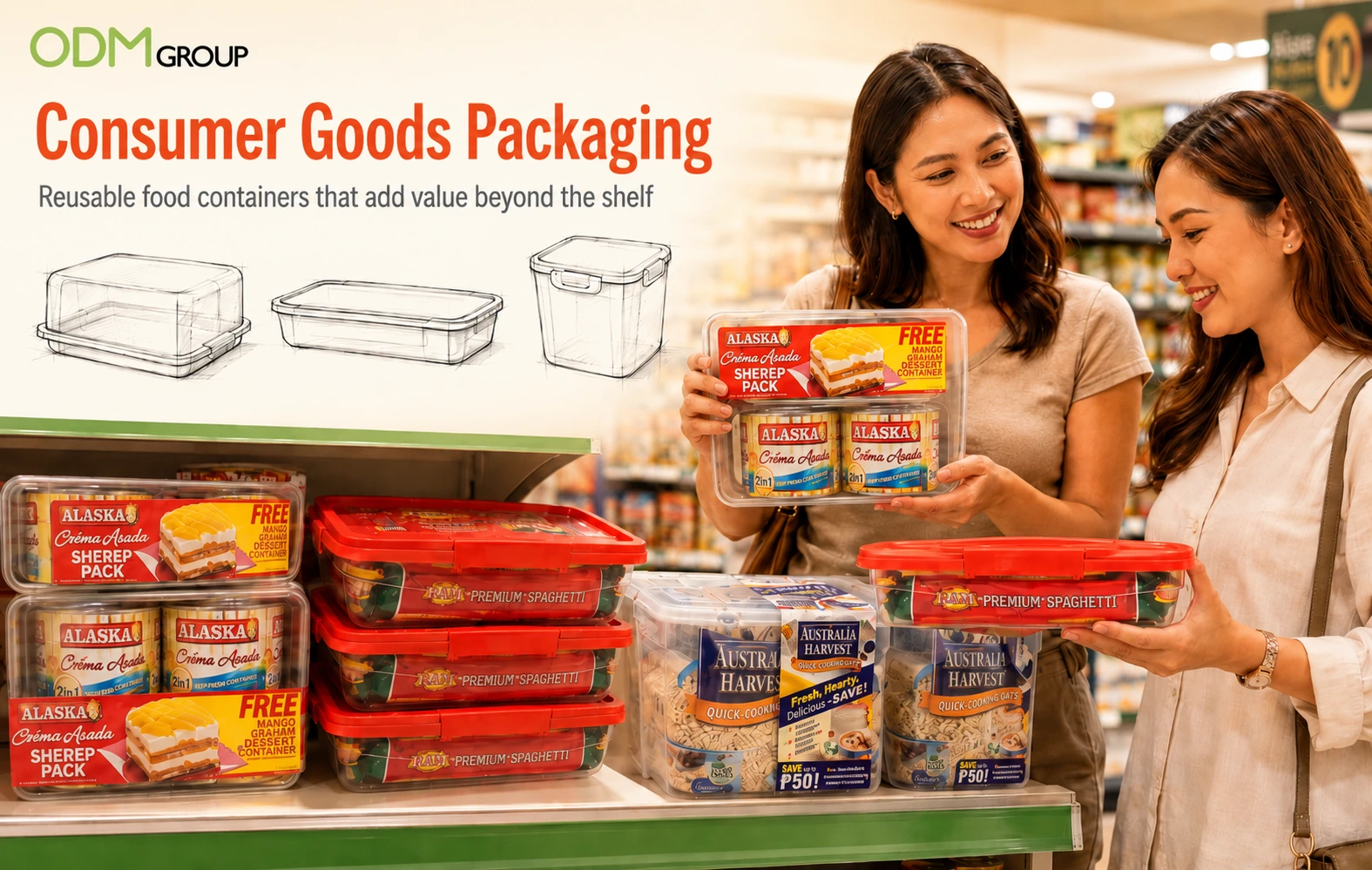
Reusable Food Containers Found in Retail
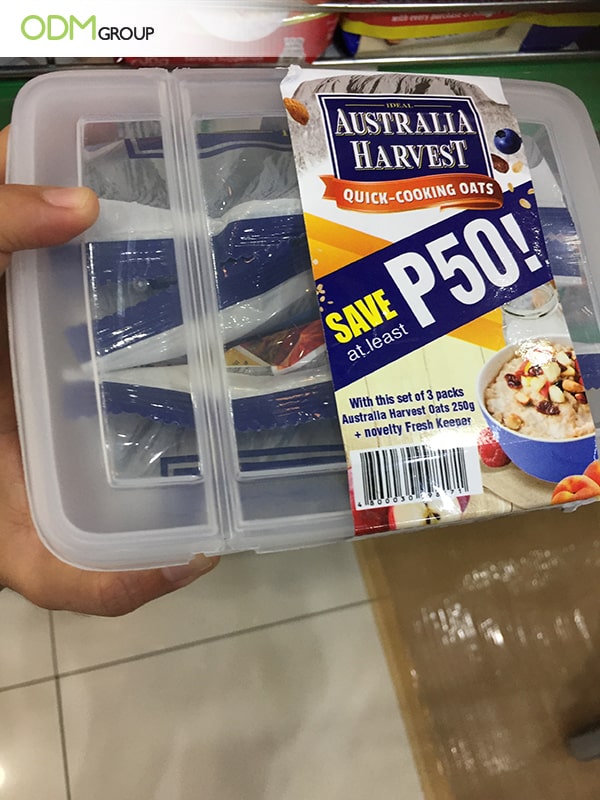
The examples included products from Alaska Crema Asada, RAM Premium Spaghetti, Loacker, and Australia Harvest Oats.
Although the products belonged to different food categories, they followed a similar promotional approach: pairing the main product with a practical food storage container.
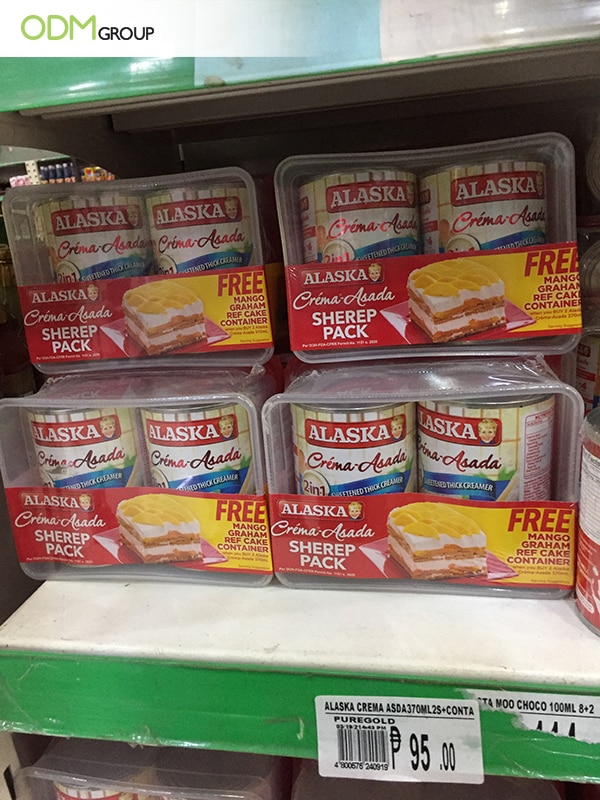
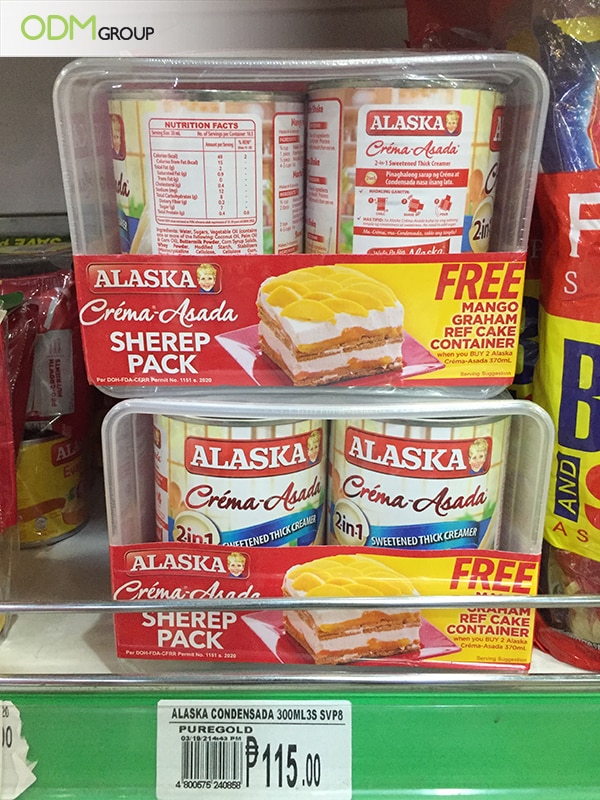
1. Alaska Crema Asada
Alaska Crema Asada used a reusable container to make the product bundle feel more complete and practical.
For shoppers who regularly prepare desserts or store ingredients, the container provides an immediate connection to the product’s use. It can also help the promotion stand out from standard packs displayed nearby.
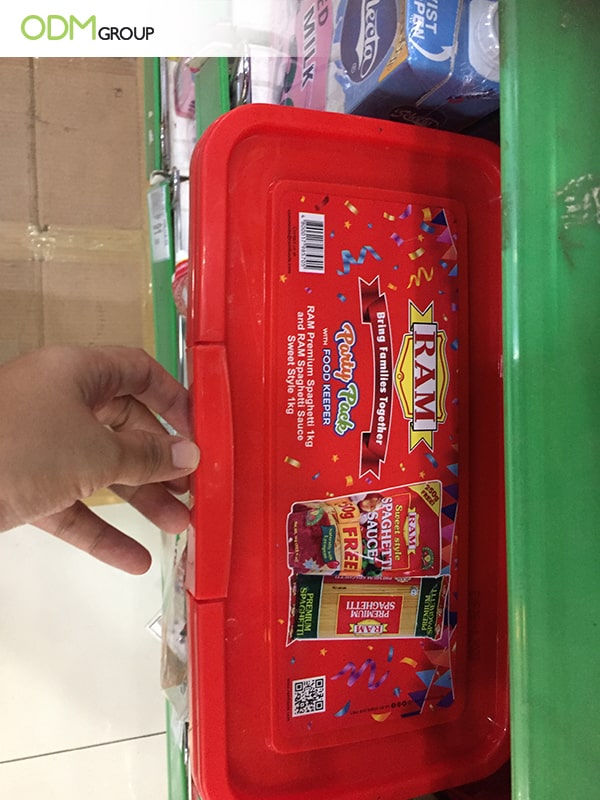
2. RAM Premium Spaghetti
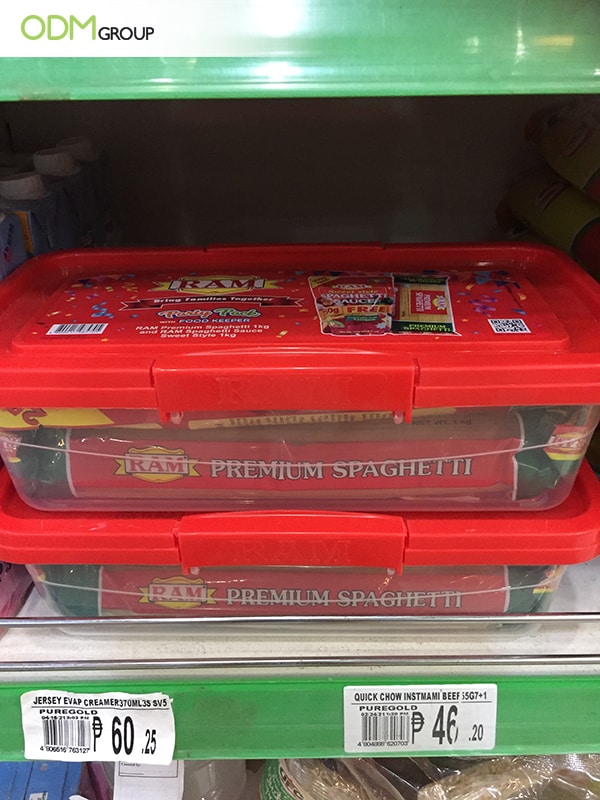
Pasta products are commonly purchased for family meals and pantry storage. Adding a reusable container gives shoppers an item they can use for leftovers, meal preparation, or ingredient organization.
This type of promotion can be particularly effective during holidays, family celebrations, and seasonal cooking campaigns.
3. Loacker
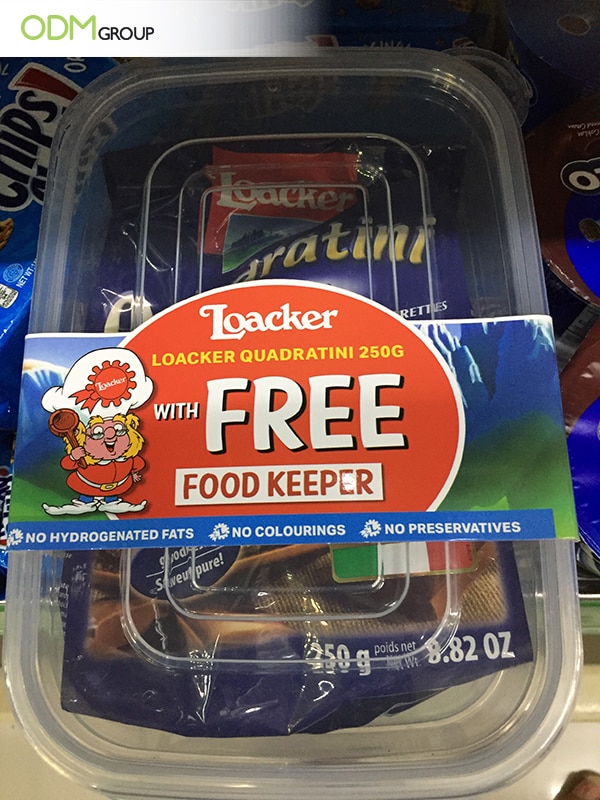
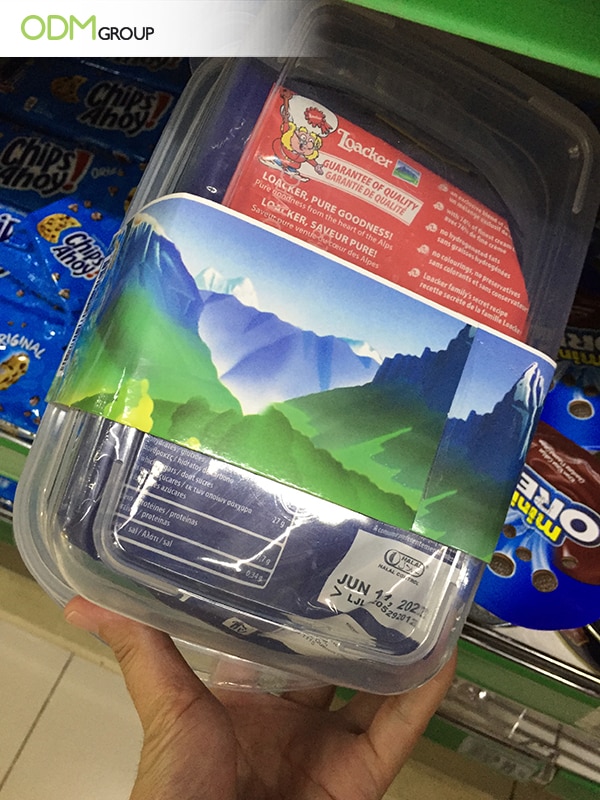
For confectionery and snack brands, reusable containers can help reposition the product as something suitable for sharing, gifting, or storing at home.
The additional container increases the perceived value of the purchase while giving the brand a presence beyond the original snack packaging.
4. Australia Harvest Oats
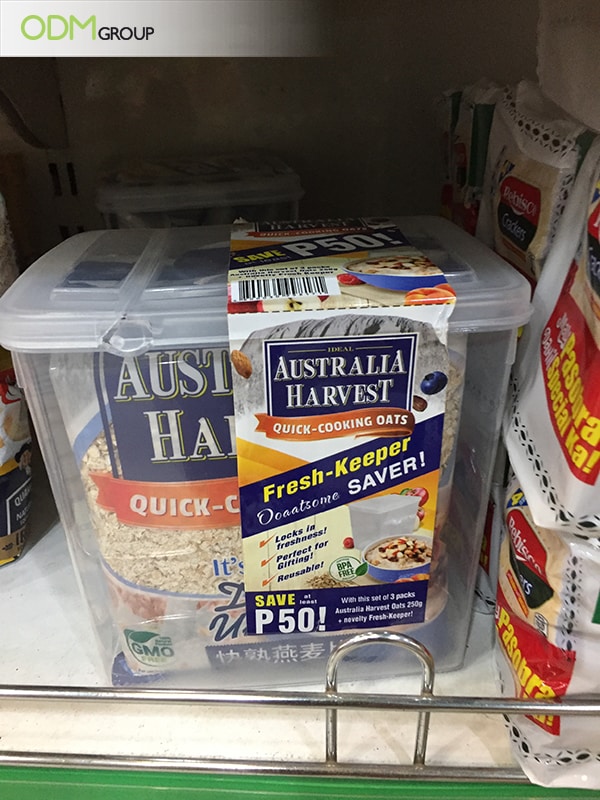
Oats are often associated with breakfast preparation, meal planning, and pantry organization. A reusable food container therefore complements the product naturally.
When the promotional item is relevant to how the main product is used, the overall campaign feels more considered and useful.
Why Use Food Containers for Consumer Goods Packaging?
Reusable containers offer more than additional packaging space. They can improve the customer experience, strengthen retail presentation, and keep the brand visible after the original product has been consumed.
Here are five reasons brands should consider using food containers in their next FMCG campaign.
1. They Increase Perceived Product Value
Shoppers often compare similar products based on price, quantity, packaging, and any additional benefits included in the purchase.
A reusable food container gives customers something practical in addition to the main product. This can make the promotional pack appear more valuable, even when competing products are displayed at a similar price.
The container can be presented as:
- A free gift with purchase
- Part of a promotional bundle
- A reward for buying multiple products
- A limited-edition packaging format
- A loyalty campaign incentive
The key is to make the additional value easy to understand. Shoppers should be able to see what they are receiving and how they can use it.
2. They Improve Visibility at the Point of Sale
Retail shelves can become crowded, especially in categories such as snacks, dairy products, breakfast foods, pasta, and confectionery.
An unusual packaging format can interrupt the shopper’s normal browsing pattern. A visible reusable container changes the silhouette, size, and presentation of the product, helping it stand apart from conventional boxes, cans, or pouches.
Brands can strengthen this effect by using:
- Clear promotional labels
- Color-coordinated container lids
- Branded sleeves or wraps
- Window packaging
- Custom retail trays
- Point-of-sale displays
However, the container should not make the pack difficult to stack, transport, or display. Shelf dimensions and retailer requirements should be considered during development.
3. They Give Customers Practical Everyday Utility
The strongest promotional items are usually those that fit naturally into a customer’s routine.
Food containers can be used for:
- Storing leftovers
- Organizing pantry ingredients
- Preparing packed lunches
- Carrying snacks
- Separating meal portions
- Keeping small household items organized
Useful features may include airtight or secure lids, transparent bodies, stackable shapes, easy-to-clean surfaces, and compact dimensions.
Brands should select the container according to the target audience. A small snack box may work well for families with children, while a larger pantry container may be more suitable for oats, pasta, cereal, or baking products.
4. They Extend Brand Exposure Beyond the Purchase
Most primary packaging is discarded after the product has been consumed. A reusable container can remain in the customer’s kitchen, pantry, lunch bag, or workplace for months.
This gives brands an opportunity to create longer-lasting visibility.
Branding can be applied through:
- Printed logos
- Molded brand marks
- Branded lids
- Custom colors
- Decorative patterns
- Product-related artwork
- Campaign messages
Branding should be noticeable without making the container feel overly promotional. Customers are more likely to continue using an item when the design is attractive, practical, and appropriate for everyday settings.
Durable branding is also important. Logos that fade, peel, or scratch after a few washes may reduce the perceived quality of the promotion.
5. They Can Support Loyalty and Repeat Purchases
Reusable food containers can also be developed as part of a wider promotional series.
For example, a brand could release containers in different sizes, colors, or designs over several campaign periods. Customers may be encouraged to make repeat purchases to complete a coordinated collection.
Possible campaign formats include:
- Collectible container sets
- Tiered rewards
- Limited-edition seasonal designs
- Character-themed collections
- Mix-and-match lid colors
- Containers unlocked through loyalty points
- Different sizes for different purchase quantities
This approach gives customers a reason to return while creating anticipation around future promotional releases.
A collection should still provide genuine value. Changing only the printed design may not be enough to encourage repeat participation unless the containers are useful and visually appealing.
Here are more fantastic examples from other brands that we have featured before:
Kellogg’s has used branded food storage containers as gift-with-purchase items. The connection is easy for shoppers to understand because cereal and other breakfast foods are commonly stored in kitchens and pantries.
A reusable container can complement Nutella promotions by supporting family meals, packed snacks, and kitchen storage. The practical item adds value without competing with the personality of the main product.
A partnership between a food brand and an established food container brand can strengthen customer confidence in the promotional item.
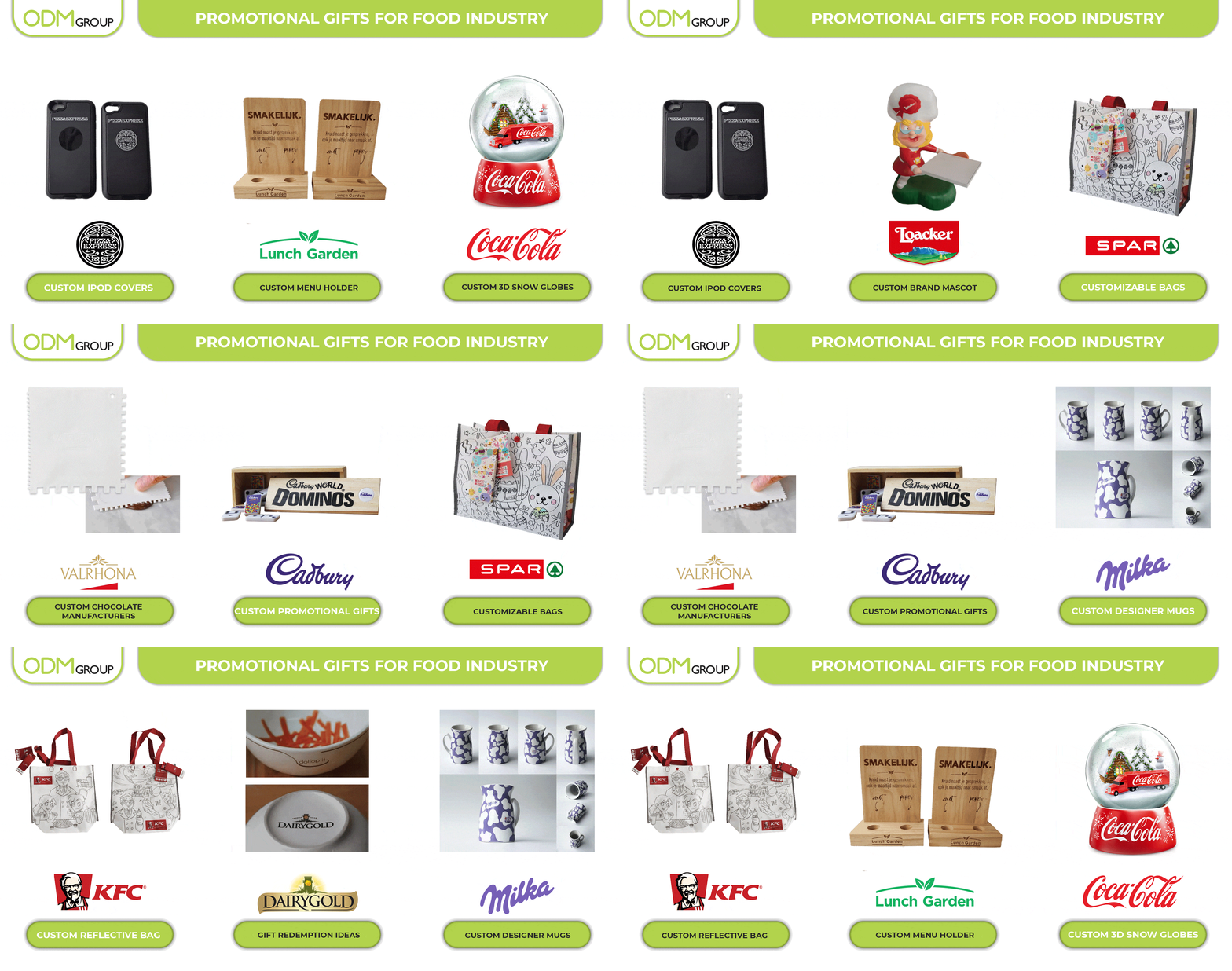
Free food containers as packaging is a good way to incentivize your customers. However, if you want to give more to them, you might also consider any of these promotional gift ideas for businesses in the food industry!
Are Reusable Containers a Sustainable Packaging Option?
Reusable containers may support waste-reduction goals when they are durable and used repeatedly over time.
However, reusable does not automatically mean environmentally friendly. Brands should consider the complete product lifecycle, including:
- Material selection
- Product durability
- Manufacturing requirements
- Packaging volume
- Transportation
- Recyclability
- Expected frequency of reuse
The most responsible approach is to create a container that customers genuinely want to keep and use.
Low-quality promotional containers that break quickly or are discarded after limited use may not deliver the expected environmental or marketing benefits.
Bringing It All Together
Reusable food containers can make consumer goods packaging more practical, noticeable, and valuable.
They can help FMCG brands improve shelf visibility, encourage product trial, extend brand exposure, and support repeat-purchase campaigns. Their everyday usefulness also makes them suitable for promotions in food, snacks, confectionery, dairy, breakfast, and pantry products.
The container should not be treated as an unrelated free gift. It should complement the main product, suit the target customer, and support the wider campaign objective.
How Can ODM Help?
The ODM Group helps brands develop promotional packaging and reusable food container concepts for retail campaigns.
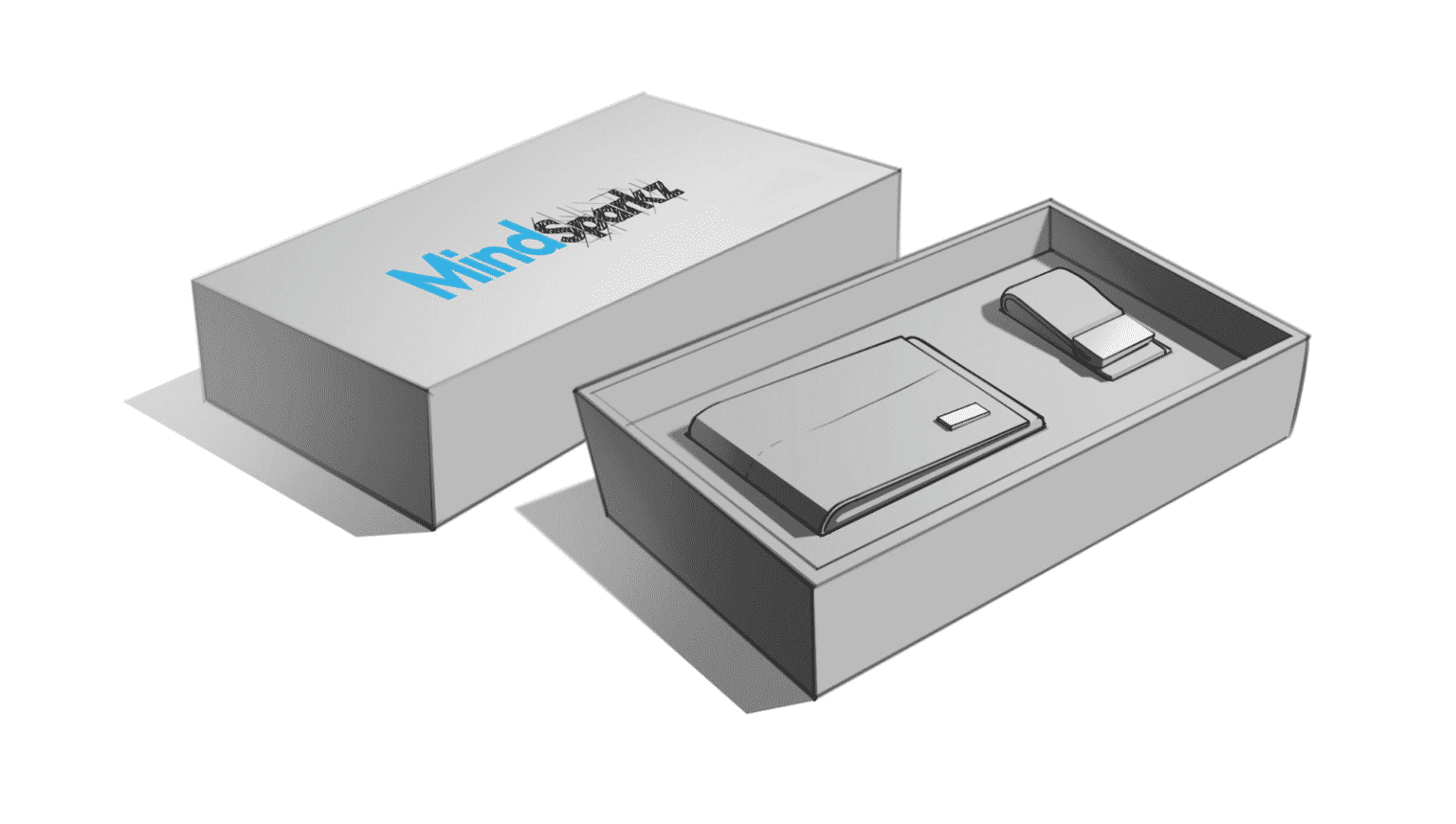
Together with our design team at Mindsparkz, we can support the development process from the initial idea through to the finished promotion.
Whether you are planning a gift-with-purchase campaign, a collectible container series, or a value-added FMCG bundle, our team can help create a solution that aligns with your brand and retail strategy.
Contact The ODM Group to discuss reusable food containers and consumer goods packaging for your next promotional campaign.
Frequently Asked Questions
What is consumer goods packaging?
Consumer goods packaging refers to the materials and formats used to contain, protect, present, and promote products sold to consumers. It includes primary packaging, secondary packaging, retail bundles, and promotional packaging.
Can food containers be used as gift-with-purchase items?
Yes. Reusable food containers can be bundled with food, beverage, confectionery, dairy, cereal, and pantry products as gift-with-purchase items.
What materials can be used for promotional food containers?
Common options include food-grade plastic, stainless steel, glass, silicone, and combinations of materials. The best choice depends on the intended use, campaign budget, product positioning, and applicable regulations.
How can brands customize reusable food containers?
Containers can be customized through printed logos, molded branding, custom colors, branded lids, decorative graphics, labels, sleeves, and custom packaging.
How to design packaging right for your product? Here’s an insightful blog from our superb in-house design team. Make sure to check it out!
More Amazing Packaging Design Ideas to Bring Your Promotions to Life
Bespoke Product Packaging Ideas for Beverage Brands
Product packaging plays a vital role in product merchandising. [...]
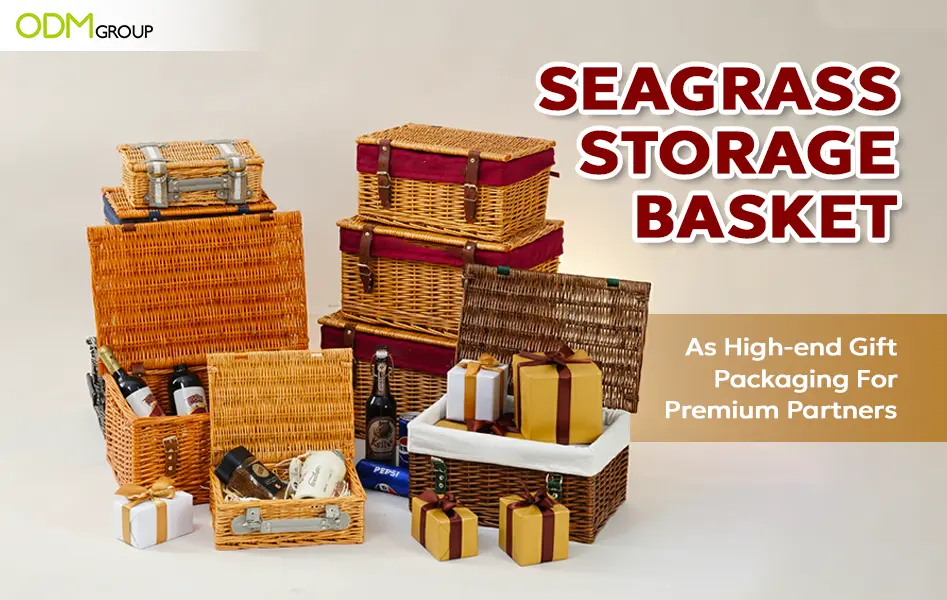
Seagrass Storage Baskets As High-end Gift Packaging For Premium Partners
A meaningful gift begins with a story. Not just [...]
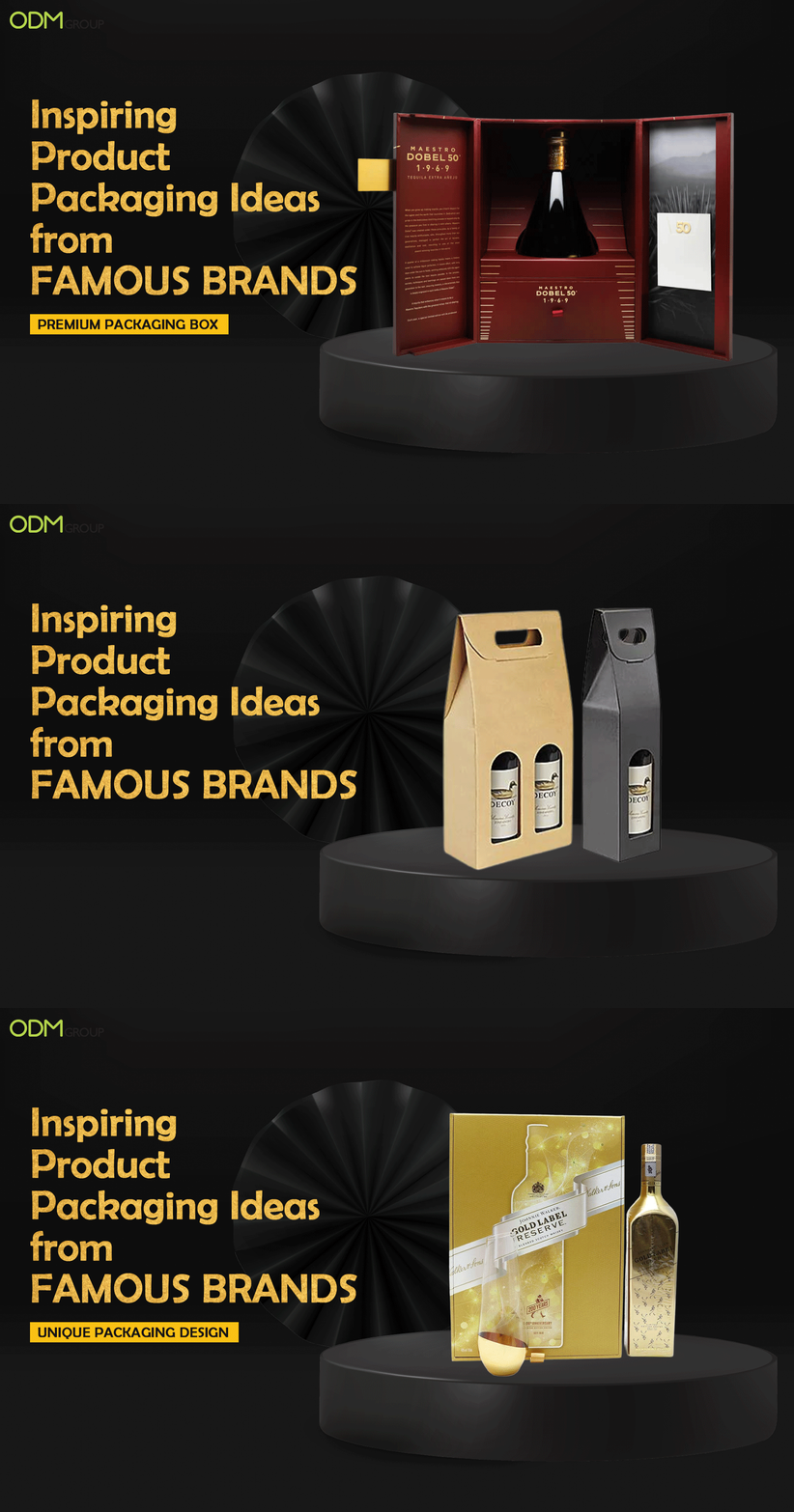
Inspiring Product Packaging Ideas from Famous Brands
Feeling overwhelmed when searching for packaging inspiration? Don’t be. [...]
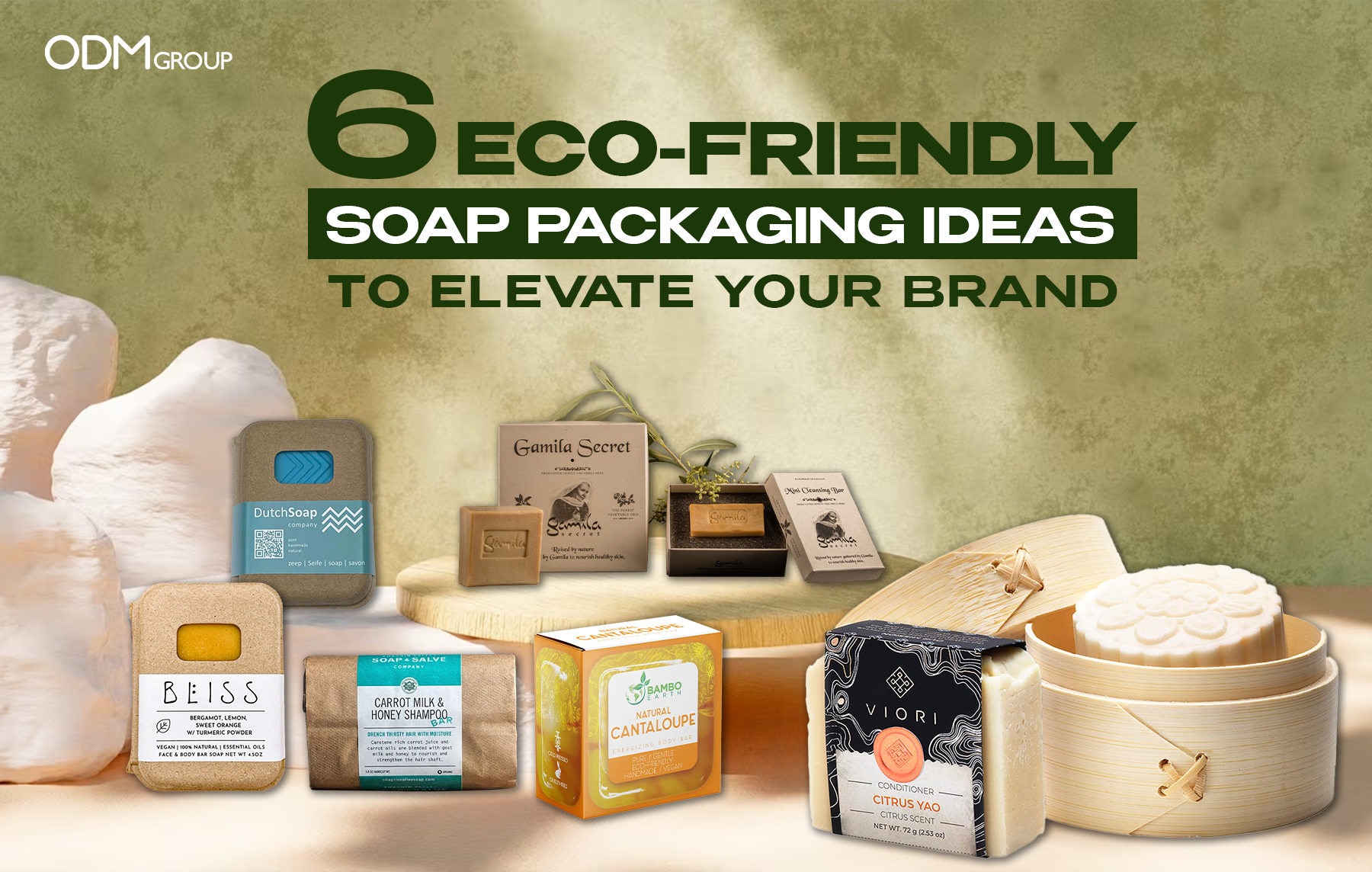
6 Eco-friendly Soap Packaging Ideas To Elevate Your Brand
Proper packaging is a powerful tool for brand identity, [...]
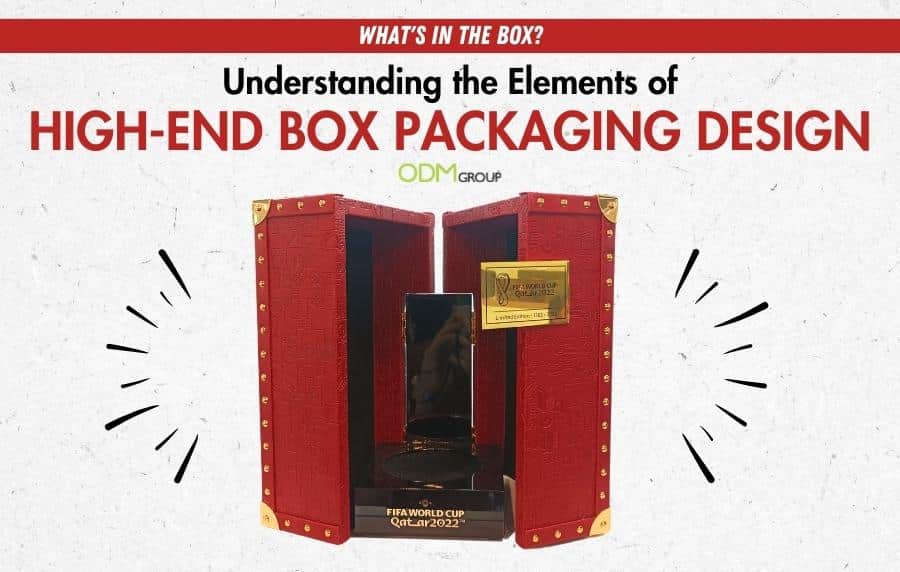
Unwrapping Success: Premium Box Packaging for Brand Promotion
In this digital age, where consumers are constantly bombarded [...]