
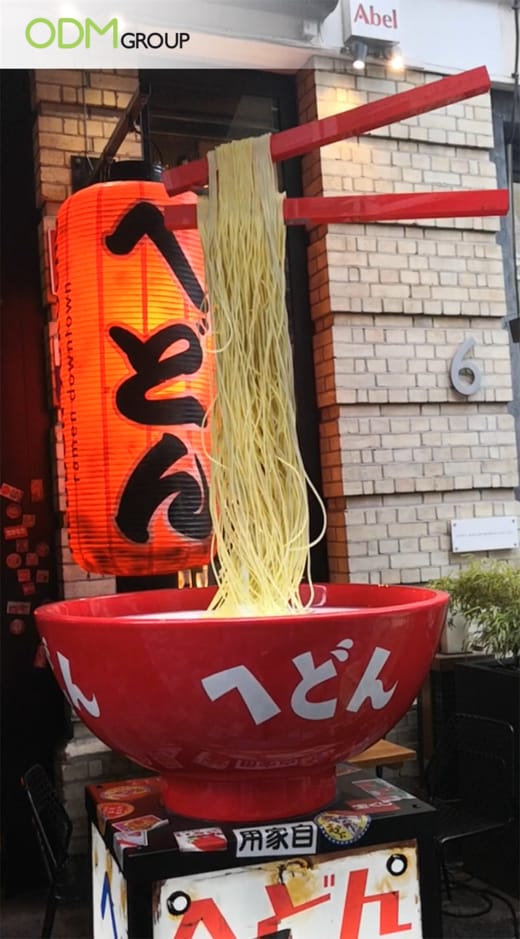
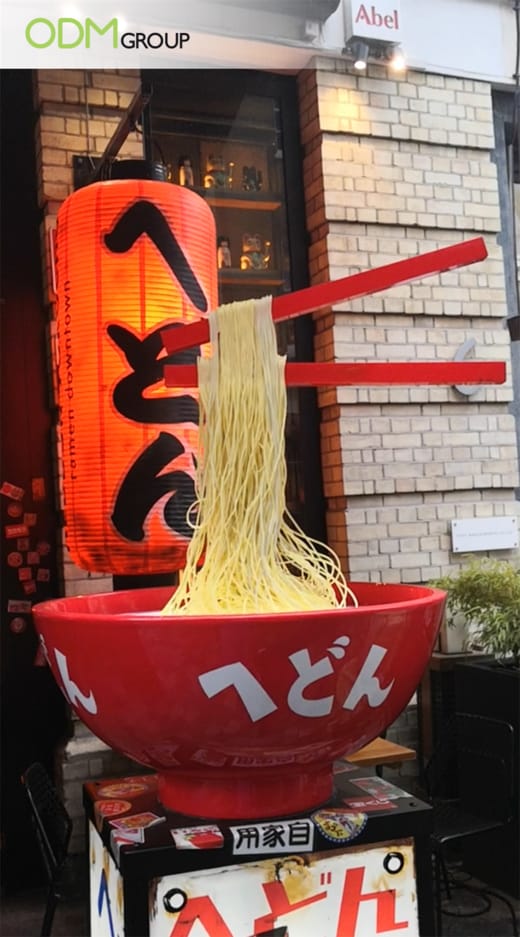
A restaurant POS display can do more than show a menu. Outside Heddon Yokocho, a Japanese restaurant in London, a large ramen bowl with chopsticks turns a signature dish into a street-level attraction. Its movement gives passersby a reason to look twice. For restaurant brands, the useful question is how to turn that brief moment of attention into interest in the food inside.
What Makes This Ramen Display Work?
1. It shows the product before customers enter
A food replica communicates the offer faster than a long description. The bowl, noodles, and chopsticks immediately tell people what the restaurant serves. An oversized version also helps the dish stand out along a busy street.
The idea applies beyond ramen. A bakery could feature a sculpted signature pastry; a dessert shop could spotlight its best-known sundae. The display should represent a dish customers can actually order, with the menu or entrance close enough to make the next step clear.
2. Movement earns a second glance
The moving elements add a moment of surprise to an otherwise familiar shopfront. That can encourage people to pause, look at the display, and notice the restaurant. It may also make the scene appealing to photograph, although a display alone cannot guarantee social sharing or more sales.
Movement needs a purpose. A simple, reliable motion that reinforces the food concept is more useful than an elaborate feature that distracts from the restaurant name or needs frequent repairs.
3. The design makes the offer recognizable
The prominent bowl and chopsticks connect the installation directly to the food. For a new customer, this is more helpful than a decorative sculpture that needs an explanation. Color and scale help the display stand out, but the strongest choice is the one that makes the restaurant and its featured dish easy to identify.
A brand planning a similar installation should decide what viewers must understand at a glance: the cuisine, the signature item, or a limited-time offer. Then build the design around that single message.
4. It gives the storefront a distinctive landmark
A three-dimensional display can help people recognize an entrance from a distance and remember it later. If it is intended for an outdoor location, its construction also needs to suit the actual site. Weather exposure, pedestrian clearance, cleaning, power access, and maintenance should be reviewed before a concept is approved. The materials and operating specifications of Heddon Yokocho’s display have not been verified here.
How Can a Restaurant Adapt This Idea?
Start with the campaign objective. Is the display meant to introduce a new outlet, highlight a signature dish, support a seasonal menu, or make an existing storefront easier to spot? That answer determines what the display should show and where it should sit.
Before commissioning a design, brief your team on:
- The focal item: Choose one recognizable dish, drink, character, or campaign visual.
- The viewing position: Check how it looks to people approaching from both directions and where they will see the restaurant name or menu.
- The footprint: Measure the intended area, including clearance for customers, staff, doors, and queues.
- The interaction: Decide whether movement, lighting, or a photo opportunity adds value to the concept.
- The operating needs: Confirm power, cleaning access, installation method, repair access, and the conditions the display must withstand.
- The next action: Make it easy to find the entrance, scan a menu, or ask about the featured item.
A small prototype can help the team check scale, visibility, and moving parts before committing to full production. If a unit will sit outdoors, confirm the applicable site permissions and technical requirements with the venue and local authorities.
Restaurant POS Display
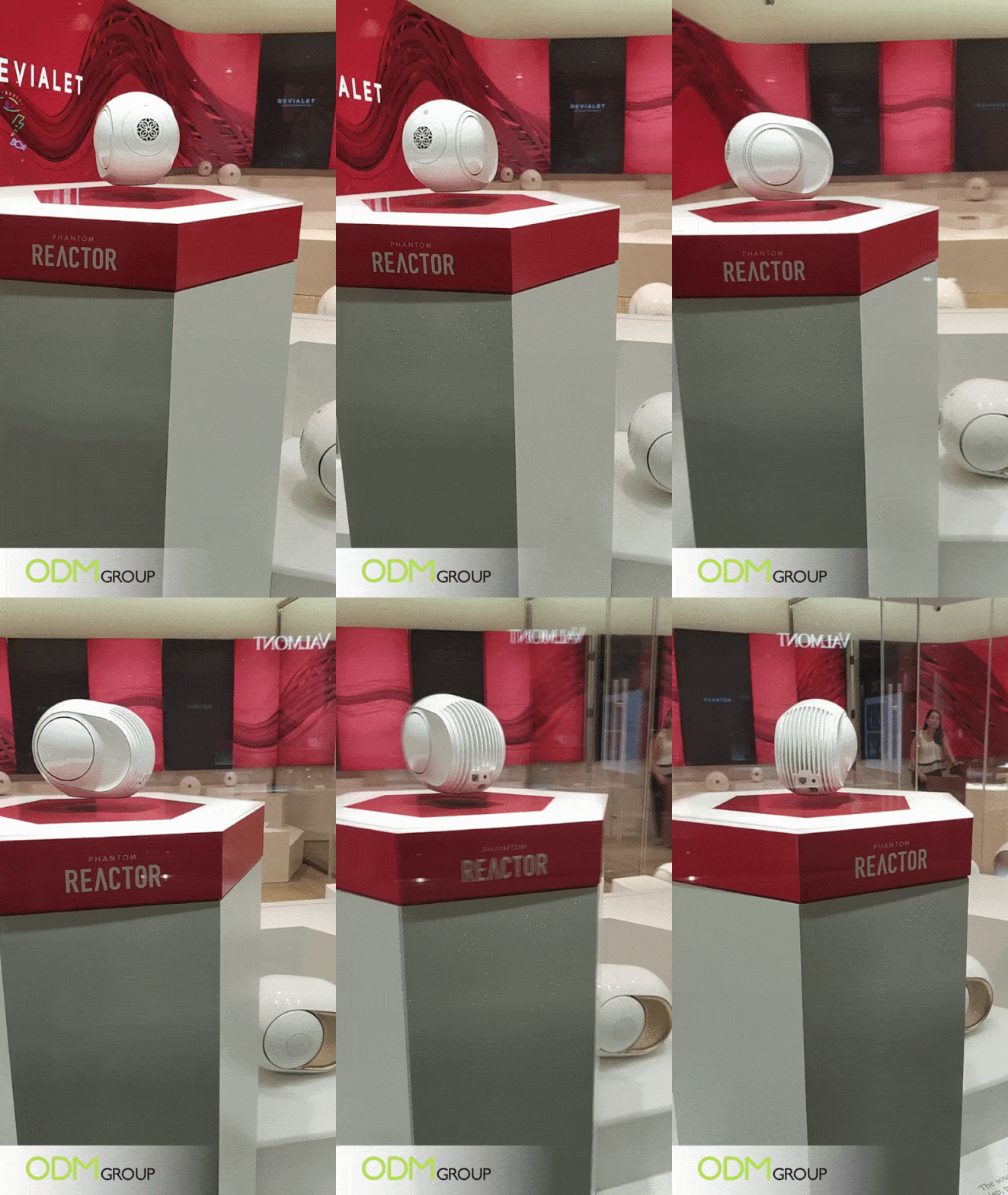
Although we can’t be sure if this example is completely magnetic, it reminds us of a levitating display that we spotted at Devialet, a company that produces high-end audio amplifiers. This magnetic POS display is ahead of its time in that it takes branding a notch higher and improves the shopping experience with some kind of entertainment.
magnetic POS display
From Concept Sketch to Restaurant Display
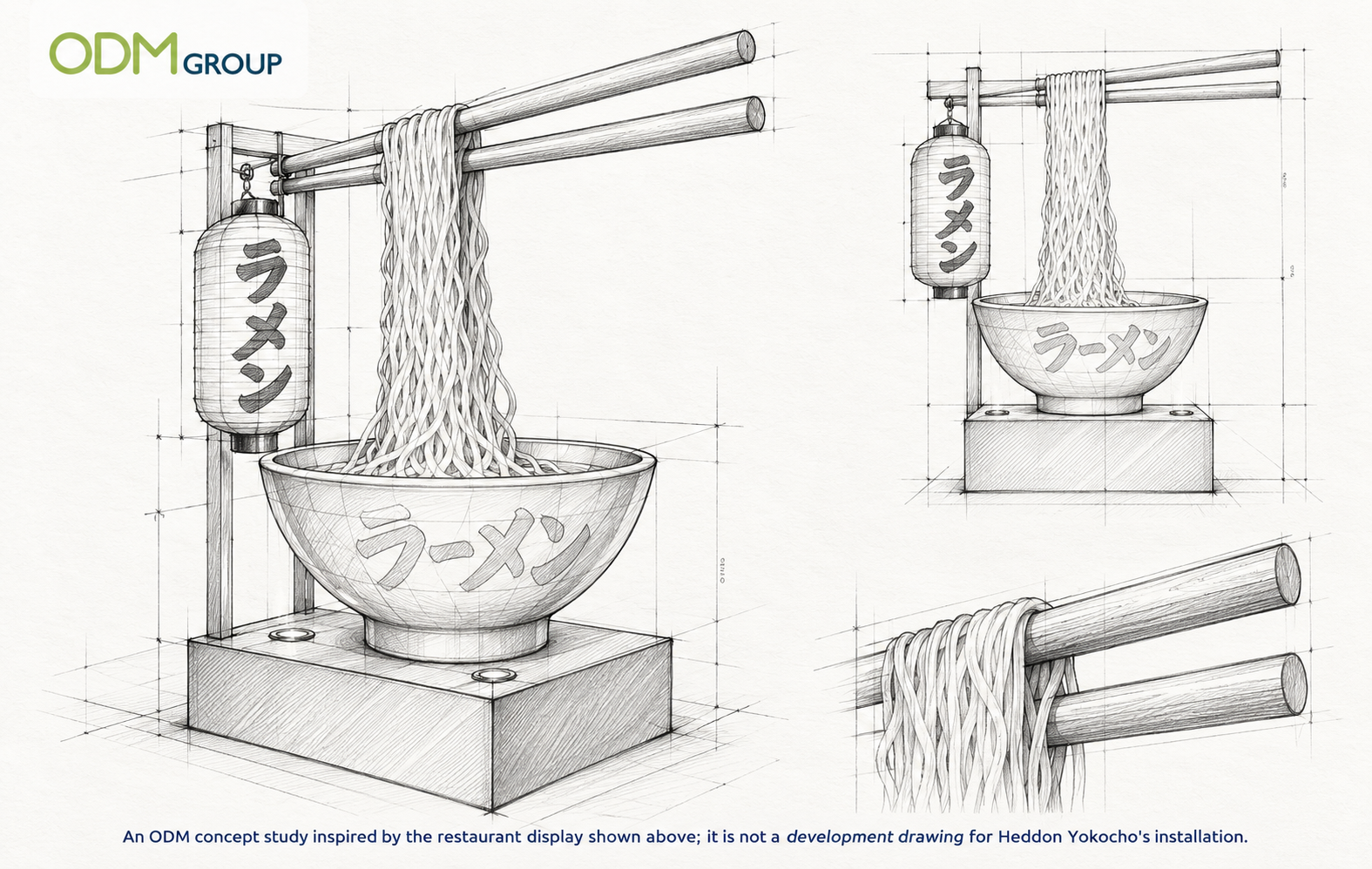
A custom display starts with the brand’s objective, menu item, location, and budget. ODM Group and our design agency, Mindsparkz, can develop concept sketches and 3D visuals, review materials and construction, and arrange prototyping. ODM can then coordinate suitable production partners, quality control, packaging, and delivery for the approved design.
The best concept makes the food recognizable and works in the space where customers will encounter it. If you are planning a display for a restaurant launch, menu promotion, or branded dining experience, contact ODM Group with your brief and site details.
More Display Ideas


FAQs about Restaurant POS Displays
What type of restaurant display should I choose?
Choose based on where customers will see it and what you want them to do. A window graphic can show a menu offer, a counter display can promote an add-on, and a three-dimensional food replica can draw attention to a signature dish from the street.
How much does a custom restaurant POS display cost?
Cost depends on size, materials, quantity, sculpted parts, lighting or motion, and installation. For a useful quote, provide site measurements, a target budget, quantity, deadline, and whether it will be used outdoors.
How long does it take to make a custom restaurant display?
A custom sculpted display usually takes longer than printed signage because it needs concept approval, prototyping, production, and delivery. Share your launch date early and ask for a schedule that includes time for revisions and installation.
Can a restaurant use a display like this outdoors?
Yes, if it is designed for the site's weather, power, stability, and maintenance needs. Check property approval, local signage rules, and pedestrian clearance before production.
Does a restaurant display need to move to attract customers?
No. Motion can catch attention, but a clear, well-placed static display may work just as well for the campaign goal. If you choose movement, prototype it and plan for power, safety, and servicing.
Creative POS Display Ideas to Inspire Your Next Campaign
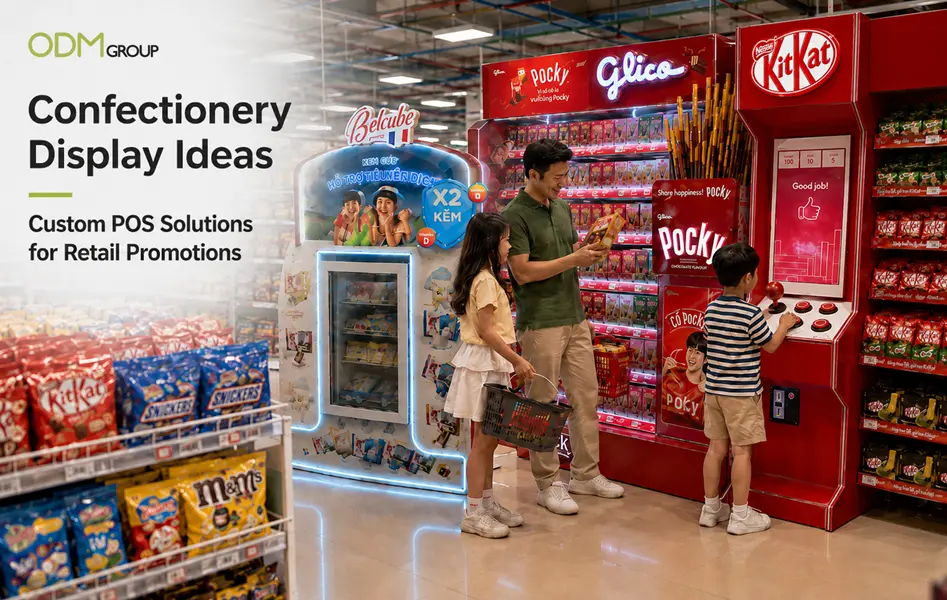
Custom Confectionery Displays: Ideas That Win Attention In-Store
Confectionery is one of the most impulse-driven categories in [...]
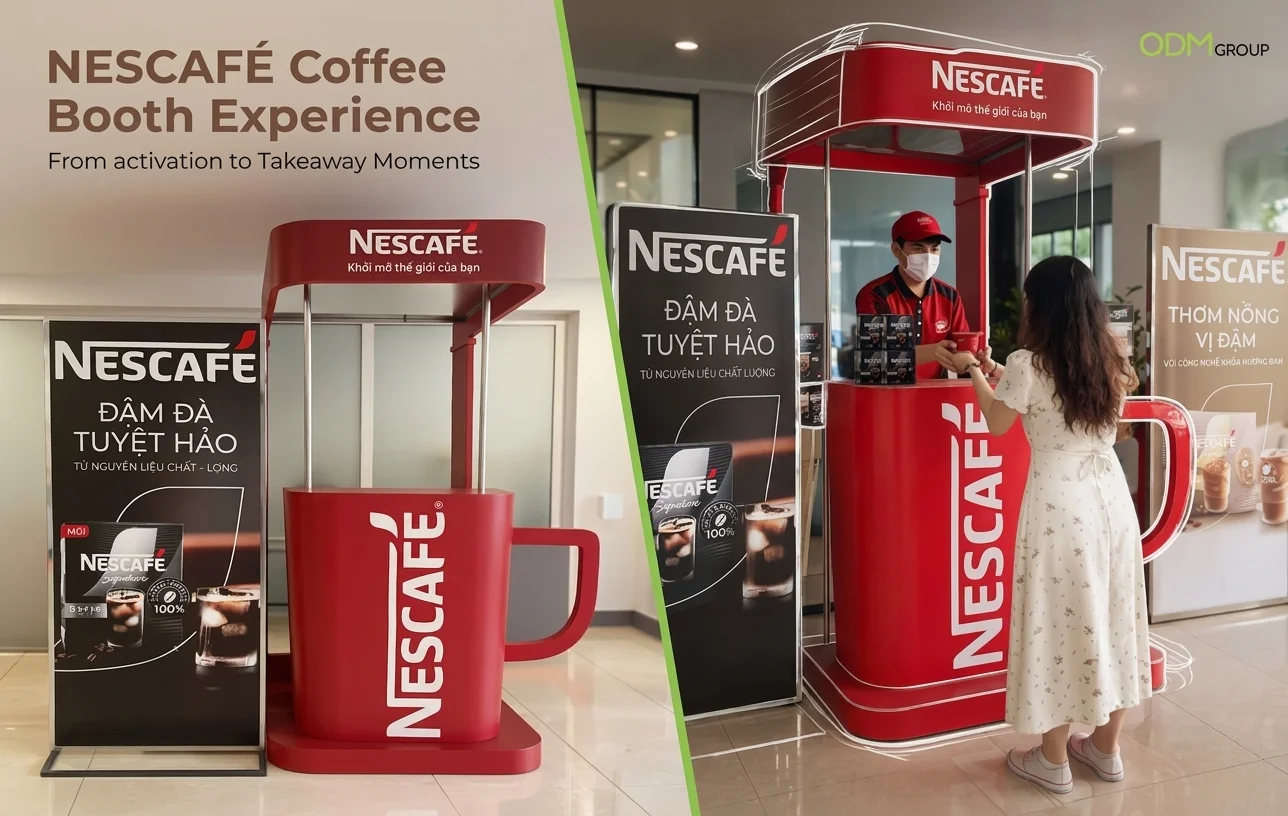
How Nescafe Coffee Booth Activations Drive Real Engagement in Office Spaces
Discover how a Nescafe coffee booth turns sampling into a daily brand experience using smart design, POS displays, and packaging strategies.
11 Cosmetic Retail Display Ideas Plus Tips for Beautiful Setups
Point-of-sale displays play a crucial role in marketing products. [...]
Create Unlimited Brand Exposure with Custom Infinity Mirror Display!
Imagine an advertising medium that not only showcases your [...]
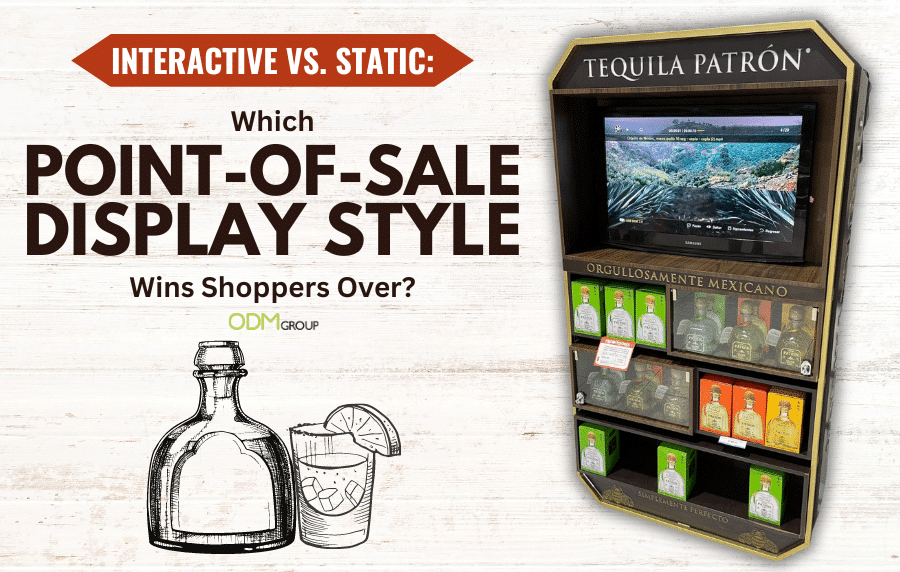
Drinks Marketing Idea: The Power of Point of Sale Video Display
In today's competitive retail environment, it is essential to [...]
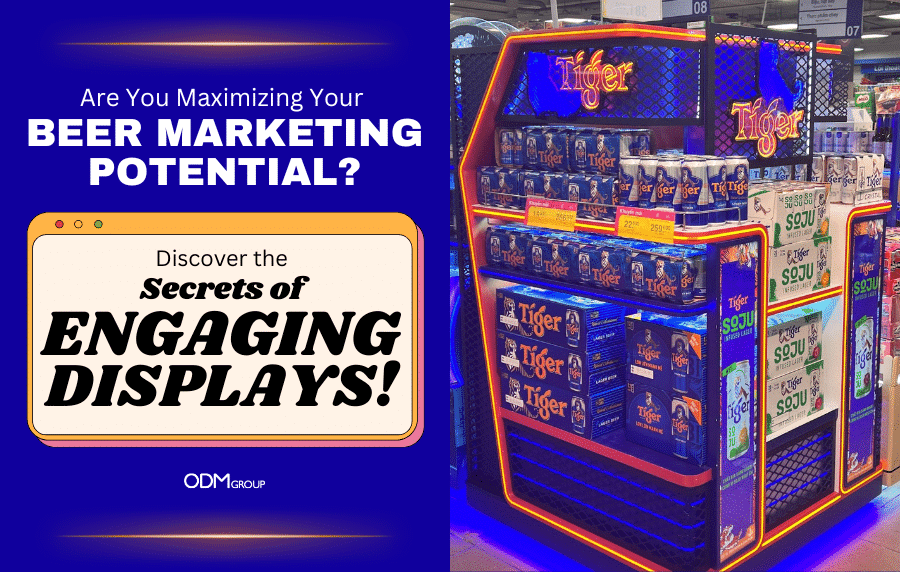
Beer Discovery Zone: What Made Tiger Beer Store Display A Success?
Shoppers usually go to stores with lists of things [...]