
Retail merchandising ideas can transform an ordinary store environment into a more engaging brand experience. From shelf frames and product glorifiers to interactive displays, the right execution can help products stand out, communicate key benefits, and guide shoppers toward a purchase.
However, an effective retail display must do more than look attractive. It should suit the product, fit the available retail space, support easy replenishment, and remain practical throughout the campaign.
Below, we explore eight retail merchandising ideas that brands can use to strengthen product visibility and create more memorable in-store activations.
What Is Retail Merchandising?
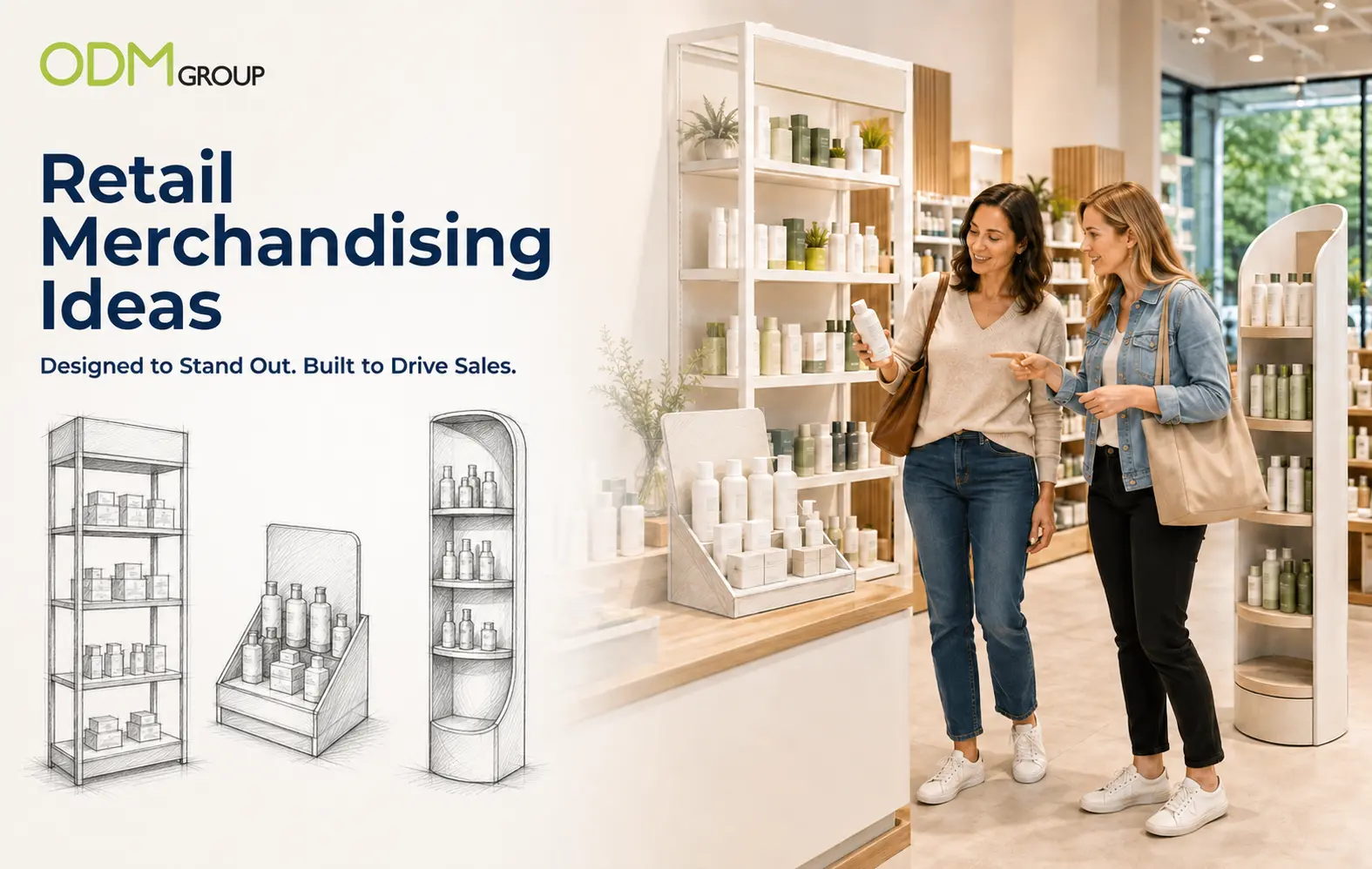
Retail merchandising is the strategic presentation of products within a physical store. It combines product placement, branded displays, signage, lighting, packaging, and promotional messaging to influence how shoppers discover and evaluate products.
A strong merchandising concept helps answer three questions quickly:
- What is the product?
- Why should the shopper consider it?
- What should the shopper do next?
The most effective displays communicate these points without making the retail environment feel cluttered or difficult to navigate.
Why Does Retail Merchandising Matter?
Retail shelves are crowded with competing products, colors, messages, and promotions. Even an established brand can lose visibility when its products are placed alongside many similar alternatives.
Purpose-built retail displays help create visual separation. They can also highlight new launches, seasonal ranges, gift-with-purchase offers, product bundles, and limited-edition packaging.
Good retail merchandising can support a campaign by:
- Improving product visibility
- Directing attention toward priority products
- Communicating benefits at the point of purchase
- Organizing multiple product variants
- Supporting seasonal or promotional messaging
- Encouraging shoppers to explore the range
- Reinforcing a consistent brand identity
The format should always reflect the campaign objective, retail environment, product dimensions, and expected display period.
8 Retail Merchandising Ideas
1. Shelf Framing
Shelf framing uses a branded structure around a product section to create a clear visual boundary. It can turn part of a standard retail shelf into a dedicated branded zone without requiring a separate floor-standing unit.
The frame may include a header, side panels, dimensional elements, lighting, or graphic messaging. It is particularly effective for product ranges that need to remain on the retailer’s existing shelving system.
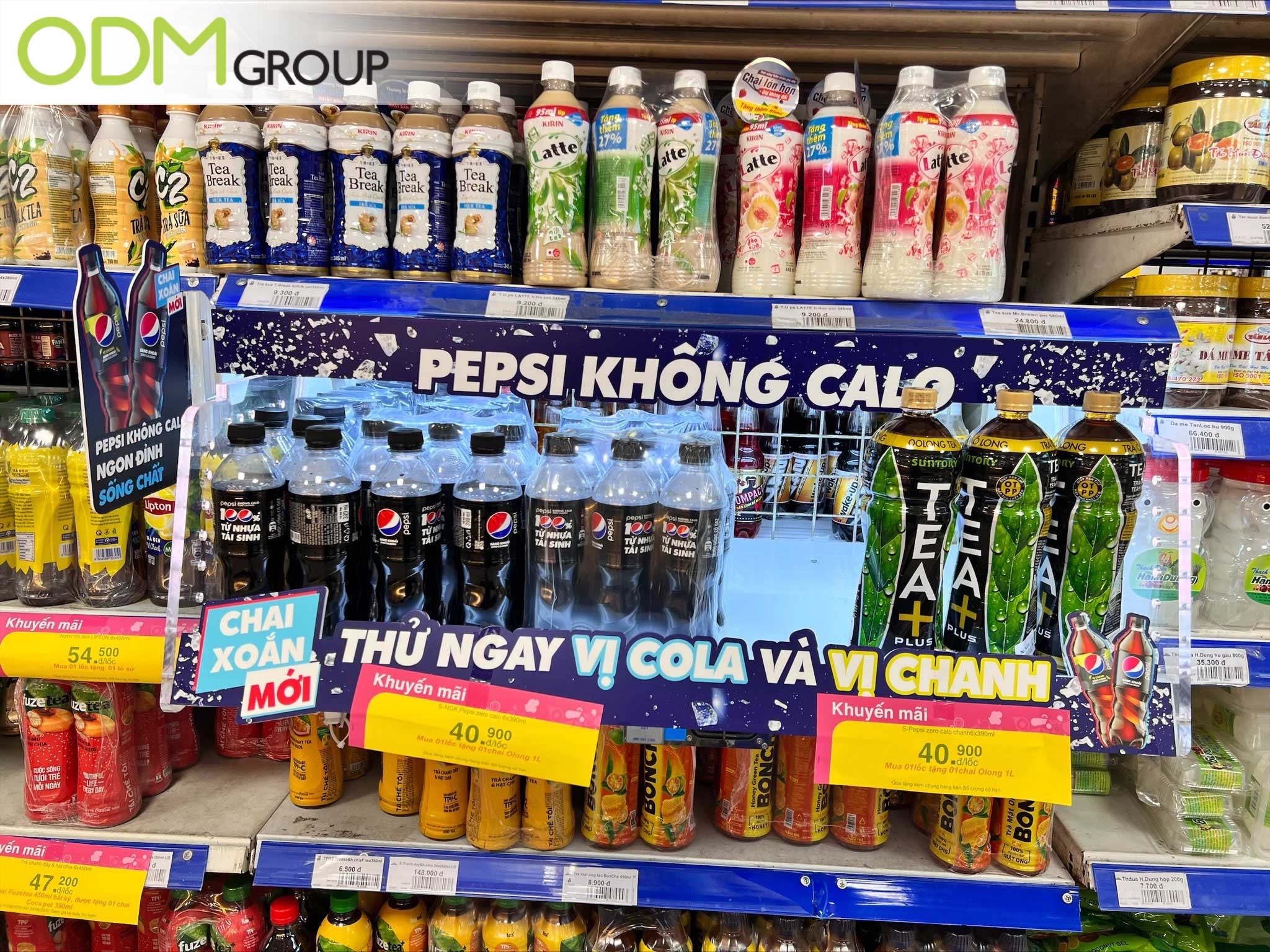
A Shelf-Framing Example Spotted in France
During a retail visit in France, our team found a shelf-framing display that transformed a conventional aisle section into a more noticeable product area.
The structure was relatively simple, but it created a strong visual break from the surrounding shelves. By framing the product range, the display helped guide attention toward that particular section.
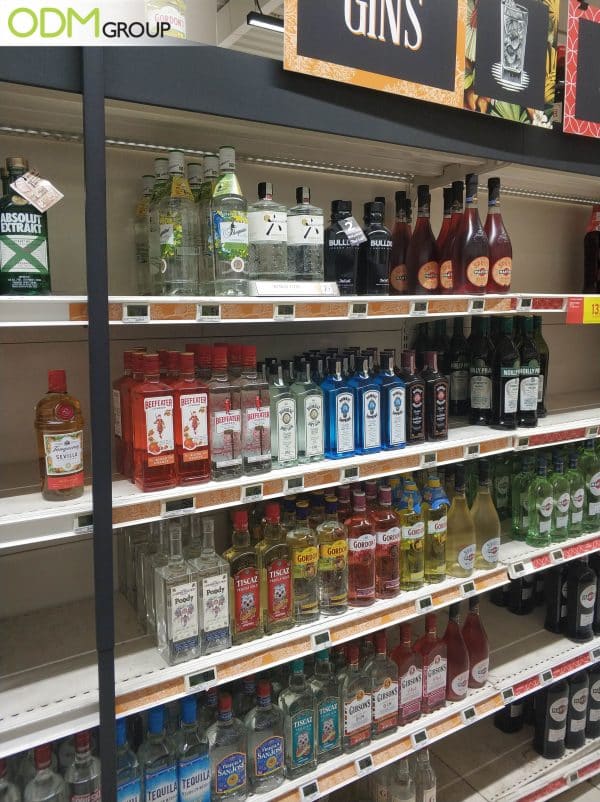
This example shows that retail merchandising does not always need to be large or complex. A well-designed shelf surround can improve visibility while working within the store’s existing layout.
Brands can develop the concept further with interchangeable graphics, illuminated logos, seasonal components, promotional messaging, or shelf-level product information.
2. Shelf Talkers and Shelf Wobblers
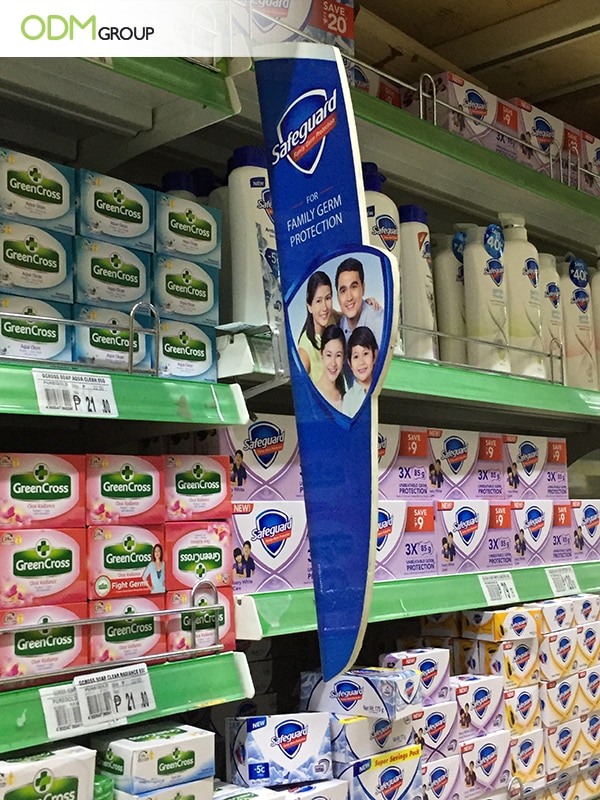
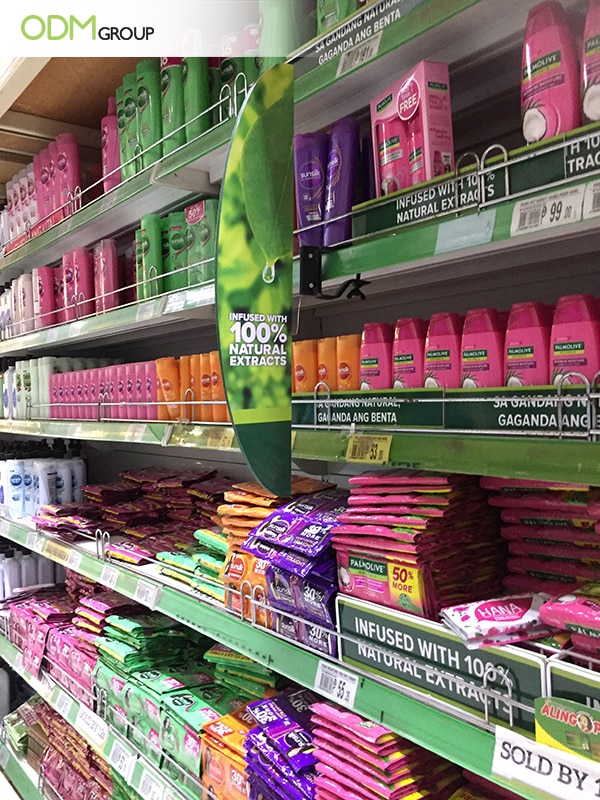
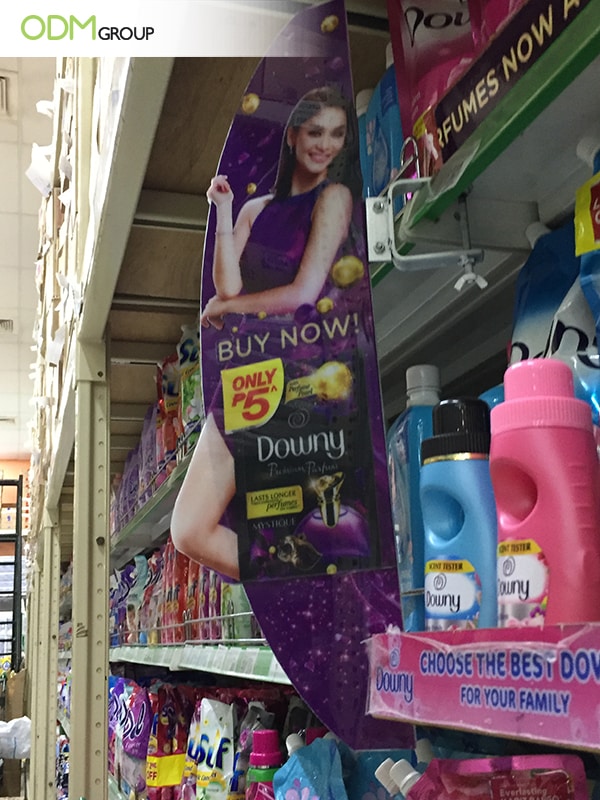
Shelf talkers are compact signs attached to the edge of a retail shelf. They are useful when brands need to add a promotional message without changing the entire shelving system.
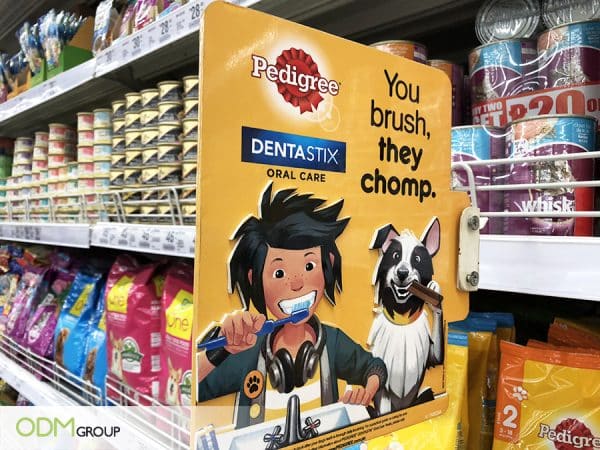
These displays can communicate:
- New product launches
- Special prices
- Product benefits
- Awards or certifications
- Gift-with-purchase offers
- QR codes and campaign links
- Limited-edition availability
The message should be short enough to understand at a glance. Complex explanations and multiple calls to action can make a small display difficult to read.
Materials may include printed card, polypropylene, PET, acrylic, or mixed-material components, depending on the required durability and campaign duration.
3. Product Glorifiers and Plinth Displays
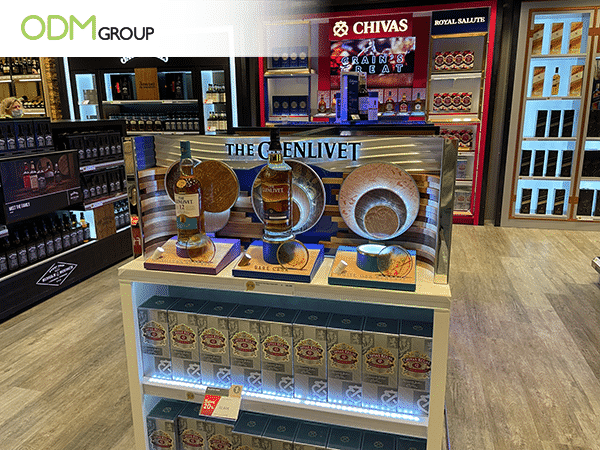
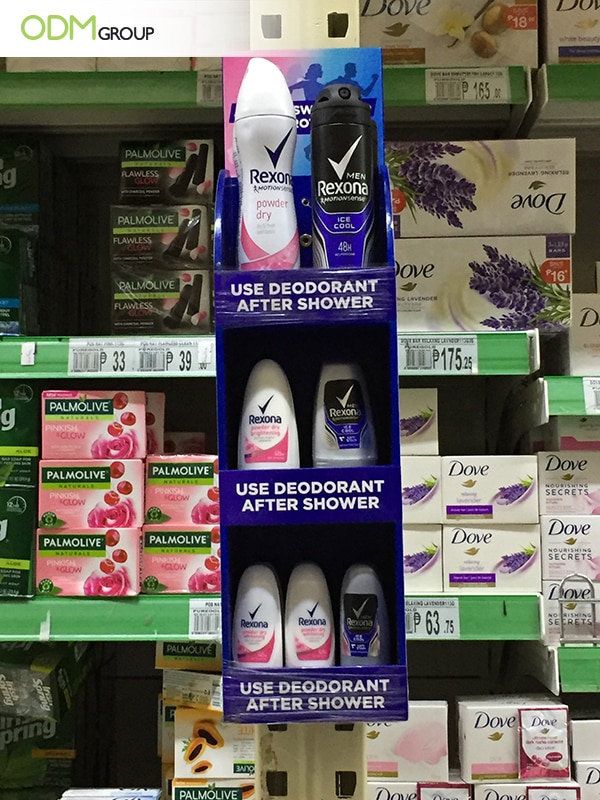
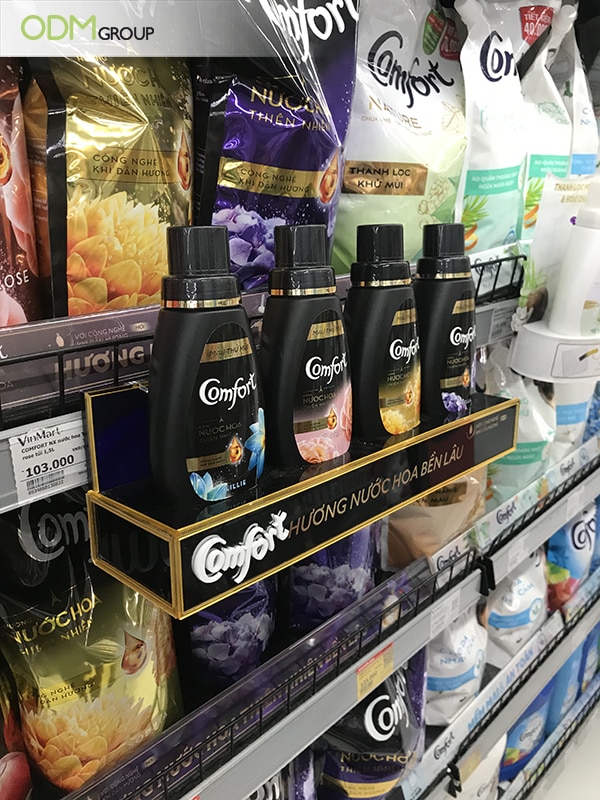
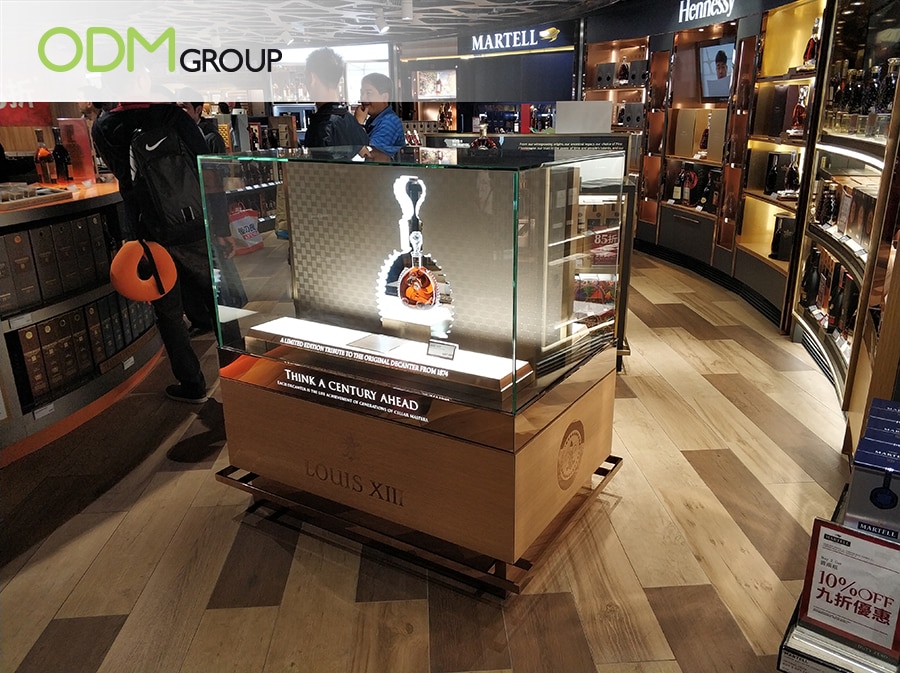
A product glorifier elevates a featured item above or away from surrounding products. It can be placed on a shelf, counter, display table, or inside a branded retail unit.
Glorifiers work particularly well for cosmetics, beverages, electronics, fragrances, jewelry, and premium product launches. Lighting, mirrors, metallic finishes, molded components, and dimensional logos can help strengthen the presentation.
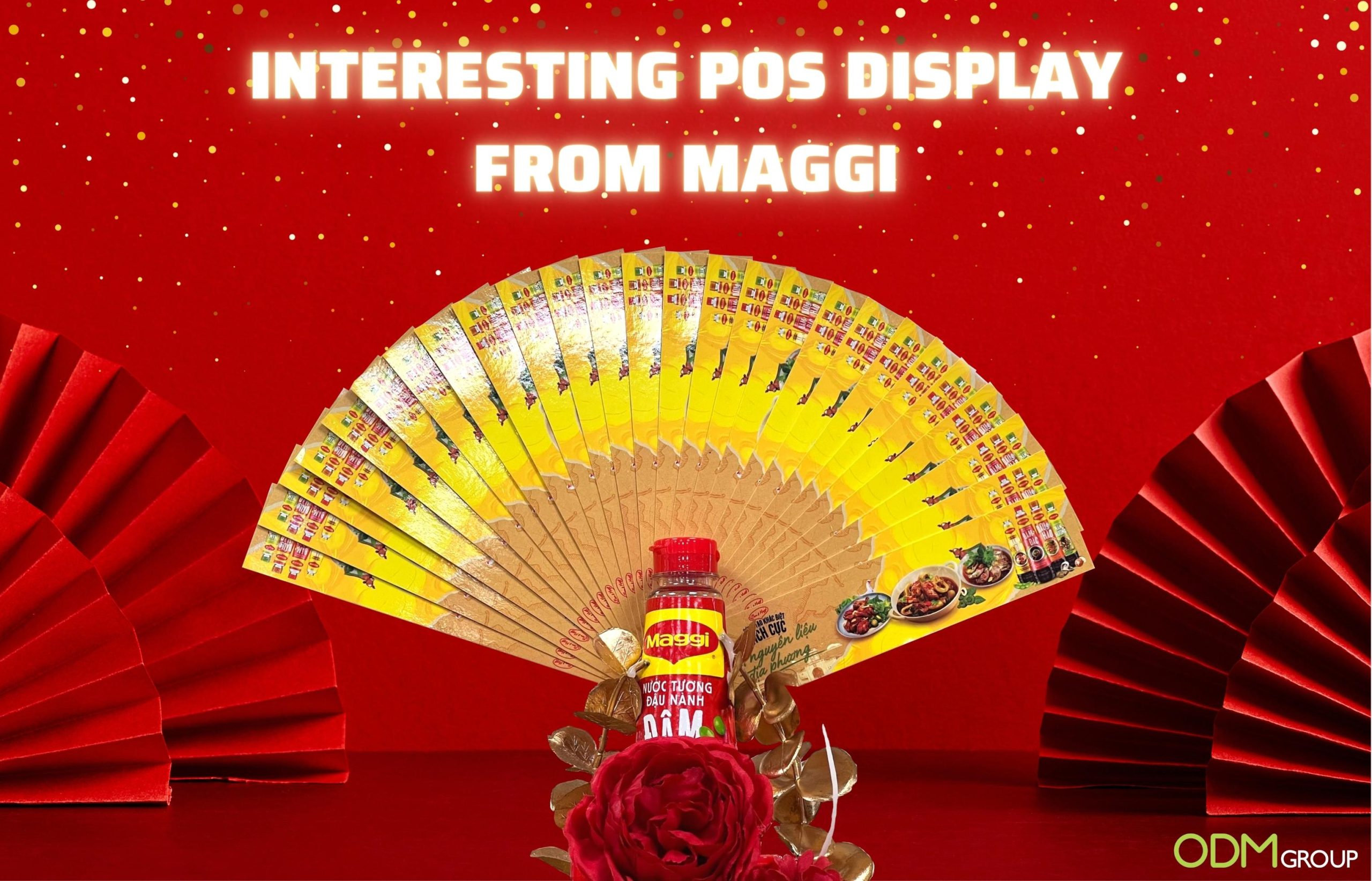
Custom Bottle Glorifiers
The product should remain the main focus. An elaborate structure that visually overwhelms the merchandise can reduce the effectiveness of the display.
When developing a glorifier, brands should also consider product security, cleaning, cable management, tester placement, and how store staff will replenish the display.
4. Countertop Display Units
Countertop display units position smaller products close to checkout areas, service counters, sampling points, or consultation desks. They are often used for products that benefit from impulse purchasing or a final reminder before checkout.
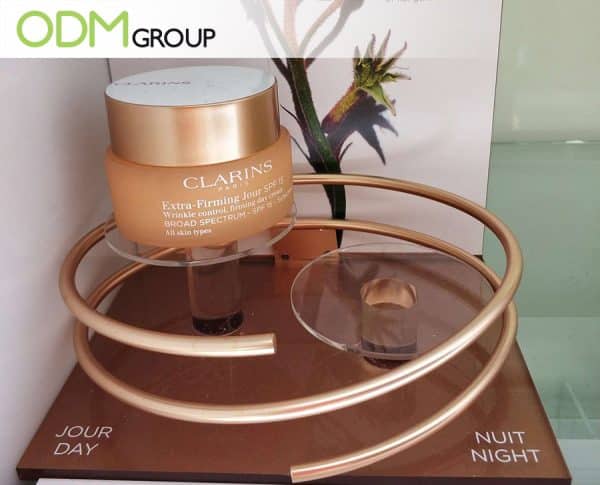
Common applications include:
- Cosmetics and skincare samples
- Confectionery and snacks
- Travel-sized products
- Small electronics
- Gift cards
- Promotional merchandise
- Trial-size product bundles
A countertop display needs to use space efficiently. The footprint, height, product capacity, and viewing angle should be confirmed before structural development begins.
Display trays, dividers, risers, header cards, and product-shaped inserts can be incorporated to keep the merchandise organized.
5. Floor-Standing Display Units
Floor-standing display units create a dedicated branded area away from the standard shelf. They can carry more products and offer greater creative freedom than smaller shelf-based displays.
These units can support product launches, seasonal campaigns, cross-category promotions, and temporary retail activations. Depending on the campaign, they may be made from corrugated board, honeycomb board, wood, metal, acrylic, or a combination of materials.
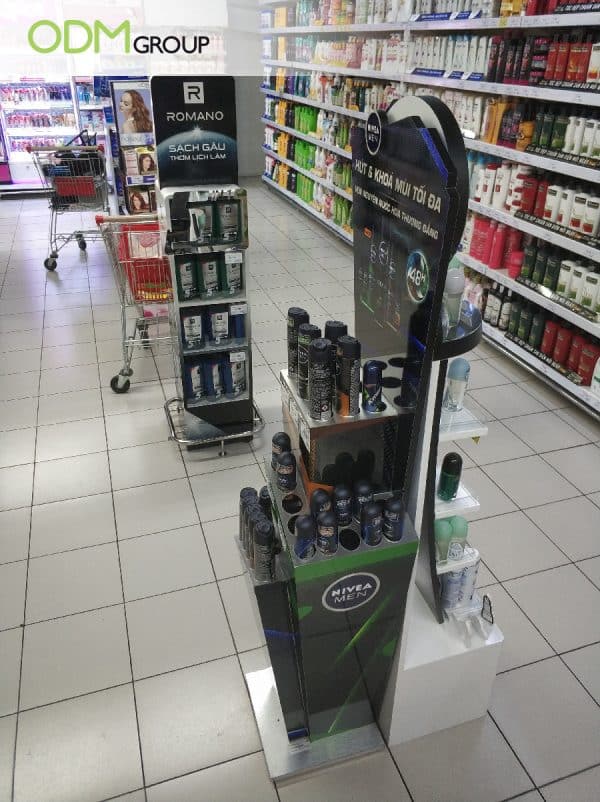
Retail Floor Display
The display must balance visual impact with practical retail requirements. Important considerations include:
- Product weight and capacity
- Structural stability
- Store footprint restrictions
- Assembly requirements
- Replenishment access
- Shipping volume
- Campaign duration
- End-of-campaign disposal or reuse
Flat-pack construction can reduce shipping volume and simplify delivery to multiple retail locations. However, the assembly process should remain straightforward for store teams.
6. Endcap Displays
Endcap displays are positioned at the end of retail aisles, where they can benefit from visibility across multiple shopper pathways.
These displays are valuable for seasonal campaigns, product bundles, new releases, and brands seeking visibility beyond their usual shelf position. They can combine products, campaign graphics, promotional offers, and educational content within one defined area.
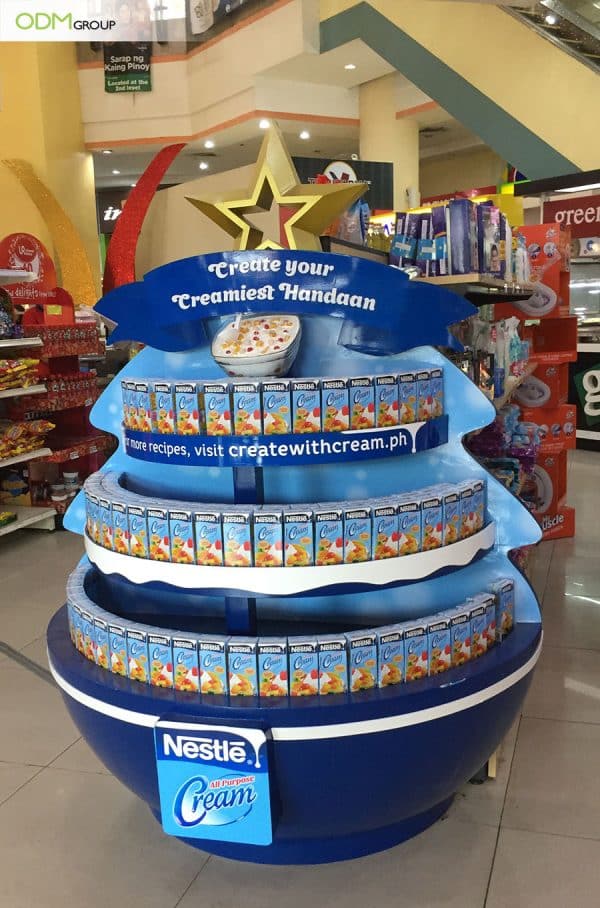
End Cap Display
Because endcap space is highly visible, the design should communicate one clear campaign idea. A strong headline, recognizable brand colors, organized product placement, and a direct call to action are usually more effective than excessive information.
The design must also account for the retailer’s shelving dimensions and fixture restrictions.
7. Interactive and QR-Enabled Displays
Interactive displays invite shoppers to engage with a product rather than simply view it. Interaction may include product testers, movable components, touchscreens, lighting effects, sound, sampling features, or QR codes.
QR codes can connect shoppers to:
- Demonstration videos
- Product comparisons
- Digital coupons
- Loyalty programs
- Competition entries
- Ingredient or sourcing information
- Augmented-reality experiences
- Online product pages
Digital features should support the physical display rather than compensate for unclear merchandising. The primary message and product offer should still be understandable without requiring shoppers to use a phone.
Brands should also test QR code size, contrast, placement, scanning distance, and mobile landing-page performance before rollout.
8. Seasonal Retail Zones
Seasonal retail zones bring related products and promotional materials together around a specific occasion. Campaigns may focus on Christmas, Lunar New Year, Valentine’s Day, summer travel, back-to-school periods, or major sporting events.
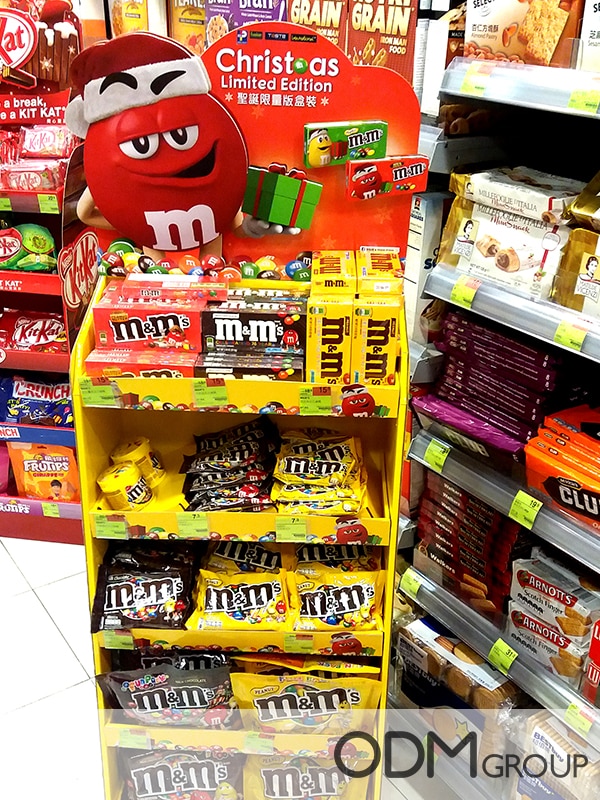
A seasonal display can combine:
- Branded fixtures
- Promotional packaging
- Gift sets
- Gift-with-purchase merchandise
- Product bundles
- Hanging decorations
- Shelf graphics
- Floor stickers
- Promotional signage
The concept should remain connected to the brand rather than relying only on generic seasonal decorations. Custom structures, brand colors, product-inspired shapes, and coordinated promotional merchandise can create a more distinctive activation.
Reusable components may also help brands adapt the display for different stores or future campaigns.
How to Choose the Right Retail Display
The most visually impressive display is not always the most appropriate one. Display selection should begin with the campaign objective and retail conditions.
Before starting development, brands should consider the following:
Campaign Objective
Determine whether the display is intended to launch a product, increase visibility, explain a feature, support sampling, promote a bundle, or encourage an impulse purchase.
Retail Placement
Confirm whether the display will be installed on a shelf, countertop, aisle end, window, floor area, or temporary activation space.
Product Requirements
Provide accurate product dimensions, weight, quantity, packaging format, and preferred arrangement. These details influence the display’s structure and material selection.
Campaign Duration
A short promotional campaign may suit printed board construction, while a longer-term installation may require metal, wood, acrylic, or other durable materials.
Store Operations
The display should be easy for retail teams to assemble, clean, replenish, relocate, and maintain. Instructions and clearly labeled components can support consistent implementation across multiple locations.
Transportation
Bulky displays can increase storage and shipping costs. Flat-pack or modular construction may make distribution more efficient, particularly for campaigns involving many stores.
How ODM Supports Retail and POS Display Development
ODM works with brands, marketing agencies, distributors, and retail teams to turn initial campaign ideas into practical custom retail displays.
Our team can support the project from early concept development through final delivery. This may include retail research, industrial sketching, structural design, graphic development, 3D visualization, material recommendations, prototyping, factory identification, quality control, and logistics coordination.
For custom POS displays, we consider both creative and operational requirements. Product dimensions, loading capacity, retail footprint, customer sightlines, assembly, replenishment, packaging, and transportation can all influence the final design.
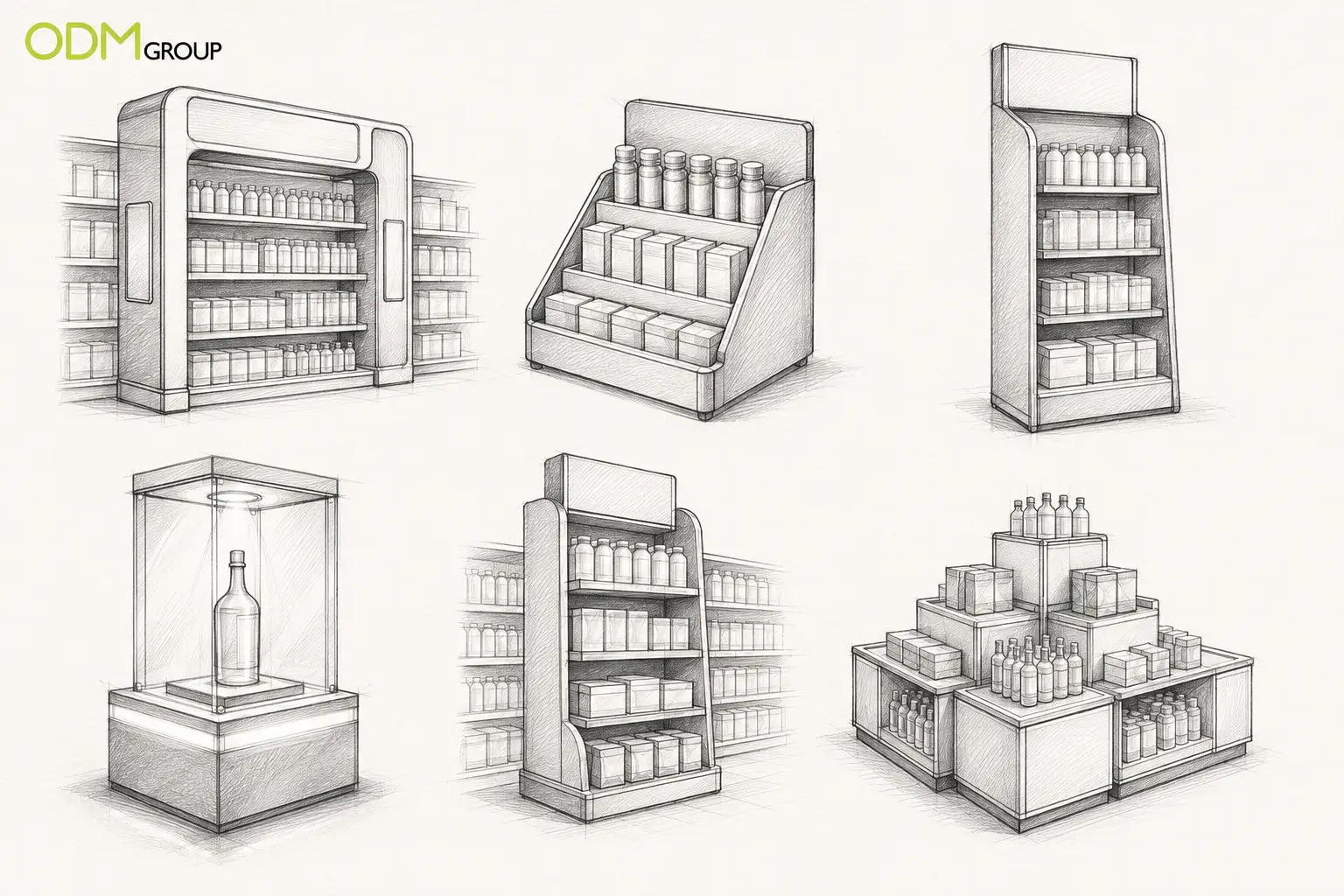
Prototypes and pre-production samples allow the structure, graphics, product fit, stability, and assembly process to be reviewed before a larger rollout. ODM can also coordinate on-site inspections during development and production to help maintain consistency with approved specifications.
Whether the project involves a shelf frame, countertop unit, product glorifier, endcap, floor-standing display, or wider retail activation, ODM helps manage the different stages and stakeholders involved.
This coordinated approach gives brands one project partner across display design, development, sourcing, quality control, and delivery.
Final Thoughts
Effective retail merchandising makes it easier for shoppers to notice, understand, and engage with a product. The right solution may be a compact shelf talker, a framed shelf section, a premium product glorifier, or a complete floor-standing unit.
What matters is that the display supports the campaign objective while remaining practical for the retail environment.
If your brand is planning a new in-store campaign, ODM can help develop a custom retail or POS display from the initial sketch through prototyping, factory coordination, quality control, and logistics. Contact our team to discuss your product, retail space, campaign requirements, and rollout plan.
Another Dose of On-Shelf Advertising Concepts:
Shine Brighter, Sell Better: Top 4 Benefits of LED On-Shelf Display
The retail store shelf can be just as plain [...]
Top 5 Reasons to Include Retail Shelf Stoppers in Your In-Store Promotion
In a competitive and cluttered environment such as the [...]
How Store Shelf Display Ideas Drive Sales — 6 Brilliant Examples
When customers roam around in-store, their eyes are feed constantly [...]
Increase Sales with The Power of Retail Shelf Display
Does retail shelf display marketing still work today? Known [...]
Why Do Consumers Spend More with an On Shelf Display?
On shelf displays are displays that appear on store [...]
FAQs about Retail Merchandising
What are retail merchandising?
Retail merchandising is the strategic presentation of products within a store to attract attention, communicate value, and encourage purchases. It can include shelf frames, shelf talkers, countertop units, product glorifiers, endcap displays, and floor-standing display units.
What makes a retail display effective?
An effective retail display attracts attention, communicates a clear message, presents products neatly, and fits the available store environment. It should also be stable, accessible, easy to replenish, and practical to distribute.
Which materials can be used for POS displays?
POS displays can be developed using corrugated board, honeycomb board, polypropylene, acrylic, wood, metal, molded plastic, or mixed materials. The best option depends on the product weight, visual requirements, budget, campaign duration, and shipping plan.
Can retail displays be designed for flat-pack shipping?
Yes. Many countertop and floor-standing displays can be developed with foldable, knock-down, or modular structures. Flat-pack construction can reduce shipping volume, but the unit must remain easy to assemble and structurally secure.
More Retail Merchandising Ideas You Might Love to Check Out:
11 Secrets of Successful Visual Merchandising Displays
Does having great products automatically attract customers? Not always. [...]

How X-Men Shampoo Advertising Ideas Attract Consumers In-Store
Body essential products cater to different markets with very [...]
4 Visual Merchandising Techniques To A Compelling Marketing
If you're looking for fresh ideas to revitalize your [...]
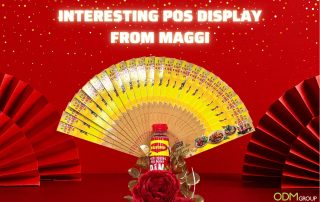
4 Secrets to An Impressive Seasonal Merchandising Display
Seasons come and go, much like anticipated holidays. However, [...]
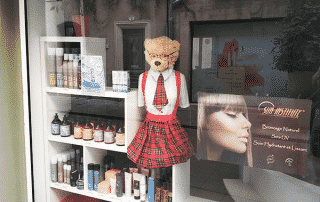

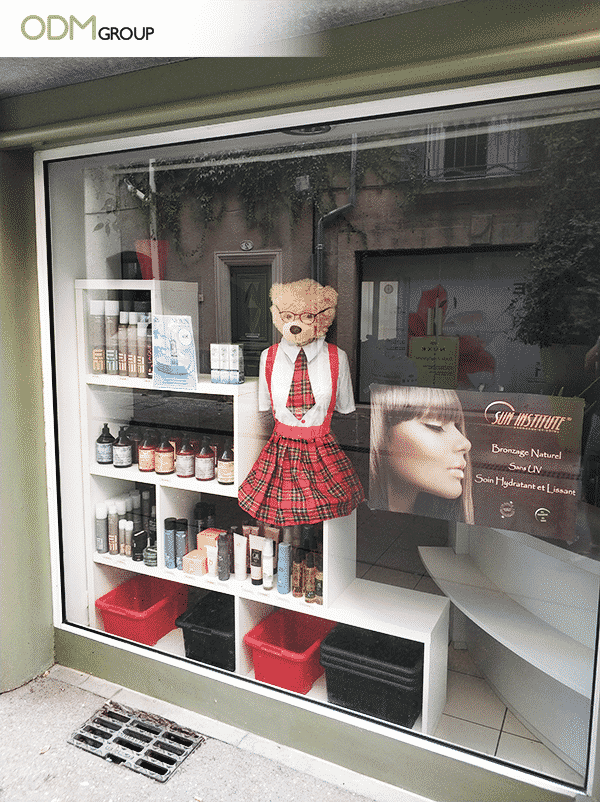
5 Secrets to Store Window Display Ideas that Boost Foot Traffic!
When people are strolling on a busy street, there [...]
How can you make your retail merchandising display more engaging for your target audiences? How can you keep a connection with them even though they are no longer in your retail store? Find the fantastic benefits of quick-response codes by tapping the image below:
Related posts:
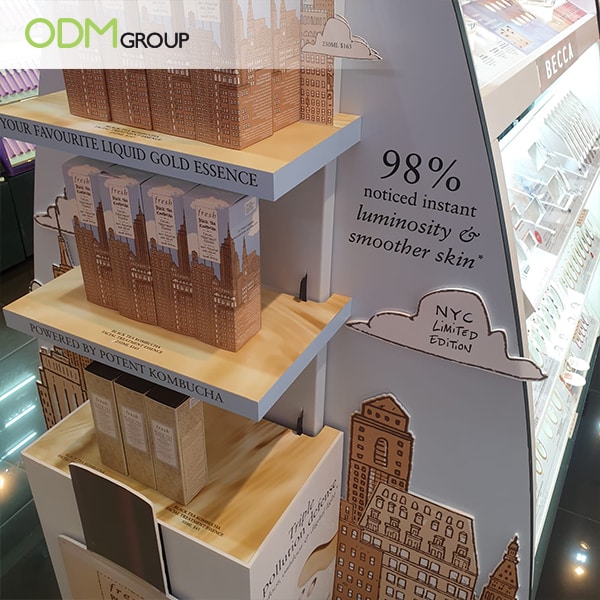 Maximise Your In-Store Promotion with a Custom Retail End Cap Display
 Outsell Your Competition- Use a Retail Store Floor Display!
 5 Easy Tips for a Head Turning Retail Merchandising Display
 3 Simple Tips to Get the Most Out of Your Merchandising Retail Display
 5 Advantages of Using Wire Display Shelf on Retail Merchandising