
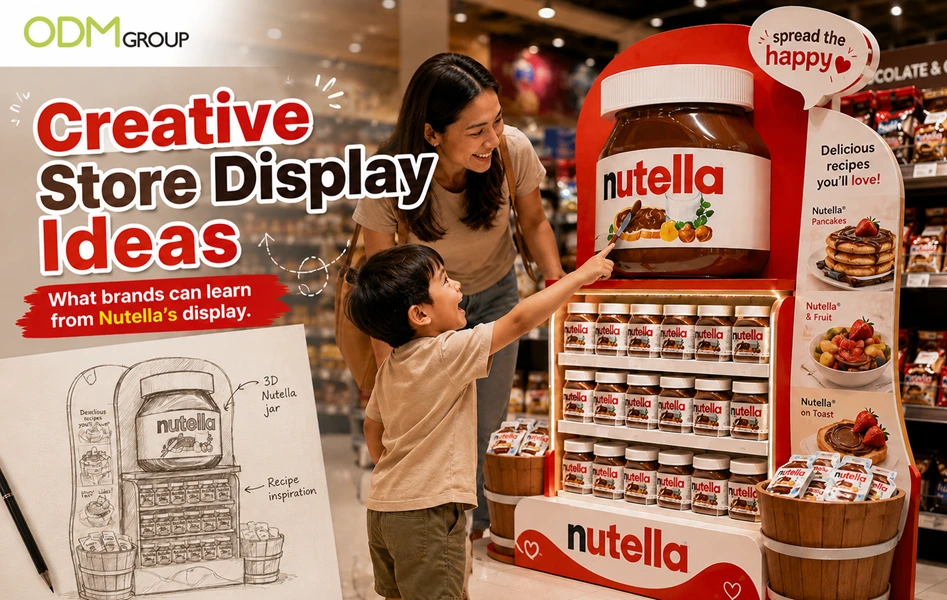
Known for offering jars of sweet treats, Nutella has been able to play off fans’ devotion to its chocolaty goodness. For years, the famous hazelnut cocoa spread has been spreading happiness among its consumers with its delightful products. We have recently encountered this chocolate POS display by Nutella, one of the simple yet creative store display ideas we have come across in today’s market.
How Nutella Uses a Creative Store Display to Attract Shoppers
The centerpiece of the display is a three-dimensional Nutella jar positioned above the products.
Because the jar shape and label are immediately recognizable, the feature acts as a visual landmark within the aisle. Shoppers can identify the brand from a distance without needing to read additional promotional messages.
Using an enlarged product replica is particularly effective in busy supermarkets, where several brands compete for attention within the same category.
A 3D product display can help brands:
- Improve visibility from different angles
- Reinforce product recognition
- Direct shoppers towards the promoted range
- Create a memorable focal point
The feature does not need to be mechanically complex. Its effectiveness comes from using a familiar brand asset at a larger scale.
The display uses Nutella’s signature red, white, and black color palette throughout the structure.
This consistent branding allows the display to stand apart while remaining visually connected to the product packaging. Shoppers can easily understand which brand owns the space and which products are being promoted.
The design also avoids unnecessary messages and decorative elements. This keeps the focus on the products rather than overwhelming shoppers with too much information.
For brands developing creative store display ideas, simplicity should not mean a lack of design. It should mean using each visual element with a clear purpose.
Strong retail branding often depends on:
- A recognizable color palette
- Clear product imagery
- Simple promotional messaging
- Consistent logo placement
- A strong visual hierarchy
These elements help shoppers process the display quickly, which is important in fast-moving retail environments.
The side panels feature Nutella-inspired food and breakfast ideas.
This imagery does more than decorate the display. It helps shoppers imagine how they could use the product at home. Instead of seeing Nutella only as a jar on a shelf, customers are shown possible serving ideas and occasions.
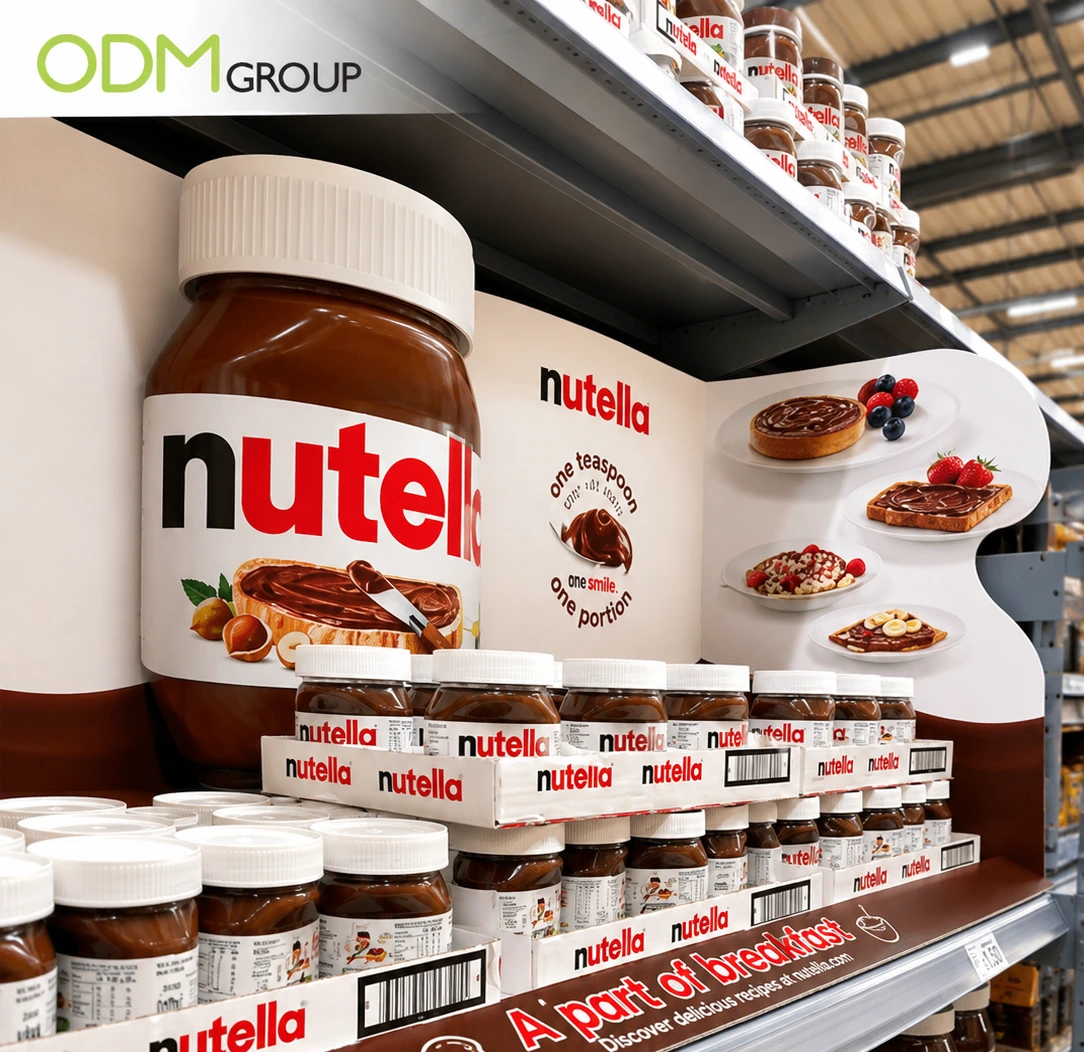
Food styling can be especially persuasive when it highlights texture, flavor, and familiar moments of consumption. Images of toast, pancakes, fruit, or baked treats may encourage shoppers to add the product to their basket even when it was not originally on their shopping list.
This strategy can also support complementary purchases. A shopper inspired by a recipe may also buy bread, fruit, baking ingredients or breakfast products.
Brands can use display graphics to communicate:
- Serving suggestions
- Recipe inspiration
- Seasonal uses
- Family consumption occasions
- Product combinations
The most effective imagery should remain clear, appetizing, and easy to understand at a glance.
The Nutella jars are arranged neatly on the upper shelves, making the products easy to see and access.
Good product organization is an important part of retail display design. Even the most creative structure may underperform when the products are hidden, difficult to reach, or arranged without a clear system.
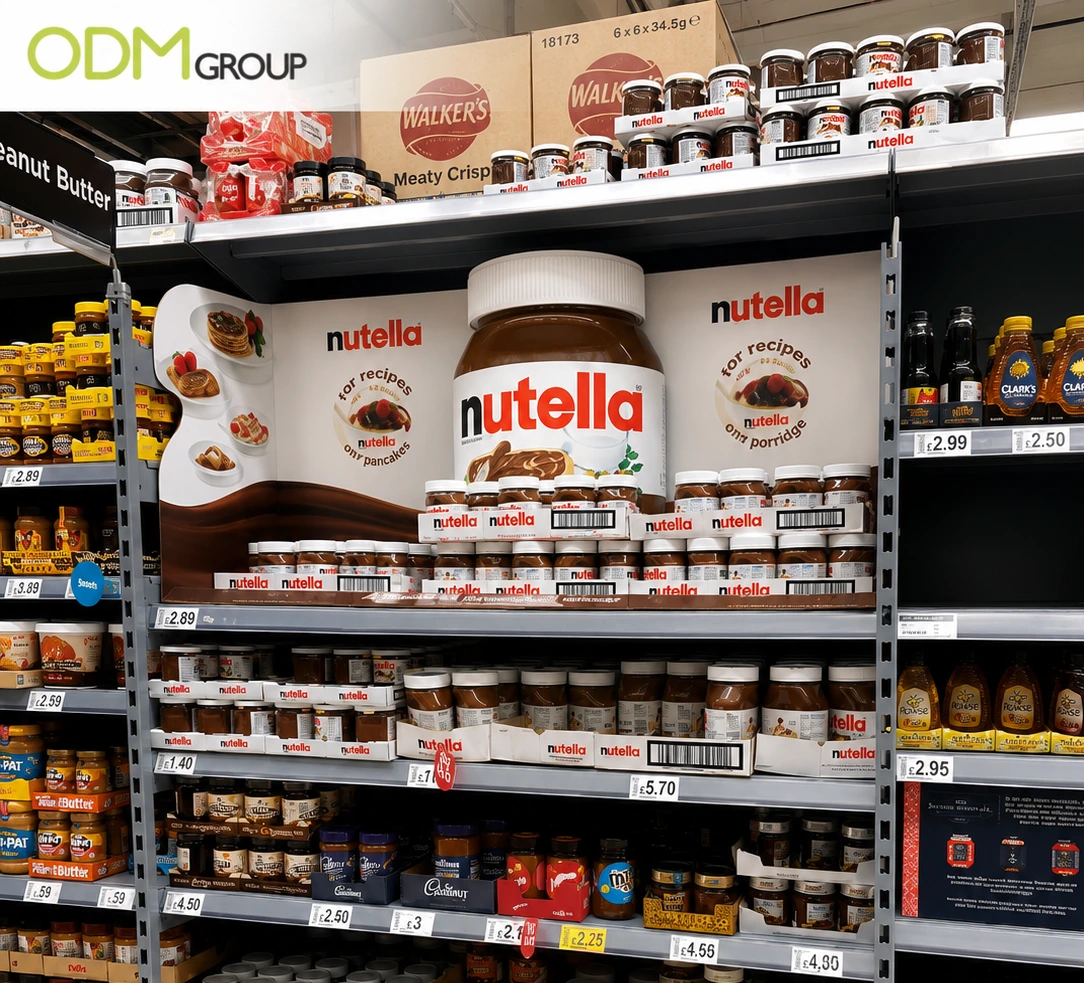
The Nutella display keeps the merchandise visible while allowing the branded structure to frame the range.
Clear organization can support both shoppers and retail staff by:
- Making products easier to locate
- Keeping different sizes or varieties organized
- Improving stock visibility
- Simplifying product replenishment
- Maintaining a more presentable display
Display designers should therefore consider product capacity and accessibility from the beginning of the development process.
A Practical Cardboard Display Structure
[/fusion_li_item][/fusion_checklist]The main structure appears to be produced from printed cardboard.
Cardboard is widely used for temporary supermarket promotions because it is lightweight, printable and relatively easy to install. It also allows brands to customize shapes, graphics, shelves and header panels around a specific campaign.
Its cost will depend on the structure, finishing, printing method, quantity and assembly requirements. However, it can provide a cost-efficient option for brands that need to roll out displays across multiple retail locations.
Cardboard displays may be suitable for:
- Product launches
- Seasonal promotions
- Limited-time campaigns
- Gift-with-purchase offers
- Retail sampling activities
- Supermarket aisle promotions
Brands should still consider the expected display duration, product weight, and store conditions. Heavier products may require reinforced shelves, stronger internal supports, or alternative materials.
More Promotional Ideas from Nutella
In one of our recent blog posts, we featured Nutella&Go’s plastic hang sell display. This unique retail display idea was spotted at a supermarket in Singapore. It is a simple yet very effective promotion by Ferrero, which is highly functional and very kid-friendly, as children do not need to stretch and tiptoe to get one packet. You can learn more about this promotion for kids by checking out this case study:
The well-known chocolate spread maker is increasing its brand presence by offering these exciting gift packs to shoppers at Debenhams UK.
We spotted this sweet GWP offer from Nutella in Vietnam. Nutella’s custom food storage containers are stacked neatly in a mounted POS display. Doing so helped distinguish their promotional products from their regular price items.
Nutella always implements exciting marketing campaigns, amazing POS materials, and gifts with purchase for their promotions. In this particular marketing campaign, the brand has introduced a wonderful GWP offer— a Nutella custom-shaped speaker!
What Brands Can Learn from Nutella’s Store Displays
Nutella’s approach shows that a successful retail display does not always require an elaborate concept.
Instead, the display connects several practical elements:
1. Build Around a Recognizable Brand Asset
A distinctive product shape, character, logo, or packaging feature can become the central visual element of the display.
2. Keep the Products Easy to See
Creative branding should support product visibility rather than compete with it.
3. Show Shoppers How the Product Can Be Used
Recipe imagery, serving suggestions, and lifestyle visuals can make a product feel more relevant to everyday life.
4. Match the Display to the Audience
The height, placement, and accessibility of the products should reflect the people most likely to buy them.
5. Select Materials Based on the Campaign
Cardboard may work well for temporary promotions, while longer campaigns may require plastic, metal, wood, or a combination of materials.
6. Design for the Retail Environment
The display should fit the available floor or shelf space without obstructing shoppers, nearby products, or store operations.
More Creative Store Display Ideas Brands Can Explore
Nutella’s oversized jar shows how a familiar product can become a strong visual feature. However, brands can take several other creative approaches depending on the product, campaign objective and available retail space.
The following examples demonstrate how shape, interaction and storytelling can turn an ordinary product fixture into a more memorable in-store experience.
1. Turn a Brand Character into a 3D Display
Milka’s cow-shaped display transforms one of the brand’s most recognizable assets into a physical retail feature. The sculpted cow head projects from the unit, while baskets and shelves hold the confectionery products.
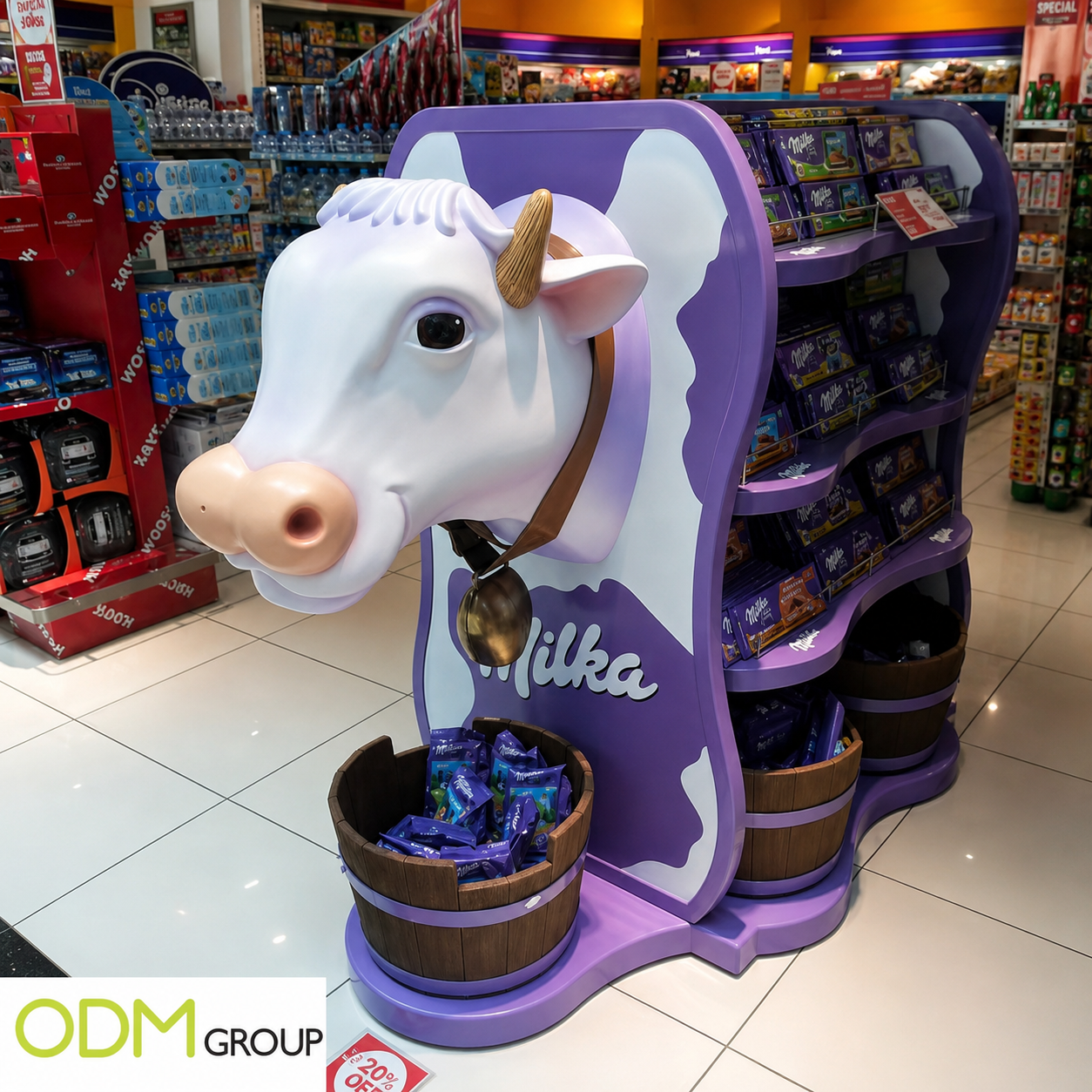
Three-dimensional characters can attract attention because they feel more playful than standard printed graphics. They may work particularly well for confectionery, snacks and family-focused products.
Brands can develop displays around:
- Mascots
- Animals associated with the brand
- Product characters
- Seasonal figures
- Recognizable symbols from advertising campaigns
The structure must still leave enough space for customers to access the merchandise comfortably.
2. Build the Display Around the Product Category
Cadbury’s large teapot-shaped display uses a familiar object associated with sharing, comfort and refreshment. The hollow center creates a retail area where products can be arranged around curved shelves.
This type of display does not simply enlarge the packaging. Instead, it connects the product with a wider consumption occasion.
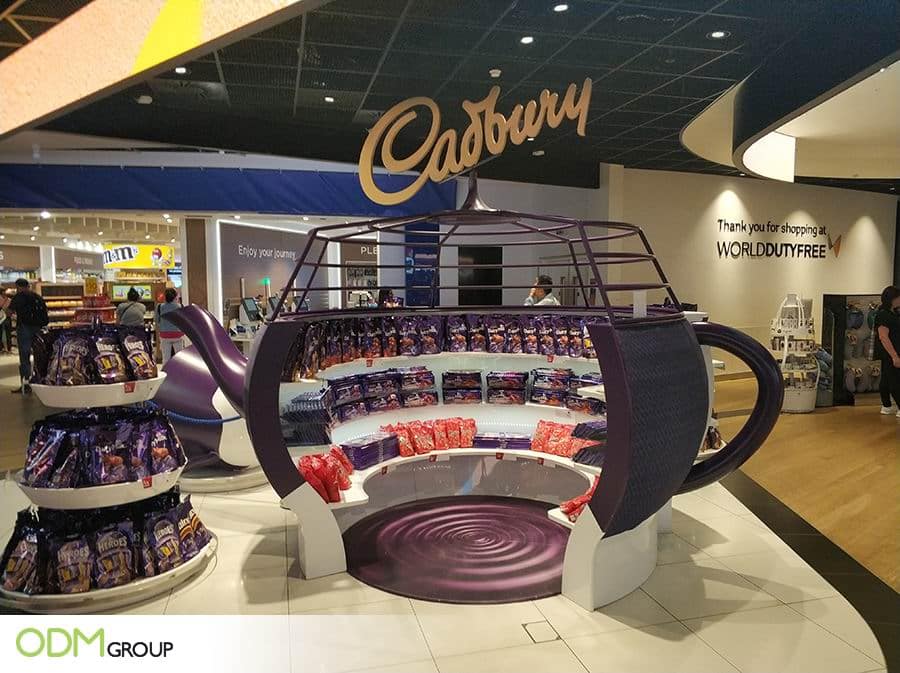
Food and beverage brands could explore structures shaped like:
- Cups or mugs
- Serving bowls
- Picnic baskets
- Breakfast tables
- Cooking pots
- Gift boxes
The chosen shape should reinforce how or when the product is consumed.
3. Use Oversized Product Packaging
An Evian display uses an enlarged bottle form as part of its header. This immediately communicates the product being promoted, even when shoppers view the unit from a distance.
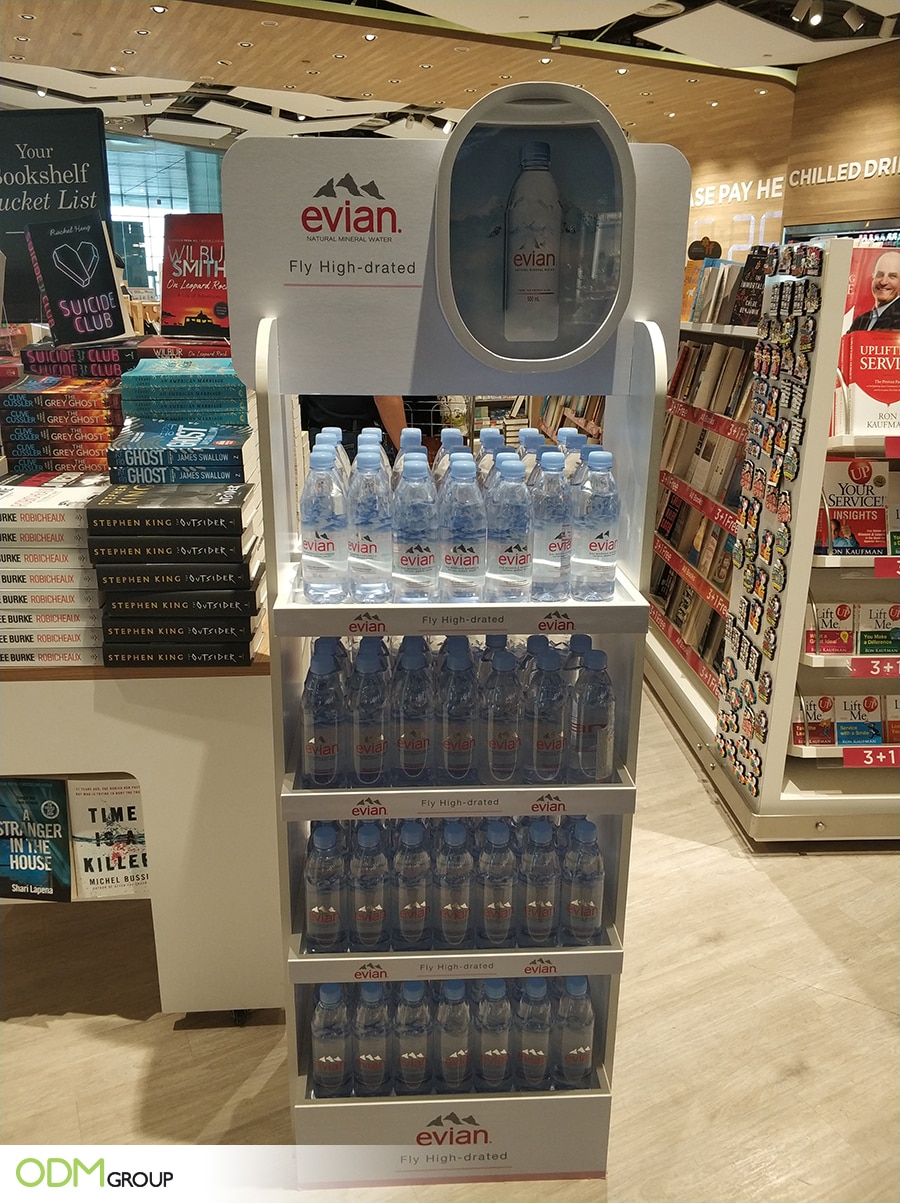
Oversized packaging can be particularly useful for brands with distinctive bottles, cartons, cans or containers. The replica can sit above the display, project from the side or form part of the entire structure.
For the strongest effect, brands should preserve the packaging’s most recognizable details, including its shape, label placement and color palette.
4. Add Interactive or Gamified Features
KitKat’s arcade-style retail display combines product shelving with a central game console. Shoppers can interact with the controls while browsing the confectionery range.
Gamified displays can increase dwell time and give customers another reason to approach the promotion. They may also support competitions, product education or reward-based campaigns.
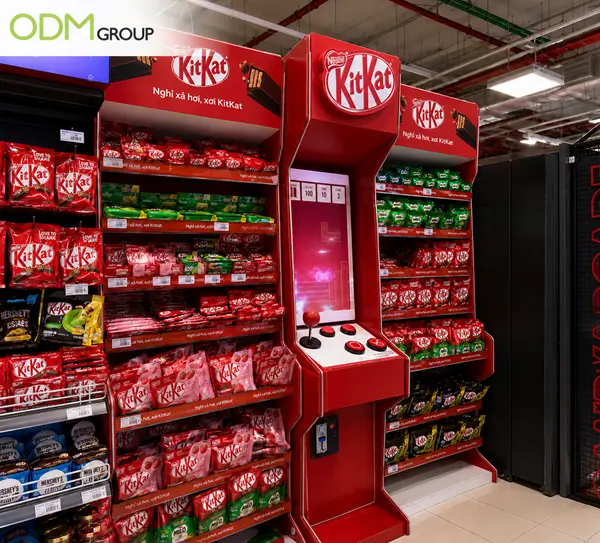
Possible interactive features include:
- Push buttons
- Touchscreens
- Prize wheels
- Reaction games
- Digital quizzes
- Product selectors
- Scan-to-play activities
Any interactive element should be intuitive, durable and easy for retail staff to manage.
5. Connect Physical Displays with Digital Experiences
Cadbury’s football-themed display uses a strong campaign graphic alongside a virtual reality experience. The physical unit attracts attention, while the digital activity encourages shoppers to participate.
Brands do not always need full virtual reality equipment to create a connected campaign. QR codes, augmented reality filters and mobile games can also extend the display beyond the store.
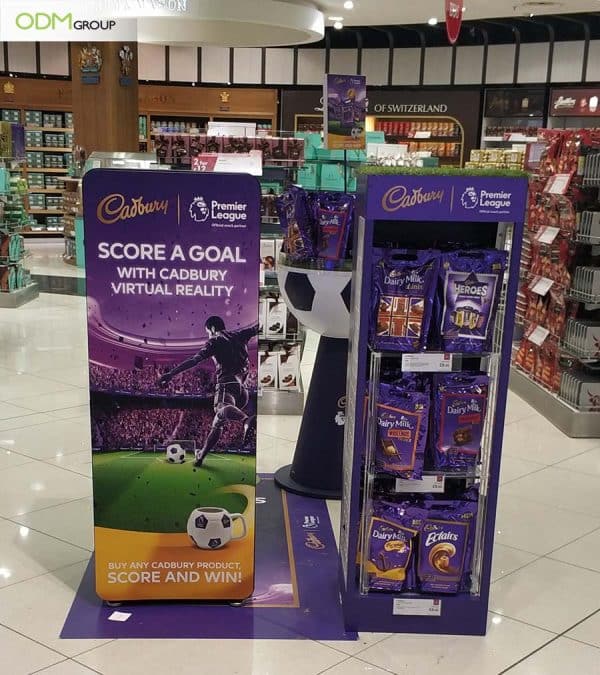
For example, shoppers could scan the display to:
- Enter a competition
- Unlock a branded game
- View product demonstrations
- Access recipes
- Collect digital rewards
- Share an augmented reality experience
The digital activity should support the campaign rather than distract customers from the product.
6. Create a Display That Looks Like a Vehicle
Kinder and Nutella products were presented inside a large, school-bus-inspired structure. Its bright color, windows and vehicle details turn the promotional space into a recognizable retail scene.
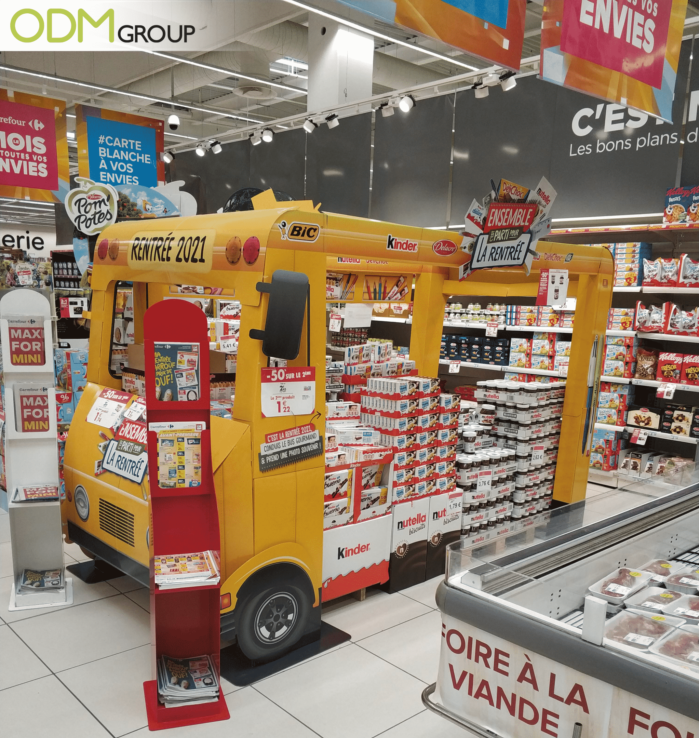
Vehicle-shaped displays are useful when they connect naturally with the campaign story. A bus can support back-to-school marketing, while a van, airplane or delivery truck may suit travel, convenience or distribution themes.
These structures can create a strong visual impact, but brands must consider floor space, assembly and movement around the unit.
7. Use Sculptural Displays to Create a Premium Atmosphere
The large wooden horse sculptures displayed at a retail entrance demonstrate how decorative structures can shape a store’s atmosphere. Although they do not carry products directly, they create an eye-catching entrance and reinforce the space’s visual identity.
Sculptural displays may be appropriate for:
- Premium product launches
- Fashion retail
- Hotels and travel retail
- Heritage brands
- Luxury gifts
- Special events
Materials such as wood, metal, fiberglass, and molded resin can create a more permanent or premium appearance than temporary cardboard units.
8. Design the Display Around a Campaign Story
The strongest creative store display ideas do more than hold stock. They communicate a clear theme that shoppers can recognise quickly.
A display might represent a breakfast table, sports arena, gift-opening moment, kitchen, vehicle or seasonal celebration. The structure, graphics and product placement should all contribute to the same story.
Before selecting a concept, brands should consider:
- What should shoppers notice first?
- How does the idea connect with the product?
- Does the display suit the target audience?
- Can customers reach the products easily?
- Will the structure fit the retailer’s available space?
- Is the idea practical to produce, transport and assemble?
A creative concept is most effective when it strengthens the product presentation without making the shopping experience more difficult.
How ODM Can Support Retail Display Development
A creative store display must balance branding, product presentation, structural performance, and practical retail requirements.
ODM can support brands throughout the development process, from the initial idea to the final retail rollout.
Our work can include:
- Sketch design
- 3D visualisation
- Prototyping
- Factory selection
- Quality control
- Packaging and logistics planning
Through Mindsparkz, our in-house design team can also develop sketches, renders and prototypes that help brands review the concept before moving into production.
Whether the campaign requires a cardboard floor-standing display, shelf unit, countertop display or interactive retail structure, the design should support both the product and the shopping experience. Feel free to contact us today to find out more about how we can help your brand with your marketing needs!
ODM Retail Display Projects
FAQ about Retail Displays
What makes a store display creative?
A creative store display uses shape, color, product presentation or interaction in a way that attracts attention while supporting the campaign objective. Creativity should improve visibility and shopper engagement rather than add unnecessary complexity.
Why are 3D elements effective in retail displays?
Three-dimensional features create depth and improve visibility from different directions. Enlarged product replicas can also strengthen brand recognition and help shoppers locate products in crowded retail environments.
Is cardboard suitable for supermarket displays?
Cardboard can be suitable for temporary and medium-term supermarket campaigns. The structure should be designed according to product weight, campaign duration, store conditions and required shelf capacity.
How can food imagery support retail promotions?
Food imagery helps shoppers visualize how a product can be served or used. Recipe ideas and serving suggestions can also encourage impulse purchases and increase interest in complementary products.
What should brands consider before producing a custom POS display?
Brands should define the campaign objective, retail location, product dimensions, required capacity, target audience, display duration, materials, assembly method and logistics requirements before production begins.
Looking for More Creative Store Display Ideas to Inspire Your Next Retail Marketing? Find Them Here:
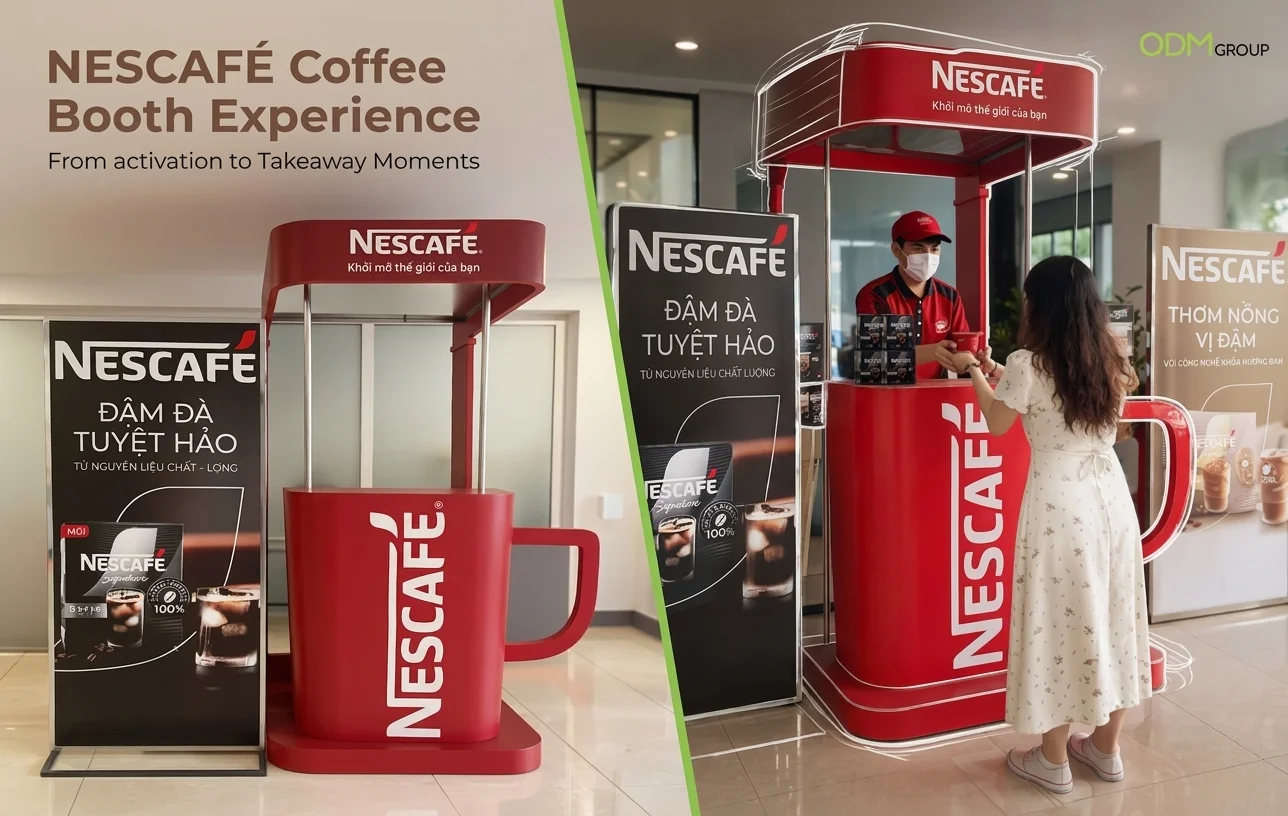
How Nescafe Coffee Booth Activations Drive Real Engagement in Office Spaces
Discover how a Nescafe coffee booth turns sampling into a daily brand experience using smart design, POS displays, and packaging strategies.
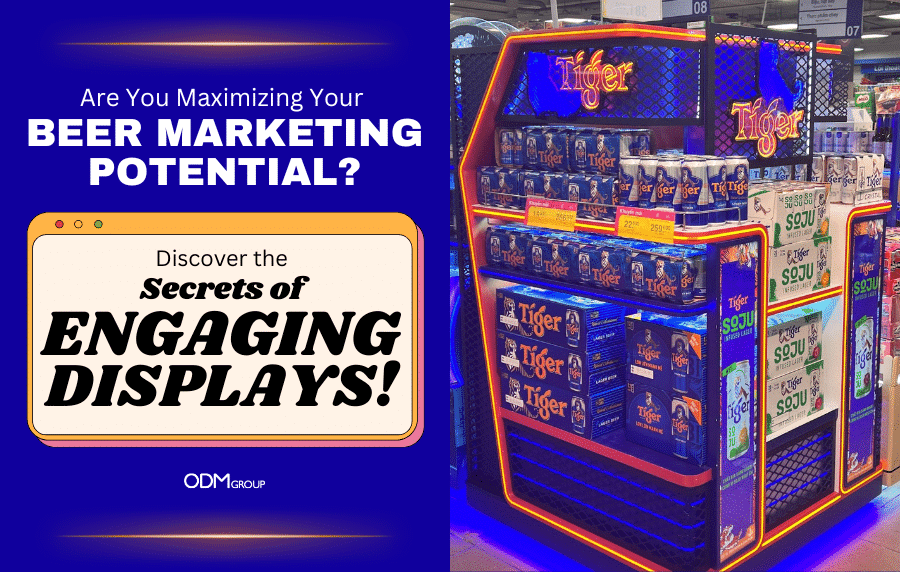
Beer Discovery Zone: What Made Tiger Beer Store Display A Success?
Shoppers usually go to stores with lists of things [...]
Advertising Screen Display: Why Should You Invest In One?
Short forms of media and moving pictures, especially those [...]
How to Spice Up F&B Marketing With POS Merchandising Display?
It goes without saying that a POS merchandising display [...]
4 Ways to Enforce Branding With Hendrick’s Creative Store Display
People's eyes are naturally drawn to pleasant as well [...]
Kiehl’s Unique Store Fixture: Getting to Know More About Mr. Bones
Your store shelves surely help display your products, but [...]